ARISE-FLUIDS has arrived and it's awesome 🥳
For over a decade, the Surviving Sepsis Guidelines recommended that septic patients get at least 30 cc/kg fluid. In the United States, these guidelines were weaponized into performance metrics, pressuring clinicians to prescribe arbitrary volumes to every patient.
Evidence-based clinicians have LONG known that this guideline lacked evidentiary support. For example, I've attached a picture of a blog I wrote about this back in 2017. Despite the lack of evidentiary support and some evidence of harm, the Surviving Sepsis Guidelines INSISTED on perpetually recommending 30 cc/kg fluid resuscitation.
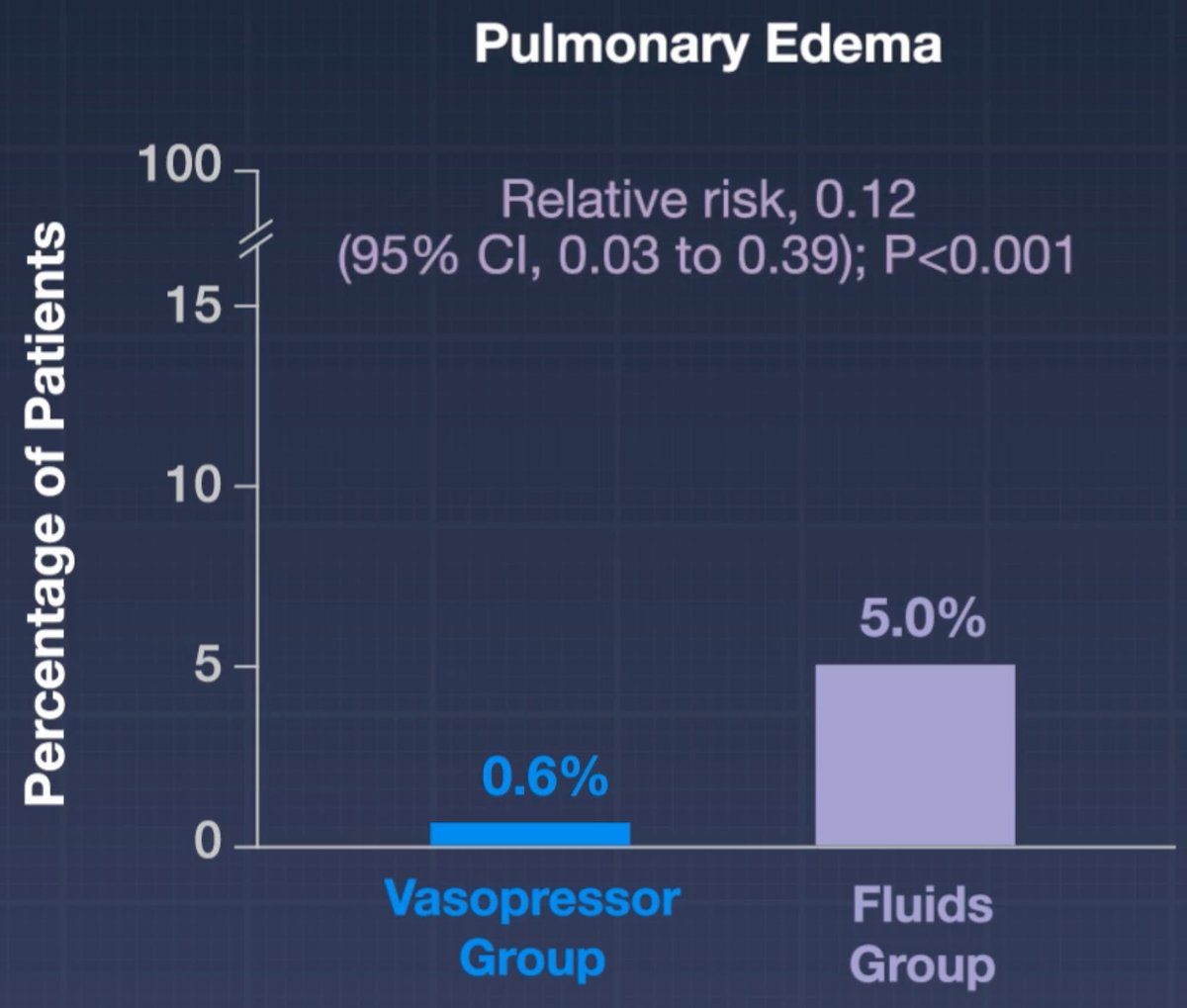
We finally have a prospective RCT demonstrating that mandating early administration of 30 cc/kg fluid (as compared to early vasopressors) doesn't help and may actually cause harm.
It's important to note that all of the hard endpoints in this trial were neutral (e.g., mortality, days free of organ support).
I still think that 30 cc/kg fluid is a pretty reasonable volume of fluid for *most* patients. But the study does suggest that giving too much fluid may promote edema - so we should be *thoughtful* about this intervention rather than mandating it for every septic patient.
Based on the subgroup analysis, the fluid-conservative strategy may have helped the subgroup of pneumonia patients the most. This is statistically nonsignificant but aligns with my expectation. ARDSy patients often don't respond well to fluid. (In contrast, I really doubt that a liter of fluids in either direction matters for most urosepsis patients.)
This is a great example of the over-reach of guidelines and protocoled medicine. People get all upset about practice variation, so sometimes they try to stomp it out using guidelines and protocols. But these guidelines are highly fallible, so what may occur is that you standardize care in a way that harms everyone equally. 🤦♂️
@EstebanOrtizMD Toda muerte política es repudiable, como quemar viva a una persona por ser esposa de un comunista o los 65 líderes indígenas en Brazil.
Pero sentido común ser Anti vacunas no es.
@EmmaRincon En el 36 se decía algo muy similar con poquitas palabras cambiadas.
Cómo "estos jóvenes se les enseña a morir por su patria y el Führer"o frases como "aprenderán el amor a su patria y a su raza".
luego un montón de periodistas aplaudían como focas por "recuperar los valores"
@auraneurotica Lo leí en la casa de mi tia, un folleto incompleto a mis 9 o 10 años y solo lo termine en forma pirata en la universidad, si pueden díganme dónde conseguir esa edición.
Listen to this termination of resuscitation… which is how it should happen.
There are several things to note that Dr. Robby from The Pitt did here that are spot-on.
1. He, in no uncertain terms, told her parents that her cardiac arrest was non-survivable. This is not the time to list out percentages or probabilities. This is the time to provide certainty to the inevitable death.
2. He told the parents when the appropriate time was to terminate resuscitation.
Notice… No one said, “hey, so, do you want us to keep going or what?”. When a statement like that or similar is used, what the family hear are, “so… do YOU want to let granny die now or what?”
You, the medical professional, that understands physiology and abysmal outcome even if ROSC is achieved at this point should be the one bearing the burden of making that decision, not the family member.
3. He offered to allow the remaining family to come in before stopping all of the visible efforts of resuscitation. (see previous post on this topic)
My general gist is something like this, “Johnny has had no pulse and no blood flow to the brain for 40 minutes. Even if all the things we are doing were to get his heart beating again, he has suffered permanent brain damage. He will never wake up and be the same person you’ve him as. Now is the appropriate time to stop.”
More to come on potassium levels and cardiac arrest...
#emergency #emergencymedicine #criticalcare #icu #erlife #iculife #science #army #armymedicine #armyemdoc #resuscitation #research #data #family #death #cpr #medx #medtwitter
@paul_aguayo@EstebanOrtizMD Espero que sea así, que la farmacéutica tome el gasto extra, que no exista un aumento del precio y posterior desabasto, si no es así, te lo recordaré en forma amable y oportuna
@paul_aguayo@EstebanOrtizMD Supongo que no se tanto de la parte comercial, lo suficiente de transporte y almacenamiento, y bastante sobre seguridad del paciente. Sobre este contexto,no veo como comprar directa a medio mundo de distancia, dosis específicas, de alto coste son mejor que comprar a mx
@paul_aguayo@EstebanOrtizMD Se produce en Latinoamérica para reducir costos, importar un medicamento de 1500 de dólares por dosis desde europa en cadena de custodia cuánto crees que va costar ?
@nandoyerovi Tiene que presentarse el 27 en Turquía le toca salir el 25 de diciembre para llegar, no somos un país somos un hacienda y una no muy productiva