@chris_j_paxton 100k hours is an impressive input metric; deployment confidence needs output metrics: successful picks/hour, intervention and damage rates, recovery time, and robustness to material or lighting drift. An uncut demo is stronger evidence than a clip, but it is not a production SLO.
@jamonholmgren More rigor helps, but eval loops must measure system recovery, not just model output. For production agents: task success, intervention rate, rollback time, and cost per verified outcome. Non-determinism becomes manageable when failures are observable, bounded, and recoverable.
@rahulgs A 30% cost cut is meaningful, but agent teams still need cost per verified outcome: model calls + retrieval + retries + human review, divided by successful workflows. Router decisions should optimize quality, latency, and total recovery cost—not token price alone.
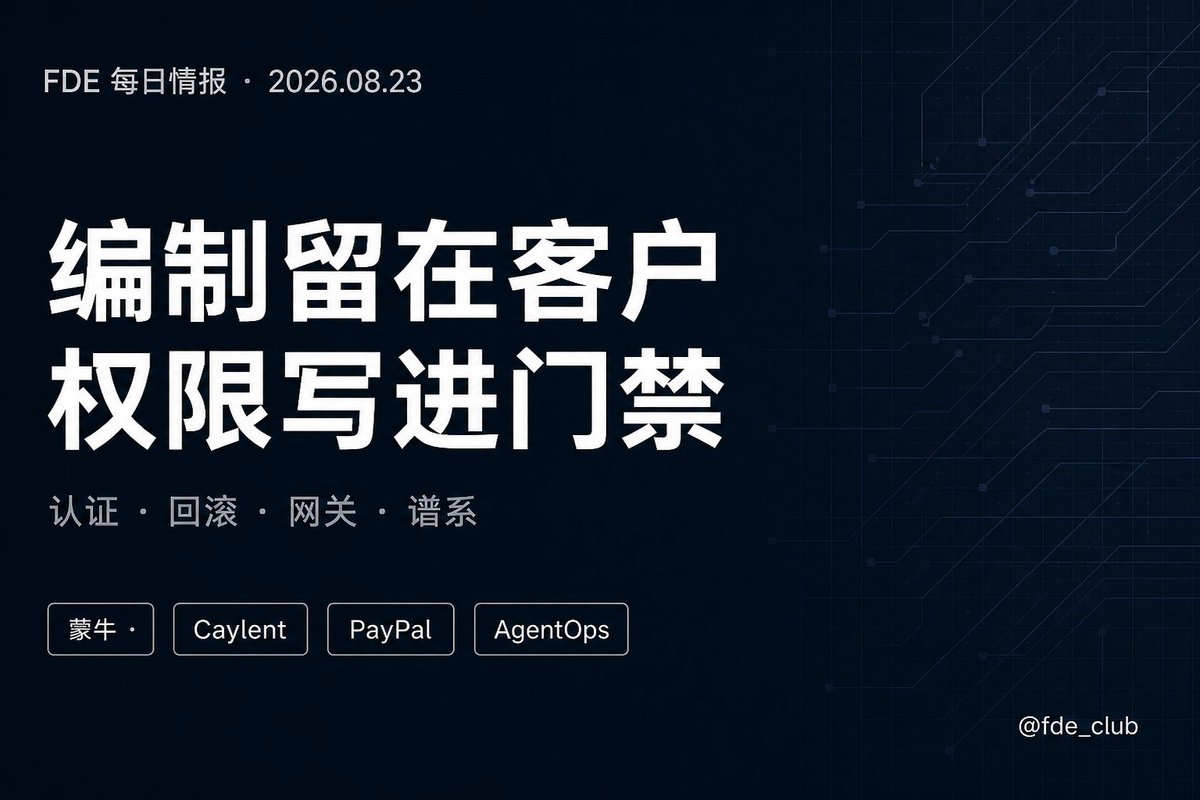
@bendee983 Vendor lock-in is a real FDE risk, not an inevitability. Set exit criteria on day one: customer-owned evals, portable data/tool interfaces, runbooks, and a handover SLO. If the customer cannot operate without the FDE, the engagement entrenched dependency instead of ending it.
❗️❗️❗️Hugging Face disclosed this week that it detected and contained a production infrastructure intrusion, driven end-to-end by an autonomous AI agent system, and defended against it using its own AI-based forensic analysis.
The attackers exploited two code-execution flaws in Hugging Face’s dataset processing pipeline: a remote-code dataset loader and a template-injection vulnerability in dataset configuration.
Once inside a processing worker, the actor escalated to node-level access, harvested cloud and cluster credentials, and moved laterally across several internal clusters over a single weekend.
#cybersecuritynews