The Bible’s oldest idea of the underworld was not a place of eternal torture. It was the world of the dead.
In the Hebrew Bible, Sheol (שְׁאוֹל) stands on the other side of life. The living are above, the dead “go down” to Sheol. It is pictured as dark, silent and cut off from ordinary human activity. Work, family life and the activities of the living are gone. The key distinction is not good versus evil. It is life versus death. The righteous can descend to Sheol just as the wicked can. Jacob speaks of going down there in his grief. Job describes it as a place of darkness and rest from earthly suffering. This is why equating Sheol with “hell” can distort the older concept. Sheol is not simply a prison where God sends sinners for punishment. It is the realm associated with death itself, sometimes closely linked with the grave and the depths beneath the world of the living.
Abaddon (אֲבַדּוֹן) appears beside Sheol in several passages. Its Hebrew meaning is “destruction” or “place of destruction.” At first, Abaddon is not Satan and not a demon ruling an underworld. It describes destruction in connection with death.
Later Jewish thought develops the afterlife further, with resurrection, judgment and different destinies for the righteous and wicked. The Greek Septuagint commonly translates Sheol as Hades. Then Revelation 9:11 gives Abaddon a new form. He becomes the angel of the Abyss, called Apollyon in Greek, “Destroyer.” The important point is that these terms are not interchangeable. Sheol is not automatically Hades, Hades is not automatically Gehenna, and neither is simply the lake of fire. Each belongs to a different textual and historical context. The biblical picture of the afterlife is therefore a developing tradition. Sheol begins with the fate of the dead, while later Jewish and Christian texts add resurrection, final judgment, punishment and an ultimate end. The “hell” familiar today is the product of this long development, not the original meaning of the Hebrew word Sheol.
Image source:
“Christian’s Combat With Apollyon” (c. 1850), H. C. Selous and M. Paolo Priolo.
Source: Wikimedia Commons.
Version checked: 3 August 2007.
License checked: 9 September 2026 - Public Domain
“Early Hebrew Conception of the Universe” (1909), Ralph V. Chamberlin. Source: Wikimedia Commons. Version checked: 25 July 2015. License checked: 9 September 2026 - Public Domain
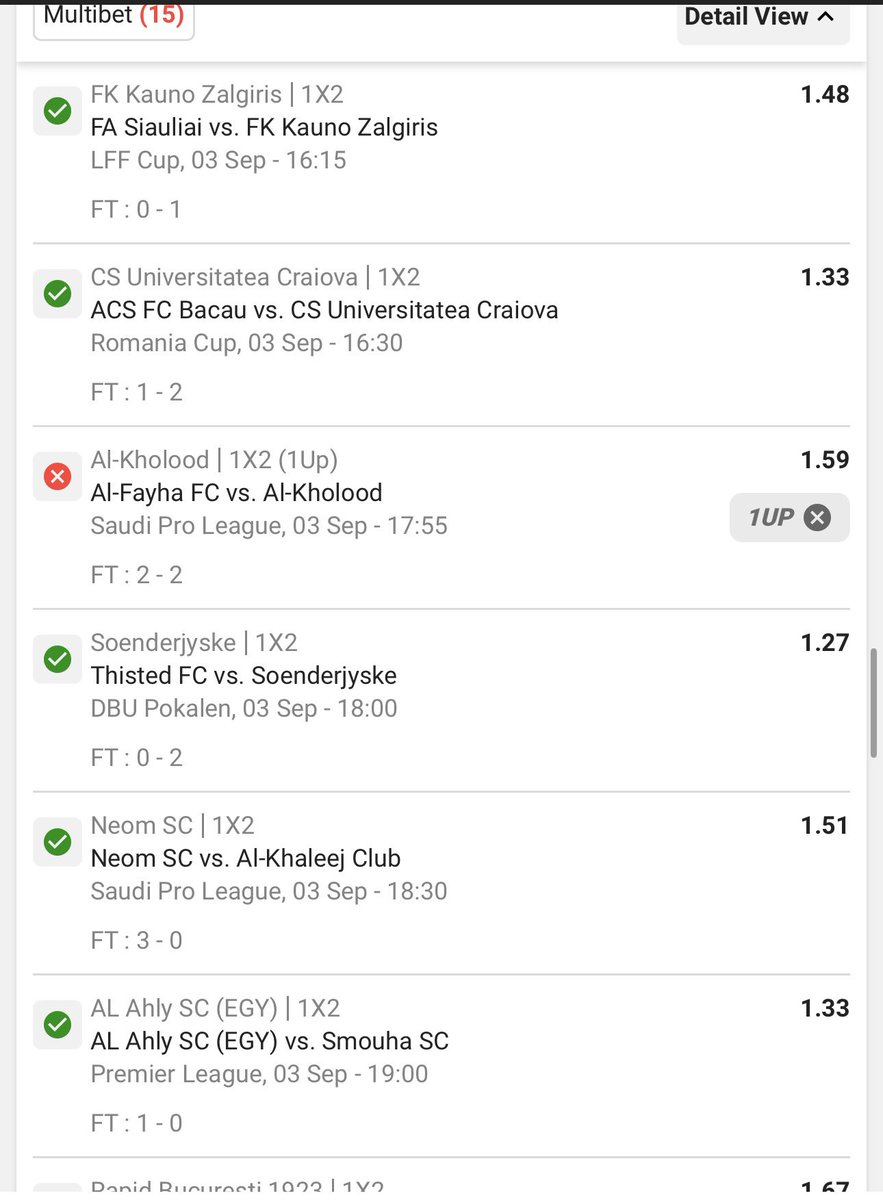
The score predictions made by a data analysis website for the UEFA Champions League have become a hot topic.
✅ Except for the AEK match, all the scores of yesterday's played matches turned out accurate.
24.50 odds & 6.58 odds💰 ⚽️
Edit out what you don’t like
Slip 1 (24.50 odds Edit/Cut) 🚨- Multi Bet betslip BW6FF094EC https://t.co/UqCUCDm1Go
Slip 2- Multi Bet betslip BW6FF0F0EE https://t.co/MeLYPqNzAK
A medieval magician could turn a spirit’s name into a geometric code.
The method was surprisingly mathematical. In Francis Barrett’s The Magus (1801), each planet is assigned a “magic square”, a grid of numbers arranged according to specific rules. A spirit’s name could be converted into numbers, the numbers marked on the corresponding planetary grid and then connected in sequence. The resulting line became the spirit’s sigil. But sigils were used in other traditions long before this. The 1701 edition of Sefer Raziel contains sigils used in magical texts and amulets for purposes such as gaining favor or protection from weapons. They were part of a broader Jewish magical and Kabbalistic tradition, not the later personal sigil practice associated with modern occultism.
The underlying idea in these older systems was that words, numbers, divine or spiritual names, planets and symbols could correspond to one another. A sigil gave those relationships a visible form.
Austin Osman Spare later shifted the focus toward personal intention. Instead of starting with a traditional spirit or planetary system, the practitioner starts with a desire, reduces its words to letters and turns them into an abstract glyph.
The sigil is then focused on intensely, sometimes in a state later called “gnosis” in Chaos Magick and the original intention is deliberately released. The theory is that constantly chasing the desired result keeps it in conscious thought, while forgetting it allows the intention to operate through the unconscious. So the history of the sigil is not one single tradition. Different systems used similar-looking symbols for very different purposes, from representing spirits and cosmic correspondences to working with personal intention, consciousness and belief. #Esotericism
Image source:
“Magic squares and sigils from Francis Barrett The Magus” (1801), Francis Barrett.
Source: Wikimedia Commons
Version checked: October 31, 2022.
License checked: September 5, 2026 - Public Domain / Creative Commons Public Domain Mark 1.0.
“Two amulet texts from Sefer Raziel, Amsterdam 1701” (1701), unknown.
Source: Wikimedia Commons
Version checked: October 31, 2022.
License checked: September 5, 2026 - Public Domain (Public Domain Mark 1.0).
“It takes something more than intelligence to act intelligently.”
- Dostoevsky
Solomon's Paradox is the tendency to reason more wisely about other people's problems than our own.
It's named after the biblical King Solomon — famous for his wise judgments, but who in his later years is depicted as making increasingly poor choices in his own personal and political life.
The term was introduced in 2014 by psychologists Igor Grossmann and Ethan Kross. In their studies on relationship conflicts, they found that people were better at taking multiple viewpoints into account, acknowledging what they didn't know, and looking for compromise when they were thinking about someone else's problem instead of their own.
They also found a way to counteract it: self-distancing. If you look at your own situation as an outside observer would, or ask yourself, "What would I tell a friend to do if they were in this exact position?" it becomes easier to think more clearly and objectively.
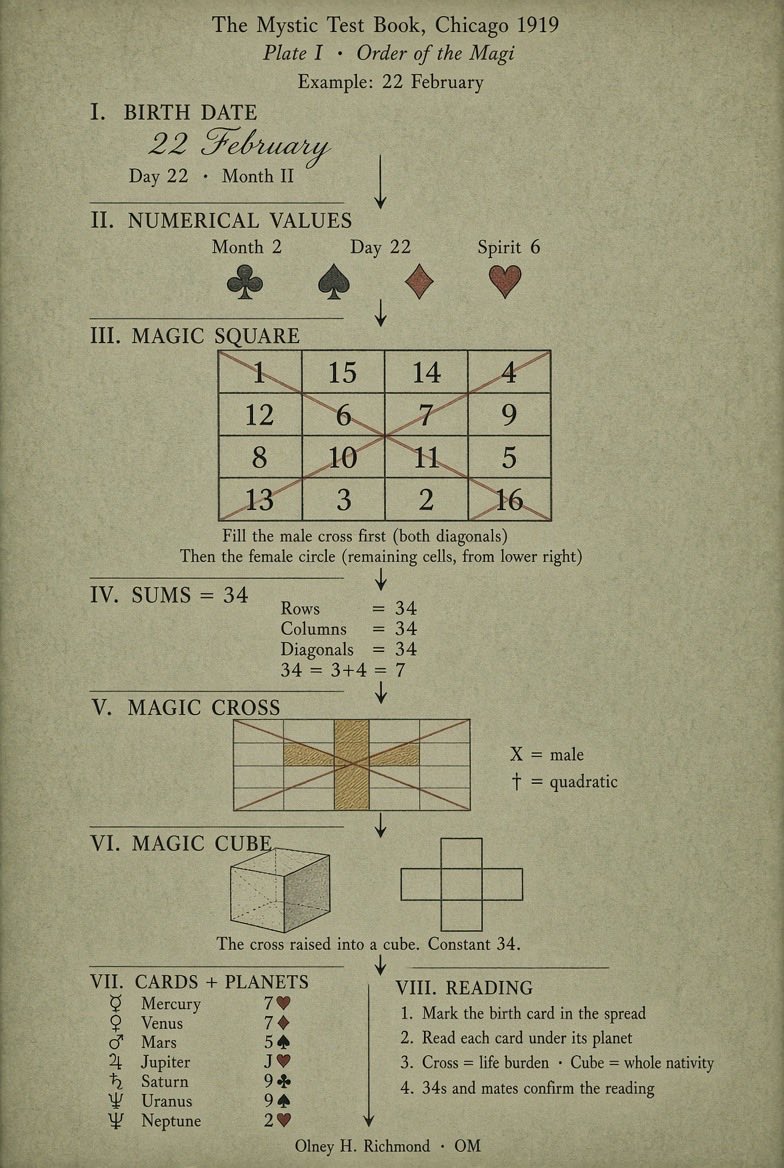
A deck of playing cards became a mathematical machine for reading a life.
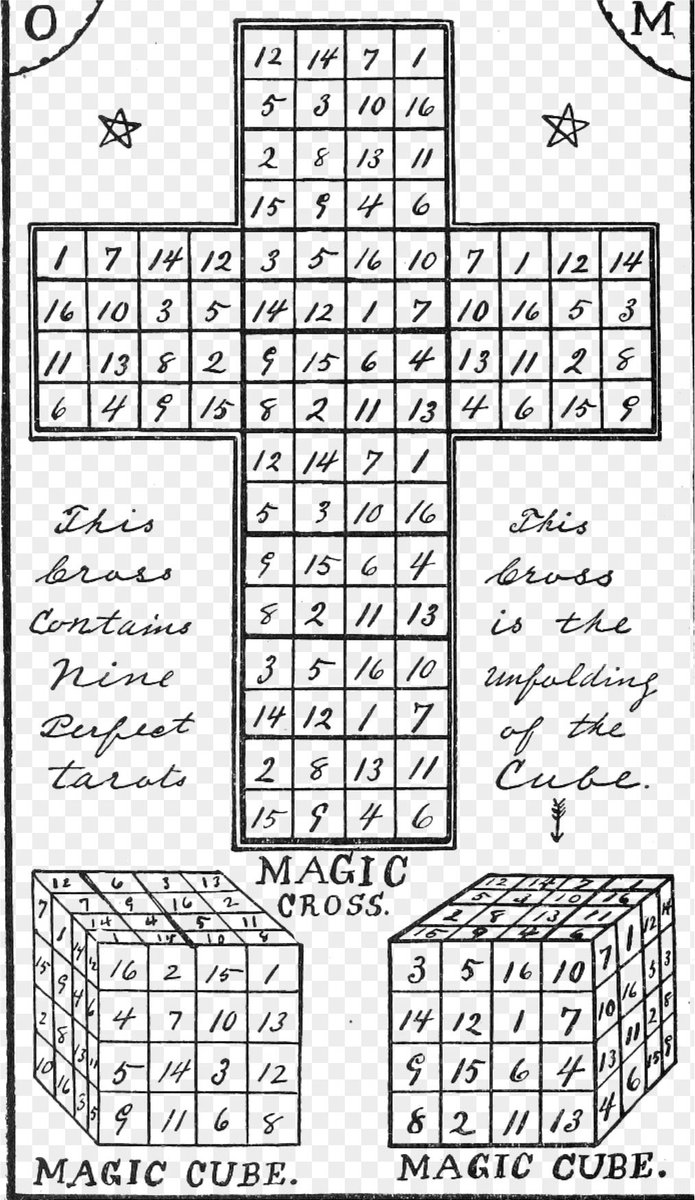
In 1919, Olney H. Richmond published The Mystic Test Book, combining playing cards, birth dates, astrology and numerical diagrams into a single system.
At its center were the “Magic Cross” and “Magic Cube”. Richmond constructed numbered squares in which rows, columns and diagonals followed fixed numerical relationships. He called the resulting arrangements “Tarots” and catalogued 384 “Cross Tarots”.
The system went beyond a simple magic square. Richmond connected several numerical arrangements in three dimensions, then described how they could be unfolded from a Magic Cube into a Magic Cross while preserving their numerical relationships. These patterns were then assigned occult meanings through playing cards and planetary correspondences. A birth date supplied the numerical basis for an individual reading.
The result was an attempt to make divination calculable. The geometry provided the framework, the numbers provided the rules, and cards and astrology supplied the interpretation. Richmond was essentially trying to turn occult symbolism into a system that could be constructed, calculated and repeated.
Fat loss after 40:
Old way:
- Reduce carbs
- Push harder in the gym
- Do random workout classes
- Repeatedly burn out and rebound
This doesn’t work anymore.
Here’s what’s working for fat loss after 40 in 2026:
Exactly. The difference is, I manage the risk before I manage the odds. Anyone can throw big prices onto a slip. The skill is knowing which legs deserve to be there.
“The Eucharist means the end of violence, and at the same time it shows the continuity with the whole history of religion. So when the anthropologists tells you ‘hey, it's cannibalism,’ you should answer: ‘Yes, of course — cannibalism is part of human history and the Eucharist summarizes it all in non-violence.’”
— René Girard, Interviews pt. 2