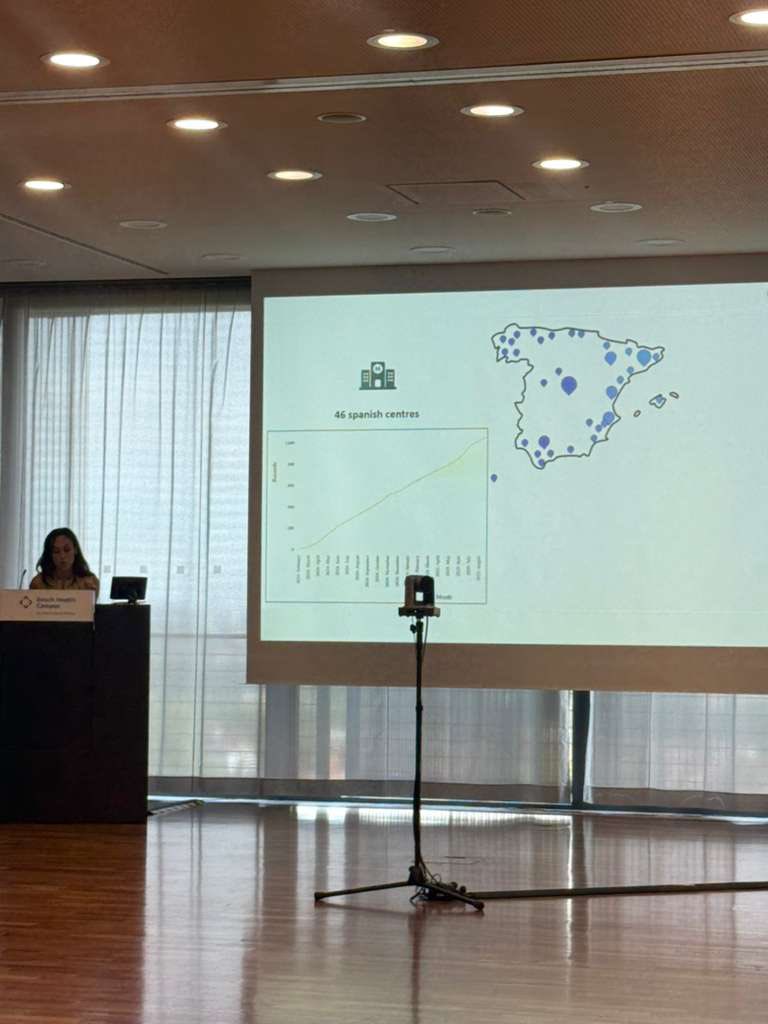
Comenzando la sesión de #FELLOWTALKS de hoy en H. Ramon y Cajal, sobre Novedades en fisiologia intracoronaria, con el Dr @fer_iver como ponente invitado.
In the Spanish SCAD Registry, LAD involvement identified a higher-risk SCAD phenotype, characterised by more complex angiographic features, greater myocardial injury, and an increased risk of long-term adverse cardiovascular events.
Read full paper here: https://t.co/53Mfv9mD20
@maitevelazquezm@macayaten@OjedaOjeda18@CamachoFreire@teresabastante@David_delVal_@rajivxgulati
#SCAD #CoronaryArteryDisease
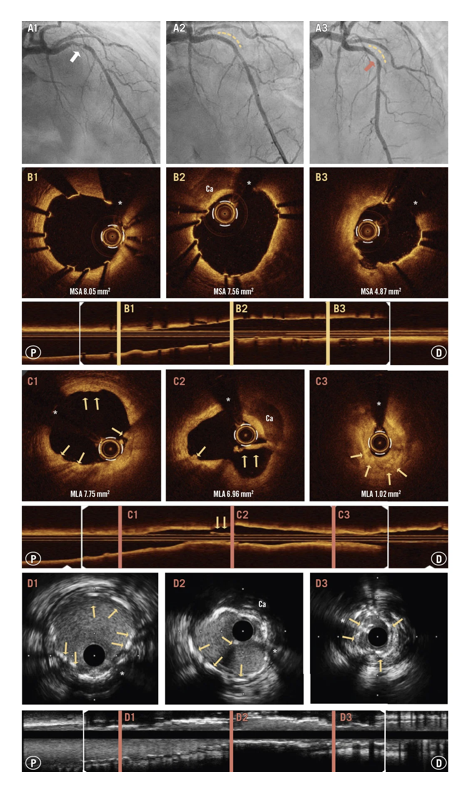
Severe scaffold collapse may occur even with new-generation bioresorbable magnesium scaffolds.
This multimodality intracoronary imaging case documents restenosis secondary to scaffold collapse 6 months after implantation, highlighting the importance of meticulous implantation technique and optimisation.
https://t.co/9VUaM15jfv
@teresabastante
Distal occlusion of a marginal branch in a 38-y-o 👩. No CVRF. SCAD? Coronary embolism? In situ atherothrombosis? Bilateral iliac artery FMD supports SCAD, with implications for management and prognosis. Nice example of how screening for FMD can help refine the diagnosis of SCAD.
Can we rule out coronary microvascular dysfunction from just one angiographic view? 🤔
Our new study introduces a Murray’s law–based approach for assessing coronary microvasculature in INOCA patients.
Thrilled to share the results!
https://t.co/nBPXf3fDvx
@IJCardio@fer_iver
Can we rule out coronary microvascular dysfunction from just one angiographic view? 🤔
Our new study introduces a Murray’s law–based approach for assessing coronary microvasculature in INOCA patients.
Thrilled to share the results!
https://t.co/nBPXf3fDvx
@IJCardio@fer_iver
"En el ensayo OPTION-STEMI se observó una interacción significativa con la clase Killip, lo que sugiere un mayor riesgo en pacientes con insuficiencia cardiaca aguda", destaca @fer_iver. #BlogSEC@jovenesSEC https://t.co/quLbxt7o3s
The PLATEBRISK study suggests that a simplified antithrombotic regimen after #LAAO is as effective as conventional treatment for high bleeding risk patients, with a lower rate of major bleeding in those with a history of bleeding. @pjantunez#EIJBestOf
https://t.co/gCnJTQ76wT