Los estoicos entendían algo que hoy seguimos olvidando.
La mayoría de los problemas no aparecen de repente.
Se construyen lentamente.
Una mala decisión.
Un hábito descuidado.
Una pequeña concesión repetida.
Lo mismo ocurre con una buena vida.
Rara vez nace de un gran acierto.
Suele ser la suma de cientos de pequeñas elecciones correctas.
1️⃣ Baja la tasa de refresco de la pantalla
Muchos teléfonos vienen con 120Hz activados por defecto y eso devora batería.
Ve a Ajustes, Pantalla y busca Pantalla fluida o Fluidez de movimientos según tu modelo. Bájala a 60Hz.
No ofrece la misma suavidad, pero el ahorro de energía es enorme.
La historia de Nico Williams y su familia demuestra que los padres hacen lo imposible por sus hijos. ❤️ Conoce el camino que recorrieron hasta llegar a la élite del futbol
#NicoWilliams#SelecciónDeEspaña#Mundial2026#fifaworldcup
"Una persona inteligente aprende de sus errores. Una persona sabia aprende de los errores de los demás."
— Otto von Bismarck
La experiencia enseña. Pero aprender de experiencias ajenas suele ser mucho menos costoso.
Una vida bien vivida no siempre parece impresionante desde fuera.
A veces se parece a alguien que duerme bien.
Mantiene sus promesas.
Cuida a su familia.
Tiene amigos de verdad.
Y puede acostarse por la noche con la conciencia tranquila.
Hay personas que llegan a cierta edad sintiendo que desperdiciaron gran parte de su vida, aunque desde fuera todo pareciera “normal”. Tenían trabajo. Rutinas. Responsabilidades. Incluso momentos felices. Pero en el fondo sabían que llevaban años viviendo desconectadas de sí mismas.
Y casi siempre empieza igual: dejando pequeñas cosas importantes para después. Después cuidarían su salud. Después empezarían el proyecto. Después cambiarían de entorno. Después aprenderían a vivir más tranquilos. Después pasarían más tiempo con la gente que quieren. Pero el problema de vivir siempre pensando “después” es que los años pasan igual.
Y poco a poco una persona empieza a acostumbrarse a sobrevivir en lugar de vivir realmente.
También noto algo bastante triste en mucha gente: nunca desarrollaron una relación sana con el silencio. Necesitan ruido constante para no pensar demasiado. Vídeos. Música. Notificaciones. Contenido. Distracciones. Como si quedarse a solas con su propia mente fuera incómodo.
Y sinceramente creo que eso termina alejando muchísimo a las personas de entender qué necesitan de verdad. Porque cuando nunca paras, nunca escuchas lo que realmente sientes.
Otra cosa que suele destruir lentamente a la gente es vivir intentando satisfacer expectativas ajenas. Hay personas que pasan décadas construyendo vidas que impresionan desde fuera pero que internamente les vacían completamente. Persiguen aprobación. Status. Imagen. Validación. Y un día se dan cuenta de que casi todas sus decisiones importantes fueron tomadas pensando demasiado en cómo serían percibidos.
Creo que una de las tragedias más silenciosas de la vida moderna es precisamente esa: puedes pasar años funcionando perfectamente mientras te alejas cada vez más de quien realmente querías ser.
Mi estimado piloto… tu todavía no lo sabes, pero tu vida va a cambiar para bien gracias a tu ingenio, ganas de salir adelante y sobre todo a que aparentemente nada te detiene.
¿Nos ayudan a encontrarlo?
@Marcela252016 Yo anuncié que no dejaré herencia desde hace años cuando mis hijos eran niños. Me parece lo mejor para ellos, deben forjarse su bienestar. Mi único consejo es que planee sus últimos años sin depender de sus hijos, que tenga para pagar su estancia y cuidados hasta el final.
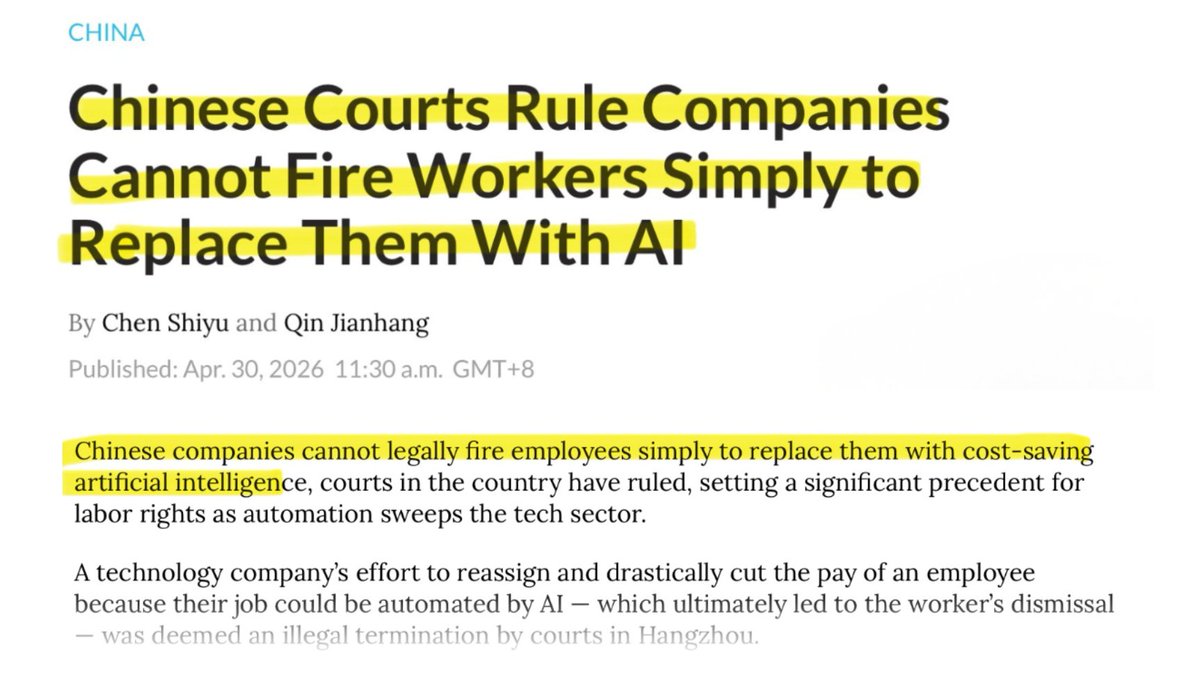
🚨 CHINA JUST MADE IT ILLEGAL TO FIRE EMPLOYEES AND REPLACE THEM WITH AI.
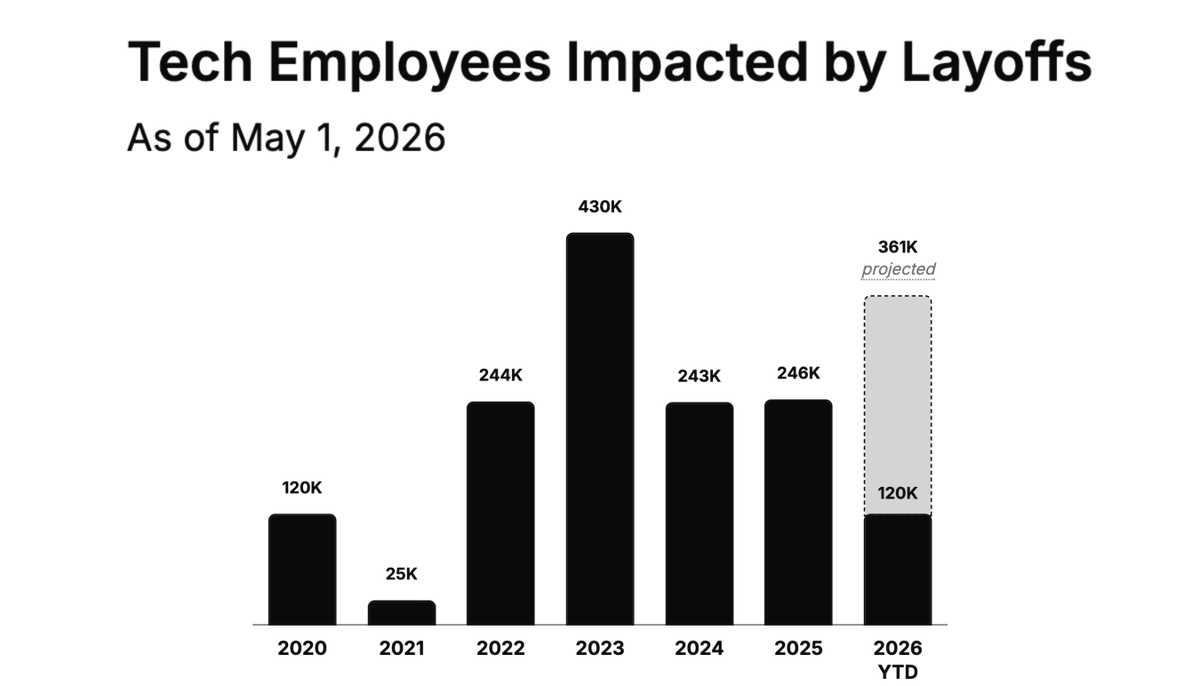
The rest of the world had cut 1.5 Million+ jobs since 2020 doing exactly that.
The Hangzhou Intermediate People's Court ruled that a tech company's decision to cut an employee's salary from 25,000 yuan to 15,000 yuan because AI could now handle his tasks, and then fire him when he refused the cut, was an illegal termination. A similar Beijing case involving a map data collector whose entire role was replaced by AI automation reached the same verdict.
Both courts ruled that adopting AI is a voluntary business decision, not an uncontrollable external event and therefore companies cannot shift the financial consequences of that decision onto employees.
The courts stated that AI replacement does not automatically justify terminating a labor contract. Companies must instead retrain workers for new roles, reassign them to suitable positions with fair compensation, or help them develop new skills.
Now look at what is happening everywhere else.
Over 100,000 employees were hit by AI-driven layoffs in 2025. In 2026 alone that number has already exceeded 61,000 in the first four months. 78,557 tech workers were laid off between January and April 2026, with 47.9% of those cuts directly attributed to AI replacing human roles.
Amazon eliminated 30,000 corporate jobs across late 2025 and early 2026 citing AI efficiency. Block cut its workforce nearly in half from 10,000 to 6,000 with CEO Jack Dorsey saying directly: "This is not driven by financial difficulty, but by the growing capability of AI tools." Atlassian cut 1,600 and Meta is about to cut 8,000.
Companies are not just replacing workers with AI, they are cutting headcount to fund AI infrastructure spending. "Companies are shifting budgets toward AI investments at the expense of jobs," according to Challenger, Gray & Christmas.
The workers losing jobs are directly funding the AI that replaced them.
An MIT simulation found AI can replace nearly 12% of the US workforce, approximately $1.2 trillion in lost salaries. Anthropic CEO Dario Amodei and Ford CEO Jim Farley have both said AI will wipe out half of all entry-level white-collar jobs in the US.
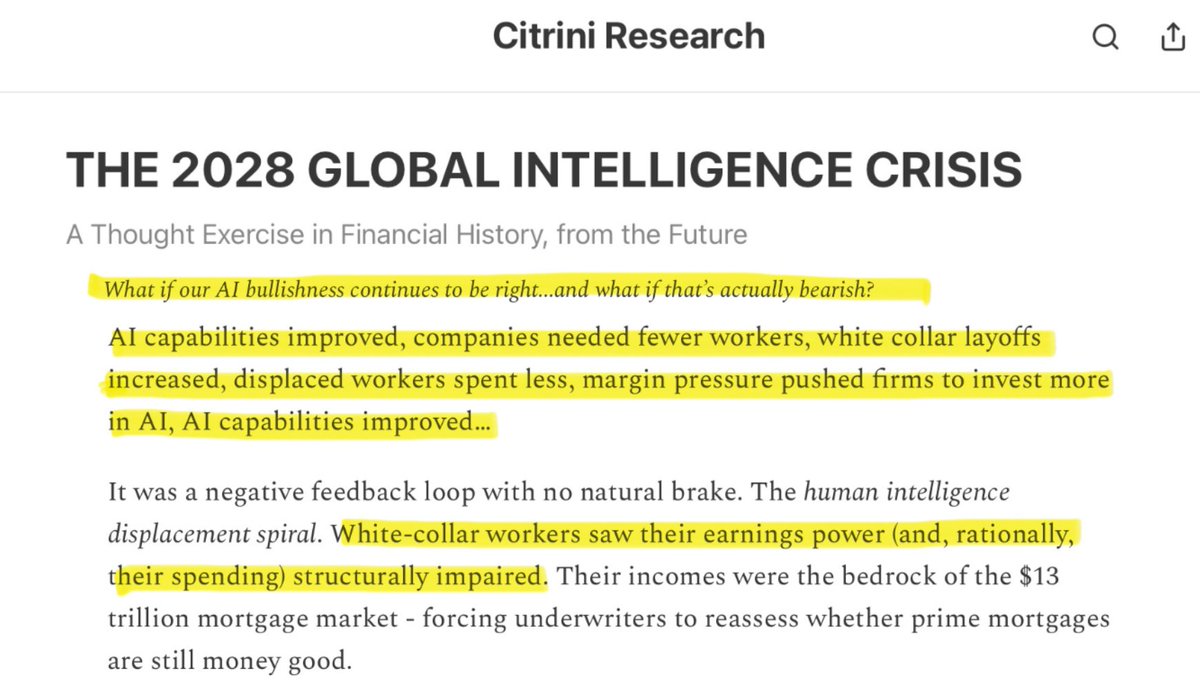
White-collar workers represent 50% of employment and drive roughly 75% of all discretionary consumer spending in the US economy. These are not peripheral workers. They are the engine of the entire consumer economy. When they lose their jobs and their salaries disappear, they stop buying houses, cars, holidays, restaurants and everything else that keeps other businesses alive.
The companies cutting these jobs are boosting their profits and funneling those profits straight back into AI compute, not back into wages, not back into consumer spending or the economy. Corporate earnings can go up, GDP numbers look fine on paper. But the money is not circulating through the real economy anymore. Economists have a name for this: Ghost GDP. Output that shows up in the national accounts but never reaches the people who actually spend it.
A University of Pennsylvania and Boston University study called this the "AI Layoff Trap", firms automate to cut costs, widespread layoffs reduce consumer spending, and since workers are also customers, overall demand in the economy starts to fall. "At the limit, this becomes self-destructive: firms automate their way to boundless productivity and zero demand."
China drew a legal line and said the cost of the AI revolution cannot be borne by individual workers. By forcing companies to retrain and reassign instead of firing, China is protecting the one thing that keeps an economy alive: consumer spending.
The people who buy things must keep getting paid or the entire system collapses on itself.
Ya está publicado el informe sobre homeopatía. (https://t.co/Zkxd9hQbfB)
🔴No hay evidencia de que tenga ningún beneficio clínico.
🔴Puede desplazar a otros tratamientos y, por ello, perjudicar la salud de quien la toma.
Afortunadamente, en España no se financia por parte del Sistema Nacional de Salud (en otros países sí, pero está en retirada y merece la pena leer en el informe algunas consideraciones sobre esos casos).
“Cinco minutos después de nacer, decidirán tu nombre, nacionalidad, religión y secta, y pasarás el resto de tu vida defendiendo desesperadamente cosas que no elegiste.”
- Arthur Schopenhauer
Buenos días. Hoy a las 9.04 am inicia el Invierno. Por lo mismo, hoy es el solsticio de invierno, cuando menos tiempo de sol tendremos y mas larga será la noche. Que para todas y todos sean maravillosas estas fiestas!