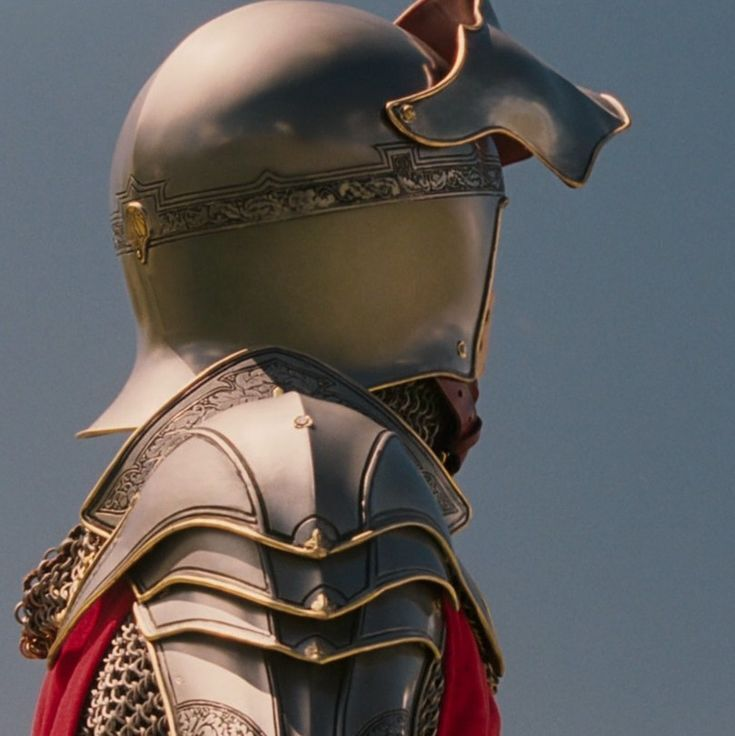
🧙♂️ ¡No te pierdas nuestro sorteo de una Caja de Coleccionista de Magic: The Gathering - The Hobbit™!
¿Cómo puedes hacerte con ella? ¡Completa todos estos pasos!
🔹 Síguenos
🔹 Haz RT
🔹 Etiqueta a dos amigos en los comentarios
Tienes hasta las 13:59h del próximo jueves 6 de agosto para participar. ¡Pero no lo dejes todo para última hora!
#magicbarcelona #mtg #mtgcommunity #thehobbit #lotr
New for financial services: ready-to-run Claude agent templates for building pitches, conducting valuation reviews, closing the books at month-end, and more.
Install them as plugins in Cowork and Claude Code, or use our cookbooks to run them in production as Managed Agents.
The etymology of military terms is fascinating.
In English, we use the word "company" to refer to two things:
-A group of 100-200 soldiers.
-A business.
The word "captain" means:
-A man in charge of a company.
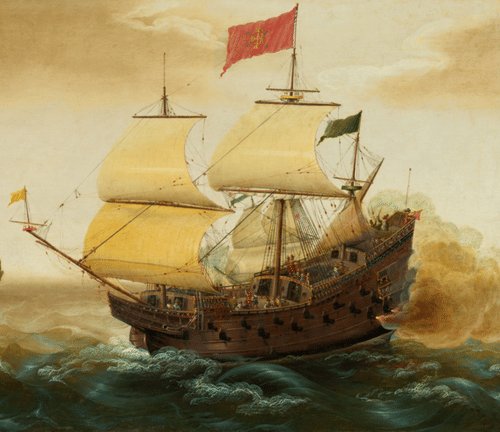
-A man in charge of a ship.
Is there a connection between all these things? Yes.
In late medieval times a company was the smallest unit that could operate semi-independently. And it was a term used often for mercenaries. Like the "Free Companies" of the Hundred Years War that got into trouble when they were unemployed.
A company was a single group of mercenaries who would fight together, live together and sign contracts as a corporate entity. A company was a military business.
This is why a business is also called a company. And the most effective businesses have a quasi-military esprit-de-corps and are united in a common purpose under a single leader.
Now, a company is commanded by a captain.
A ship is also commanded by a captain.
Because functionally they are the same. A company and a ship are the smallest units that operate independently in military terms.
A ship is its own little world. A company is its own little world.
Both are the smallest unit where one man - the captain - holds life-or-death authority, accountable only upward.
Think about that next time you look at an org chart.
Really love how Gennedy Tartakovsky and his creative team decided to give the ARC Troopers the hardest entrance imaginable for Volume 2 of the 2003 Clone Wars series
BREAKING: In a stunning moment, French President Emmanuel Macron just delivered the most powerful rebuke of Donald Trump we've seen yet. This is incredible.
HITO HISTORICO: Ursula von der Leyen confirma que la EU INC será una realidad en Europa y lo incluye en la agenda legislativa para este año.
La iniciativa denominada “EU-INC” (también vinculada al llamado “28th Regime”) es una propuesta estratégica para crear una forma jurídica societaria paneuropea estándar que permita a las startups y empresas innovadoras constituirse y operar en todos los Estados miembros de la Unión Europea bajo un único marco legal simplificado.
Como abogado en el sector tech, vengo siguiendo y apoyando esta iniciativa a nivel europeo, que por fin toma forma y se acoge por parte de la UE. Un régimen único para las empresas, en Europa, no solo reduce costes, sino que las hace muchísimo más competitivas y por supuesto, convierte eso del "mercado único" en algo más real.
El 28th regime era una demanda desde hacía años. Sus características clave son:
- Se creará “régimen opcional” paneuropeo disponible para empresas que deseen operar en toda la UE bajo un marco común.
- Se tratará de una entidad constituida digitalmente, con procedimientos rápidos y simplificados.
- Se crearán documentos de inversión estandarizados, un registro central a nivel de la UE y potenciales estándares armonizados para aspectos como las opciones sobre acciones para empleados.
Es sin duda una gran noticia pues llevábamos años luchando por poder reducir las cargas administrativas y los lastres jurisdiccionales que esto suponía a nivel corporativo.
Last quarter I rolled out Microsoft Copilot to 4,000 employees.
$30 per seat per month.
$1.4 million annually.
I called it "digital transformation."
The board loved that phrase.
They approved it in eleven minutes.
No one asked what it would actually do.
Including me.
I told everyone it would "10x productivity."
That's not a real number.
But it sounds like one.
HR asked how we'd measure the 10x.
I said we'd "leverage analytics dashboards."
They stopped asking.
Three months later I checked the usage reports.
47 people had opened it.
12 had used it more than once.
One of them was me.
I used it to summarize an email I could have read in 30 seconds.
It took 45 seconds.
Plus the time it took to fix the hallucinations.
But I called it a "pilot success."
Success means the pilot didn't visibly fail.
The CFO asked about ROI.
I showed him a graph.
The graph went up and to the right.
It measured "AI enablement."
I made that metric up.
He nodded approvingly.
We're "AI-enabled" now.
I don't know what that means.
But it's in our investor deck.
A senior developer asked why we didn't use Claude or ChatGPT.
I said we needed "enterprise-grade security."
He asked what that meant.
I said "compliance."
He asked which compliance.
I said "all of them."
He looked skeptical.
I scheduled him for a "career development conversation."
He stopped asking questions.
Microsoft sent a case study team.
They wanted to feature us as a success story.
I told them we "saved 40,000 hours."
I calculated that number by multiplying employees by a number I made up.
They didn't verify it.
They never do.
Now we're on Microsoft's website.
"Global enterprise achieves 40,000 hours of productivity gains with Copilot."
The CEO shared it on LinkedIn.
He got 3,000 likes.
He's never used Copilot.
None of the executives have.
We have an exemption.
"Strategic focus requires minimal digital distraction."
I wrote that policy.
The licenses renew next month.
I'm requesting an expansion.
5,000 more seats.
We haven't used the first 4,000.
But this time we'll "drive adoption."
Adoption means mandatory training.
Training means a 45-minute webinar no one watches.
But completion will be tracked.
Completion is a metric.
Metrics go in dashboards.
Dashboards go in board presentations.
Board presentations get me promoted.
I'll be SVP by Q3.
I still don't know what Copilot does.
But I know what it's for.
It's for showing we're "investing in AI."
Investment means spending.
Spending means commitment.
Commitment means we're serious about the future.
The future is whatever I say it is.
As long as the graph goes up and to the right.
No se cuantos Tweets, post o contenido en general quedará sin que los haga una IA.
¿Cuánto queda para que ya ni si quiera los humanos escribamos libros e historias?
Es triste.