I am looking forward to applying to Biomedical Science PhD programs in the upcoming cycle! Does anyone know of labs that are researching Clinical Progress in Cancer (BRCA) using Single Cell RNA Sequencing and Proteomics?
WAEC Nigeria can never be above the Nigerian government.
They must do the needful.
Children are crying daily, parents are panicking, and many schools are in chaos.
This may be our only opportunity to fix the mess within WAEC.
An organization run by a tyrant cannot be allowed to determine the future of millions of Nigerian children.
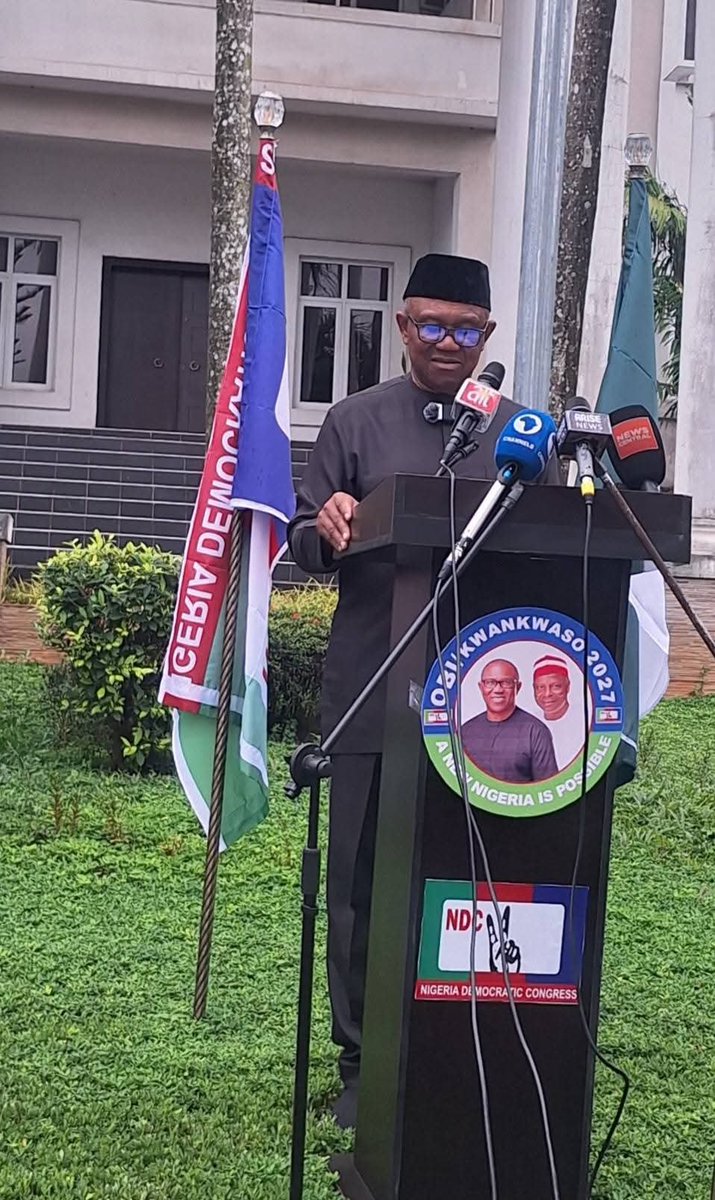
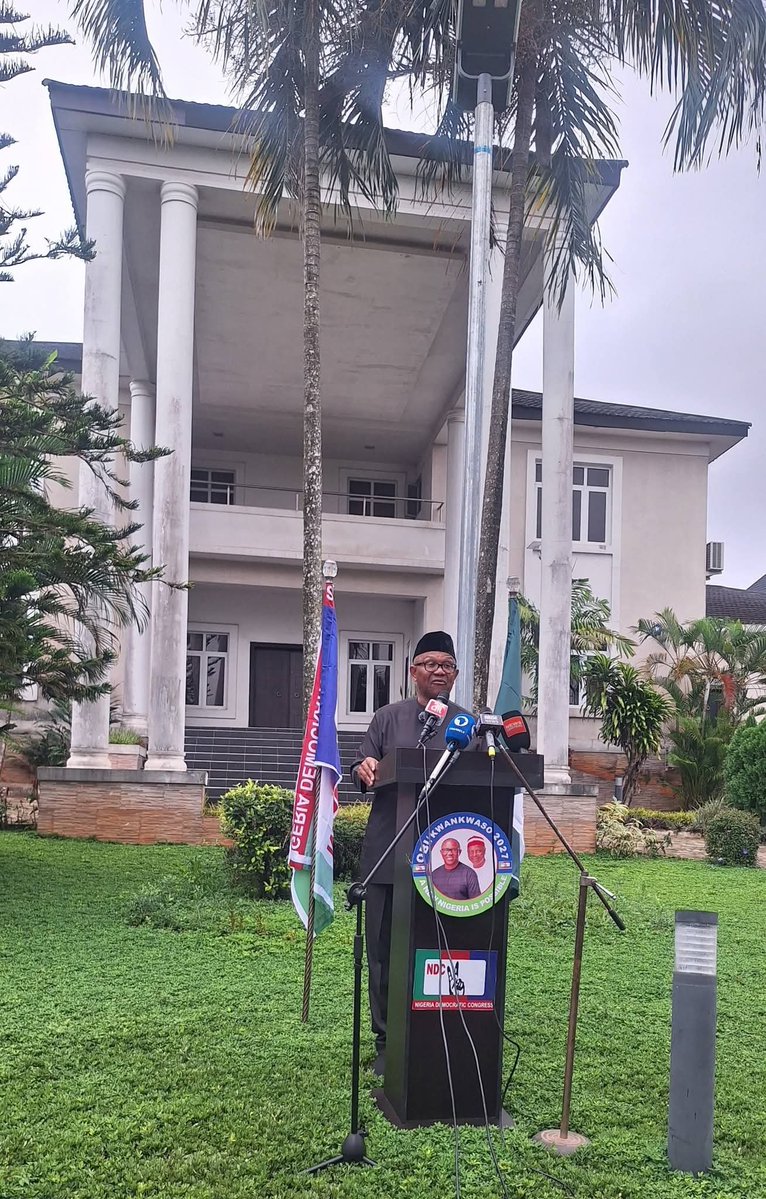
MY ADDRESS TO MARK THE COMMENCEMENT OF THE 2027 PRESIDENTIAL AND NATIONAL ASSEMBLY CAMPAIGNS
21 August 2026
Dear Compatriots,
Members of the Press,
Distinguished ladies and gentlemen,
Wednesday, 19 August 2026, marked the official start of the campaign period for the 2027 Presidential and National Assembly elections.
There is no doubt that this is a defining moment for our democracy. This moment gives Nigerians the opportunity to assess the records, ideas, and plans of those seeking their mandate to lead their country at a time of grave uncertainty in our rapidly changing world.
I consider myself quite privileged to be one of those seeking your mandate to deal with these challenges facing our country.
I enter this contest with one firm conviction: Nigeria can work, and Nigeria must work.
Nigeria faces several serious challenges. Some of them are indeed of existential proportions.
According to the IMF, 63%, or over 140 million Nigerians, live at or below the national poverty line, while humanitarian agencies estimate that 35 million people will need food assistance during the 2026 lean season. About 3.6 million Nigerians remain internally displaced, largely because of conflict and insecurity. Each year, millions of young people enter the labour market, yet too many struggle to find productive opportunities. Weak infrastructure, unreliable power, insecurity, and the excessive cost of doing business continue to burden households and constrain enterprise.
These are more than statistics. They reflect the daily realities of Nigerian families, farmers, workers, students, and businesses.
Yet I do not believe Nigeria lacks the ability to overcome these challenges. We have the people, resources, market, talent, and enterprise. What we must do now is turn these strengths into security, productivity, and shared prosperity.
LEADERSHIP MUST DELIVER RESULTS
My successful private-sector experience, studies in institutions of repute on policy and business matters, and my service as Governor of Anambra State have shaped my understanding of public leadership. Government must manage resources responsibly, set clear priorities, and measure the outcomes of its decisions. Public office is not a reward; it is a responsibility to the people.
In Anambra, I prioritised the foundations of long-term development: education, healthcare, infrastructure, fiscal discipline, and institutional capacity. I do not present that record as perfect, but as an experience from which Nigerians can draw their own conclusions.
Senator Rabiu Musa Kwankwaso brings a different but complementary governing experience.
As Governor of Kano State, he focused strongly on education, technical training, scholarships, infrastructure, and human-capital development. His administration’s investments in education and skills showed an understanding that the people are a state’s most important long-term resource.
Our experiences are different, but our conclusion is the same: Nigeria must invest in its people and manage public resources with discipline.
BUILDING AN ECONOMY THAT WORKS
Nigeria needs more than reactive reforms. We must focus on the questions that matter:
Are Nigerians better off than they were four years ago? Can they afford food, education, and healthcare? Can businesses produce, expand, and create jobs? Can young people find productive work? Can farmers work safely and get their produce to market?
I have been thinking about something lately, and the more I think about it, the more disturbing it becomes.
A lot of Nigerians became poor without doing anything wrong.
They didn’t stop working. They didn’t become lazy. They didn’t suddenly become irresponsible.
They simply woke up one day and realised that the money they had worked for could no longer buy the things it used to buy.
Think about someone earning ₦100,000 a month.
The person still wakes up early every morning, goes to work, puts in the same hours, probably works even harder, gets promoted occasionally and does everything society says a responsible person should do.
Yet every year, that person seems to be able to afford less.
At some point, ₦50,000 could buy a reasonable amount of food for the house. Today, you can enter the market with the same ₦50,000 and genuinely wonder where the money went.
Nothing happened to you.
The economy happened to you.
And I think this is something we don’t talk about enough.
Imagine working hard for years, only for circumstances completely outside your control to quietly reduce the value of everything you have worked for.
You didn’t lose your job.
You didn’t lose your salary.
But somehow, you lost your standard of living.
That is poverty too.
And this is why I struggle with the way we sometimes discuss palliatives.
Of course, when people are hungry, you must find ways to help them immediately. There is nothing wrong with providing temporary relief.
But surely, the bigger question should be:
Why did millions of working Nigerians suddenly need palliatives in the first place?
If a man could comfortably buy a bag of rice from his salary a few years ago and today he needs government assistance to buy that same bag of rice, giving him rice may solve today’s hunger.
But it has not solved the actual problem.
The real problem is that his labour has lost value.
And perhaps that is what we should be obsessed with fixing.
How do we make the Nigerian worker’s income valuable again?
How do we make ₦100,000 buy more next year, rather than less?
How do we make food cheaper by producing more?
How do we reduce the cost of energy and transportation?
How do we build an economy where salaries can actually keep up with the cost of living?
Because when I think deeply about it, perhaps one of the greatest things a government can do for its people is not to keep giving them money.
It is to build an economy where the money they earn has value.
There is dignity in being able to take care of yourself from the product of your own labour.
There is dignity in a teacher being able to feed a family from teaching.
There is dignity in a nurse being able to pay rent from nursing.
There is dignity in a young person working an honest job and gradually seeing life improve.
People should be able to look back after five years of hard work and say, “My life has become better.”
Not, “I earn more money today, but somehow I can afford less.”
That is the part that keeps bothering me.
Millions of Nigerians are not asking to become millionaires overnight.
They just want hard work to make sense again.
And maybe that should be one of the simplest ways we measure whether our economy is actually working:
Is the ordinary Nigerian who works hard becoming progressively better off, or progressively poorer?
Everything else is secondary.
Yesterday morning, these children from Abor village in Enugu State gathered to learn “Place Value” in Mathematics. The turnout became so large that we now have to create a daily timetable for different groups.
These are the same children the community had been saying were not serious about their studies for years. Yet, we changed that narrative after just one encounter.
Before this holiday ends, every child in this village will have a strong foundation in Mathematics.
And here’s the most interesting part: no teacher is standing in front of the class. We only have a supervisor to maintain order while the children learn through world-class lessons delivered in the most engaging and exciting way.
Children are the same everywhere.
The difference is not intelligence.
The difference is access.
These 3 boys tied at the 2026 South East Maths Olympiad before Onwubiko Chimdiebube won by one mark in the sudden-death round.
Their checkpoint results are out, and look at how they smashed these exams with outstanding results.
Azie Kosisochukwu got a perfect score in Maths.
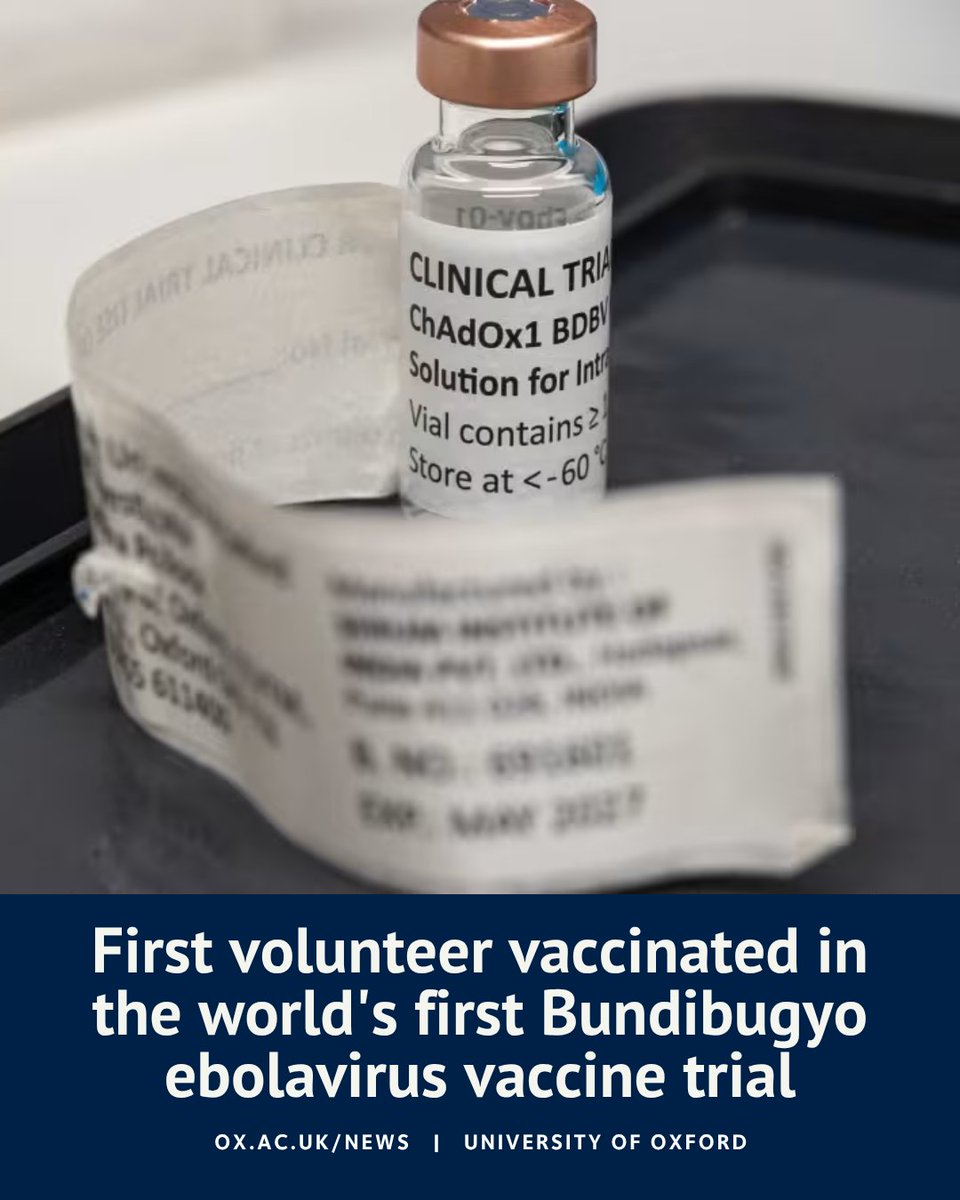
NEW: Oxford’s @OxfordVacGroup has today successfully vaccinated the first volunteer in the world’s first clinical trial of a vaccine designed to protect against Bundibugyo ebolavirus (BDBV).
Find out more ⬇️
https://t.co/2pMJqXyLZx
I struggle to understand public officials who proudly celebrate sending their children abroad while the schools they oversee are collapsing.
It's not about whether they can afford it. They have every right to spend their money however they choose.
It's about emotional intelligence and leadership.
Publicly celebrating your escape from a system you are responsible for fixing sends the wrong message to millions of families who have no such option.
The goal of public service shouldn't be to build an exit plan for your own children.
It should be to build a country where every parent's child has access to an education so good that leaving becomes a choice, not a necessity.
That's the standard we should demand.
Why the voter registration exercise should be extended.
As we continue to encourage Nigerians to participate actively in our democracy, I respectfully appeal to INEC to consider extending the voter registration window to the latest practical date that still allows adequate time for the preparation of a credible voters’ register before the 2027 general elections.
Every day, more young Nigerians attain the age of 18 and become constitutionally eligible to vote. They are not just our future; they are stakeholders in our present. It would be unfortunate if many of them were denied the opportunity to exercise their civic responsibility simply because the registration process closed long before the elections.
Moreover, this position is legally supported by the High Court judgment delivered on 22 November 2022 in Anaja Salmat & 3 Others v. INEC (Suit No. FHC/ABJ/CS/1342/2022). In that decision, the Federal High Court held that voter registration should continue until 90 days before a general election to protect the constitutional voting rights of eligible Nigerians.
I appreciate the enormous responsibility placed on INEC to deliver free, fair, and credible elections. I also recognise the need for sufficient time to clean the register and make the necessary logistical preparations. However, our electoral process should, as much as possible, maximise participation rather than limit it.
A democracy is strengthened when every eligible citizen has the opportunity to be heard. I therefore urge INEC to adopt a registration timeline that protects the integrity of the process while ensuring that no eligible Nigerian, especially our young people, is unnecessarily disenfranchised. -PO
I've spent the last several months researching, travelling, and studying why countries like Singapore, Netherlands, United Kingdom, Canada and Finland built some of the world's best public education systems.
One thing became clear:
Nigeria doesn't just have an education problem. We have a school management problem.
Today, I'm releasing a white paper that proposes a new way to transform our public schools, keeping them publicly owned while introducing world-class management and accountability.
This isn't about politics.
It's about giving every Nigerian child the opportunity to attend a world-class public school.
I hope this sparks one of the most important conversations our country has had about education.
Read it. Criticise it. Improve it. Share it.
If we get education right, we change Nigeria.
Here is the link https://t.co/EViU52FKFi
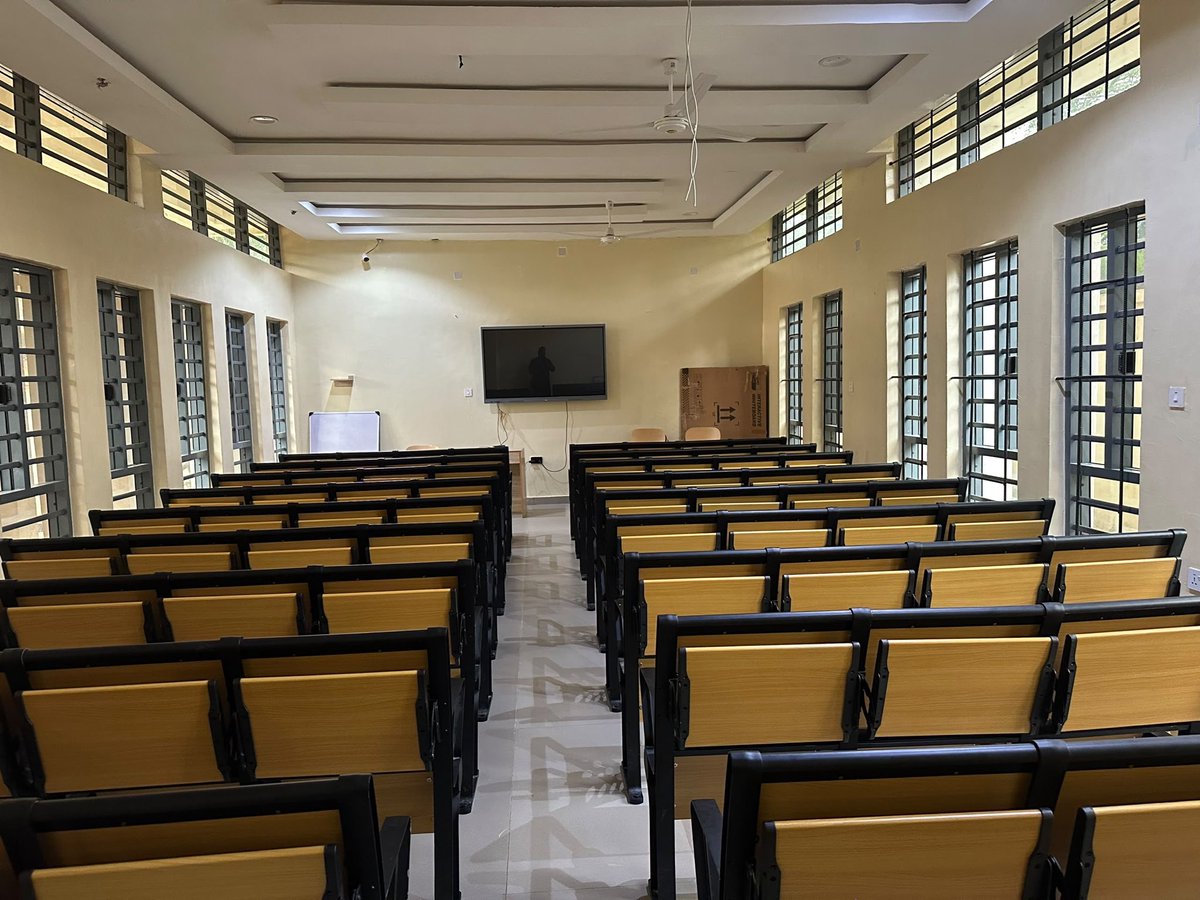
Today, the T.N. Onodingene Family of Abor, Udi LGA, Enugu State, made this facility available for free to serve as one of the 2027 South East Mathematics Olympiad Preparatory Centre and also one of the official examination venues.
The facility features a 60-computer CBT centre, 24/7 internet access, a physical library, an 80-seat conference hall, and three dedicated workstations.
Students from any part of the country are welcome to use the facility free of charge.
This is the kind of investment in education that transforms lives and creates opportunities for generations to come.
We hope to see more families, individuals, organizations, and communities make similar contributions across the South East and beyond.
Please join us in appreciating the T.N. Onodingene Family for this remarkable act of generosity and their unwavering commitment to advancing education and empowering the next generation.
We have been invited to Singapore for 2027. We will challenge their best students in Maths.
The winners of the 2027 South East Maths Olympiad will challenge the best in Singapore in 2027. 56 other countries will join too.
I like how the world is now taking an interest in our children.
I am benchmarking our education against that of Singapore, Finland, Shanghai, China, Canada, and the US.
This is how we can move from being a third-world country to a first-world country.
The future is looking exciting.
I've been thinking about this almost every day.
What would it actually take to ensure every single child in the South East is in school?
I don't mean reducing the number of out-of-school children.
I mean ZERO.
I'm setting myself a target:
Zero out-of-school children in the South East within the next 24 months.
And within 4 years, I want us to drive illiteracy as close to zero as possible.
I know it sounds ambitious.
There are children out of school because of poverty. Some because of culture. Some because of religion. Some because they have to work. Others because there are barriers we've not even identified yet.
But I genuinely believe this is a problem we can solve if we stop treating it as someone else's responsibility.
So I'm asking for your help.
If you had to achieve this, what would you do?
I want practical ideas. Bold ideas. Crazy ideas. Lessons from other countries. Community-based solutions. Technology. Policy. Anything.
I'll read every suggestion.
If we can solve this in the South East, we'll create a blueprint that the rest of Nigeria and maybe even Africa can learn from.
The news of the abduction of a school principal, students, and a NECO official in Kogi State while the students were writing their examination is both heartbreaking and deeply troubling. That innocent children can no longer go to school, study, or sit for a national examination without the fear of criminal violence is a stark reminder of how far insecurity has eroded the sanctity of our educational institutions and the safety of our citizens. This is happening at a time when education is our most needed asset for development and growth.
Our schools must never become theatres of fear; they should symbolise hope and the promise of a better future, not terror and uncertainty.
I call on the relevant security agencies to act with urgency, deploy every available resource, and ensure the safe and unconditional rescue of all those abducted. At the same time, government at all levels must take deliberate steps to strengthen security around our schools and restore public confidence in our education system.
My thoughts and prayers are with the affected families, the school community, and the people of Kogi State. We cannot continue to normalise these recurring tragedies. A nation that cannot guarantee the safety of its children is mortgaging its future.
A New Nigeria is POssible. -PO
Roadmap to a New Nigeria That Is Possible – Part II
Education and Healthcare: The Foundation of a Renewed Nigeria
Recall that on July 1st, in Part 1 of "My Vision for a Productive and Prosperous Nigeria," I outlined the broad framework of my proposed roadmap for national renewal. In it, I emphasised that the transformation of Nigeria must begin with rebuilding our human capital through quality education and healthcare, supported by reforms in Technical and Vocational Education and Training (TVET), character and civic education, and strategic investments that will move our nation from a consumption-driven economy to a production-driven one. I promised to follow up with other parts in the coming weeks and months.
Today, July 16th, in the middle of July, I wish to expand on these two critical pillars - education and healthcare - because they are the bedrock upon which every prosperous nation is built. They are the cornerstones of the foundation that will ensure that a son of nobody can become somebody and remove many from the ranks of the disaffected who often become tools in the insecurity challenges confronting us.
Evidence from around the world shows that quality education and accessible healthcare are among the clearest distinctions between thriving nations and lagging ones. Princeton University Nobel Prize-winning economist Angus Deaton highlights this reality in his book, “The Great Escape: Health, Wealth, and the Origins of Inequality.”
Nothing, therefore, could be further from the truth than the claim by some young people that “education is a scam.” Education, when combined with good health, provides the ladder for individual upward mobility and drives economic growth for the nation.
We must become more intentional about aligning education with our national priorities, as Singapore did, and challenge our country to value education in the same way Deng Xiaoping repeatedly urged China to do from 1978 onwards, with the remarkable transformation we see today.
We will work through commissions that strengthen collaboration among the tiers of government, ensuring that primary education is domiciled at the community and local government levels, with strong parental involvement and curricula that are sensitive to local economic factor endowments and the value chains derived from them.
State governments will be supported to expand high-quality Technical and Vocational Education and Training (TVET), as well as general secondary education, through targeted grants and incentives.
We are also developing schemes that will enable universities to focus more deliberately on specialised areas of teaching and research, making them globally competitive while producing a workforce equipped for the demands of the future.
A NEW Nigeria is POssible. -PO
This is the sickbay and a classroom in a public school in Abia State.
19 more like this are currently being built, and education is completely free.
Education is taking back its place in our society.