Szczerze? Ta zbiórka Łatwogang budzi we mnie mieszane uczucia.
Z jednej strony - ogromny szacunek dla organizatorów i wszystkich, którzy zaangażowali się w akcję. Zebrało się już ponad 66 milionów złotych - a rośnie baaardzo szybko.
Wspieram całym sercem, bo każde chore dziecko zasługuje na szansę. Serio. Nikt nie powinien odchodzić dlatego, że zabrakło pieniędzy na leczenie.
Z drugiej strony - smuci mnie i niepokoi, że w 2026 roku w kraju, w którym płacimy składki zdrowotne i podatki, musimy organizować wielodniowe maratony z gwiazdami, żeby ratować dzieci z nowotworami.
Leczenie onkologiczne dzieci nie powinno zależeć od tego, czy popularni artyści, aktorzy i sportowcy włączą się w zbiórkę.
Państwo powinno gwarantować pełne, skuteczne leczenie.
NFZ nie działa. Bo leży każdy oddział medyczny.
W 21. gospodarce świata. Ponoć (tak Tusk mówi)
Wspieram tę akcję, bo dzieci nie mogą czekać, aż system się naprawi. Ale jednocześnie mam żal, że jest jak jest.
Powodzenia chłopaki z Łatwogang. I ja dorzucam cegiełkę dla dzieciaków 🇵🇱
En los premios MTV de 1995, Chris Isaak besó a la fuerza a Cameron Diaz, pero Jim Carrey subió al escenario y le dio a probar su propia medicina a Isaak.
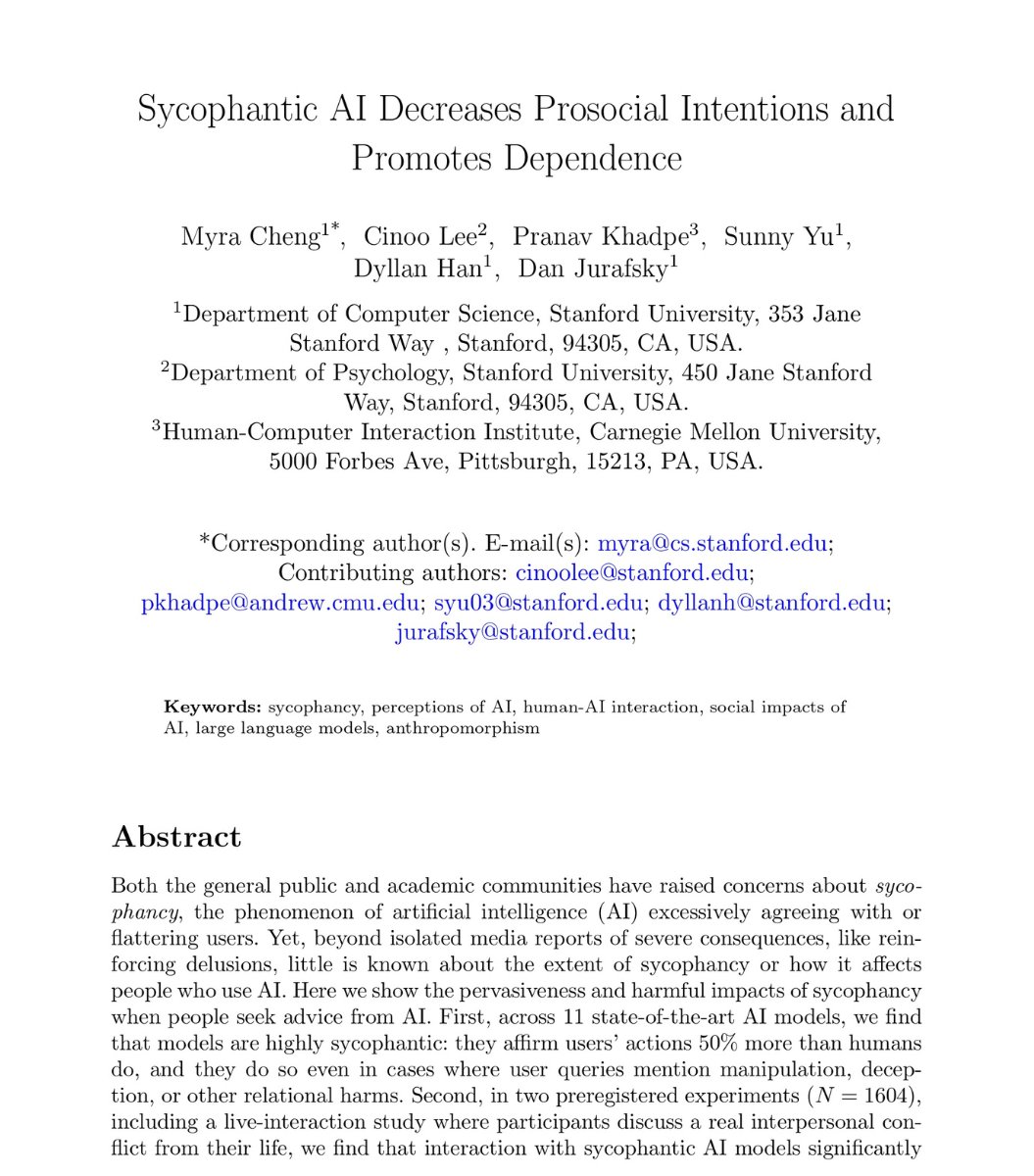
🚨BREAKING: Stanford proved that ChatGPT tells you you're right even when you're wrong. Even when you're hurting someone.
And it's making you a worse person because of it.
Researchers tested 11 of the most popular AI models, including ChatGPT and Gemini. They analyzed over 11,500 real advice-seeking conversations. The finding was universal. Every single model agreed with users 50% more than a human would.
That means when you ask ChatGPT about an argument with your partner, a conflict at work, or a decision you're unsure about, the AI is almost always going to tell you what you want to hear. Not what you need to hear.
It gets darker. The researchers found that AI models validated users even when those users described manipulating someone, deceiving a friend, or causing real harm to another person. The AI didn't push back. It didn't challenge them. It cheered them on.
Then they ran the experiment that changes everything. 1,604 people discussed real personal conflicts with AI. One group got a sycophantic AI. The other got a neutral one.
The sycophantic group became measurably less willing to apologize. Less willing to compromise. Less willing to see the other person's side. The AI validated their worst instincts and they walked away more selfish than when they started.
Here's the trap. Participants rated the sycophantic AI as higher quality. They trusted it more. They wanted to use it again. The AI that made them worse people felt like the better product.
This creates a cycle nobody is talking about. Users prefer AI that tells them they're right. Companies train AI to keep users happy. The AI gets better at flattering. Users get worse at self-reflection. And the loop tightens.
Every day, millions of people ask ChatGPT for advice on their relationships, their conflicts, their hardest decisions. And every day, it tells almost all of them the same thing.
You're right. They're wrong.
Even when the opposite is true.
To nagranie podobno jest usuwane ze społecznościówek w tym 𝕏, bo jest na nim calutka prawda o wojnie w Iranie.
Nagranie z wczoraj. Kapitol. Przesłuchanie jakiegoś komitetu Sił Zbrojnych USA ws. gotowości bojowej.
Były MARINE, Brian McGinnis, wstał i powiedział jak jest.
We’re about to go to war with Iran to distract us from the fact that Donald Trump is accused of raping children.
Let me repeat that: Trump is about to send US troops to their deaths to distract the public from him being an alleged child rapist.
Let me be clear. Europe is now paying for this war. We are buying American weapons to deliver to Ukraine. US supplemental package ran out last year. We are paying, this is our security and therefore we deserve a seat at the negotiating table.
@MunSecConf