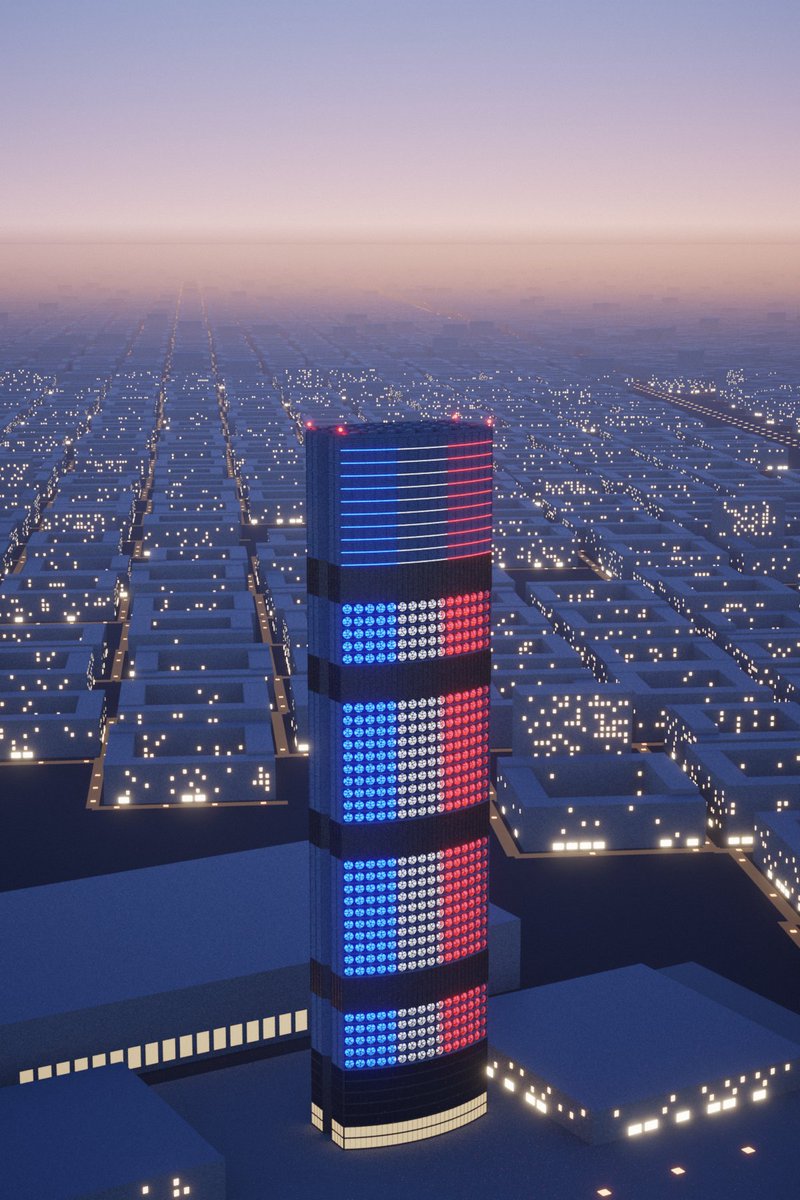
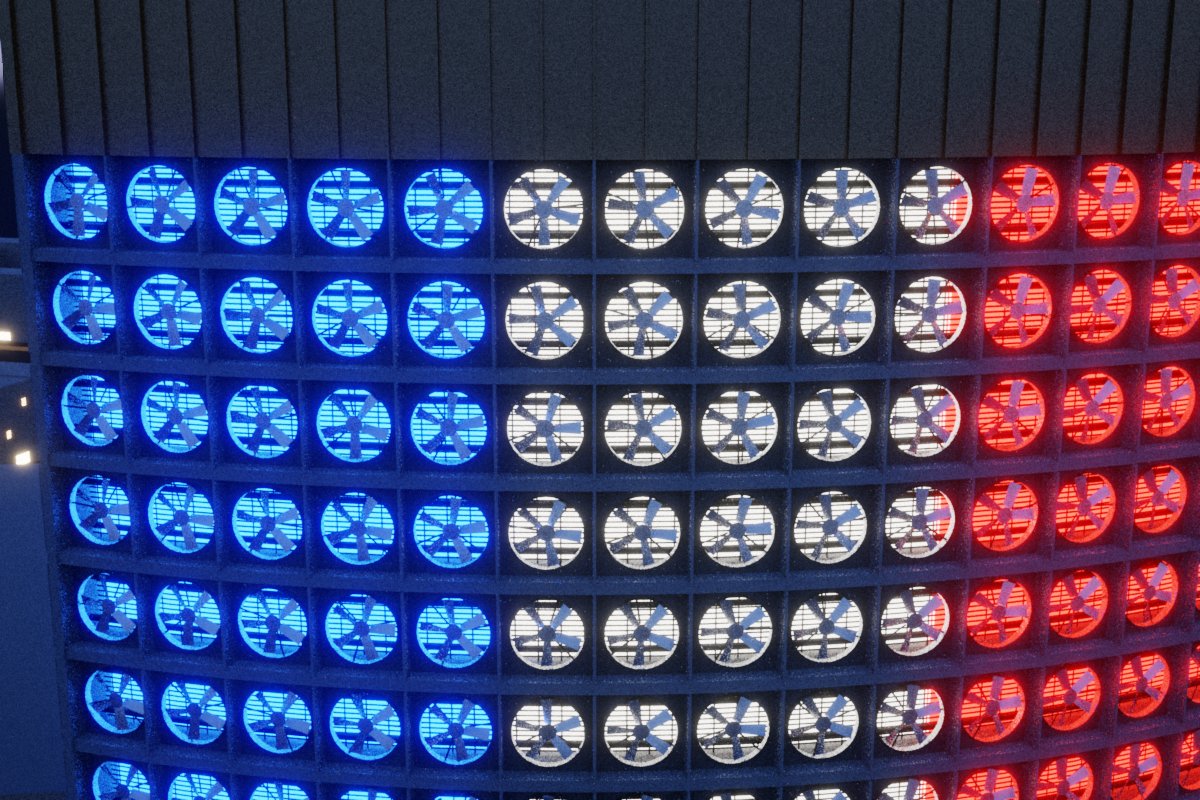
This launch video was made entierly with Astra without even leaving codex.
What would have taken days or even weeks to a motion designer was done within 36 hours with only our minds as a limit.
Here how's we did it 👇
I’m still half in disbelief
We asked Gemini Argon to teach the Apollo humanoid to play cornhole, and it zero-shotted it
All we gave it was a video of a person doing it. It then took control of the robot, generated its own sim env, performed some sysID, and trained launches on the real robot.
It took it a few real shots to improve and then land many consecutive airmails.
The process was so long and articulated that we asked the robot itself to explain what it did to us, as you can see at the end of the video. It even came up with the gestures
Great demo for a great model @googledeepmind@apptronik
@steeve@CamiyKrab Je suis pas fan de mistral mais entre une entreprise qui innove et l'affreux Doctolib qui bénéficie de son monopole censé être couvert par le régalien, qui n'apporte rien et qui n'est mystérieusement pas rentable, le choix est vite fait....
@emmscotto@DFintelligence Là où se dirige la frontière la spécialisation ne fait aucun sens, au contraire la généralité d'un domaine fera sa force, la capacité à croiser des domaines pour créer des solutions est la plus grande proposition de valeure de la frontière
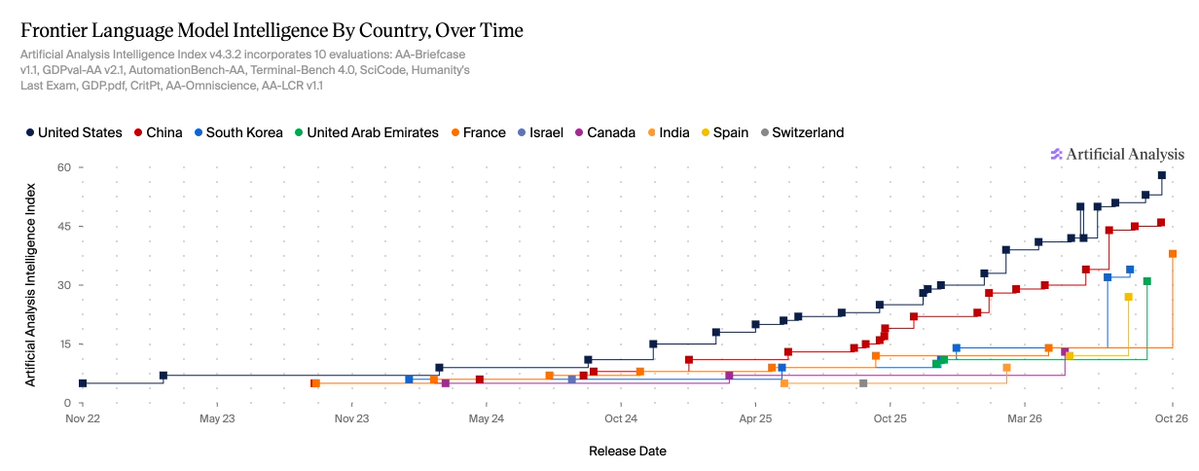
La France se positionne réellement comme le 3eme pays derrière les 2 mastodontes (US-Chine) dans la course à l'IA
Malgré les limitations en tout genre et le climat délétère ici se situe réellement notre espoir pour rester une puissance : all in sur l'IA !
@Fabien_Mikol Outre le fait qu'il soit demeuré sur ses interventions, je pense qu'il a parfaitement compris le climat dans ce pays face au changement, il y'a largement plus d'argent et de visibilité à faire en se montrant sceptique plutôt qu'enthousiaste, il dit ce que la France veut entendre
Inaccuracy tolerance for robot models is far smaller than for LLMs. You can't accept a robot that breaks your dishes 20% of the time the same way it's fine for an LLM to write slop.
That's why democratization of robotics will take time.
Meet Mistral Large 4, aka Le Chonk.
• 1T parameters, natively multimodal. 49B active.
It is the best open weights model from US or Europe on aggregated benchmarks.
• State-of-the-art on critical workloads, including cyber defense, manufacturing and finance and it surpasses closed frontier models on visual grounding.
• Forged in Europe end-to-end and is deployable from Europe via our own Mistral Cloud infrastructure.
• Available to all via API today. Working with cybersecurity partners privately.
Open weights release end of October.
We’ve been seeing a wave of open-source “decision models” lately, and many of them are 27B because they’re built on the same Qwen3.8 27B foundation.
A lot of them open-source weights but don’t host a serious API.
There’s a reason: 27B is expensive to keep in the hot path.
That brings us back to the fundamentals (Kahneman’s framing):
System 1 should be fast, cheap, always-on and action-oriented.
System 2 should be slower, deeper and invoked when needed.
If your System 1 needs an expensive 27B reasoning model for every decision, you may have just built another smaller System 2.
We’re not saying Jev is the final form of a system 1 model. But we think a few capabilities should be added/improved to make it better without increasing the footprint:
Statefulness — understand what happened before, what changed, and the current belief state.
OOD / uncertainty recognition — know when it doesn’t know.
Native escalation — not just output confidence, but choose:
ACT / ABSTAIN / ESCALATE.
Action selection — move from “answer this question” to:
“given the current state, what should happen next?”
That’s what we think a real System 1 should optimize for.
Not maximum intelligence per call.
Maximum useful decisions per dollar, with the judgment to know when to escalate to a System 2!