❄️A new study has been carried out by @isardSAT with the Institut de Ciències del Mar @ICMCSIC.
Its compares machine learning algorithms with moorings' data and shows that such approaches could improve SMOS #seaice thickness retrievals.
More 👉 https://t.co/yAGBE3f1LC
In #RAQRSVII we presented a methodology based on #MachineLearning that provides high accuracy & improved sea ice thickness estimates from
@SMOS_satellite data. 🛰️🧊
It has been developed together with @ICMCSIC
& validated against in situ data from @WHOI.
🧊A new methodology based on #MachineLearning provides high accuracy & improved sea ice thickness estimates from @SMOS_satellite data.
It has been validated against in situ data from @WHOI's Beaufort Gyre Exploration Project.
Check it out on @SMOS_satellite blog 👇
@ICMCSIC
📢 New release of our regional SSS Product for the Arctic. For more details on the changes of the new release, visit our blog ⬇️
https://t.co/BNajTS1cty
@ICMCSIC@teledetect@PolarCSIC@CSIC_VAACT
📢Publication alert: New publicaction at @IEEE_GRSS . The study proposes a machine learning based methodology for estimating Arctic thin sea ice thickness (up to 1 m) from brightness temperature measurements of SMOS.
🪢https://t.co/NUpP44Nkfv
@ICMCSIC@teledetect@PolarCSIC
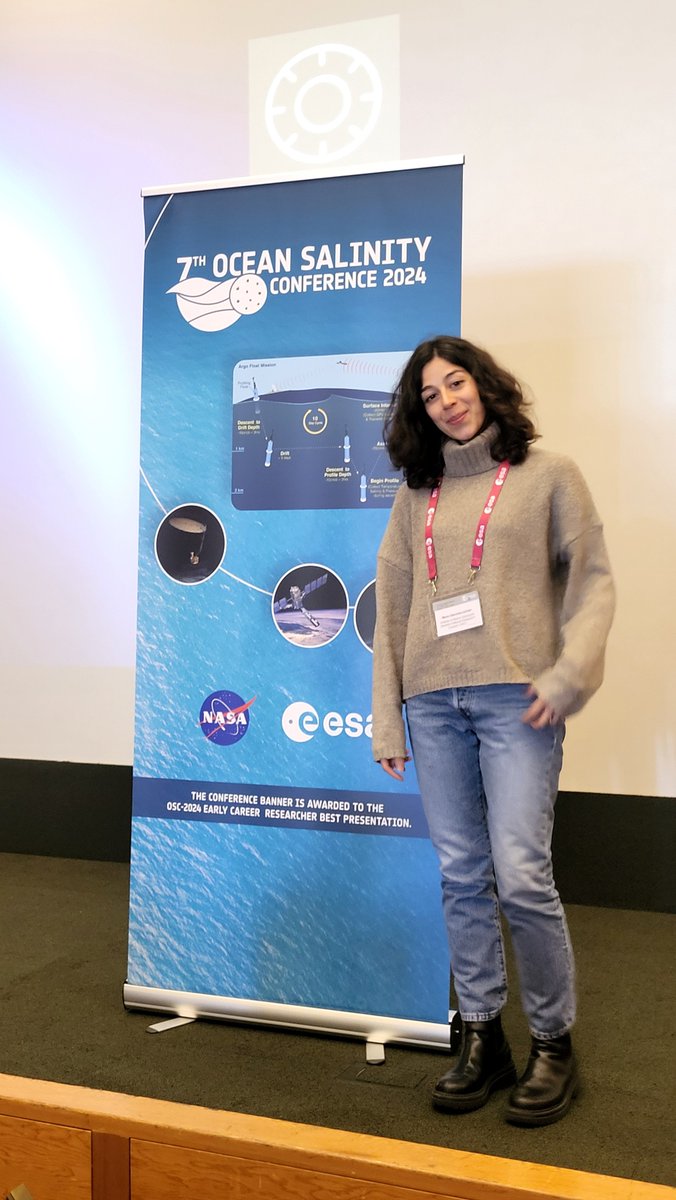
Last week, our college María Sánchez-Urrea received the Best Early-Career Researcher Presentation Award at the 7th Ocean Salinity Conference! Congratulations María!
#SMOS#SSS @ICMCSIC@teledetect
New video in @66graus: https://t.co/rw6M5ytO0G
Talking about polar geoengineering projects and its scientific, and social, implications to combat climate change.
Climate change is starting to alter how humans keep time
The effect of melting polar ice could delay the need for a ‘leap second’ by three years https://t.co/ndyPkVHB3j
🧊Climate change will reshape Earth's #ice coverage as we know it today.
@esa's CRISTAL mission will monitor ice surfaces in high resolution, detecting changes in the order of cm!
At @isardSAT we are working to bring this mission into reality 👇(1/4)
Video credit: @esa
🚨New Review!
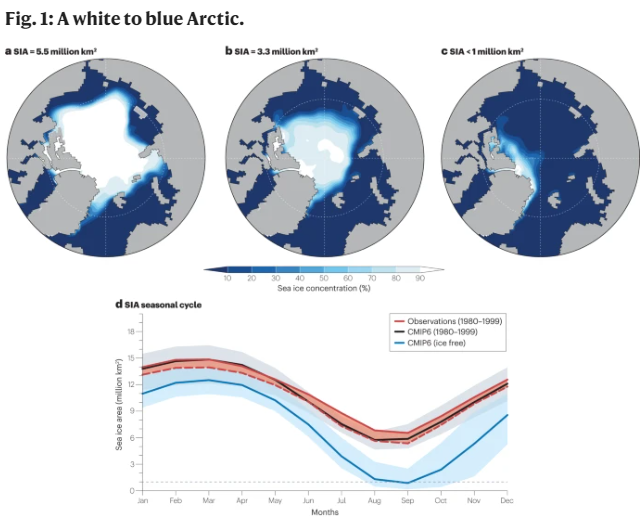
Projections of an ice-free Arctic Ocean
The earliest ice-free conditions in the Arctic could occur in 2020–2030s under all emission trajectories & are likely to occur by 2050
https://t.co/iREWFVKgCQ @SeaIceClimate @CUBoulderATOC@INSTAAR@CUBoulder@NCAR_CGD
🚨New Review!
Projections of an ice-free Arctic Ocean
The earliest ice-free conditions in the Arctic could occur in 2020–2030s under all emission trajectories & are likely to occur by 2050
https://t.co/iREWFVKgCQ @SeaIceClimate @CUBoulderATOC@INSTAAR@CUBoulder@NCAR_CGD