This is not a photograph.
It’s called A Stream and a Deer, and it was painted by the Danish artist Peder Mørk Mønsted.
Look closely at the way the stream leads your eye into the forest, reflecting the trees and patches of light along the way. Mønsted had an extraordinary ability to observe nature, especially the way light changes everything around it.
And then there are the deer, scattered through the landscape, almost disappearing among the trees.
That's precisely what I love about this painting: nothing feels staged or dramatic, it feels like you have simply wandered into the woods and caught a moment that was already happening, with the water moving, the light shifting, and the deer completely at home in it...
On #InternationalCoffeeDay, take a closer look at how coffee DNA is shedding light on what genetic factors contribute to the plant’s characteristics. ☕ https://t.co/7pDvAmT0uw
The number of ‘fake’ doctors and nurses just in California is mind-boggling. We have now confirmed over 3,780 nurses and physicians who very well appear to have counterfeit degrees from India.
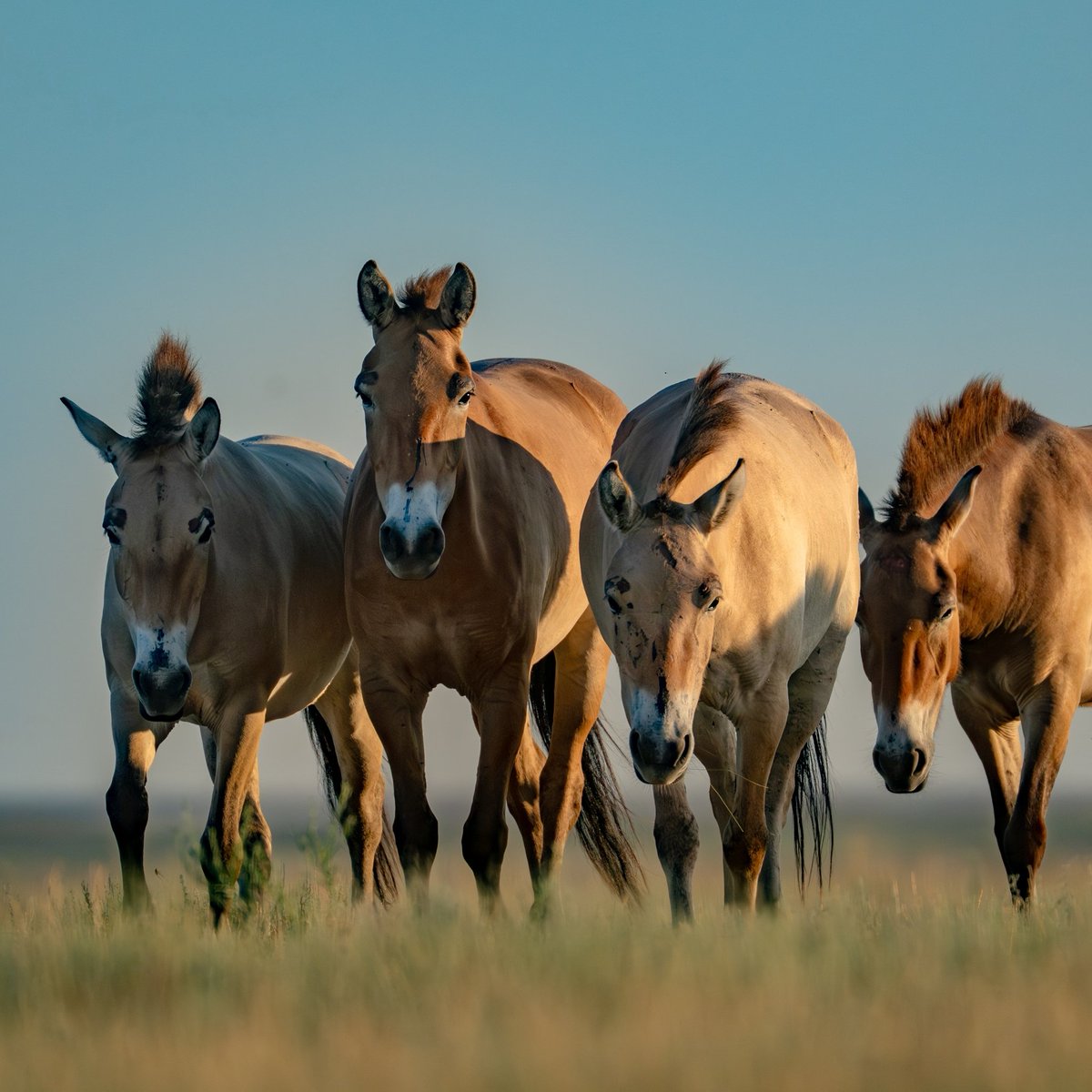
World's last truly wild horse returns to Kazakhstan after 200 years
6 Przewalski's horses were reintroduced to Kazakhstan last year, 5 more were released this May, and another 8 have now arrived from Prague and Berlin, bringing the restoration program's total to 19 horses
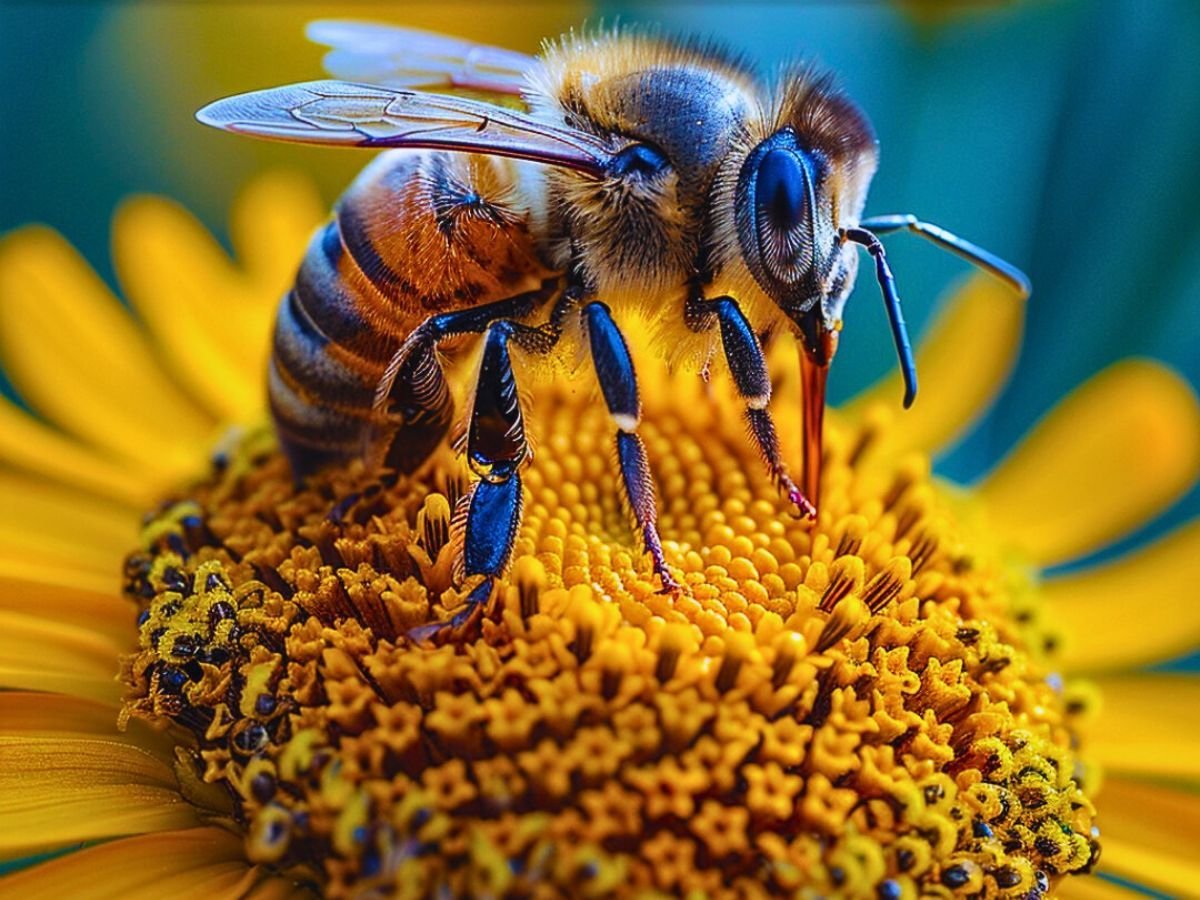
🚨: BEES ARE OFFICIALLY DECLARED THE MOST IMPORTANT LIVING SPECIES ON THE PLANET 🌍
• They allow plants to reproduce 🌱
• They form the basis of our food 🍎
• They support the entire food chain 🐝
MICROSOFT’S AI DATA CENTER BOOM IS SET TO DRIVE WATER USE SHARPLY HIGHER THIS DECADE, UNDERMINING ITS 2030 “WATER POSITIVE” PLEDGE AND INTENSIFYING PRESSURE ON ALREADY WATER-STRESSED REGIONS WORLDWIDE.
FORD CEO SAYS HE HAS 5,000 OPEN MECHANIC JOBS WITH 6-FIGURE SALARIES FROM THE SHORTAGE OF MANUALLY SKILLED WORKERS: ‘WE ARE IN TROUBLE IN OUR COUNTRY’
“We are in trouble in our country. We are not talking about this enough,” Farley told host Monica Langley. “We have over a million openings in critical jobs, emergency services, trucking, factory workers, plumbers, electricians, and tradesmen. It’s a very serious thing.”
Full article:
https://t.co/XijlczxzDj
This footage from inside the eye of Category 5 Hurricane Melissa might be the most jaw-dropping video ever captured of a hurricane’s eye, showcasing the infamous “stadium effect."
If our retro-futuristic diner turns out well, which I think it will, @Tesla will establish these in major cities around the world, as well as at Supercharger sites on long distance routes.
An island of good food, good vibes & entertainment, all while Supercharging!
Denk je werkelijk dat windturbines groene en duurzame oplossingen zijn?
Bekijk deze korte video van minder dan 3 minuten en bedenk:
Hoeveel grondstoffen erin gaan.
Hoe deze enorme industriële gevaartes worden geproduceerd.
Hoeveel CO₂ er vrij komt bij productie en plaatsing.
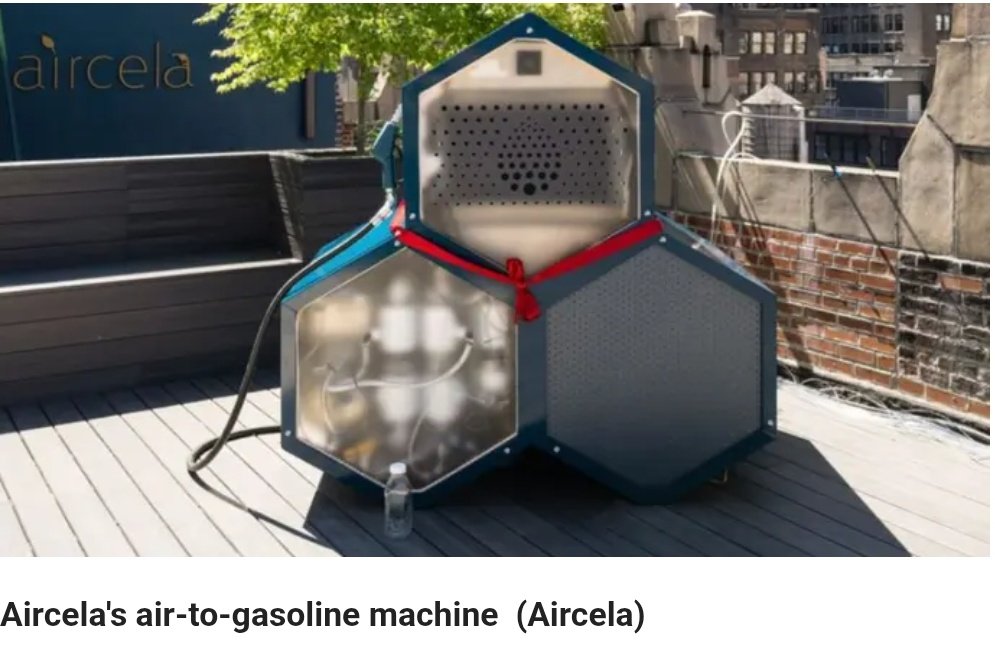
Compact machine turns air into ready-to-use gasoline
Recently, Aircela, a fuel company headquartered in New York, publicly demonstrated a machine in Manhattan that produces gasoline directly from air.
The event attracted city and state officials, investors and energy professionals who witnessed the launch of this compact, refrigerator-sized unit.
Aircela's technology combines direct air capture with on-site fuel synthesis, providing fossil-free gasoline that is fully compatible with existing engines and infrastructure.
Each Aircela unit can produce approximately one gallon of gasoline per day from around 22 pounds of captured carbon dioxide with a storage capacity of up to 17 gallons.
This innovative machine enables users to generate fossil-free gasoline on site using only air, water and renewable electricity.
Each unit can produce gasoline on site, making it suitable for off-grid locations, ports, islands or emergency situations.
Aircela has secured funding from notable investors, including Chris Larsen, founder of Ripple Labs' Jeff Ubben, a board member at ExxonMobil; and Maersk Growth, the venture capital arm of A.P. Moller-Maersk.
Aircela plans to begin initial deployments of its machines in the fall of 2025, with a focus on off-grid, commercial and industrial users. (Fox)
🧪 WOW: FDA Approves First Lab-Grown Salmon Based Solely on Manufacturer’s Safety Claims
San Francisco-based ag-tech startup Wildtype Foods won approval from the @US_FDA for its lab-cultivated salmon last month.
In its approval letter, the FDA said that it understood from Wildtype’s own safety testing that the company had concluded that “foods comprised of or containing the cultured cellular material” made by the company’s production process were “as safe as comparable foods produced by other methods.”
Based on its assessment of Wildtype’s data, the agency said it didn’t find any basis to dispute the company’s safety assessment.
That means that all safety testing of lab-grown fish cells has been conducted by the company seeking to market it.
Read more from Brenda Baletti, Ph.D. on CHD's The Defender: https://t.co/mmAG0EBuGL
The newly adopted WHO Pandemic Treaty ushers in a New World Health Order.
Fast-tracked experimental genetic injections, mass surveillance, and vaccine passports—all under the guise of “pandemic preparedness.”
The U.S. is pulling out. Other nations should follow before it's too late.
Energy security is national security.
If a country can’t stabilize its grid, it risks dragging down its neighbors.
Our energy transition in the EU isn’t risk-free—it’s a gamble.
From #GreenDeal to #Blackouts.
Hour 0–1
•Power suddenly goes out.
•Most people assume it’s a minor outage and wait passively.
•Emergency lighting (e.g., battery backups) kicks in at hospitals, some offices, and critical infrastructure.
•Traffic lights stop working, causing immediate minor traffic jams and accidents.
Hour 1–2
•Phone networks (cell towers) run on backup batteries.
•People flood social media and news sites (on mobile) to find information.
•Stores see a quick rush for flashlights, batteries, and bottled water.
Hour 2–4
•Backup batteries at cellular towers begin to fail.
•Communication becomes patchy.
•Gas stations stop operating because pumps need electricity.
•Food businesses and restaurants close rapidly.
•People start conserving mobile phone batteries.
Hour 4–6
•Refrigerators and freezers without generators start warming up.
•Perishable food is now in early stages of spoiling.
•Water pressure may drop if pumps are electricity-dependent.
•Temperatures in homes (hot or cold) begin to drift toward outside conditions.
•People light candles, increasing fire risks.
Hour 6–12
•Urban centers are noticeably darker and quieter.
•Hospitals operate on generators, but these have limited fuel.
•Crime risks start rising: opportunistic thefts and burglaries occur.
•Emergency services become overwhelmed and prioritize major threats only.
Hour 12–18
•Home batteries (if any) are depleted.
•Communication is extremely limited. Internet is mostly down except for some satellite services.
•Public concern grows. Some people attempt to leave the city, but face gasoline shortages.
•Some neighborhoods organize informal watches for security.
Hour 18–24
•Water supply issues worsen.
•Sewage systems relying on electricity begin to back up in some places.
•Supermarkets, if not looted, have largely spoiled goods in refrigerated sections.
•People ration bottled water and canned food.
•First serious health incidents (dehydration, food poisoning, minor injuries) appear.
Hour 24–30
•Small fires and local emergencies go unaddressed due to limited emergency response.
•Makeshift community hubs may form around locations with generators (e.g., some schools or community centers).
•Portable solar panels, if available, are used to charge small devices.
•Conflicts start over limited resources: water, food, batteries.
Hour 30–36
•Public hygiene deteriorates: no showers, limited toilet usage.
•Mental stress rises: anxiety, panic attacks, depression.
•In colder regions, hypothermia risk increases; in hotter regions, dehydration and heatstroke become major problems.
•Individuals dependent on refrigerated medicine (like insulin) face life-threatening situations.
Hour 36–42
•Fuel shortages become acute.
•Hospitals may begin rationing generator use or transferring patients.
•Government and emergency broadcasts (if any) recommend shelter-in-place policies.
•Some people try to leave by bicycle or on foot if cars are unusable.
•Neighborhood barter systems (trading water for batteries, etc.) emerge.
Hour 42–48
•Trust in local authorities erodes.
•Security issues become severe, especially at night.
•People start forming tighter community groups for mutual defense and resource sharing.
•Wild rumors and misinformation spread rapidly without reliable news sources.
•Morale is extremely low: hunger, thirst, and fear dominate most households.
After 48 hours (if power returns)
•Immediate relief but lasting distrust in authorities.
•Health crises (from spoiled food, untreated illnesses) last for days afterward.
•Major cleanup needed: spoiled food disposal, fire damages, water damage.
•Public debate about backup systems, infrastructure resilience, and emergency preparedness intensifies.
Insects contain chitin, a substance that the human digestive system cannot break down. Chitin is essentially a type of sugar molecule that is very appealing to cancer cells, parasites, fungi, and other disease-causing agents as a food source. Chitin plays a structural role in insects. Additionally, insects have metamorphic steroids like ecdysterone, which are not suited for mammalian consumption. Mammalian digestive systems, unlike those of birds which can handle insect consumption, are not adapted to process these compounds. Cynically, This might explain why there's a push for humans to eat insects by the anti-human marxist contingent