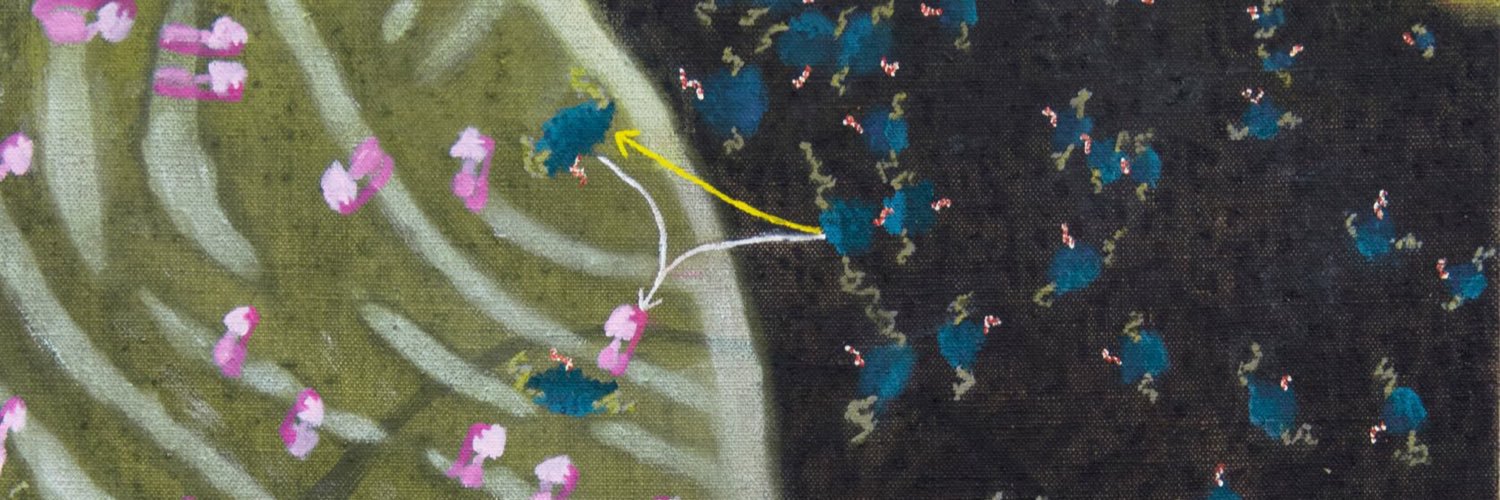
RNA-seq tells us how much RNA is present in the cell. But to understand gene regulation, we need to easily measure the synthesis and decay rates driving this abundance. We introduce AIR-seq: analog intrinsic recoding sequencing. (1/6) https://t.co/EOlJbrwUef
Come join us! In addition to being a core member of the amazing Mol Bio department at MGH, the recruit will be a part of my department at Harvard Medical School.
Our MGH Dept of Molecular Biology is hiring. It’s an exceptional *basic* science dept with a longstanding track record for curiosity driven science, great colleagues / infrastructure and generous support.
Assistant Professor https://t.co/nuJKyrvLUn
I’ve built DNA synthesizers and sequencers by hand. I used the engineer viruses for a living. I used to engineer human immune evasion for therapeutic constructs. Who the fuck are you people? Have you ever so much as held a pipette before?
You can spaghetti blast an ensemble of DNA sequences at some shitty provider but 1) you still have to assemble it and bootstrap a system for making virions 2) you are not single shotting a viable, virulent viral design without a ton of experimental selection and development. Viral fitness is deeply dependent on codons and cotranslational kinetics - you’re not just gonna obfuscate away from wild type and get something good by magic.
You keep treating AI like some kinda god, but molecular physics has computational complexity that scales exponentially in particle number which just crushes the abilities of any classical computer to do end-to-end design of biological functions ab initio.
Grabbing a bunch of bacteriophage phi174 hits from a mass ensemble screen in lab microbes is not evidence of some magical AGI bio design ability - it's just a classic spray and pray selection. This is just nothing like building something viable in humans.
Goddamn it read some books before you waltz into biomedicine and lecture us on protecting human life.
@samjlord@baym@DavidRBellamy Verifiable vs. non-verifiable domains have very different coefficients in their AI exponentials. Both are important, but should not be conflated. The timescales are (vastly, imo) different.
This is why I'm not worried about AI biosecurity threats 👇
(I've been groaning out a less elegant version of these points to anyone who asks me what I think of AI biosecurity -- thanks @DavidRBellamy for saying it so clearly)
I must be among an extremely small group of people (n=1?) that have both 1) trained a frontier LLM and 2) designed and synthesized custom viruses in a lab with my own two hands.
And I think that the takes on AI killing us all by creating dangerous viruses is total bogus.
@anshulkundaje Completely agree, but I worry that politicians and the general public do not think long-term and have a finite amount of bandwidth for "AI-worry," so we want to be careful with how we communicate AI risks and what timescales they could come to pass.
@samjlord@baym@DavidRBellamy Agree. That's why it's important to focus on imminent cyber threats and make sure whatever legislative window we get goes toward that, not far-off theoreticals.
@arjunrajlab@DavidRBellamy My main goal is for people to focus on the imminent, real AI threats. I worry that the general public (and politicians) have only so much "AI-worry" bandwidth, and we need to be clear and precise about what needs legislation now versus later.
@arjunrajlab@DavidRBellamy I am quite optimistic and AI-pilled, no worries! But curing all diseases in 5 years is a bit of a stretch for any amount of optimism (based on reality). Mostly because it will involve testing, in a lab... I'm more willing to say 10 years is possible. Just not 5 :)
I run one of these API-driven automated biolabs at @ginkgo and @DavidRBellamy is right -- we are miles away from AI killing us with viruses being a real risk. There are many physical checkpoints you can implement easily that prevent dangerous biological work from happening.
@anshulkundaje The threat of AI viruses and AI biosecurity threats in general is discussed as a parallel threat to AI cybersecurity, something that could happen today. But a Hugging Face-like bioincident won't happen any time soon.
@anshulkundaje Her timeline differs from where the conversation has been. Eventually, virology will take less time, because of AI, but this will be in >10yrs.
Of course bioweapons are dangerous but there is no biological agent stored in any lab anywhere that, if released, would mean “goodbye humans.” Unlike nuclear weapons.
From a great piece on apocalyptic AI talk by my @WashU colleague Ian Bogost:
https://t.co/drtFvF4yH9
Hiring 1-2 experienced wet lab biologists in SF for a several-month contract (potentially longer). Experience with RL environments is preferred. In-person, five days a week, in Dogpatch area.
Interested —> DM with background and send a phone number. Optionally include some times of availability and ideally details of RL env work. I will give you a call if there’s potentially a good fit.
Finishing your PhD or looking for a post-bac research position? We’re recruiting multiple postdocs and research technicians to study somatic evolution!
Come do interdisciplinary science in a friendly, collaborative environment at @harvardmed Genetics.
https://t.co/AC3iRb7Gcj
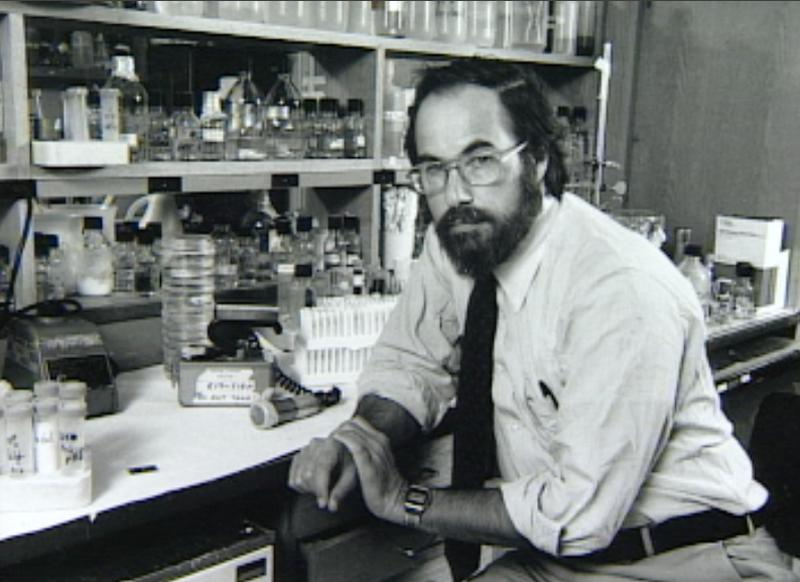
The biotech era debuted in the 1980s, and this is the type of lab the NIH thought a single R01 could support.
Using the NIH entry-level postdoctoral stipend as a consistent benchmark, a single R01 with $250,000 in annual direct costs could theoretically pay for about 15.6 postdoc-years in 1987, when the stipend was $15,996 per year.
How about today? At the FY2026 stipend of $63,480 per year, that same $250,000 would pay for only about 3.9 postdoc-years.
This means that while a single R01 could theoretically support the equivalent of about 3 entry-level postdocs over 5 years in 1987, it could support fewer than one (one for four years) today—a roughly 75% loss in personnel purchasing power.
And, of course, this assumes that every dollar goes directly to postdoc stipends. It does not include fringe benefits, PI salary, graduate students, technicians, supplies, equipment, animals, core-facility fees, travel, publication charges, or any of the other costs required to run a modern laboratory.
Same nominal R01. Roughly one-quarter of the scientific labor.