Between 1916 and 1931, a strange illness known as encephalitis lethargica swept across the world, affecting millions.
Striking often after a sore throat or flu-like illness, it could leave victims in a deep, prolonged sleep that lasted weeks or months. Some collapsed mid-activity, food still in their mouths, while others suffered uncontrollable eye movements or developed symptoms similar to Parkinson's disease. Roughly a third of those infected perished, and many survivors were left with lasting disabilities or profound personality changes.
By the early 1930s, it faded as suddenly as it appeared, leaving scientists puzzled and the medical community to move on to other concerns. Modern analysis of preserved brain tissue has led most researchers to suspect an immune reaction to an infectious agent (possibly streptococcus or influenza) that damaged the brain's basal ganglia. Still, there is no certainty, and the mystery remains unsolved.
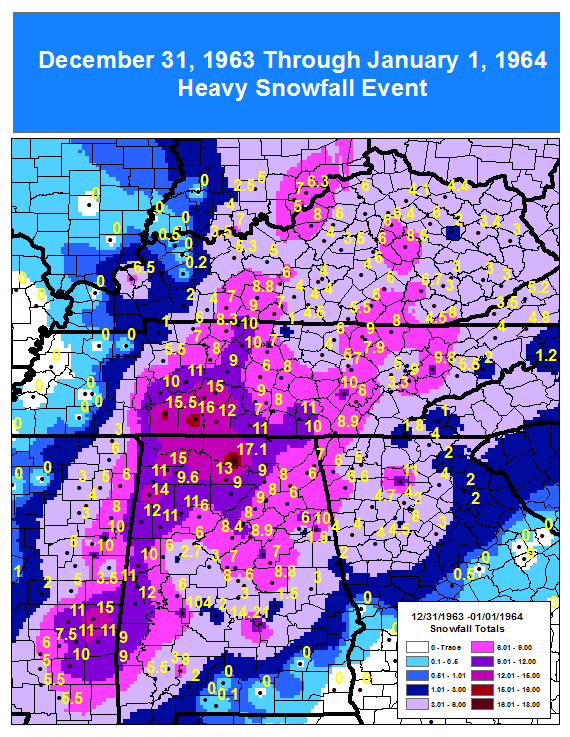
Sixty years ago today, the New Year's Day, 1964 snowstorm brought massive accumulations of snow to Middle Tennessee. Several records that were set that day still stand. Lawrenceburg topped everyone with 16" of snow during this event. https://t.co/glugThq3yT