I've recently joined Imperial College London as an IPPRF Fellow in Psychiatry in the Department of Brain Sciences. I will be working on AI- and wearable technology-based approaches to improve care for people with mood disorders and deepen our understanding of these conditions.
I’ve had a wonderful five years in Edinburgh. I am grateful to everyone I met while working as a psychiatrist for NHS Lothian and during my PhD at University of Edinburgh. I look forward to building on the skills and experiences I gained there as I begin this next chapter.
3/3 Collecting HRV data and psychometric scales over multiple time points during a BD episode is costly, limiting the sample size. We introduce a Bayesian Hierarchical Model, better suited for small samples and uncertainty quantification.
2/3 Heart rate variability (HRV) - variability in the time between consecutive heartbeats -reflects the health of the autonomic nervous system. Our study shows that HRV recovery correlates with symptom improvement in BD 🎭, suggesting HRV could be a potential biomarker for BD.
and congratulations to Dr. @filippocmc who successfully passed his viva, examined by Paolo Ossola and @KiaNazarpour
Filippo's thesis is a wonderful bridge between #ML#AI and clinical practice in psychiatry for mood disorders with wearable!
1/2 If you are working in #wearables, #AI, and #healthcare do not let small datasets stop you. https://t.co/sAnB4F2l8M 👈 We share the largest publicly available data collection for #empatica#e4 and release the codebase for pre-processing and self-supervised pre-training.
#NeuroSymbolic#AI 🤖 enforces constraints, but models can achieve high accuracy using wrong concepts.
Can we spot when a model relies on flawed concepts and ensure #trustworthiness?
Yes, with BEARS! 🐻
📢 Introducing our latest paper, accepted as a spotlight at UAI2024 !🎉📄
we evaluate #continual learning models on "baby" benchmarks, where it is easy to show no catastrophic forgetting!
we propose a new simple benchmark that glues simple but still challenging tasks in a curriculum: from MNIST to Imagenet and back!
📜https://t.co/xpdEuQwuhq
Will be at AISTATS this week, would love to chat if you have integrals to approximate or are generally into compstat / opt. transport / estimation in causal inference.
Also we have two papers around importance sampling and variational inference.
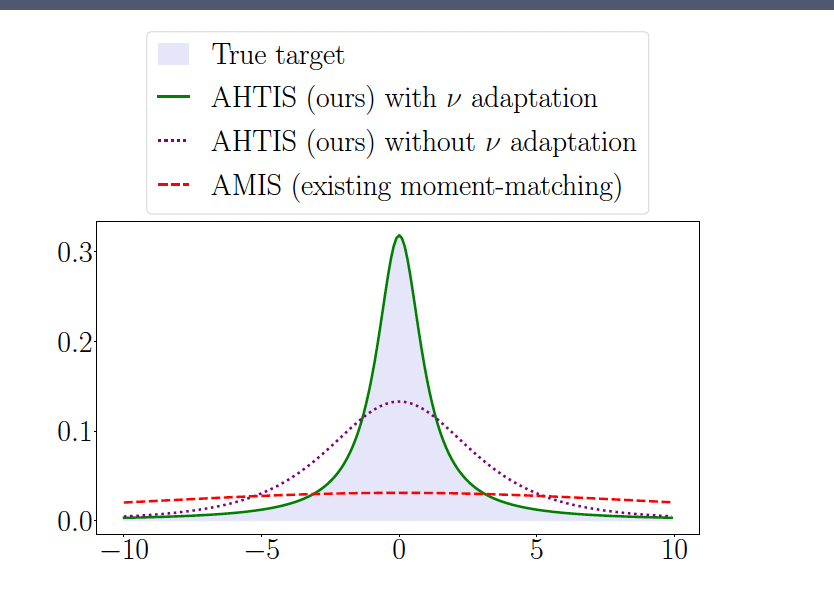
1st: adaptive IS for heavy tails
The softmax bottleneck is an interesting problem; it has many side effects which we do not yet fully understand!
If you want to build an intuition for the problem, here is an interactive visualisation I made https://t.co/DWMbFd0nx7 (best viewed on desktop).
New preprint out!🚨We performed a large scale analysis of physicochemical features extracted from over half a million AlphaFold structural models, and using data-driven methods we showed a link between these features and in vivo behaviour of proteins. Find out more below⬇️1/9
Classical mixture models are limited to positive weights and this requires learning very large mixtures!
Can we learn (deep) mixtures with negative weights?
Answer in our #ICLR2024 spotlight by @loreloc_ Aleks, Martin, Stefan, Nicolas @arnosolin
📜https://t.co/iEt1jKDMU8
Applications are now open to join our new UKRI AI Centre for Doctoral Training in Biomedical Innovation for September 2024 entry. All the information you need to apply is ➡️ https://t.co/W7g5miBZ0j @UKRI_News @AI4BI_CDT
3/3 The task we propose, inferring what symptoms are driving an acute episode, is better aligned with the actual clinical practice and more useful towards informing clinical decision-making. This however comes with new #machinelearning challenges. Code: https://t.co/1RP5t9nJ2M
2/3 Different symptom combinations, requiring different therapy and management approaches, can be seen within an acute affective episode. Thus, the reductionist binary classification (acute episode yes or no) previously pursued is limited and misses out on actionable information.