Jensen Huang was asked if he trusts the four or five CEOs who now control AI.
He brought up their age.
“They’re all young CEOs. First-time CEOs.”
“I’ve been doing this for 33 years.”
Nvidia was founded in 1993. The year Sam Altman turned eight.
Then Huang explained what he thinks they are going through.
“It’s not easy building a company, building organizations, building products, building industries, building a business, going public. All of that is new and it’s all happening at the same time.”
“I’m empathetic to the enormity of the challenges that they’re dealing with.”
He was asked again, directly. So you trust them?
“I believe in them. I believe in the people. I also am empathetic of the circumstances.”
Six seconds later the empathy ended.
“I don’t approve of deflections and distractions about the end of the world.”
“I’d rather them focus on the things that I know they’re focused on.”
The men he is describing are the ones asking the world to slow AI down.
He is the man who sells them the chips.
33 years against a first-time CEO.
Whose warning would you take more seriously?
The video below is the moment he is asked whether he trusts them.
Last night I went on a date (with a girl)
During that date, Grok Bot autonomously built and launched an entire business for me
All of this was done autonomously:
• Built the website
• Came up with the business plan
• Started collecting emails
• Launched a newsletter
• Shipped 20+ PRs by itself
• Sending morning newsletter
• Monetized and finding sponsors by reaching out to AI companies
In the 15 hours since launch, the website has had 20,000 visitors and 1,500 emails collected
I have no doubt a first sponsor will be found shortly. It’s first autonomous dollar made
This is the beautiful future AI unlocks
You get to do more of what you love while AI does all the things you want to do less
It puts in the work and makes you money, while you enjoy all the beautiful gifts life has to offer
Find a simple challenge to solve, then send your Grok Bot off to solve it for you
For me, I wanted to solve the problem of people not knowing what to do with AI
So my Grok Bot launched a website with thousands of amazing AI agent use cases that it continuously updates
Apparently it solves the problem well, because activity on it is exploding (check it out here https://t.co/S9zybQK14I)
Want your Grok Bot to do something similar? Send them this post and say ‘do this for me’
Life is incredible
Grok Bot just got a serious brain upgrade
With Claude Opus 5.5 entering the stack, one Bot could run an entire AI team that researches, writes code, uses tools, verifies results, and delivers finished work
Here's how to build it in 10 steps: https://t.co/SysbtXuqoJ
Grok Bot just had a MASSIVE update
They added a ton of functionality including:
• Dedicated email address
• Opus in Grok
• Cursor integration
• A 'Main' bot
• Much more
In this video I cover all the new updates and show you two new use cases I just discovered:
🇺🇸🇮🇷🇩🇰 U.S. can cut a deal to open Hormuz, or it can wait 428 years, the way the Baltic did.
Denmark started charging every ship through the gap with Sweden in 1429.
The water is 4 km wide. Kronborg's cannons were the late fee.
Captains named their own cargo value, and if they lowballed it, Denmark could buy the whole load at that price.
It ran until 1857, when the big powers paid Copenhagen to kill the toll for good.
America paid $393,000 on its own, for passage in perpetuity.
The strait never closed again.
Commercial ships go through free, warships pass under the normal rules, and a bridge went up in 2000 without putting the fee back.
The cannons are a museum.
Hormuz is the same door, except nobody has written the check, and the guns are still live.
Source: Denmark National History website / Writer: Lucas
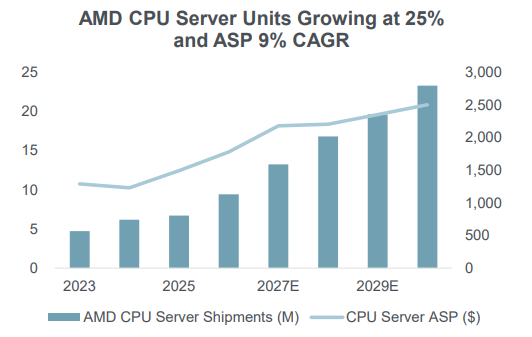
AMD says demand is already higher than supply and this chart shows why 2027 could be even bigger.
Lisa Su says AMD will substantially increase chip supply next year as AI demand continues to exceed available capacity and AMD has already expanded supply throughout 2026, but management says it could still sell more chips if additional capacity were available. This chart shows how this could affect AMD’s server CPU business because it projects annual shipments increasing from fewer than 5 million units in 2023 to roughly 23 million by 2030, representing a compound annual growth rate of around 25%.
AMD could also benefit from higher prices. The chart projects server CPU average selling prices rising at approximately 9% annually and approaching $2,500 by 2030 as customers adopt larger, more powerful processors.
If unit shipments grow by 25% annually while average prices grow by 9%, AMD’s server CPU revenue could theoretically compound by roughly 36% annually. AI servers do not run on GPUs alone, CPUs prepare data, coordinate accelerators, manage networking and storage, and handle the general purpose workloads surrounding AI models. As inference expands into more applications, data centers will need more CPUs alongside their GPUs. AMD could therefore benefit from several growth engines at once: more AI accelerators, rising EPYC server shipments, market share gains and higher average CPU prices.
The problem is no longer finding customers but rather securing enough advanced wafers, packaging capacity and memory to build complete systems. That is why Su traveled to Taiwan to meet key manufacturing partners and ensure CPU and GPU production can ramp together. AMD still has substantial room to grow across both CPUs and GPUs. Nvidia dominates AI accelerators but AMD does not need to overtake Nvidia for its business to expand dramatically. It only needs to capture part of a rapidly growing market while continuing to take share in server CPUs. Bullish on AMD. If you want to see how I’m positioned across the companies benefiting from the next wave of AI compute, CPUs, memory, and infrastructure, check out my full portfolio below. https://t.co/Hkywss4Ugh
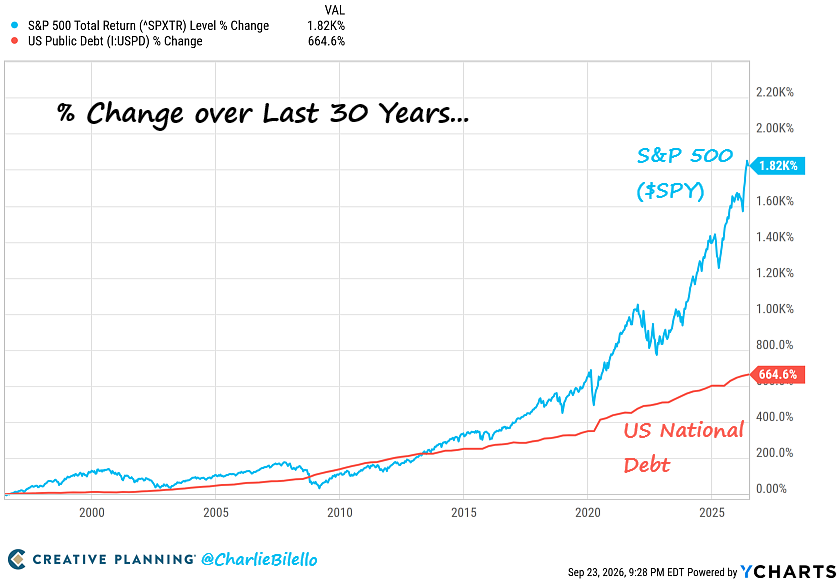
Last 30 years...
US National Debt: +665%
S&P 500 Total Return: +1,820%
Government borrowing isn’t necessarily bad for corporations in the short run.
More borrowing → more spending → higher revenues & profits.
The long-term consequences are another story.
Video: https://t.co/MYrJdUWU7x
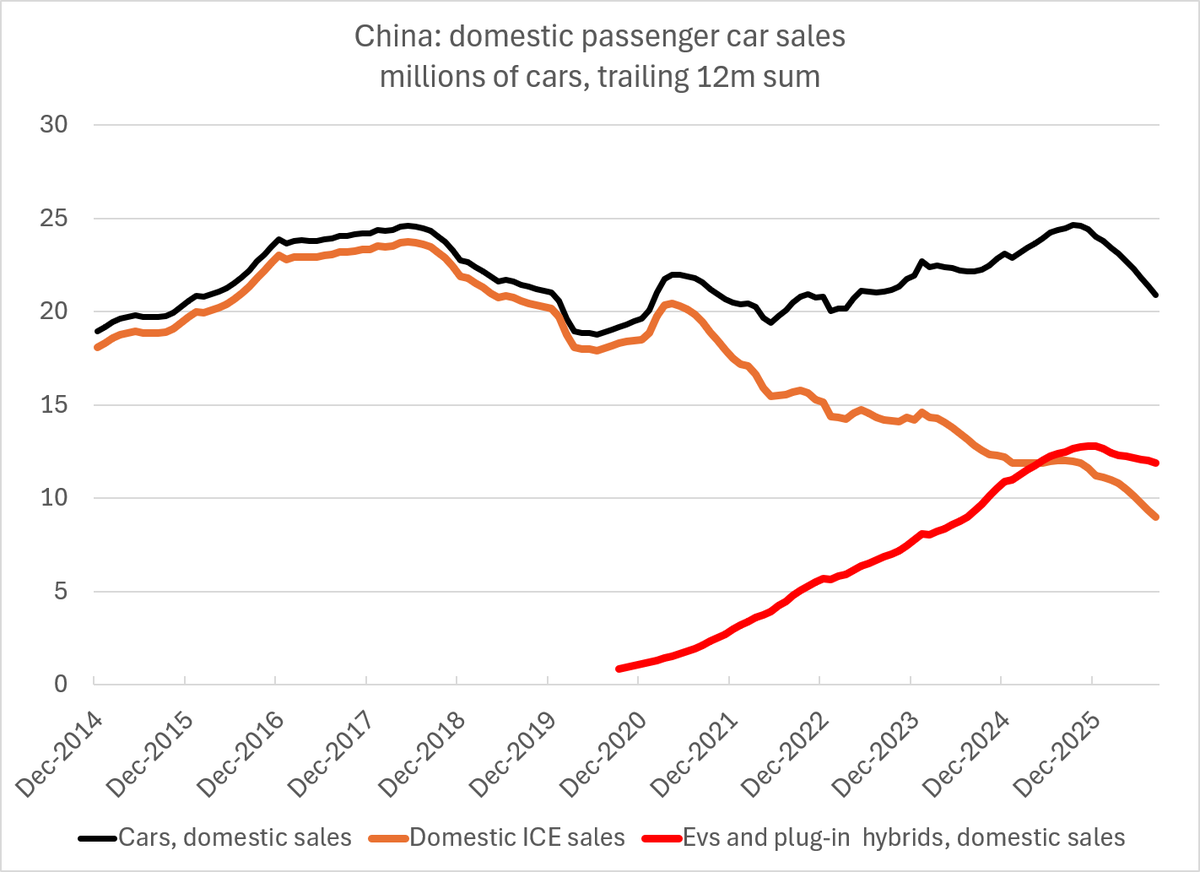
China has the capacity to produce 50-55 million cars --
The domestic market has fallen from ~ 25m cars to ~20 m cars this year
China could easily export 2-3m cars to the US AND its 1.5m cars to Europe
Every day i'm blown away at what i can do in an hour with frontier models like Opus 5.5.
I didn't know what to do with an old iPhone, so I built Bluey, w/ Opus 5.5. It's powered by GPT Realtime 2
(i think... whatever Opus decided to use).
Bluey is an iOS app + mac app that is made to be a computer companion. It can point, comment, and even control my entire computer.
github repo below
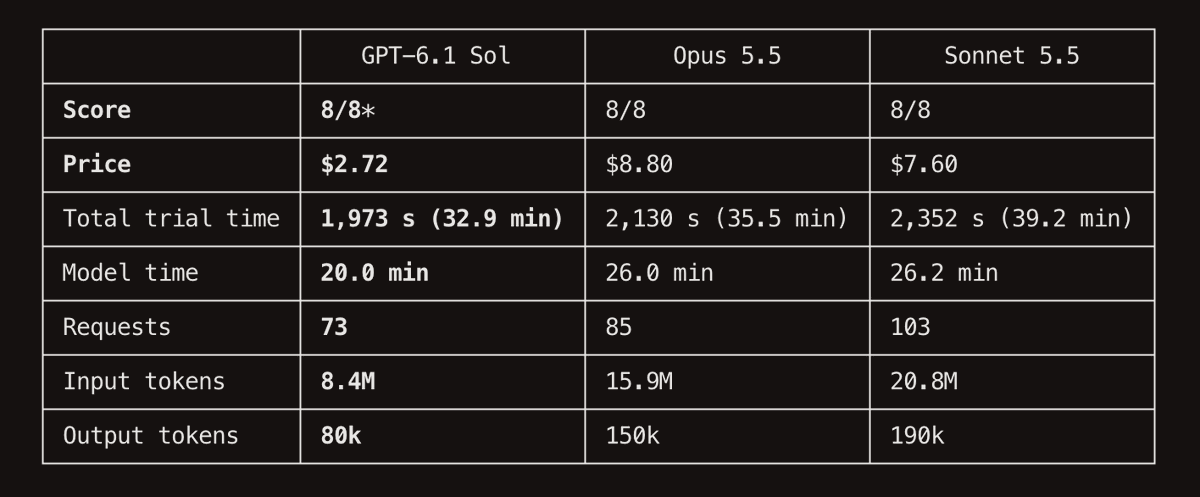
we found opus 5.5 to be 2X as efficient as gpt-6-sol in our internal https://t.co/QhA9tU0Lhp evals so i was not expecting 6.1-sol to improve on that much
but to see it 3X the efficiency of opus 5.5 and 2.5X against even sonnet 5.5 is actually 🤯
this is an insane point release
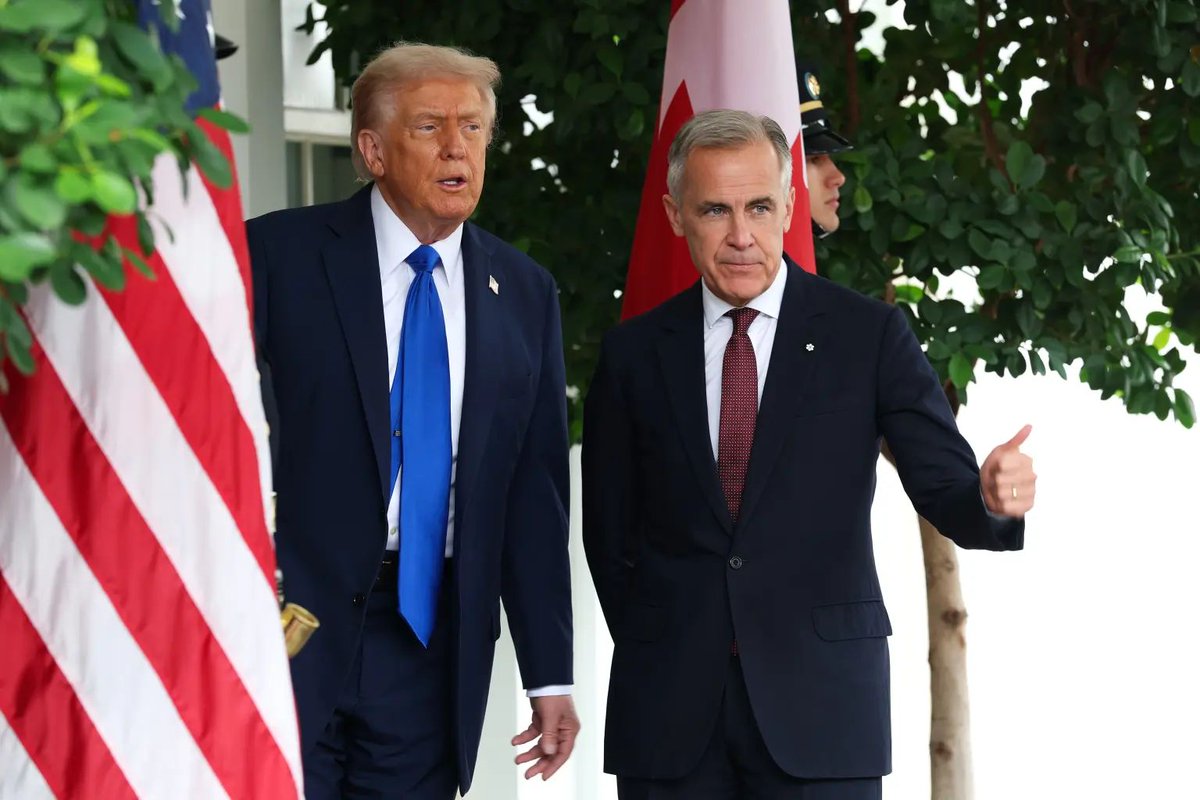
🇺🇸🇨🇦 Trump thinks Canada is about to fold on tariffs.
He’s giving it 3 or 4 weeks before Canada comes back and offers to get rid of them altogether.
His message is that the U.S. is going to win everything here. He even threw in Lake Ontario, which he’s now calling “Lake America.”
Whether Canada agrees is another matter, but Trump clearly thinks the leverage is all on his side.
Writer: Daniyal
🇺🇸🇨🇦 Trump’s bitter trade war with Canada is TORCHING key midterm battleground states...
Swing states like Iowa, Maine, Michigan, Ohio, and New Hampshire do a massive $188 billion in trade with Canada.
That is more than a quarter of all U.S. and Canada business.
Now Canada is hitting back hard.
They put huge tariffs, up to 50%, on over $20 billion of American goods.
Maine relies on Canada for over 60% of its traded goods, so Republicans like Sen. Collins are desperately running for cover as the midterms come calling.
With Trump’s approval numbers sinking, his tariff strategy is unsurprisingly backfiring…
Self-inflicted, no sympathy.
Source: NY Post / Writer: Bri
🇺🇸🇨🇦Canada just dumped U.S. cars. Americans got the bill.
Yes, the tariffs Trump imposed on the auto sector are taking a toll.
But the biggest victim of this policy is found south of the 49th parallel, according to a report by Fortune magazine.
Their main customer, Canada, is gradually turning away from them.
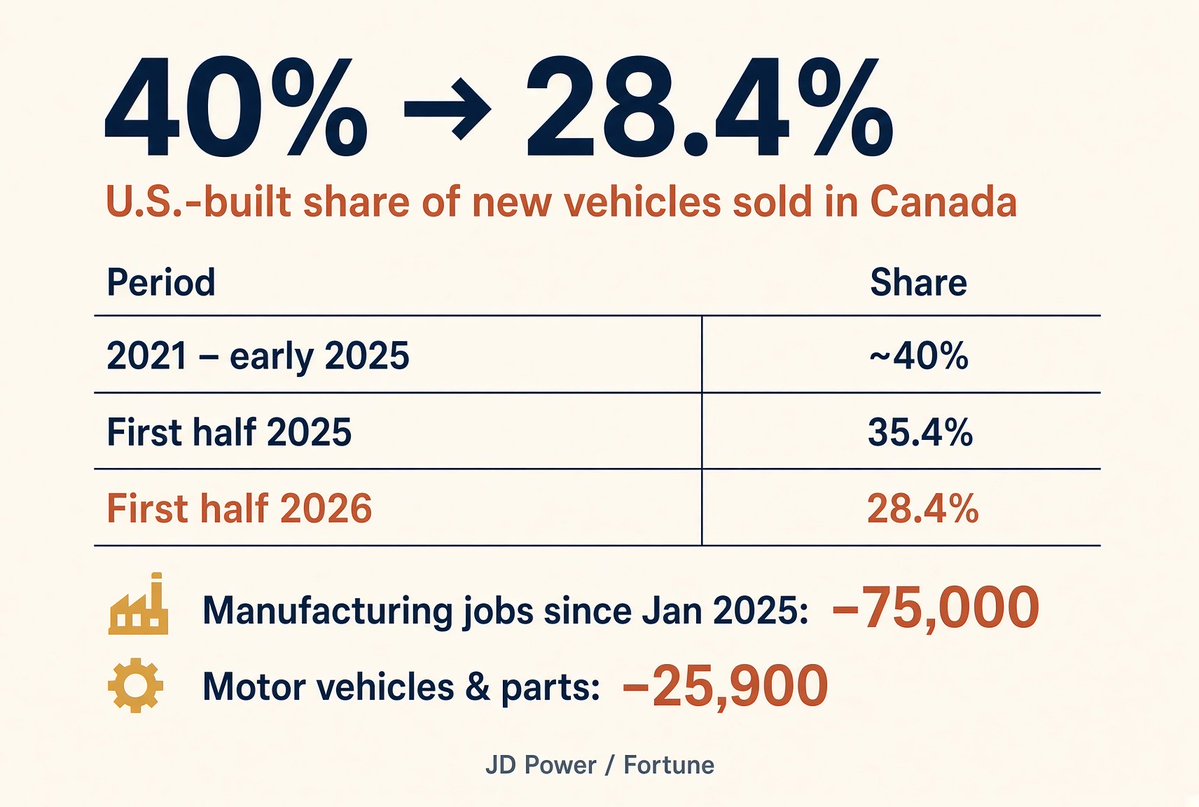
From 2021 to 2025, about 40% of new vehicles sold in Canada were U.S.-built.
When Trump launched his trade war in 2025, that share dropped to 35.4% during the first six months.
And this year, during that same period, that share fell to 28.4%!
A loss of some 12 percentage points in market share in just a year and a half...
And the Canadian market is so vital to the United States that it outweighs the next ten largest markets combined.
This decrease in sales, compounded by the tariffs, inevitably impacts vehicle prices and jobs.
A vehicle hit from all sides by tariffs on its many Canadian-made components can cost an average of $6,000 more.
With lower sales come lower production levels and a reduced need for staff.
Consequently, since Trump took office, 75,000 manufacturing jobs have vanished, including 25,900 in the automotive sector.
Impact on Trump
Is Trump aware of these figures? Is he being shielded from them? And even if he did know, would he take them into account?
One can assume not, given that since day one of his presidency, almost every decision he has made has disadvantaged the average American—and undermined the United States' standing as a global power. One might quibble over his motives for acting against his country's interests, but not over the negative impact of his choices.
And yet, I ask you: are Americans aware that their president is working against them?
(Information gathered from the Fortune article in the second post.) 1/2
#cdnpoli #uspoli @FlavioVolpe1