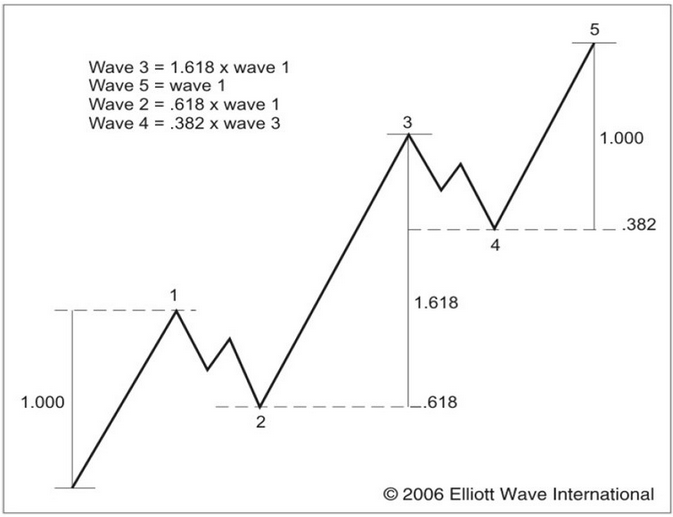
One of the biggest advantages of trading with the Elliott Wave Principle?
High-probability price targets.
Using Fibonacci relationships, traders can identify key levels and set targets.
Learn the basics free: https://t.co/8N9iOsSPHS
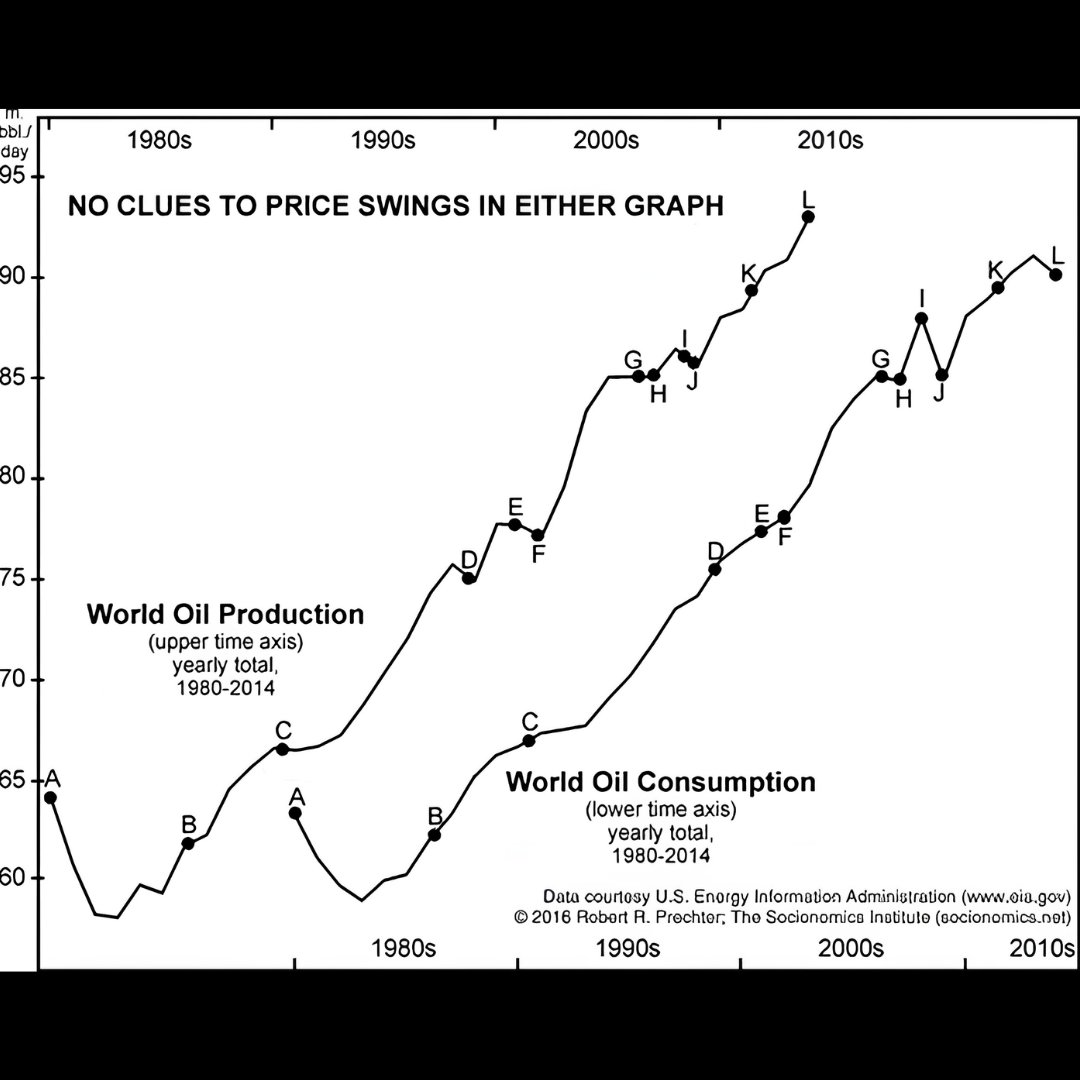
This chart from The Socionomic Theory of Finance shows global oil production and consumption from 1980 to 2014. The letters mark major turning points in the price of oil. Can you guess which way - and how far - prices moved at each point?
The actual price moves are listed in the second image.
See what really drives oil prices. https://t.co/CwfAI3ToFR
"It's waiting that helps you as an investor, and a lot of people just can't stand to wait. If you didn't get the deferred-gratification gene, you've got to work very hard to overcome that."
— Charlie Munger.
Forget oil demand destruction... the next stop is outright shortages.
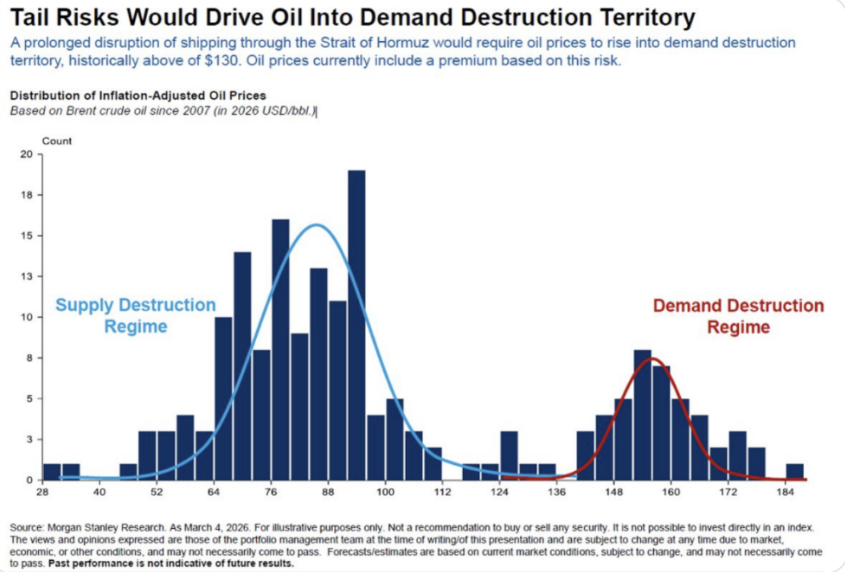
Morgan Stanley says no oil demand destruction below 120 dollars a barrel, and Axios together with the Trump administration will never allow that price to hold for long.
They’re crushing oil with fake‑news headlines in the middle of the biggest supply shock ever, which only fuels demand instead of reducing it.
Trucking spot rates have never moved up this fast, ever - including early COVID.
The weekly average for truckload spot rates moves to a new all-time high of $3.71/mile.
It took 43 weeks for spot rates to increase by $1.38/mile during early COVID (April - Feb 2021).
It has taken only 29 weeks to achieve the same increase (Nov 2025 - June 2026).
EIA crude oil inventory changes since 1982:
- Largest crude draw in history, -17.783 million bbls, May 15, 2026 week.
- Third largest crude draw in history, -15.967 million bbls, May 29, 2026 week.
- Eighth largest crude draw in history, -13.355 million bbls, April 24, 2026 week.
- Next week, 5th largest crude draw in history.
BACD.
It looks like we're entering the next stage of the Commodity Supercycle.
The precious metals trade led the charge. Gold, silver, miners, and juniors had their run.
Now we're starting to see capital rotate into base metals and energy.
ART BERMAN'S BASE CASE: OIL SPIKES TO $160 THEN STABILIZES PERMANENTLY AT $110
Petroleum geologist Art Berman built a probability model for the current oil crisis that rejects political theater and quick deals. He treats every forecast as a distribution of outcomes because the situation has no historical precedent. His base case carries the highest weight and it points to a permanent break from the energy world of 2025.
ART BERMAN'S PROBABILITY MODEL
➡️ He maps best case, base case, and worst case scenarios instead of offering single predictions because no one can know the exact path through unprecedented disruption.
➡️ The best case assumes a perfect deal by early June yet still delivers only 50 percent of normal flows by the end of 2026 due to demining, insurance delays, and weeks of tanker queuing.
➡️ Even that optimistic path leaves three quarters of 2026 operating under severely reduced energy supplies with catastrophic economic consequences.
THE BASE CASE THAT DRIVES EVERYTHING
➡️ Iran has no incentive to ever fully reopen the Strait of Hormuz and will likely maintain control indefinitely.
➡️ Restarting shut-in production faces massive lags from damaged reservoirs, lost investment confidence, and infrastructure that may never fully recover.
➡️ The global system faces irreversible change with no realistic path back to 2025 economic conditions.
THE OIL PRICE PROJECTION
➡️ In the realistic base case oil prices will almost certainly spike into the 150 to 160 dollar per barrel range by summer.
➡️ Extreme prices trigger demand destruction that pulls Brent back down to around 100 to 105 dollars.
➡️ Prices then slowly rise and stabilize in the 105 to 115 dollar per barrel range through 2027 and likely beyond.
WHY THIS SHOCK IS 60 TO 99 TIMES FASTER
➡️ The rate of supply loss is 60 to 99 times faster than the greatest previous oil shocks in recorded history.
➡️ No rapid solutions like vaccines or policy reversals exist this time to cushion the blow.
➡️ Inventories have masked the crisis so far but those savings are running out fast and the full impact is coming.
THE BOTTOM LINE
Art Berman's model shows the world just suffered its greatest energy blunder in modern history by jeopardizing the entire global economy with one move.
Oil will spike hard then settle into a permanently higher range because the old supply system is broken beyond repair.
#OilPrices #ArtBerman #EnergyCrisis #OilShock #HormuzBlockade #DemandDestruction #NewOilNormal
HT: YouTube @PalisadesRadio@aeberman12
The 10-year Treasury yield just completed a textbook five-wave move.
Elliotticians know what comes next, but what about the big-picture implications?
Follow the waves for more market insights. https://t.co/ylnoFE5LZq
Diesel is the pinch point. Hormuz is only part of the story. And equity markets may be missing the bigger repricing ahead.
In the latest EA Forum podcast, @ea_amrita and @CommodMkt unpack one of the biggest market dislocations in energy and commodities right now.
Key takeaways:
- The market is still conflating a deficit with a shortage and until that shifts, prices may not fully reflect the underlying reality.
- Even if the Strait of Hormuz reopened tomorrow, long-dated oil still needs to reprice on the structural set-up.
- Jeff argues this could be the biggest repricing opportunity across the commodity complex.
- Meanwhile, equity markets are in “la la land”, having repriced the energy halo lower while overlooking the broader hard asset story.
- Diesel remains the critical pinch point, with implications that feed through the entire system.
Watch the full episode now: https://t.co/fi9ii0WEwR
Recorded on 8 May, this episode features Energy Aspects Founder and Director of Market Intelligence Dr Amrita Sen and Jeff Currie, Co-Chair at Abaxx Exchange, Co-Founder of 1947 Oil & Gas Plc and Non-executive Director at Energy Aspects.
EA Forum brings together leading voices in global commodities and macroeconomics, offering unique perspectives and in-depth analysis from both EA and external experts.
#EnergyAspects #EAForum #EnergyMarkets