More than 100 new datacentres in the UK plan to burn gas to generate electricity, some potentially doing so permanently.
▪️No net zero for the data centres.
▪️Net zero enforced on us plebs (probably to enable the data centres to burn more energy).
The whole thing is a scam.
Britain has historically been one of the richest countries in the world. The fact that so much of it now feels broken is not a tragedy. It’s an embarrassment. And for this, blame successive governments, who have hollowed out and sold off British assets.
The UK’s median house price is around £278,000. Median full-time earnings are about £39,000. That’s 7 times annual earnings nationally. The official benchmark for affordability is five times earnings. Britain didn’t accidentally stumble into a housing crisis. It built one.
The NHS waiting list still stands above 7 million treatments. Millions of people are waiting for care in a country that spends enormous sums on healthcare. Staff are delivering record numbers of treatments, yet the backlog remains vast. That is not a sign of success. It is a sign of demand overwhelming the system.
For nearly two decades, Britain has suffered a productivity decay. Normal productivity growth more or less vanished after the 2008 financial crisis. The consequence is simple: weak productivity means weak wage growth, weak growth means weak public finances, and weak public finances is made even worse by a Labour government creating a record tax burden that is punishing the self employed and small businesses - the engine room of growth.
Everywhere you look, the same story repeats itself:
The trains are expensive.
The roads are full of potholes.
High streets are decaying
Road drains blocked.
The housing is unaffordable.
The NHS is overloaded.
Taxes are at historically high levels.
Record business closures.
Growth has flatlined.
Britain has perfected the art of managed disappointment. And since Covid, the national mood is worse than I can ever remember.
And that is what makes people angry.
Not because Britain is poor.
Not because Britain lacks talent.
Not because Britain lacks resources.
Yet somehow the country often struggles to reboot forgotten communities, improve roads, construct railways, maintain infrastructure, or deliver major projects without years of delay and billions in extra cost.
The outrage comes from the gap between potential and performance.
We should be spending our taxes for national infrastructure improvements, but instead governments are funnelling our money to their corporate cronies and turning off the taps on North Sea oil and gas to hit net zero targets. It’s shameful.
A generation ago, politicians promised rising prosperity. Today they promise that things will get slightly less worse than expected.
The national ambition has shrunk from “How do we become better?” to “How do we stop falling even more behind?”
That is not decline in the dramatic sense, but instead, a slow erosion of standards, expectations and confidence.
Britain isn’t a failed state. It’s a successful country that has become horribly comfortable with failure.
A country that still thinks of itself as world-class while accepting conditions that would have caused outrage twenty years ago.
A country living off the reputation built by previous generations while struggling to build enough for the next.
And perhaps the most infuriating statistic of all is one that cannot be measured: the number of people who have simply lowered their expectations.
When a nation starts treating dysfunction as normal, decline stops being an event.
It becomes a culture. We are where we are.
First, you can use the tax revenue to cut bills.
Second, your balance of payments improves which lowers costs across everything.
Third, there are entire sectors supported by the oil and gas industry - chemicals, plastics, even renewables - which is why a Government attacking its own industry is sheer insanity.
You talk about the centre ground, which is something you seem to think other people create - rather than accurately diagnosing the country's problems and pushing for the right solutions.
Maybe that’s why you pushed Net Zero legislation with no plan and with no forecast on the cost of energy.
Growth and cheap reliable energy is our priority.
🚨🎙️Roy Keane SLAMS the Liverpool board on recent decision 😳
🗣️“Liverpool’s board are sleepwalking into a disaster. Xabi Alonso is sitting there, a former Liverpool player, one of the brightest managers in Europe, and instead of going all out for him, they’re letting Chelsea hold talks while they cling onto Arne Slot like finishing second or third is some kind of achievement.
This is Liverpool Football Club, not a charity project for managers who ‘need more time.’ Slot’s had months to stamp authority on this team and what have we seen? Inconsistency, weak mentality in big moments, and a side that looks miles away from the standards Klopp left behind.
If Chelsea end up getting Alonso while Liverpool keep pretending everything’s fine, the board deserve every bit of criticism coming their way. Because years from now fans won’t remember the excuses, they’ll remember that Liverpool had the perfect manager available and were too weak to act.”
Another performance to show that Slot’s out of possession coaching is poor.He doesn’t want to dominate matches with high pressing but on top of that is the lack of an effective mid-block. The number of times that Chelsea players had acres to pass in-behind from deep,was shocking.
As an #LFC supporter, I'm no longer frustrated by just the results.
I'm frustrated because I can't see how this gets better. No identity. No roadmap. No visible sign that the people in charge feel the urgency the rest of us feel.
Wrote about it: https://t.co/MBeeXmOhiT
🔴 Liverpool Beaten, Bullied and Left Clinging to Context
#MUFC 3-2 #LFC | #PremierLeague
I predicted a Liverpool defeat in my my preview this morning, which is not something I do lightly, even in a season as miserable as this one. The injury list finally felt too heavy to ignore. For once, it was valid context rather than the tired shield it has too often become.
But context is not absolution.
Liverpool lost 3-2 to a poor Manchester United side and, in truth, the score flattered them. United were better, sharper, stronger, and should have won by more. Liverpool’s two goals came from gifts. United created the better chances, won the physical argument, and exposed yet again a side that cannot defend properly, cannot control key areas, and cannot be trusted when the game demands nerve.
Yes, there was a third-choice goalkeeper. Yes, Curtis Jones was filling in at right-back. But how did Liverpool get here? Poor planning. A January window ignored. A squad stretched to breaking point while the manager keeps talking as though this chaos happened to him, not under him.
Arne Slot may believe he can fix it. I see no evidence. The man-management has looked poor, the squad has looked underused, and the excuses now sound less like explanations and more like evasion. As soon as the season turned sour, so did the conviction behind the project.
Mac Allister was poor again. Gravenberch still does not look like a natural six when Liverpool are under pressure. The team tried, but trying is not enough at this level.
United have done the double. City have done the double. Liverpool are falling into a Champions League place rather than earning one.
This needs ending. Not dressing up. Not explaining away. Ending.
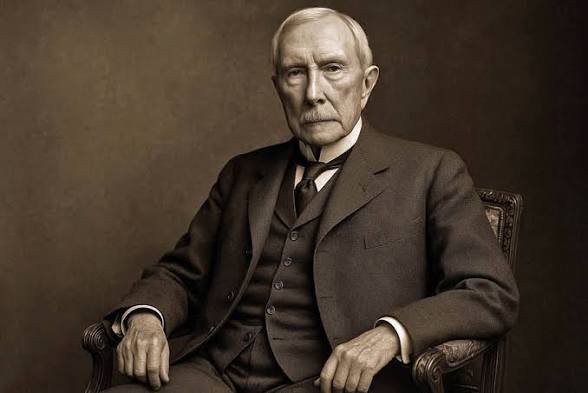
In 1900, John D. Rockefeller controlled approximately 90 percent of all petroleum refining in the United States. He was, by some calculations, the richest private individual who had ever lived.
He had a problem. Scientists were discovering that compounds derived from coal tar, a petroleum byproduct, could be used as synthetic medicines. Aspirin, derived from coal tar, had been launched by Bayer in 1899. The petroleum waste stream Rockefeller had previously had to dispose of could now be sold back to the public as medicine at a markup of roughly 10,000 percent.
He had another problem. American medicine in 1900 was a competitive ecosystem of homeopaths, herbalists, naturopaths, osteopaths, midwives, and traditional doctors who used food, plants, water, and lifestyle as the primary tools of healing. Approximately half of all American medical schools taught some form of natural or alternative medicine.
Rockefeller bought into the German pharmaceutical industry, eventually taking a substantial stake in IG Farben, the conglomerate that included Bayer, BASF, and Hoechst. He then commissioned a report.
The report was written by Abraham Flexner, an educator with no medical training, funded by the Rockefeller and Carnegie Foundations, and published in 1910. It declared that natural and alternative medical schools were unscientific quackery. It recommended the closure of more than half of all American medical schools and the standardisation of the rest around medicine based on synthetic patented drugs.
Congress acted. Half of American medical schools closed within a decade. The remainder accepted Rockefeller and Carnegie funding on the condition that their curricula be reorganised around pharmaceutical treatment. Nutrition was removed. Herbal medicine was removed. Lifestyle intervention was removed. The doctor's job was redefined: diagnose the symptom, prescribe the drug.
The drugs were petroleum-derived. The petroleum was supplied by Rockefeller-controlled refineries. The medical schools were funded by Rockefeller. The journals were funded by Rockefeller. The AMA was supported by Rockefeller. The hospitals were funded by Rockefeller.
By 1925, the American medical system was a vertically integrated extension of the petroleum industry, operating under the marketing slogan that it was scientific.
This is the system that exists today.
The pharmaceutical industry generates approximately $1.5 trillion in annual revenue. The American population, 4 percent of the global total, consumes approximately 50 percent of all pharmaceuticals manufactured.
The system was not designed to make people healthy. The system was designed to manage symptoms in a way that produces lifetime customers. A healthy patient is a former customer. A managed patient, who takes the pill every day for the rest of their life, is an annuity.
The objective has always been to keep you in that profitable corridor between healthy and dead.
Long enough to keep buying. Not so well that you stop.
The doctor who advises you to fix your metabolism by changing your diet is, from the point of view of the system that trained him, a defective product. The doctor who prescribes you a statin, a metformin, an antidepressant, and a blood pressure medication for life is performing exactly as designed.
The system was designed by an oil baron who needed to sell the waste products of his refineries.
It still functions, 116 years after the Flexner Report, exactly the way he designed it.
You are the customer.
The corridor is where you live.
You are aware that oil and gas together still account for 73–75% of the UK's total primary energy consumption (which covers all energy needs across electricity, heating, transport, industry and other sectors, measured in primary energy terms)? So explain to me exactly how ‘you will make it happen’ that we don’t use fossil fuels.
Another energy fail. Unlike oil, gas trades at regional rates, not global rates. Gas from the UK North Sea is piped to our shores. Most of it stays in the UK. A small amount goes into the European system. The more that comes out of the North Sea the bigger the dampening effect on domestic prices because it is cheaper than LNG. But the real benefits are security of supply (the government has ultimate control over it via licenses), more taxable revenue (to cut fuels bills), fewer imports, stronger sterling, more jobs, smaller carbon footprint than LNG. What’s not to like? Why create jobs in Stavanger when you could be creating them in Stonehaven.
No one serious is claiming that North Sea oil and gas is state-owned. That's a strawman. The actual argument is about what extracting it does for Britain - and the answer is straightforward.
North Sea oil gets sold on the global market, yes. Around 80% of it bypasses our refineries entirely, partly because those refineries were built to process Libyan crude, not the light sweet crude the North Sea produces. Fine. But when oil companies extract that oil and turn a profit, the Exchequer taxes that profit. That tax revenue is real money that can subsidise bills during supply disruptions. That's our stake - and it's a legitimate one.
Gas is even more direct. North Sea gas feeds straight into the UK pipeline network. Britain consumes between 65% and 85% of the gas it extracts domestically. It stabilises supply. It generates taxable profit. There is no coherent argument for leaving it in the ground.
Now, climate. Britain produces less than 2% of global greenhouse emissions. Not a single major polluter on earth is adjusting their behaviour based on UK climate commitments. What actually happens when we strangle our own energy sector in pursuit of rapid decarbonisation is simple - we de-industrialise, we export jobs to China, and China builds EVs powered by coal. We get poorer. The climate is unaffected.
Leaving recoverable North Sea reserves untouched doesn't save the planet. It just makes Britain weaker.
“Let’s spend £4.5 trillion on net zero over the next 25 years. Let’s increase taxes to pay for net zero. Let’s ban new oil and gas licences in the North Sea but spaff away £40billion buying North Sea oil and gas from Norway. Let’s buy coking coal shipments worth £7.2million from Japan but ban UK coal mining. Let’s plaster thousands of acres of farmland with solar panels but spend £50million on sun dimming experiments. Let’s give huge renewable energy construction contracts to China. Lets fail to improve gas storage facilities, Let’s give Drax an estimated £1.8billlion in taxpayer funded subsidies on top of the £11billion it has already received despite Drax burning an amount of wood equivalent to 300 million trees. Let’s give £1billion this year alone to wind power companies not to generate power from their wind turbines. And let’s spend £30billion of taxpayers’ money on carbon capture machines but put pensioners, farmers and the disabled into financial peril by claiming there’s a £22bn black hole.”
🇬🇧 Rosebank is the biggest undeveloped oil field in the North Sea, and could extract a projected 500 million barrels of oil equivalent over its lifetime. That makes it almost triple the size of the controversial nearby Cambo oil field, which drew widespread protests and opposition in 2021 and was eventually paused.
Importing gas from halfway across the world has a carbon footprint three times higher than extracting it locally.
We’re outsourcing our wealth and our emissions to hostile regimes. Rosebank, about 80 miles northwest of the Shetland Islands, is massive: it’s estimated to contain between 300 million and 500 million barrels of oil equivalent. 🇬🇧
Tapping into this vast resource will stop our over dependence on foreign sources & help bring oil prices down.
Fly the flag, loud and proud 🇬🇧