15 days ago, Rocky came in as close to death as is possible for a dog to be. It has been a battle to get him back into shape but I think you will agree that he is looking fantastic.
People often ask me how you put up with the cruelty when you deal with dogs and it's a very good question. The answer actually comes from dogs themselves. You have to take it one day at a time. What has happened in the past is the past. All we can do, just like dogs, is enjoy the moment and the day that we have.
Today was a gorgeous sunny Sunday and myself and Rocky had smoked salmon. He followed me for a proper walk down Hope Avenue. He had lots of belly rubs and he was as gentle and kind as a dog could be.
Sometimes you just have to forget about what's happened in the past and not look too far into the future. We're all very guilty of it but Rocky has taught me to enjoy the moment, the present.
He’s a very good boy is our Rocky ❤️
"𝘔𝘦𝘥𝘪𝘵𝘢𝘵𝘪𝘰𝘯—𝘢𝘵 𝘪𝘵𝘴 𝘩𝘦𝘢𝘳𝘵—𝘪𝘴 𝘯𝘰𝘵 𝘢𝘣𝘰𝘶𝘵 𝘪𝘮𝘢𝘨𝘦𝘳𝘺, 𝘣𝘶𝘵 𝘢𝘣𝘰𝘶𝘵 𝘳𝘦𝘤𝘰𝘨𝘯𝘪𝘻𝘪𝘯𝘨 𝘸𝘩𝘢𝘵 𝘪𝘴 𝘢𝘭𝘳𝘦𝘢𝘥𝘺 𝘱𝘳𝘦𝘴𝘦𝘯𝘵."
If you've ever felt like a stranger in a meditation room, this one is for you.
🔗 https://t.co/FVHblCBIF4
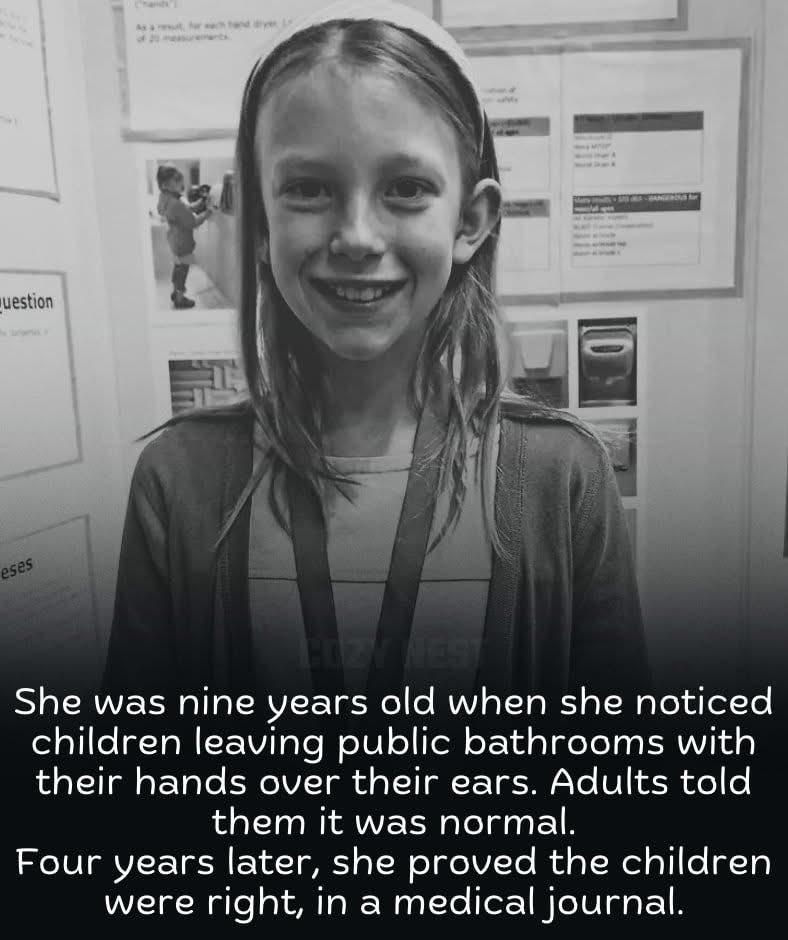
Nora Keegan was not trying to change public health policy. She was just paying attention.
In elementary school in Calgary, she noticed something adults kept dismissing. Children rushing out of public restrooms. Hands clamped over their ears. Faces tense. Complaints whispered between friends. It hurts my ears.
She felt it too. After using hand dryers, her ears rang. The sound lingered. Adults brushed it off. They are just loud. That is what machines do.
But Nora kept wondering why children reacted so strongly. And more importantly, why no one was measuring it.
In fifth grade, she decided to find out.
With the help of her parents, both physicians, she turned curiosity into research. She borrowed professional sound equipment. She designed an experiment. And then she went where the problem lived.
Public bathrooms.
Over two years, she visited forty four restrooms across Alberta. Libraries. Restaurants. Schools. She took eight hundred and eighty measurements. She measured at adult height. Then she crouched to measure at child height. She tested distance. Position. Airflow. Again and again.
What she found was impossible to ignore.
Many high speed hand dryers exceeded one hundred decibels at a child’s ear level. Some reached levels comparable to emergency sirens. Levels that medical authorities already prohibit in children’s toys because of the risk of hearing damage.
Children were not imagining the pain. They were standing closer to the source. Their ears were smaller. And the sound hitting them was stronger than what adults experienced.
Manufacturers claimed their machines were safe. Nora’s data showed real world conditions told a different story.
And she did not stop there.
Still in middle school, she began designing a noise reduction filter. A simple modification that lowered sound output by more than ten decibels. Proof that the problem was not inevitable.
Then she did something most adults never do. She wrote a scientific paper.
Her first submission was rejected. So she revised. She corrected. She tried again.
In June 2019, Paediatrics and Child Health published her study. Its title was direct and impossible to dismiss. Children who say hand dryers hurt my ears are correct.
She was thirteen years old.
Health professionals paid attention. Researchers cited her work. Parents shared it. Manufacturers requested meetings. All because a child trusted her own experience enough to test it.
Nora did not raise her voice. She measured. She documented. She proved.
And in doing so, she reminded the world of something simple and easily forgotten.
Sometimes the smallest voices are describing the biggest problems. You just have to listen.
If you want to watch something amazingly inspirational tonight, keep Niall harbinson of @wearehappydoggo company on the last 5k of the Bangkok marathon in aid of sterilising 7000 street dogs. https://t.co/6gYLKFnkca