The article is worth reading, I agree. I cannot share however its enthusiasm for, and resurrection of Dreyfus arguments which, IMO, aim to mystify, rather than understand human intelligence. AGI will be achieved by conquering one mini-Turing-test at a time, not by quitting.
If I were starting grad school now I would not do a PhD in ML. It's not the competition that would steer me away though, I think it's a bad idea for other reasons.
We've posted a brief sketch of our #useR2020 plans for July with @useR2020muc. All events will be no-cost, and more details will be coming soon as we solidify dates/times/ticketing for tutorials and the times for our keynote streaming events. https://t.co/a487KdzNn4
Extrapolating the spectacular performance of GPT3 into the future suggests that the answer to life, the universe and everything is just 4.398 trillion parameters.
Here's the thing about AI: you get what you optimize for. If you optimize for a specific skill, like chess or StarCraft, your final system will possess this skill and nothing else. It won't generalize to any other task.
To generalize, you must optimize for generality itself.
Designing social simulation to (seriously) support decision-making: COMOKIT, an agent-based modeling toolkit to analyze and compare the impacts of public health interventions against COVID-19 - a contribnution to the JASSS_Covid19… https://t.co/ted8fdLOlq
Example of swarm intelligence
Agents follow very simple rules, and there is no centralized control structure dictating how individuals should behave.
Local interactions between such agents lead to the emergence of “intelligent” global behavior, unknown to the individual agents.
I am hearing great passion for ODE, so I ask myself: "Why not use ODE for causal inference?" One answer: We don't have the functions that make up ODE. All we have are some qualitative properties, eg. who are the arguments of each function, and we still venture to estimate effects
Your 100% up-to-date guide to transfer learning & fine-tuning with Keras: https://t.co/iM7fnZEHNA
Batch normalization involves many gotchas you need to be aware of.
How to capture rich patterns in label-free data ? Currently taking Deep Unsupervised Learning by @pabbeel , et al. The website contains all the materials!
https://t.co/l6UhM56Eqx
Another exciting paper arriving at my desk reads: Causal Relational Learning: https://t.co/PD6G4hYbBs which promises to revolutionize causal inference the same way first-order predicate logic has transformed Boolean logic.
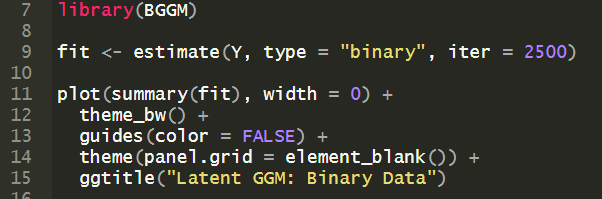
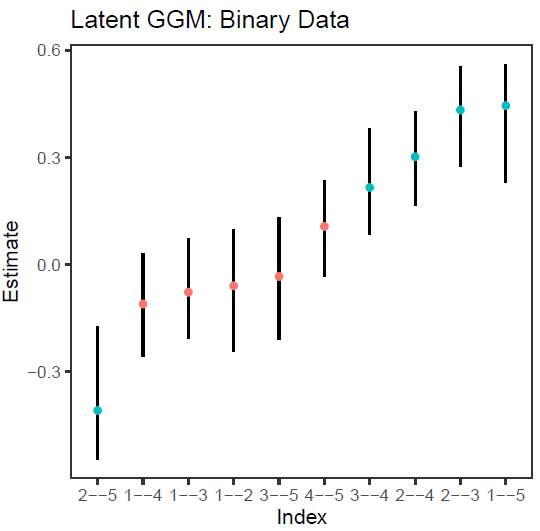
The R-package BGGM can now *estimate* (latent) Gaussian graphical models for binary data.
Also, to my knowledge, this is the only Bayesian implementation for estimating an arbitrary number of polychoric correlations.
I am always happy to see "completeness" results in CI, but these results https://t.co/KDixOe2vqj are especially gratifying, because graphical modeling of missing data problems (https://t.co/NhMaykEVQL) have totally been ignored by MD practitioners. I hope things will change soon.