Back in Europe and forced to use Uber again
I get that they're profitable now and it's probably because of the high amount of dark patterns that make the app a pain to use:
Today I accidentally signed up to an Uber One membership, which is a recurring membership kinda like Amazon Prime, nice but I don't really want it!
The dark pattern:
When you order an Uber ride, normally a popup shows up to confirm you ordered the right ride and location with a solid black button [ Continue ]
So you're WIRED to press that solid black button because you know you always do
So they do a quick switcheroo and show you the Uber One popup then with a solid black button [ Join Uber One ]
Ok fair, nice dark pattern, let's cancel
But then if you wanna cancel Uber One they pull the exact same trick on the cancel page
Now try cancelling a ride, you will go through about 3 different pages trying to make you NOT cancel your ride, because probably cancelling is a KPI (internal metric) they really wanna see go down
Uber has just become a very frustrating app to use because of all this
And it shows that yes the KPIs go up, the revenue goes up, the profit goes up, but now everyone fucking hates your app
When in Asia (see quote tweet) using Grab was such a smooth experience, it looked like it was made with love, and their goal is to make your experience happy and your ride comfy
The app tells me I am one of Uber's global top users, I spend about $1,000 to $4,000/mo on Uber rides, all good
But then if the app is such a pain to use it just makes me want to switch
Realistically of course there is nothing to switch to that offer premium taxi rides in Europe
The main competitor would be Bolt, with extremely cheap cars and agressive drivers
inb4 get a car, ye ye true, but let me complain about Uber which theoretically could be a great app!
@stevesi This Dexcomm Stelo is based off the “G7” tech and doesn’t need finger stick calibration. (Likely a software limited version of G7 hardware, with 15 minute reads and less medically-robust software)
7/ Key Finding 5: The pass-through of production costs to retail prices is slower for unexpected cost changes. This suggests that forecasting errors in costs can play an important role in slowing down cost passthrough rates.
Bucco is partially right about this.
It is hard to internalize certain lessons unless you experience them firsthand.
However books can help if you are intentional about what you read and how you read it. I started specifically looking for three takeaways that I could apply from a book and taking notes as I read.
Examples of how books have helped include:
Data from a book on a niche investment strategy helped me decide not to build a specific feature on InsideArbitrage that I had been toying with.
Several years ago @tferriss' book Four Hour Body helped me add several pounds of muscle and break through plateaus.
A specific technique from the book Relentless helped me squeeze out an extra lap when swimming. (Thanks for the recommendation @ChrisPavese)
The book "Dead Companies Walking" by Scott Fearon provided a unique perspective on how not to short companies.
David Einhorn's book "Fooling Some of the People All of the Time" provided additional perspective on the challenges of shorting stocks.
And these are just a few examples that come to mind readily.
I wonder how much more accumulated "book knowledge" is swimming around in the subconscious mind that weaves a tapestry with lived experiences as I analyze companies, determine how to approach product development and optimize lifestyle.
"Pretrial agreements are contracts—one set of promises exchanged for another. They became binding when they were approved by General Escallier," writes Eugene Fidell @just_security. https://t.co/yFFHQ7ywMj
FUNDSTRAT: Today’s BLS comment “that #Beryl had no discernible impact on the [jobs] data .. defies logic. ..
“The fact is 1.3 million homes and businesses [were] without power for two weeks. .. The August jobs report should be the ‘counter’ to this and show a major upside surprise.”
@fundstrat #NFP 🇺🇸
Every year, a lottery determines who gets an H-1B visa to work in the US. The game, it turns out, is rigged.
Outsourcing and staffing firms are exploiting loopholes, crowding out US employers and immigrants who play it fair.
We have exclusive data to show it for the 1st time 🧵
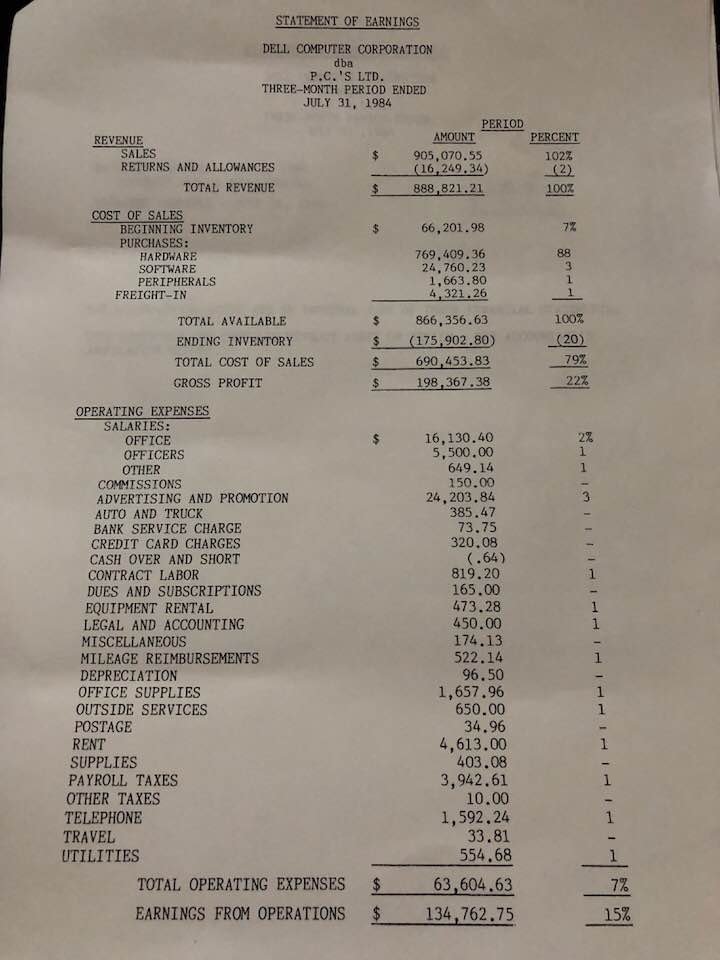
About two weeks before the end of my freshman year at @UTAustin, I officially started what is now @DellTech. My parents were understandably upset that I was dropping out and unsure it was a good idea. After the first 3 months, I showed them this financial statement. It was going pretty well and they started to come around to the idea. #PlayNiceButWin
Amazon ($19.99) is a showroom for Aliexpress
Aliexpress ($5.17) is a showroom for Taobao
Taobao ($2.48) is a showroom for Alibaba
Alibaba ($0.69) is a showroom for well whoever actually makes the thing!
Via @pandrewhk
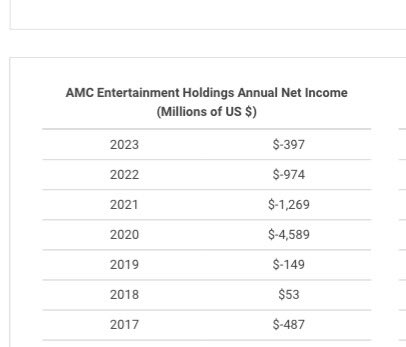
AMC CEO Adam Aron has made more money in the last eight years than the company itself and all of its shareholders
2017: $7.4M
2018: $9.5M
2019: $9.7M
2020: Possible Bankruptcy $20.9M
2021: Possible Bankruptcy $18.9M
2022: Possible Bankruptcy $23.7M
2023: $25.4M
Shares Sold: $75M
Shares Bought: $0.00
@AsifSuria The decline in (branded) street wear sales seems to have surprised a lot of people. Obviously Vans sales down more than 10% and 20% in recent years, but Superdry just delisted from the LSE. (In my anecdotal limited international travel, would see that brand all the time.)
This report is damning. Goldman Sachs's Head of Global Equity Research doesn't believe that generative AI is capable of solving complex problems, and says the tech industry "is too complacent in its assumptions that costs will decline substantially"


![levelsio's tweet photo. Back in Europe and forced to use Uber again
I get that they're profitable now and it's probably because of the high amount of dark patterns that make the app a pain to use:
Today I accidentally signed up to an Uber One membership, which is a recurring membership kinda like Amazon Prime, nice but I don't really want it!
The dark pattern:
When you order an Uber ride, normally a popup shows up to confirm you ordered the right ride and location with a solid black button [ Continue ]
So you're WIRED to press that solid black button because you know you always do
So they do a quick switcheroo and show you the Uber One popup then with a solid black button [ Join Uber One ]
Ok fair, nice dark pattern, let's cancel
But then if you wanna cancel Uber One they pull the exact same trick on the cancel page
Now try cancelling a ride, you will go through about 3 different pages trying to make you NOT cancel your ride, because probably cancelling is a KPI (internal metric) they really wanna see go down
Uber has just become a very frustrating app to use because of all this
And it shows that yes the KPIs go up, the revenue goes up, the profit goes up, but now everyone fucking hates your app
When in Asia (see quote tweet) using Grab was such a smooth experience, it looked like it was made with love, and their goal is to make your experience happy and your ride comfy
The app tells me I am one of Uber's global top users, I spend about $1,000 to $4,000/mo on Uber rides, all good
But then if the app is such a pain to use it just makes me want to switch
Realistically of course there is nothing to switch to that offer premium taxi rides in Europe
The main competitor would be Bolt, with extremely cheap cars and agressive drivers
inb4 get a car, ye ye true, but let me complain about Uber which theoretically could be a great app!](https://pbs.twimg.com/media/GZ4Hn4TXsAAwYqm.jpg)







![levelsio's tweet photo. Back in Europe and forced to use Uber again
I get that they're profitable now and it's probably because of the high amount of dark patterns that make the app a pain to use:
Today I accidentally signed up to an Uber One membership, which is a recurring membership kinda like Amazon Prime, nice but I don't really want it!
The dark pattern:
When you order an Uber ride, normally a popup shows up to confirm you ordered the right ride and location with a solid black button [ Continue ]
So you're WIRED to press that solid black button because you know you always do
So they do a quick switcheroo and show you the Uber One popup then with a solid black button [ Join Uber One ]
Ok fair, nice dark pattern, let's cancel
But then if you wanna cancel Uber One they pull the exact same trick on the cancel page
Now try cancelling a ride, you will go through about 3 different pages trying to make you NOT cancel your ride, because probably cancelling is a KPI (internal metric) they really wanna see go down
Uber has just become a very frustrating app to use because of all this
And it shows that yes the KPIs go up, the revenue goes up, the profit goes up, but now everyone fucking hates your app
When in Asia (see quote tweet) using Grab was such a smooth experience, it looked like it was made with love, and their goal is to make your experience happy and your ride comfy
The app tells me I am one of Uber's global top users, I spend about $1,000 to $4,000/mo on Uber rides, all good
But then if the app is such a pain to use it just makes me want to switch
Realistically of course there is nothing to switch to that offer premium taxi rides in Europe
The main competitor would be Bolt, with extremely cheap cars and agressive drivers
inb4 get a car, ye ye true, but let me complain about Uber which theoretically could be a great app!](https://pbs.twimg.com/media/GZ4Hoq_XUAAqyNY.jpg)



![carlquintanilla's tweet photo. FUNDSTRAT: Today’s BLS comment “that #Beryl had no discernible impact on the [jobs] data .. defies logic. ..
“The fact is 1.3 million homes and businesses [were] without power for two weeks. .. The August jobs report should be the ‘counter’ to this and show a major upside surprise.”
@fundstrat #NFP 🇺🇸](https://pbs.twimg.com/media/GUA66kSWgAAY4zX.jpg)