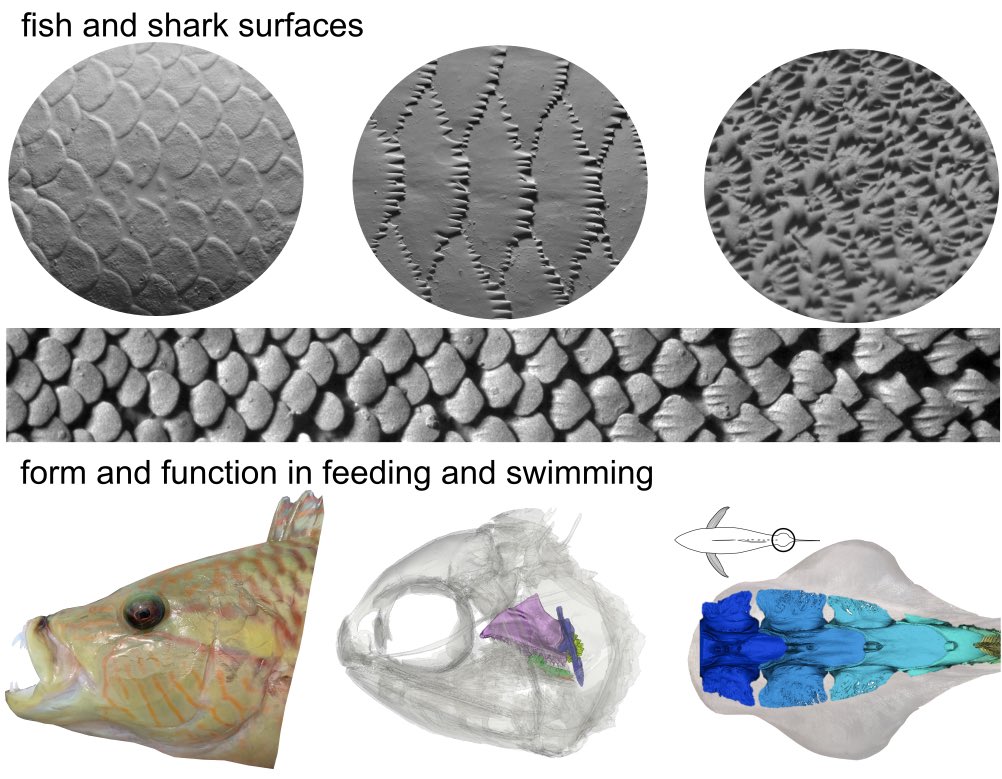
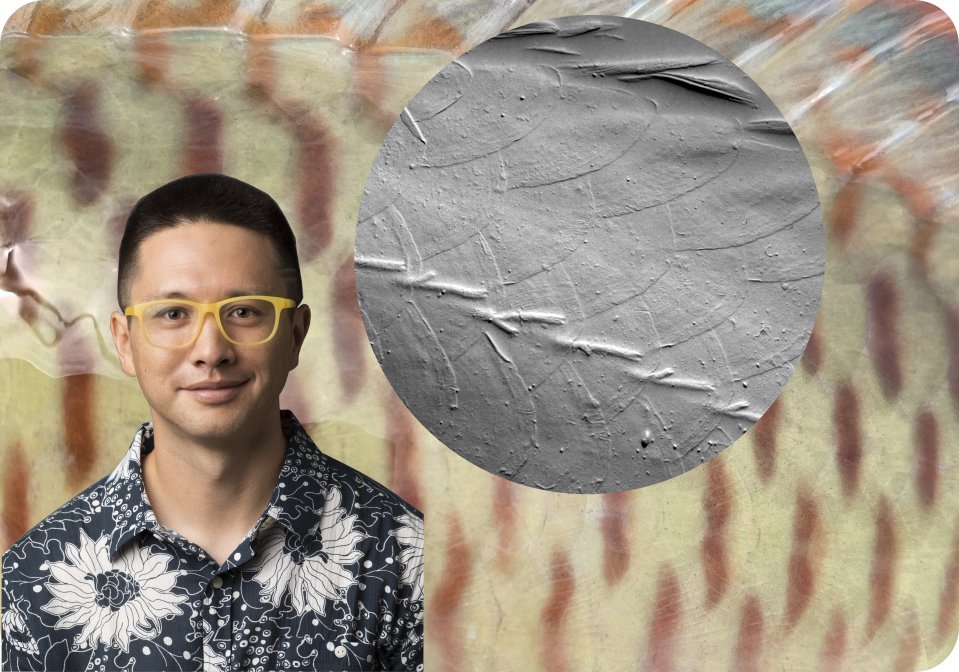
How are structural variations in scales related to different functions in fish?
Dylan Wainwright (@fishwright3) at the department of @PurdueBiolSci Purdue University (@LifeAtPurdue) tackles this & other questions in this new article👉 https://t.co/XO7N0gWGBN
#microscopy#biology
Thankful to share our new #stickyfish paper in @J_Exp_Biol before Twitter explodes! https://t.co/Ah4MjSLRV0
@fishwright3@Fishguy_FHL@Karly_Cohen & I found that the adhesive performance of clingfish, lumpsuckers, and snailfish suction discs reflect their ecologies
🧵1/6
Issue 22’s cover image by @jmhuiee shows the fluorescent ventral adhesive disc of a northern clingfish. In the accompanying article, @jmhuiee@fishwright3@Fishguy_FHL@Karly_Cohen compare the maximum adhesive forces of clingfish, lumpsuckers & snailfish
https://t.co/VcSZ1T0YYd
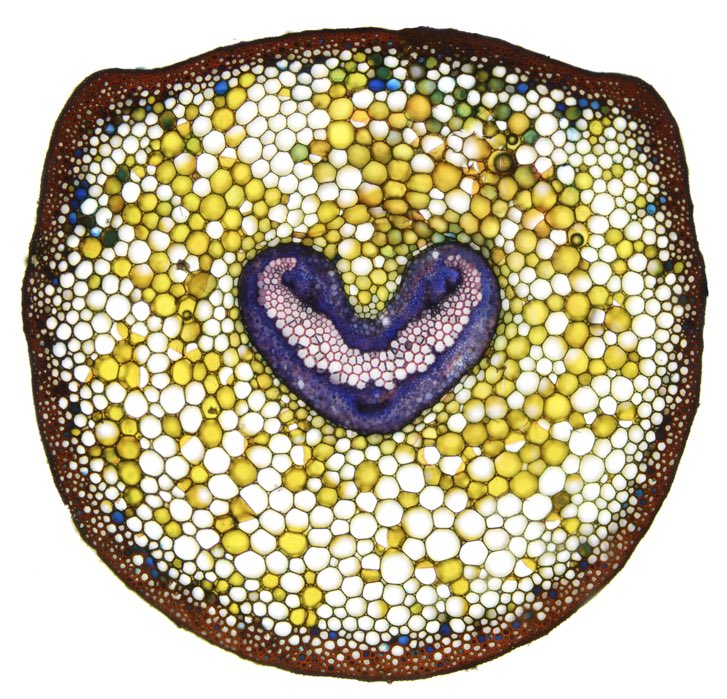
Why did the earliest plant vascular systems diversify so rapidly? We think they evolved to tolerate drought. We show why xylem connectivity was critical for preventing hydraulic failure. @BoudaLab@WasonLab@KyraPrats @HuggettLab @Medullosa 🧵👇
https://t.co/vHLTRqTZyY
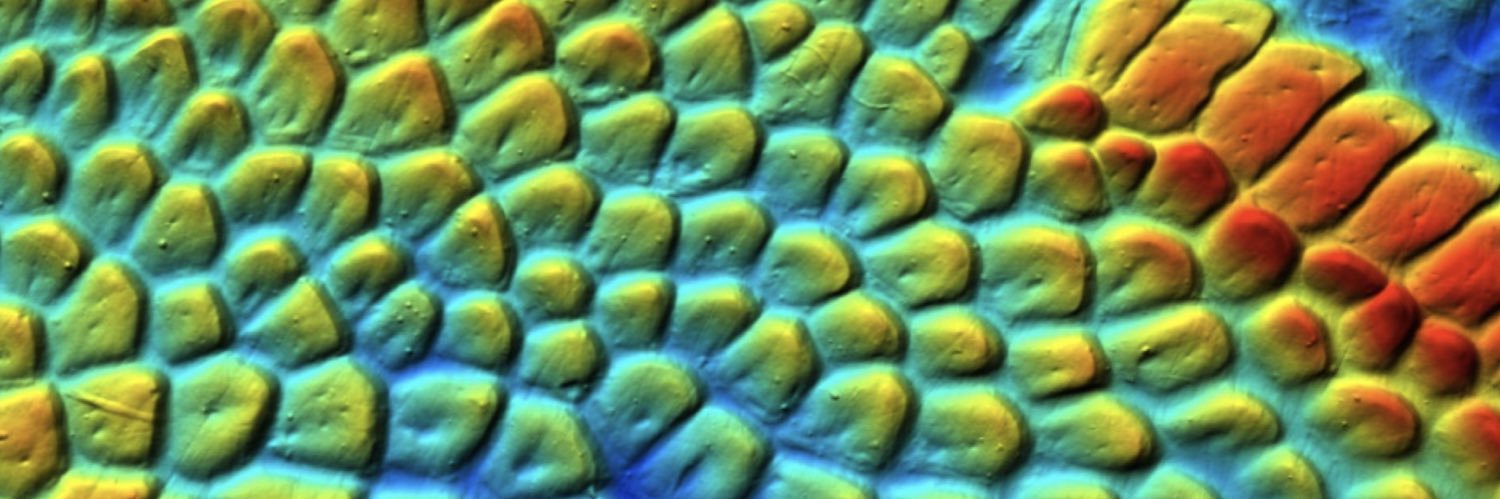
Scales of the redbreast sunfish showing a subtle transition from smooth-edged to spiny-edged. We typically think of these as different scale “types” that occur on different species. #fishes#marinebio
Dylan Wainwright @fishwright3 is a new professor here @PurdueEEB and is recruiting graduate students and postdocs. He studies connections between form and function in organisms (mostly fishes and sharks) by using 3D imaging, biomechanical testing, and comparative studies. 1/2
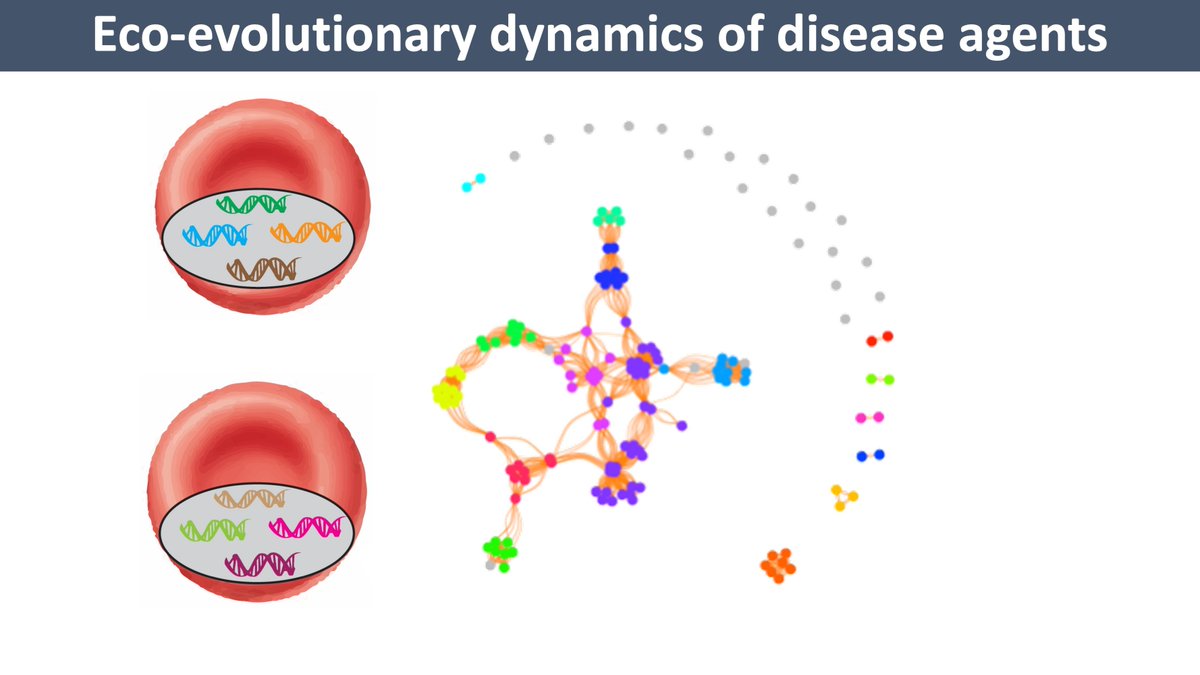
The He Lab @heqixinAA investigates infectious disease dynamics by integrating theory & empirical data. We develop new statistical tools to resolve mixed infections and predict when new disease variants would invade local transmissions. Check our website at https://t.co/pAksWygxwp
@NyaziaBey Best of luck with the grfp! I was tagged in an earlier reply on this thread - I’m a new PI who mostly studies fish biomechanics and functional morphology, although occasionally other critters too. I am currently recruiting PhD students and would be happy to talk if interested.
@brunfmelo Nothing strictly evolutionary that I can think of, but @georgelauder and I published a paper describing this in a closely related species - the bluegill sunfish. https://t.co/nNWEA2FiVd
@hannahiweller I’ve often wondered! I’m unsure of good theories from the lit, but I think it might be about needing flexibility or no longer needing protection on the cheek - just guessing at this though! (Also… some fishes have chunky cheek scales in the reverse pattern)