Capitalism has a win condition. Socialism does not.
Here's why, explained so simply a 10-year-old could get it. It starts with a book written in 1944 by an Austrian economist named Friedrich Hayek: The Road to Serfdom.
Imagine a classroom of 30 kids. One day the teacher says: "From now on, I decide what everyone eats for lunch, which games you play at recess, and who sits next to whom. It's fairer that way."
First problem: the teacher doesn't know what you like. You hate carrots. Your friend is allergic to peanuts. Lucas wants to play football, Emma wants to draw. 30 kids, 30 different wishes. Nobody can know all of that, not even the smartest teacher on Earth. Hayek called this the knowledge problem. The information needed to run an economy is scattered across millions of heads, and it can't be gathered in one office.
Second problem: the kids start fighting. "Why does he get the window seat?" "Why football again?" Before, everyone just chose for themselves. Now every choice is a fight, because every choice is made for everyone.
Third problem: the class can't agree on a plan, so someone says "we need one person in charge who just decides." This is Hayek's key insight. Planning doesn't fail because planners are evil. A plan needs everyone to agree on the same goals, and free people never agree on everything. So the plan needs force to work.
Fourth problem, and it's the scariest one: who wants that job? The kind kid doesn't want it, because the kind kid doesn't want to force 29 people to eat carrots. The job attracts the one who likes giving orders and doesn't mind punishing those who disobey. Hayek wrote a whole chapter on this, called "Why the Worst Get on Top." It doesn't happen by accident. It happens by selection.
Here's the trap. When the person who controls your lunch also controls your job, your home, your shop and your newspaper, they control your whole life. You can't say no, because there's nowhere else to go. Controlling the economy doesn't mean controlling one part of life. It means controlling the means to every goal you have.
That's the road to serfdom. Nobody votes for a dictator. People vote for "someone should fix this," then for "give them more power to fix it," and one day they wake up with no one left to say no to.
The USSR, Maoist China, Cambodia, North Korea, Cuba, Venezuela. These are different countries with different cultures and languages, and the story has the same ending every time. When a script produces the same ending every time, it isn't bad luck. It's the script.
Now capitalism. Back to the classroom. Instead of one teacher deciding everything, every kid can trade. You give me your carrots, I give you my apple, and we both walk away happier. Nobody needs to know what everyone wants, because prices do that job. A price is a message telling millions of strangers what's scarce and what's wanted, with no one in charge.
That's the win condition. In capitalism, you get rich by making something other people freely choose to buy, so your success depends on serving others. In a planned system, you get ahead by pleasing whoever holds power. One rewards usefulness. The other rewards obedience.
And this isn't theory. Two centuries ago, almost every human being was extremely poor. In 1990, about 38% of humanity still lived in extreme poverty. Today it's under 10%. More than a billion people escaped it in a single generation. It happened when China, India, Vietnam and South Korea opened up to markets, trade and private enterprise. The largest reduction in poverty in human history came from letting people trade.
So why do so many people hate capitalism?
Because what they hate usually isn't capitalism.
They hate the bank that got bailed out with their taxes while they lost their house. They hate the giant company that writes the regulations so no startup can compete with it. They hate rent they can't afford because building new homes has been made nearly impossible. They hate the lobbyist who gets a subsidy while the small business owner drowns in paperwork.
Look closely at each one, and you'll find a state handing out privileges. A bailout is not the market. The market would have let the bank fail. A regulation written by incumbents is not competition. It's protection from competition. None of this is capitalism. It's cronyism, which is what happens when businesses stop competing for customers and start competing for politicians.
People see the symptom and blame the wrong cause. They say "capitalism failed" and ask for more state. That gives more power to the same people who created the problem, and it puts us right back on Hayek's road.
The answer to bad capitalism isn't less freedom. It's less privilege. That means fewer bailouts, fewer protected incumbents, fewer permits, and more people allowed to build, compete and trade.
Capitalism has a win condition: make things people want. Socialism has an end condition: someone has to be in charge. And history keeps showing us who ends up in that chair.
The past few days, I got my hands on thousands of new transcripts and hundreds of recordings, thanks to leads from @SKDoubleDub33 and @iamlisalogan .
You've heard that the DSA is proposing structural reforms to America, including abolishing the Senate and imposing term limits.
What you not have heard is - there is an operational plan to put it all into action. If the Democratic Party sweeps 2026, then DSA will become "foot soldiers" in constant clashes with the administration to cross a "red line" or invoke a "doomsday scenario" - meaning, President Trump invokes the Insurrection Act, probably sometime in 2027.
Then, a lot of coordinated responses kick off, including delegitimizing the federal government itself and handing that legitimacy to Democratic governors. 2028 then becomes a vote on whether to keep America governance as-is or to burn it all down to appease a "young and brown" demographic.
The mysterious group who's been coordinating 50501, Indivisible, and coordinating the NoKings protests is called "United Democracy Alliance" and their intellectual leader is Erica Chenoweth who came up with the 3.5% rule of nonviolent regime change.
Patience. I know I've hyped this more than anything else. It's genuinely the biggest discovery I've had. This is an enormous archive. This is only the beginning.
My dear American friends, in my last two posts I showed you where France stands and how our economy got there. Today I want to go deeper, because the economics were only the symptom.
Here is my message to every American: you have been infected by a virus that took decades to incubate in your country. Everything you've watched get worse, year after year, is the damage. MAGA, whatever you think of it, is the immune response. But a body can't fight what it can't name. So today I'm going to name it and show you where it came from.
It starts in an Italian prison cell.
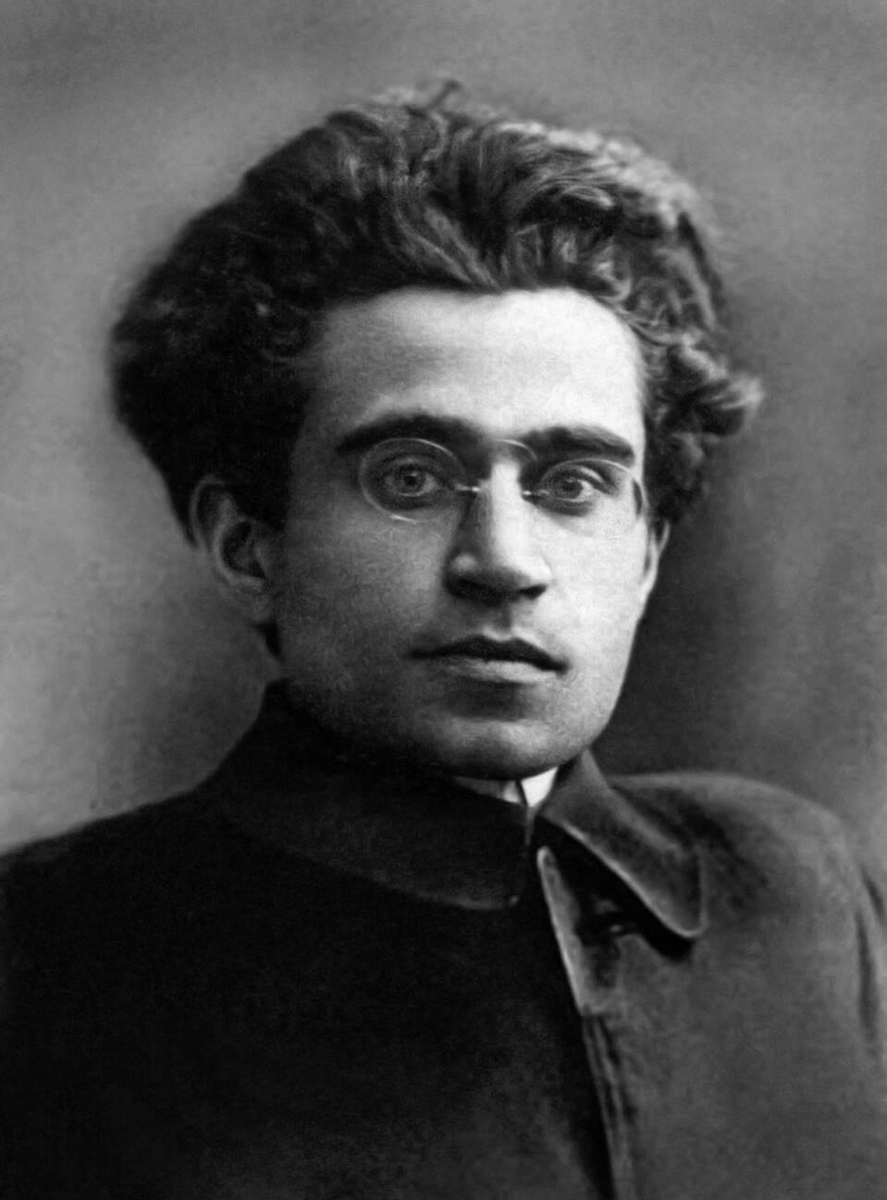
Antonio Gramsci co-founded the Italian Communist Party in 1921. In 1926 Mussolini locked him up, and he spent the rest of his life in prison filling notebooks. He was trying to answer one question: why did the revolution never come to the West? Marx had promised the workers would rise. They didn't. They went to church, saluted the flag, and wanted their kids to do better than them.
Gramsci's answer changed everything. In the West, he said, power doesn't sit in the army or the factories. It sits in culture: schools, universities, churches, newspapers, theater, the family. He called it hegemony. As long as ordinary people believe in their own civilization, you can't overthrow it. So you don't storm the palace. You fight a "war of position." You take the institutions one by one, patiently, until the culture thinks like you do. Then political power falls into your hands like ripe fruit.
A German student leader, Rudi Dutschke, later gave the strategy its famous name: the long march through the institutions.
Now watch France become the laboratory.
In 1945 the French Communist Party came out of the Resistance as the biggest party in the country, with more than a quarter of the vote. General de Gaulle needed them to govern, so communists entered the cabinet. Look at what they got. Public Health went to a communist, François Billoux. Labor went to a communist, Ambroise Croizat, who built our national social security system and put it under boards dominated by the communist-led CGT union. Industrial Production went to another communist, Marcel Paul, who nationalized electricity and gas and gave the union control of their enormous social funds. Education was redesigned by a commission led by two communist intellectuals, Paul Langevin and Henri Wallon, whose plan became the bible of French school reformers for decades.
The communists were thrown out of government in 1947. It didn't matter. They kept exactly what Gramsci told them to keep: the unions, the schools, the universities, publishing, film, theater. For a generation, being a French intellectual and being on the far left were almost the same thing. Jean-Paul Sartre, the most famous thinker in the world, defended the Soviet Union while it was filling the gulags.
Then came May 1968. Students occupied the Sorbonne, millions of workers went on strike, and for a few weeks the country stopped. De Gaulle won the elections that followed in a landslide. He won the ballot box. He lost the culture. Within a year he was gone, and the generation of 68 spent the next fifty years climbing to the top of every French institution: media, ministries, courts, schools, publishing houses. Their slogan was "It is forbidden to forbid." Authority, tradition, family, nation: all of it became suspect.
Then came the export phase. This is where you come in.
A group of French philosophers, Michel Foucault, Jacques Derrida, Gilles Deleuze, Jean-François Lyotard, gave the movement its intellectual weapons. Foucault taught that every institution, every norm, every piece of knowledge is a disguised structure of power. Derrida taught that every text, every concept, every hierarchy can be "deconstructed" until nothing stable is left. Lyotard announced the end of grand narratives, which in practice meant the end of the great narrative of the West itself.
In France these men were famous. In America they became gods. Starting with a 1966 conference at Johns Hopkins where Derrida made his American debut, your English, history and law departments imported them wholesale. Your academics even gave it a name: French Theory. On your campuses it mutated. Mixed with the Frankfurt School exiles like Herbert Marcuse, who argued that tolerance should be withdrawn from the right, it produced critical race theory, gender theory, intersectionality. The old Marxist split between bourgeois and proletarian was replaced by a new one: oppressor and oppressed, assigned by skin color, sex and identity.
That's the cultural strain of the virus. There's a second strain, and it attacked your energy and your ambition.
In 1968 an Italian industrialist, Aurelio Peccei, co-founded the Club of Rome. In 1972 it published The Limits to Growth, built on a computer model from MIT, warning that if humanity kept growing, civilization would collapse. It sold millions of copies. Its core idea, that growth itself is the problem, became gospel. In France it gave birth to the degrowth movement. Progress went from a promise to a sin.
Look what it did to us. The country that built a nuclear fleet in fifteen years shut down Superphénix, its advanced breeder reactor, in 1997, as part of a deal with the Greens. In 2015 it passed a law to cut nuclear's share of our electricity. In 2019 it cancelled ASTRID, our next-generation reactor program. In 2020 it closed Fessenheim, a working plant. We sabotaged our own greatest achievement because we were told that building things was dangerous.
Put the two strains together and you get what you call woke. One teaches children to be ashamed of their past. The other teaches them to fear their future. Guilt behind, fear ahead. A civilization that hates where it comes from and dreads where it's going has nowhere left to go.
And here's the irony. France infected America, and now America is sending it back to us. Our own politicians complain about "American woke ideas" invading French universities, without realizing those ideas were born in Paris. The virus made a round trip and came home stronger.
That's why France is the most advanced case in the West. We have every symptom at once: a state that runs health, schools, culture and energy. Unions that block every reform. Universities where you can't say what everyone thinks. Self-hatred. Fear of growth. We are what the disease looks like when nothing fights it.
The West is at a turning point. Every country is infected, some more than others. What you're living through, the fights over schools, over speech, over energy, over what it means to be American, is the fever. The fever is not the disease. The fever is your body fighting back.
So understand this. The battle in front of you isn't just Republican versus Democrat. It's a battle for the institutions Gramsci told his heirs to capture: schools, universities, media, culture. It took them eighty years to win them. You won't take them back in one election.
But you can take them back. You have something we never had: a country founded on the idea that the individual comes before the state. Free speech written into your First Amendment. Builders who still believe the future can be better than the past.
Name the virus. Fight it where it lives. Don't let it do to you what it did to us.
I come from your future. It's not too late to change yours.
A lot of uneducated people fall into this capitalism vs public trap. So let me explain why the "public" side of this debate comes down to one thing: it doesn't work.
And it's not because the State is evil. It's because the State is made of people. Same people as everywhere else. Same incentives, same laziness, same temptations. The only difference is whose money they're spending.
Milton Friedman nailed it. There are four ways to spend money. Your money on yourself: you watch the price and the quality. Your money on someone else: you watch the price, less the quality. Someone else's money on yourself: you stop caring about the price. Someone else's money on someone else: you care about neither. Every public budget on earth lives in that fourth box.
Now let me explain it like you're 8. Picture a schoolyard. 100 kids, Pokémon cards handed out at random. Nobody plans anything. Kids trade, collectors sort, good players accumulate. Very quickly every card ends up with the kid who values it most. Then the teacher walks in, decides it's unfair, confiscates everything and redistributes it herself. Problem: she has no idea who wants what. She can't. Nobody can. Trades stop, good players quit, and somehow the kids sitting closest to her desk end up with all the rare cards.
That last part is the one everyone forgets. When money flows from a central desk instead of voluntary trade, the winners are the people who know the desk best. Lobbyists, connected contractors, consultants billing 10x. California high-speed rail: budget tripled, still no train. That's not a bug, it's what happens every single time someone spends money that isn't theirs, on people they'll never meet, with zero consequences if they fail.
And here's the irony in your take. The capitalists who love public infrastructure the most are the cronies who win the contracts. That's not the free market. That's the exact opposite of it.
The free market is the only system where bad allocators lose their money and good allocators get more to allocate. Profit is the signal. Losses are the correction. The State has neither. A failing company goes bankrupt. A failing ministry gets a bigger budget next year.
So if you actually care about the common good, you should want more free market, not less. Freedom means the freedom to build, to trade, to keep what you create. It does not mean the freedom to hand other people's money to people who've proven they don't know how to invest it.
The question was never capitalism vs public. It's who allocates the next dollar best. 200 years of data, same answer every time.
My post about France went viral. Thousands of likes. Many Americans told me: "Democrats aren't socialists. America will never be France." I want to answer that seriously, step by step.
Start with a simple observation. Look at what has gotten cheaper in America over the last 25 years: TVs, phones, software, clothes, toys. Now look at what has exploded: college tuition, healthcare, childcare, housing.
What separates the two lists? The first lives in competitive markets. The second is exactly where government is most involved: subsidies, mandates, licensing, zoning, regulation.
College. Washington lends students almost unlimited money. Universities know the money will always come, so they raise tuition and hire more administrators. The student pays the bill for twenty years. More government money, higher prices.
Housing. Why can't a nurse buy a home in the city where she works? Not because of capitalism. Because of zoning laws, permits, environmental reviews, years of procedure to build a single building. The most expensive places to live in America are the places where it's hardest to build. When building is nearly illegal, prices explode.
Healthcare. The patient almost never sees the price. A third party pays, regulations limit who can compete, and costs climb year after year with no one able to say no.
So here is the trap. The problems you suffer from are not the failure of free markets. They are the places where the market has already been replaced by the state. And the solution you're being offered is more of the same.
That's the Trojan horse. It always works the same way. A real problem. A generous-sounding promise. A program that makes things worse. Then the failure of that program becomes the argument for the next one. People who lived under communism in Poland learned to recognize the lie and the mask the lie wears. The lie never presents itself as a lie. It presents itself as compassion.
In France we are at the end of that road. Debt we can never repay. Young people who can't afford a home. Our best people leaving. And every few years our cities burn. Nobody voted for this. They voted for one more generous promise, fifty years in a row.
If you're a Republican, share this with the Democrat in your life. Not to win an argument. To start a conversation.
If you're a Democrat, I'm not asking you to switch teams. I'm asking you to look at the pattern. Wherever the state took over, life became unaffordable. Don't fix the failures of government with more government.
Stay American. Ask for less state, not more.
I’m French. I want to talk to Americans who are about to vote Democrat. Not to insult you. To warn you.
I come from your future.
In France we did everything your progressive politicians promise. Free healthcare, free college, generous welfare, strong unions, heavy regulation, high taxes on the rich, a state that takes care of everything. Public spending close to 57% of GDP, one of the highest on the planet. On paper, it’s the dream.
Here’s what it looks like from the inside. France hasn’t passed a balanced budget since 1974. Our debt is above 3,300 billion euros. Interest on that debt is becoming one of the biggest items in the national budget. Our hospitals are collapsing despite record funding. Our schools rank lower every year. Young people with degrees can’t afford an apartment in the city they were born in. Our best engineers leave for London, Zurich and San Francisco. And the rich you wanted to tax? They left too, and took the jobs with them.
The promise was protection. The result is stagnation.
The worst part is that nobody in France voted for decline. Every single step sounded generous, compassionate, reasonable. One more program. One more regulation. One more tax to fund it. Each step alone makes sense. Fifty years of them, and you wake up in a country that can no longer build a nuclear plant on time or keep its streets safe.
I love America because it’s the one place on earth where people still believe they can build something from nothing. I came to Silicon Valley as a self-taught kid and it changed my life. That spirit is the most precious thing your country has.
Before you vote, ask yourself one question: is the program you’re voting for making America more like America, or more like France?
Trust me. You don’t want to be France.
Hola, soy palestino. 🇵🇸
Y como la honestidad es poco común en mi política, permítanme confesar algunas cosas.
1947. La ONU me ofreció un estado. Junto a Israel. Fronteras, independencia, reconocimiento. Dije que no. Mis líderes prometieron que la guerra "arrojaría a los judíos al mar". En cambio, lo perdí todo y lo llamaron catástrofe. No porque no me ofrecieran un estado, sino porque lo rechacé.
1948–2025. Los estados árabes podrían haberme integrado, dado derechos, pasaportes, dignidad. En cambio, me encerraron en campos de refugiados durante generaciones, para que siguiera siendo un arma contra Israel. Construyeron palacios para ellos y cárceles para mí. Me usaron como propaganda, no como personas.
1967. Tras otra guerra perdida, podría haber construido un estado en Cisjordania y Gaza. En cambio, insistí en "ni paz, ni reconocimiento, ni negociaciones". Tres noes. Cincuenta años después, sigo sin Estado. Resulta que el rechazo no paga el alquiler.
Oslo, década de 1990. Israel dijo: «Intentémoslo». Me dio autonomía. Armas para la policía. Miles de millones en ayuda. ¿Qué hicieron mis líderes? Robaron el dinero, armaron milicias y lanzaron una intifada. Atentados suicidas en lugar de escuelas. Cohetes en lugar de fábricas.
Gaza, 2005. Israel se fue por completo. Sin colonos, sin soldados. Tuve la oportunidad de convertir Gaza en un Singapur mediterráneo. Voté por Hamás. La convirtieron en Mogadiscio junto al mar. ¿Miles de millones en ayuda? Túneles, cohetes y palacios para sus líderes, mientras mi gente come comida enlatada en la oscuridad.
¿Democracia? No he tenido elecciones en casi 20 años. Hamás mata a los disidentes en Gaza. Fatah los encarcela en Cisjordania. Mis líderes cancelan elecciones porque están demasiado ocupados luchando por el poder.
Religión. En lugar de construir un futuro, pongo a clérigos en televisión enseñando a los niños a odiar a los judíos. Glorifico a los "mártires" que hacen estallar autobuses. Crío a mis hijos con canciones de sangre y fuego en lugar de libros y ciencia. Cambio la esperanza por la guerra santa.
Mundo árabe. Los regímenes árabes me llaman "hermano". Pero pregúntenles cuántos palestinos pueden vivir libremente en Líbano, Siria, Egipto o Kuwait. Me excluyen, pero celebran mi muerte, porque mi muerte es su excusa.
Absurdo. Sigo diciendo que quiero "construir un estado". E irónicamente, justo al lado está Israel: el vecino que construyó una democracia próspera, una potencia tecnológica, granjas en el desierto, ciudades de polvo. Sin petróleo, sin riqueza infinita, solo coraje. Podría haber aprendido, copiado, colaborado. En cambio, elegí la envidia y la rabia.
Obsesión antijudía. Podría haber aceptado a los judíos como vecinos. Podría haber dicho: "Dos naciones, dos estados". En cambio, repito: "Del río al mar". En lugar de exhibir el honor, la hospitalidad y la rica cultura árabe, mostré solo la cultura de la espada: la ira, el extremismo y la sangre. En lugar de gritar salaam (paz) a los israelíes, grité muerte a los judíos. Y luego finjo sorprenderme cuando los israelíes no confían en mí, cuando están enojados, decepcionados y convencidos de que no quiero coexistencia en absoluto.
Responsabilidad. Culpo a Israel de todo. Siempre. ¿Mis líderes roban miles de millones? Culpa de Israel. ¿Hamás dispara cohetes desde hospitales? Culpa de Israel. ¿Glorifico la muerte más que la vida? Culpa de Israel. La responsabilidad no es mi fuerte.
Soy palestino.
Podría haber construido una nación, muchas veces. Elegí el rechazo, la corrupción y la guerra sin fin. Podría haber vivido en paz con Israel, pero elegí vivir a la sombra de su destrucción.
Así que sí, soy una víctima. Pero con demasiada frecuencia, soy víctima de mis propios líderes, de mis propias decisiones y de mi propia negativa a abandonar el odio.
Y esa, querido lector, es la tragedia que nadie quiere admitir.
@travelingflying There are no plates in New York, heaven is not in Missouri and yes, you are correct Jesus never went to Mexico in the 1700s. There are no Nephites or Lamanites or any of those fake made up crap.