The US has finally removed the unilateral sanctions on Eritrea today.
Congratulations to the people and Government of #Eritrea for their steadfastness, resilience, and principled approach that made this development a reality.
The unilateral sanctions imposed on Eritrea by the Biden Administration in 2021 were unwarranted and caused undue damage on Eritrea. Now that they have been removed, we welcome this positive gesture and corrective measures taken by the Trump Administration.
Today’s move by the US should mark the beginning of a new chapter in the Eritrea-US relations, that we envision to be grounded in #sovereign respect, mutual interests, and the pursuit of a mutually beneficial #partnership. 🇪🇷🇺🇸
The Eritrean people live together, whether Muslim or Christian, there is no difference. They are one people, they eat from the same plate. You won't find this anywhere else, where Muslims and Christians eat from the same plate.#Eritrea#EritreaPrevails
🇪🇷Eritrea Is Open for Business — But Never for Sale ⚓
Let’s set the record straight once and for all:
🇪🇷Eritrea has never denied Ethiopia access to our ports — Massawa or Assab — under fair commercial terms. What Eritrea won’t accept is exploitation or backdoor imperialism disguised as “economic advice.”
To those like Mr. Lawrence Freeman @lfreemansafrica and others pushing misinformation:
📌 FACT 1: Eritrea offered Ethiopia fair access to its ports right after independence.
📌 FACT 2: Eritrea even used Ethiopia’s currency, making trade seamless.
📌 FACT 3: It was Meles Zenawi who arrogantly rejected Eritrean ports, saying we could use them for "camels" — choosing Djibouti instead.
📌 FACT 4: After 2018, Eritrea wanted to welcome Ethiopia again, began to rehabilitate Assab — only for Abiy to sideline it for a twisted 4-Kilo agenda.
📌 FACT 5: Eritrea saved Abiy during his darkest hours — not out of naivety, but strategic clarity.
📌 FACT 6: Eritrea is open for fair commercial terms but NOT Blind for exploitation or backdoor imperialism.
But let it be known:
💡 Eritrea knows the game better than anyone.
✅ We stand for peace, mutual benefit, and regional stability.
🚫 But Eritrea is not for sale, not to puppets, not to power plays.
Bottom Line:
🔹 Eritrea is open to win-win cooperation — but never manipulation.
🔹 We understand our sovereignty and strategic assets.
🔹 Eritrea is for peace, but ready for any challenge.
We are open for business — fairly, equally, and on our terms.
VIDEO: https://t.co/nuhIWYFnFp
______________
#EritreaNotForSale #EritreaOpenForBusiness #RedSeaSovereignty #Massawa #Assab #KnowTheFacts #HornOfAfrica #Geopolitics #StrategicClarity #HandsOffEritrea #AfricanSolutions #EritreanPorts #PeaceWithStrength #EritreanPerspective #Ethiopia #Tigray #Amhara #Fano #Somalia #Sudan #Kenya #Egypt #Africa
Proud 🇪🇷Eritreans ROARED across the globe for Independence Day — because Eritrea lives in our hearts, not just on a map.
Inside or outside, we are ONE — and we don’t forget where we come from.
Our enemies had a plan:
🔻 Sanction us.
🔻 Suffocate us at home.
🔻 Scatter us as refugees.
🔻 Erase our national identity.
But they failed — completely.
They never understood us, and thankfully, they never will.
Here's what makes us undefeatable:
1️⃣ You can’t buy the love Eritreans have for their country — not with passports, perks, or promises.
2️⃣ We know Eritrea isn’t perfect, but it’s ours — and we’ll fix it ourselves.
3️⃣ We know who is holding Eritrea back — the same forces who betrayed us in 1952.
4️⃣ Eritrea is the promise of our martyrs — and that promise will never die.
We are proud because we know:
🔹 Our Ironclad Unity
🔹 Our Unbreakable Spirit
🔹 Our Can-Do Attitude
🔹 Our Unshakable Hope
🔹 And our Bold Self-Reliance
...are unmatched.
Eritreans are built different.
We don’t forget. We don’t break. We BUILD.
Happy Independence Season to all our warriors at home and abroad. 💪🏽🇪🇷
What would YOU add to this message?
🏷️ Hashtags:
#EritreaStrong #ProudToBeEritrean #IndependenceRoar #YouCantEraseUs #IronUnity #BuiltDifferent #EritreanSpirit #RedSeaPride #SovereigntyUnshaken #DiasporaPower #MartyrsPromise #NoMoreSanctions #WeAreEritrea
Impressed by what I saw in Eritrea: rejuvenated forests, increased variety of safe & nutritious foods, renewable energy sources and water projects.
There is a lot to learn from the way Government & partners are investing to protect the environment and build community resilience.
I captured some videos, but it's almost impossible to truly convey the atmosphere and scale of the Festival, both inside and out. I've attended many festivals, but I've never seen this many people. It was simply incredible. One remarkable aspect I'd like to highlight is that despite the massive crowd, not a single accident occurred. Kudos to all the event organizers and security personnel. What an event! #50thEriteaFastivalUSA2024
The 50th Eritrean festival in Washington DC 2024 is being dominated by the patriotic young generation. The marathon is continuing. #Eritreafestval#Eritreamylove#Africa
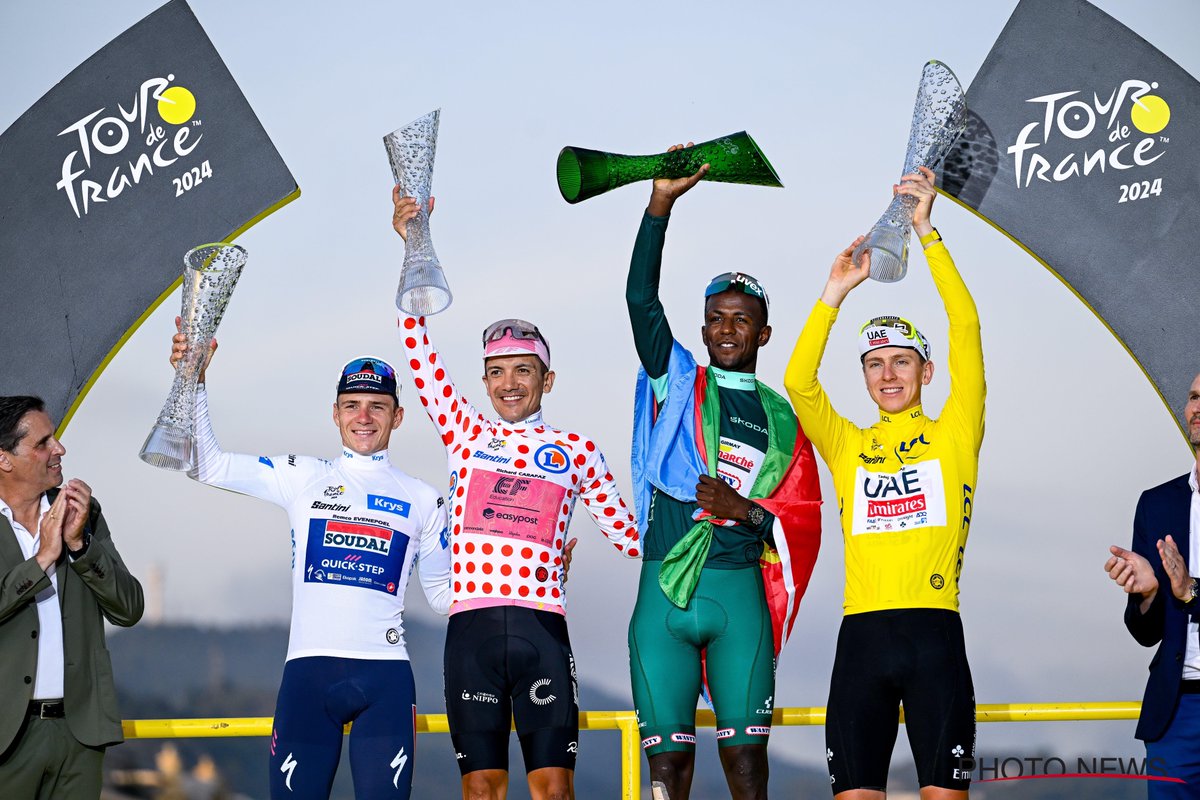
𝑯𝑰𝑺𝑻𝑶𝑹𝒀 𝑴𝑨𝑲𝑬𝑹𝑺
🇪🇷 @GrmayeBiniam : first African rider to win the green jersey / premier coureur africain à remporter le maillot vert.
🇪🇨 @RichardCarapazM : first Ecuadorian rider to win the polka dot jersey / Premier coureur équatorien à remporter le maillot à pois.
🇧🇪 @EvenepoelRemco : first Belgian rider to win the white jersey (best young rider) / premier coureur belge à remporter le maillot blanc de meilleur jeune.
Chapeau 👏
#TDF2024
@IntermarcheW @GrmayeBiniam@LeTour Indeed! Congrats @GrmayeBiniam @IntermarcheW #Eritrea 🇪🇷 #Africa. What a historical moment. Thank you Bini and Intermarch-Wanty for this moment, great team work!
🤩 A look back at a Tour de France that put Africa in the spotlight!
🏆 3 victories for @GrmayeBiniam, the first Eritrean rider to win a stage and wear the green jersey
🚴♂️ 8 young African riders accompanied by the @UCI_cycling World Cycling Centre, immersed in a stage.
🚲 176 bikes donated thanks to the partnership with @Qhubeka to enable African pupils to go to school.
🤩 Retour sur un Tour de France qui a mis l’Afrique à l’honneur !
🏆 3 victoires pour @GrmayeBiniam, premier coureur érythréen à remporter une étape et à porter le maillot vert
🚴♂️ 8 jeunes espoirs africains accompagnés par le Centre Mondial du Cyclisme de l'@UCI_cycling, en immersion sur une étape.
🚲 176 vélos offerts grâce au partenariat avec @Qhubeka pour permettre à des élèves africains de se rendre à l'école.
#LAveniràVélo
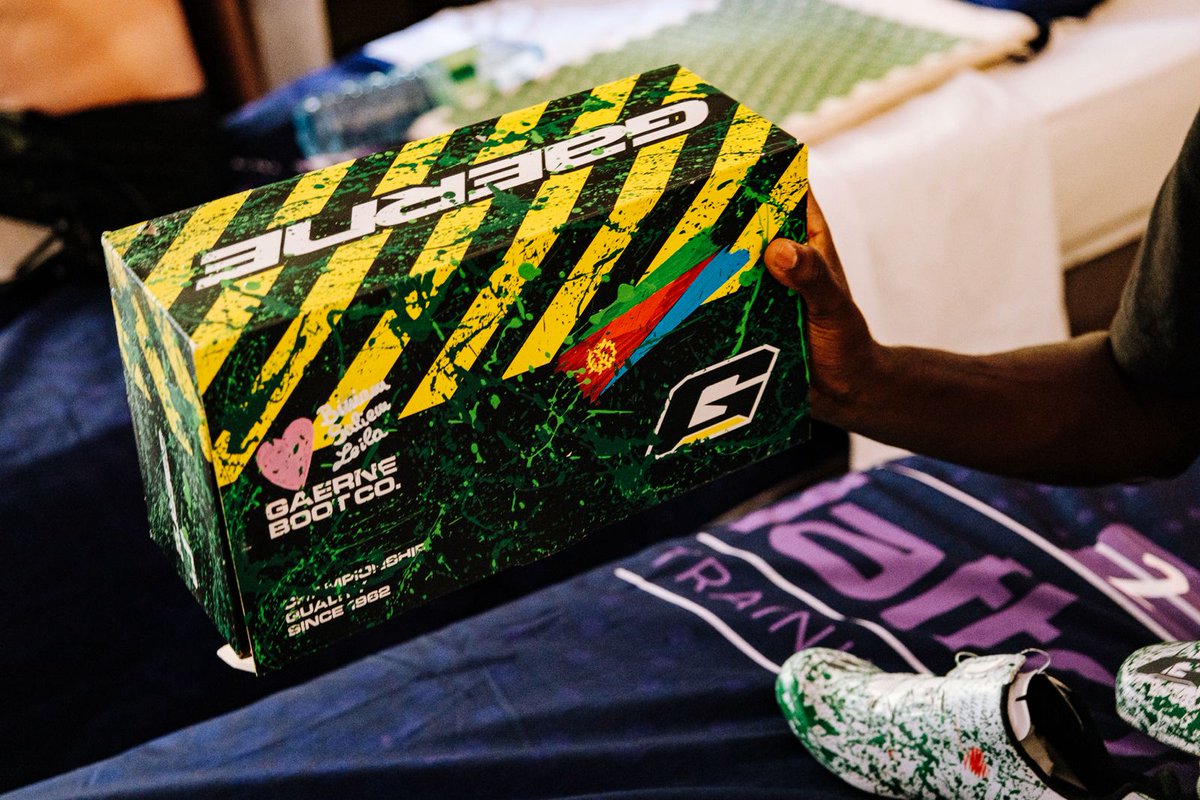
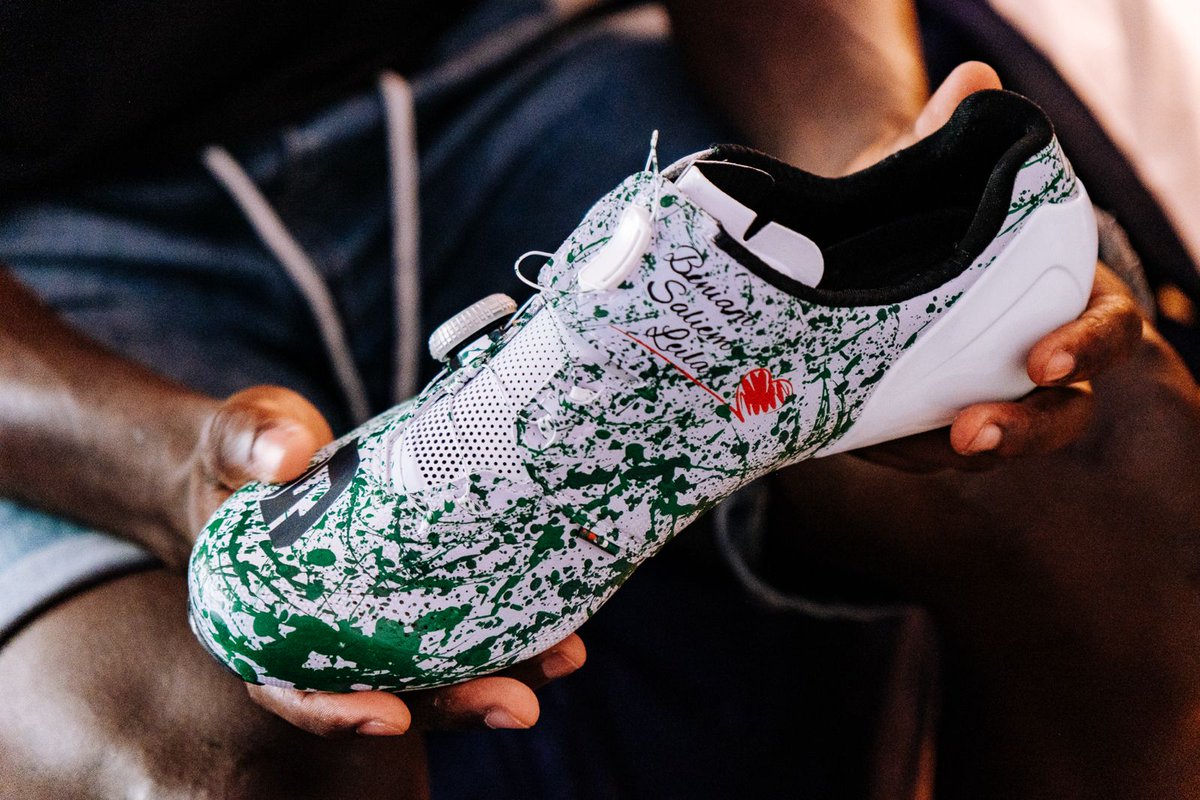
The new Gaerne shoes of Biniam Girmay is pure artwork 😍
💚 Green color
🇪🇷 Flag of Eritrea
❤️ Names of his wife and daughter
🎨 Action Painting by artist Morris Spagnol
📸 @cyclingmedia_ag#TDF2024
Dear ERITREA,
Thank you for giving AFRICA a true son and victor, Biniam Girmay! The resilience, determination, and valor that he is demonstrating in his triumphant TDF 2024 (3 stage wins already) is a result of his upbringing, training in Asmara, and great national leadership.
#Eritrea, only a country for 30 yrs & sanctioned, receives no foreign (financial) aid yet achieved all 3 health #MDGS (childmortality, maternal health, #HIV#Malaria). #Literacy rate: 76.6% of adults & 93.3% of youth. 🇪🇷 has the highest life expectancy of #IGAD. #Eritrean#Asmara
An Important Chapter of the Eritrean Story
By :- Dr. Fikrejesus Amahazion
#Eritrea
Earlier this past week, President Isaias Afwerki, and his delegation, attended the Africa-Italy Summit. The gathering, held in Rome under the theme, “A Bridge for Common Growth” and drawing leaders and representatives from 45 African nations, focused on fostering partnership and cooperation across various areas including, economy and infrastructure, food security, energy security and transition, vocational training, and culture.
During one of many meetings with Italian officials and representatives, President Isaias highlighted important aspects of Eritrea’s history, particularly Italian colonial rule over the country and subsequent British military administration.
This article delves a bit deeper into this period, which although extremely important and relevant – both to the present and to the country’s national identity – is sometimes overlooked or forgotten.
Looking back at an important chapter of Eritrea’s history
Located in the volatile Horn of Africa and possessing a long, pristine coastline on the Red Sea, Eritrea is a country with a rich, complex, and turbulent history. Prior to Italian colonial period, over a duration of several centuries, different parts and regions within what is now regarded as Eritrea were ruled or repeatedly invaded and pillaged by the Ottoman Turks, the Egyptians, and various warriors, feudal lords, and kings from areas in what later emerged as present-day Ethiopia and Sudan.
By the late 19th century, the Italians had begun to purchase and lay claim to parts of the country, steadily penetrating from the coastal areas into the interior highlands in their aim to establish a settler colonial state. Italian colonization of Eritrea, in the words of G.K.N. Trevaskis, “was connived at and, indeed encouraged by the British, who saw in the development of Italian influence in the Red Sea a useful counter to the French.” Eventually, on 1 January 1890, Italy’s King Umberto proclaimed Eritrea as Italy’s “colonia primogenita (first-born colony)”, with Massawa, a historic port city, declared as its capital. (Asmara would be made the Eritrean capital in 1897 – a status that it has retained until present.)
Over the next half century, Eritrea remained firmly under the grip of Italian colonial rule. However, the period also sparked rapid socioeconomic transformation, urbanization, and significant industrial progress, including the construction of modern port facilities, health centers, airports, workshops and factories, roads, railways, communication facilities that were among the best in Africa, and other infrastructure. This economic drive was prompted essentially to benefit and for the purposes of the relatively huge Italian settler community which numbered around 70,000 at its peak.
An illustrative look is provided in a book written by Brigadier Stephen H. Longrigg, a civilian who served as chief administrator of the British Military Administration in Eritrea from 1942 to 1944 (and also engaged in deceitful actions aiming to impede Eritrea’s prospects for independence). In his book, A Short History of Eritrea, published in 1945, he describes Eritrea as, “highly developed,” and as having, “superb roads, a railway, airports, a European city as its capital, [and] public services up to European standards.” Similarly, other scholars expressed that, “In 1935 Asmara was the most modern and progressive city in Italian East Africa.”
Eritrea remained an Italian colony until April 1941, when the British-led Allied victory over Fascist Italy at the famous Battle of Keren, extending from 5 February to 1 April, led to the dissolution of the Africa Orientale Italiana – the Italian East African Empire. With the demise of Italian colonial rule, Eritrea was placed under a British caretaker military administration pending an international decision on its long-term fate.
The British forces, led by Lieutenant General (Lt. Gen.) William Platt, had promised forcibly-conscripted Eritreans independence if they would help their forces defeat the Italians, who were led by Lt. Gen. Luigi Frusci. Once the latter had been defeated, the British reneged. As part of a propaganda campaign targeting Eritrean troops, the British even produced and distributed leaflets which declared, “Eritreans! You deserve to have a flag!...This is the honourable life for the Eritrean: to have the guts to call his people a Nation.”
Subsequently, as so-called war compensation, the British proceeded to dismantle many industries and most of the infrastructure that had been developed in Eritrea. What is more, the period of British administration in Eritrea was marked by countless British interventions and underhanded attempts to sow local division, instigate havoc, and fragment Eritrea in a variety of ways, including through political sabotage and stoking violence.
This skullduggery, a key element of British practice across its far flung colonies and territories, was planned and implemented to portray Eritrea as internally fragmented, economically weak, and unviable as independent – all with the ultimate aim of ensuring that Britain’s recommendations to the international community regarding the quashing of Eritrea’s sovereignty and independence would be accepted.
In the end, following a drawn-out international deliberation process that sought to determine the fate of Italy’s former colonies, on 2 December 1950, UN Resolution 390A(V), passed by the United Nations General Assembly, under US tutelage, extinguished Eritreans’ hopes and aspirations for independence, linking Eritrea in a bogus federation with Ethiopia.
The United States (US) determined, within the context of the emerging geopolitics of the Cold War, that its strategic military interests and foreign policy aims could be better protected and served by federating Eritrea with Ethiopia, an increasingly close ally and key partner for America in the fight against the Soviet-led spread of communism in Africa. As was so unambiguously explained by John Foster Dulles, then the US Secretary of State, in a well-known and (in)famous September 1952 speech to the UN Security Council (UNSC) shortly before the resolution was to come into effect,
“From the point of justice, the opinions of the Eritrean people must receive consideration.
Nevertheless, the strategic interest of the United States in the Red Sea basin and considerations of security and world peace make it necessary that the country be linked with our ally, Ethiopia.”
During a large luncheon organized to celebrate the resolution, the Ethiopia emperor even publicly thanked the American ambassador to Ethiopia, and it was widely and gratefully acknowledged that the UN decision was largely down to the influence and efforts of the US.
Over the next decade, Ethiopia’s imperial regime, led by Haile Selassie, systematically violated numerous terms of the international resolution and worked to steadily dismantle the federal arrangement. Finally, in November 1962, Haile Selassie fully dissolved the Eritrean parliament under force of arms and annexed Eritrea, proclaiming it as the empire’s “fourteenth province”.
Rather than representing a fatal blow, however, the move by the imperial regime only inspired greater nationalism among Eritreans and served to give further impetus to Eritrea’s nascent armed struggle for independence, which had emerged in September 1961. During the following three decades, Eritrea’s independence fighters – receiving little external aid or support, and being largely ignored, if not opposed outright, by the international community – battled first American- and then Soviet-backed Ethiopian regimes in a bloody, protracted struggle.
In 1991, after one of the longest national wars for liberation in modern African history that exacted the precious sacrifice of over 60,000 of Eritrea’s best sons and daughters; numerous more injuries; and much devastation and destruction; Eritrea defeated Africa’s largest, best-equipped army and finally won its freedom. Two years later, in 1993, Eritrea was formally welcomed into the international community of nations as Africa’s 52nd nation-state following an internationally monitored referendum in which Eritreans voted overwhelmingly in favor of independence.
History informs the present and the future
History does not remain history. It is revelatory: the past teaches us about the present. And, of course, it can inform our future. What is more, for collectives, such as families, communities, and nations, learning and understanding one’s own history is vital to ensuring a common identity and retaining pride in their heritage. Indeed, as has often been stated: “A people that lack knowledge of their history and culture is like a tree that has no roots.”
ERITREA: WHAT DEVELOPMENT?
🗣️Dr. Fikrejesus Amahazion from Eritrea delivered a comprehensive presentation at the XXIX International Rosa Luxemburg Conference in Berlin on January 13, 2024.
If you're curious about #Eritrea's notable development accomplishments and the challenges it faced, this presentation provides valuable insights. @FikreJesus
(Source: https://t.co/MWWbUUo4Q6)