"i will lose my job to AI automation." what's so bad about that?
"i won't have money/status/feeling of accomplishment." what's so bad about that?
"i like money/status/feeling of accomplishment." what's so bad about not having it?
you have to keep asking to truthfully find the underlying motivation. only then can you make good decisions
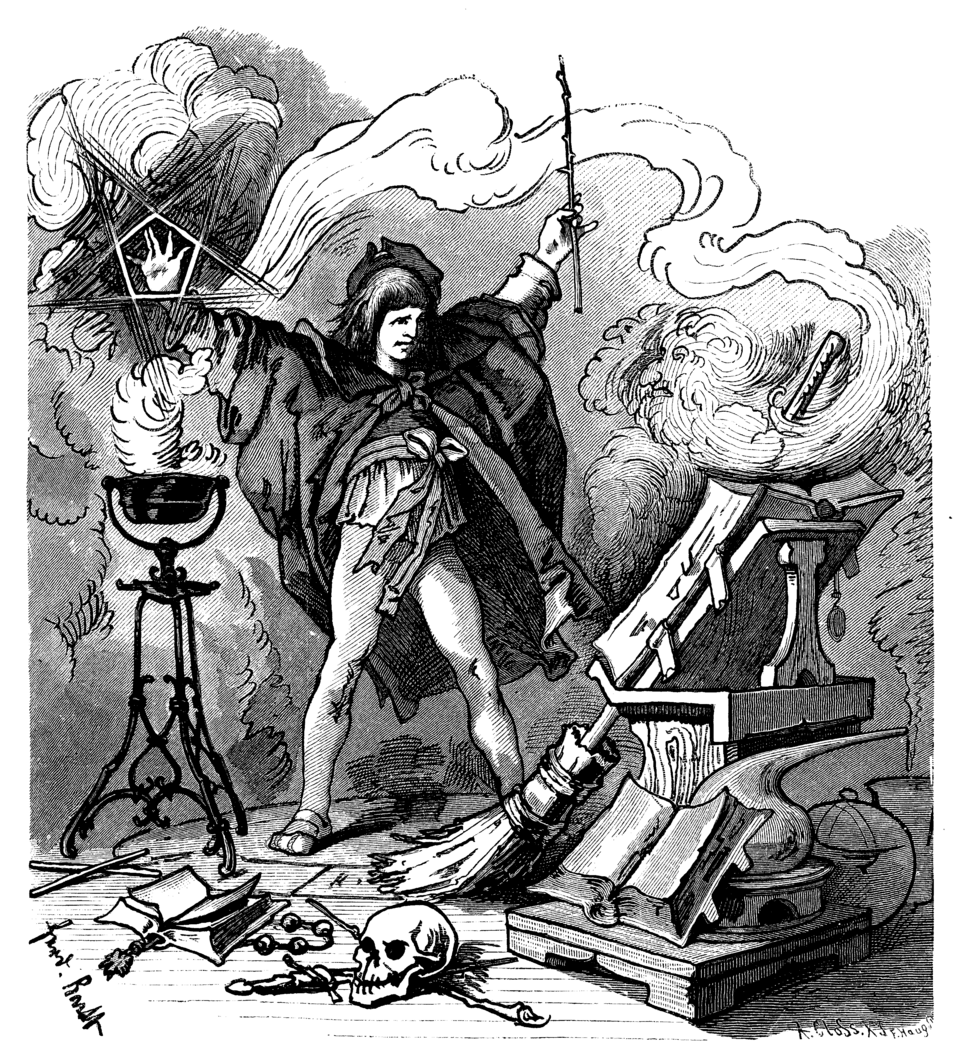
When the master dispells the "spirits" of the broomsticks they return to being simply broomsticks: "Besen! Besen! / Seid's gewesen."
For a sufficiently responsible (and masterful) individual the spirits of a technology can be dispelled as easily as they are imbued. The spirit of the broomsticks is a creation from human spirit. In the AI era perhaps this means seeing "through" technology and taking responsibility for its possibilities
it seems that, as we enter the AI era, the tale for this century will be 'the sorcerer's apprentice', made famous in disney's 'fantasia', but originally a poem by goethe.
a wizard's apprentice, left alone, tires of mopping, so he animates a broom so the broom can clean automatically, by itself. the broom spills water on the floor, so he tries to stop the broom. but, he can't, so he tries to cut it in two - this just creates two animated brooms. now the brooms are spilling water twice as fast, and the whole room is getting flooded.
just before it's too late, the master sorcerer comes back, and fixes everything. he tells the apprentice that only a master of magic is able to toy with and control such forces, and the apprentice is barred from invoking spirits.
AI agents, neutrally - with no ethical assessment on our part, are clearly something like golems (clay figures that you could animate with magic), which famously had their own safeguard: a three letter word was written on their forehead, which meant "truth". when you were done with the golem, you'd erase one letter, changing the word from "truth" to "death", and it would deactivate.
there are some earlier parallels with this, such as what i know as "ushabtis" from the ancient egyptians. these were small figurines that you were buried with that would become animate in the next life, and do your work for you. egyptians were somewhat obsessed with this. they made, i assume, thousands of these, if not more. for this reason, they're very easy to find and see in museums.
but the concept of something becoming animate in this life is different - it's clearly easier for you to lose control of it, and the tales reflect this.
in an interesting thematic tie up, the master sorcerer returns at the end of 'the sorcerer's apprentice' and just fixes everything. there's a name for the type of character who comes in at the end of a story, when all hope is lost, and just magically fixes everything. usually we use this term negatively, and you've probably heard it before in that context. it's called a 'deus ex machina': literally, "god from the machine".
Plenty of content creators have found use for the meta glasses so I started thinking about other uses: I think history research could benefit massively from live text translation capabilities
I'm researching the railway history of Manchuria right now and the Russian and Japanese literature are barely in dialogue with each other. Why is the study of rail in China, an important technology and an important country, underpowered? I speculate it's because there are few people who can deal with sources across so many languages.
My current search process involves going to the stacks, using my phone to take pictures on Google translate of the Russian shelves about Manchuria, picking out the titles I find relevant, then taking pictures of the indexes... it's a slow process, but learning to read Russian and Japanese on top of learning Chinese would be slower so I'm glad Google lens exists. Wouldn't be able to do any of this without it. I'd be way more efficient if I had a magical on-sight translation device though