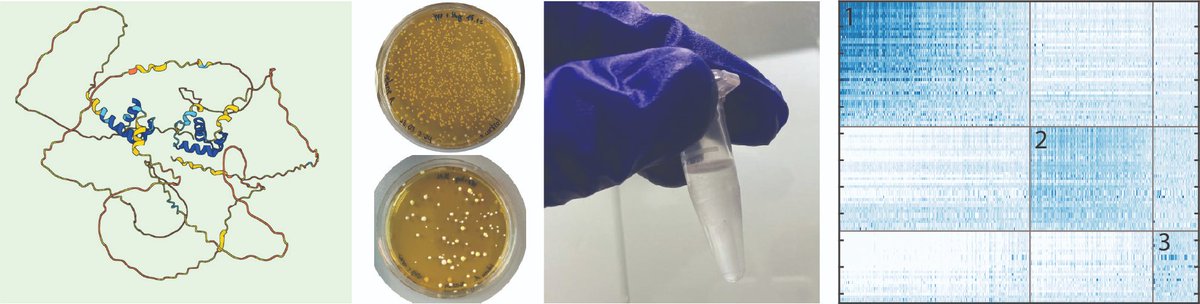
Finally out, our deep-dive into the molecular grammar of IDR-based transcription factor (TF) binding specificity. Looking for a TF IDR with malleable binding specificity we examined Gln3 and it did not disappoint. Have a look at this concise summary or https://t.co/fmUYuyYk51
🎉Happy to share our new paper! Intrinsically disordered regions (IDRs) in transcription factors (TFs) encode for complex binding patterns using diverse sequence grammars and interaction types. (1/9)
https://t.co/FjPshZfYwM
@bhurieva@Divya_KKumar guided by @FJonas15@NaamaBarkai
How do transcription factors (TFs) that recognize the same DNA motif end up binding different places in the genome? 🧬
We're excited to show you how we tackle this question in our new bioRxiv pre-print!
https://t.co/rwjTaCekCR
(1/8) Still wondering how low complexity intrinsically disordered regions (IDRs) guide transcription factors (TFs) to bind in genomes? Previous studies on sequence grammars; our new @MolCell paper takes the next step: de novo design of functional TF IDRs!
https://t.co/qJugw2V3qE
@constructor_uni is looking for an Assistant/Associate Professor for Molecular Cell Biology.🧬🧫
https://t.co/pZE4XFa0eQ
Apply today to join us, drive your science agenda and contribute to our international study programs.👩🔬👨💻
@constructor_uni is looking for a new Assistant/Associate Professor of Molecular Cell Biology:🧫🧬
https://t.co/pZE4XFa0eQ
Apply now to join us, drive your own research agenda and contribute to our international study programs!👩🔬
@constructor_uni is looking for an Assistant/Associate Professor in Molecular Cell Biology. 🧐🧬https://t.co/pZE4XFa0eQ
Apply now to join our dynamic and collaborative research environment and contribute to the most international BSc program in Germany! 🧪👩🏫
In @CellCellPress, I share a major conceptual challenge for biology in the next decade, inspired by Crick’s Central Dogma: understanding information flow in the cell, the smallest indivisible unit of life https://t.co/dgvi6mMq1a
Paper alert:
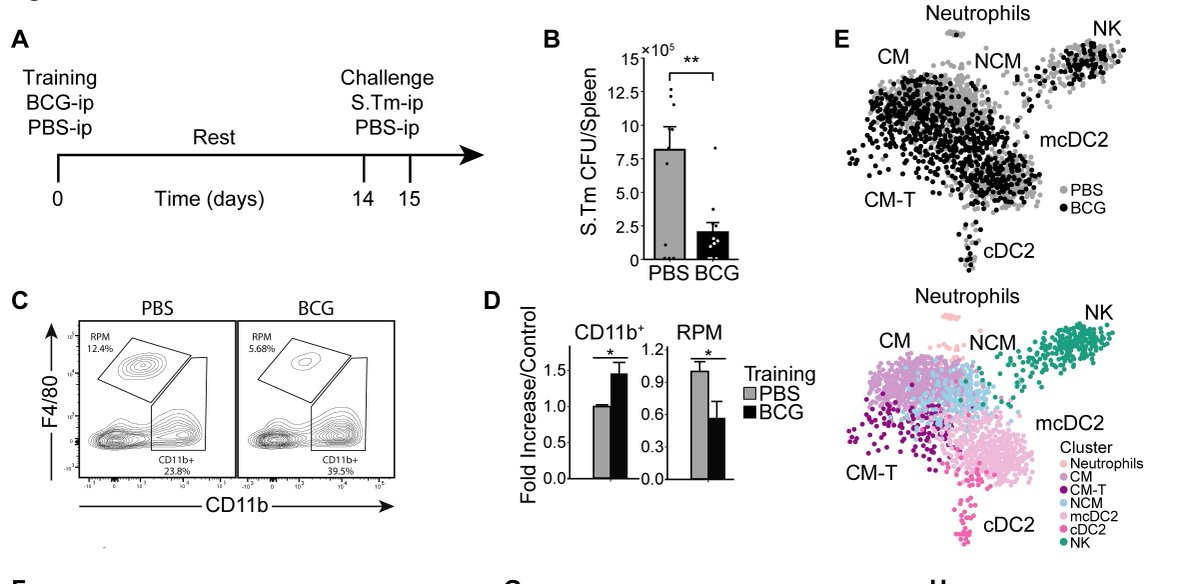
Congratulations to PhD student, now Dr. Aryeh Solomon for this great work, published @eLife.
Can a BCG vaccine also protect from Gram-negative infection? #TrainedImmunity
Thanks also to long time collaborator Mihai Netea and other friends.
https://t.co/c8zlUqfwpR
Looking for an exciting science project ? My friend and colleague Sebastian Springer is offering a PhD position on the intersection between immunology and virology. Join is bustling lab and benefit from great mentorship and insight: https://t.co/9rn38hwcpY
Exciting news! Our latest paper "Ordered and disordered regions of the Origin Recognition Complex direct differential in vivo binding at distinct motif sequences", led by Michal Chappleboim is now out in @NAR_Open. Check out the highlights below.
https://t.co/e7AxBbi7rW
I really like the simple model for Transcription Factor function: "DNA binding - Mediator recruitment - Gene activation." But this elegant and systematic study from
@MindelVladimir +@SagieBr, @BarkaiLab
provides an exciting fresh perspective. Highly recommended!
Excited to learn more about TF binding in my second favorite yeast species:
A comprehensive Schizosaccharomyces pombe atlas of physical transcription factor interactions with proteins and chromatin https://t.co/RSv5QaHDqb
Big kudos to @bhurieva and @Divya_KKumar for driving this comprehensive analysis!
And have a look at https://t.co/jpRv6380LT for our first eamination of IDR grammar in Msn2
Finally out, our deep-dive into the molecular grammar of IDR-based transcription factor (TF) binding specificity. Looking for a TF IDR with malleable binding specificity we examined Gln3 and it did not disappoint. Have a look at this concise summary or https://t.co/fmUYuyYk51
🎉Happy to share our new paper! Intrinsically disordered regions (IDRs) in transcription factors (TFs) encode for complex binding patterns using diverse sequence grammars and interaction types. (1/9)
https://t.co/FjPshZfYwM
@bhurieva@Divya_KKumar guided by @FJonas15@NaamaBarkai
🎉Happy to share our new paper! Intrinsically disordered regions (IDRs) in transcription factors (TFs) encode for complex binding patterns using diverse sequence grammars and interaction types. (1/9)
https://t.co/FjPshZfYwM
@bhurieva@Divya_KKumar guided by @FJonas15@NaamaBarkai
Join our Group ! We are looking for one PhD student to explore the "Molecular Basis of Transcription Factor Evolution". Find out more here and apply: https://t.co/nkQlUtobfY
Check out our new paper: “Intrinsically disordered regions of the Msn2 transcription factor encode multiple functions using interwoven sequence grammars” published @NAR_Open. The work of @MindelVladimir and @SagieBr. https://t.co/pAvCTMpLkG