Hi @hannahyeoh, salam sejahtera
I think the policy is silly and disconnected from reality, but I appreciate you trying to do something.
No need to "work with Zus to collect the data....analyse the pattern".
Feel free to ask your officers to contact me - using only open-source data (public transport ridership, traffic cams, Google Maps), I can already show you the time distribution of travel into KL in the morning, and out of KL in the evening. And if you add the additional data which gov has access to, you'll get an even richer picture.
Hint: It's massively driven by the time people send their kids to school, and your policy will barely move the needle.
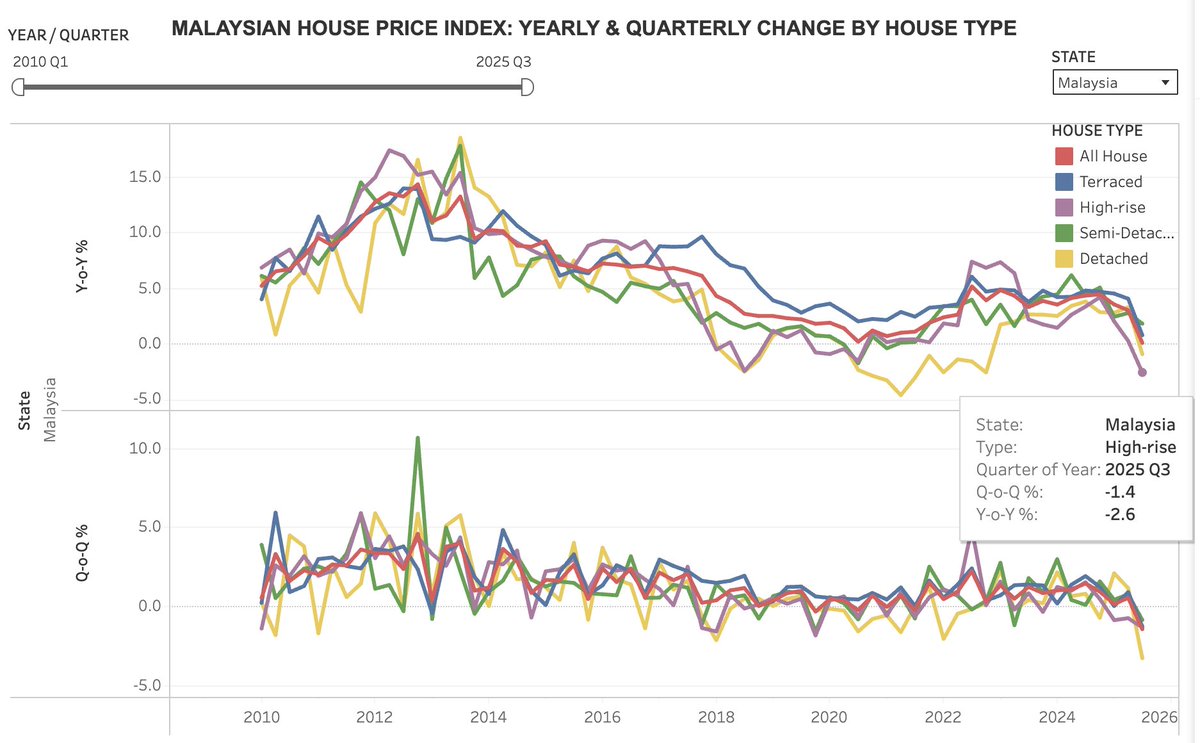
Harga rumah "high-rise" jatuh 2.6% (YoY) pada suku ketiga 2025.
Probably harga jatuh (negatif) buat kali pertama di luar kegawatan ekonomi.
Kali terakhir jatuh pada tahun 2020 masa Covid-19.
Indeks Harga Semua Rumah naik sekadar 0.1%.
Slowdown dalam property sector agak ketara.
High-rise paling banyak unit tak terjual (overhang), 13,386 unit daripada 23,515 unit (57%).
Ramai orang tunggu bubble burst, dah lama dah burst untuk segmen dan lokasi tertentu.
High housing costs —> fewer babies
M’sia has state-level data on both housing costs & fertility…
…so good opportunity for an enterprising M’sian researcher to test if Cost-of-Living affects, um, Cost-of-Loving at *state level*
Huge policy implications!
Nak tau kenapa Microsoft punya data centre Cloud Region tu takkan ada knowledge transfer utk local workforce? Analisis ke atas data centre kat Chile menunjukkan kerjaya yg ditawarkan lebih kepada security dan janitorial.
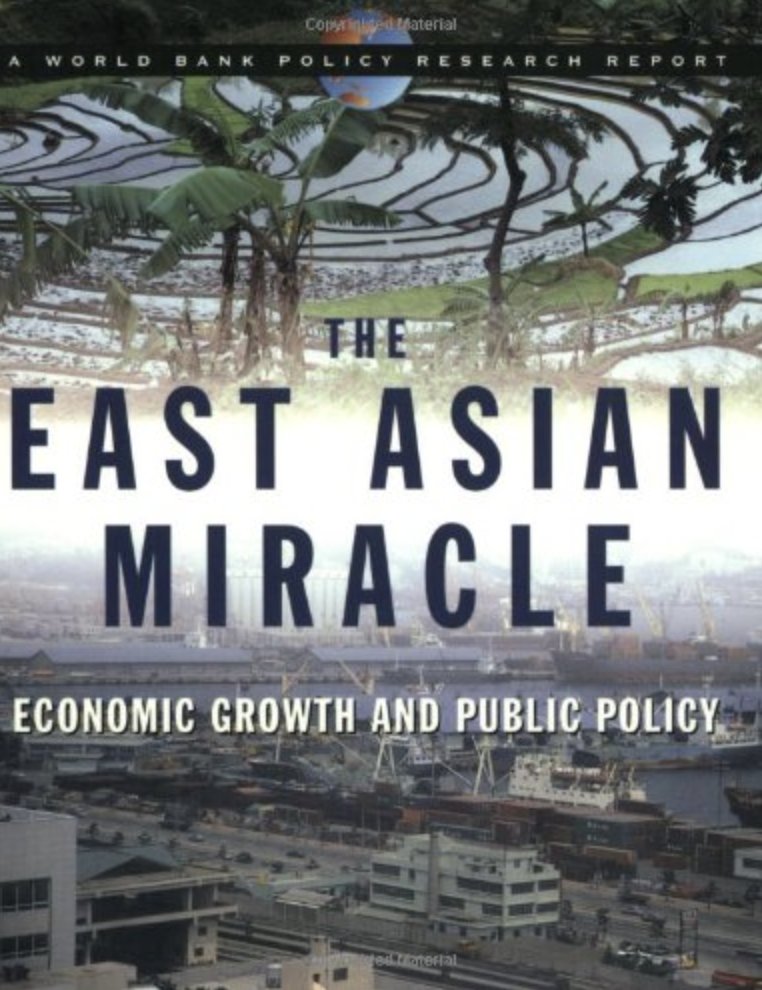
The World Bank's 1993 "East Asian Miracle" report attributed the miracle to macroeconomic fundamentals, not state intervention.
"Industrial policy" would remain taboo for 30 years.
In a new JEP symposium, @nancymbirdsall -- who oversaw the report -- reassesses that call.
🧵
The Industrial Court has ruled that AirAsia Berhad was wrong to dismiss an employee for venting about work frustrations in private social media posts in 2023.
It found that the posts, limited to former steward Hyffny Yusof's circle of friends, were unguarded but not insubordinate.
🧵1
Is AI the Future of Literature Reviews?
Here are the findings from 24 published papers ⤵
— AI is changing how we do literature reviews.
(It's fast and thorough).
— AI speeds up literature reviews.
(It can quickly search through tons of papers).
— AI helps spot patterns humans might miss
(like having a super-smart research buddy).
— Researchers and AI are working together.
(This team-up leads to better insights).
𝗖𝗵𝗮𝗹𝗹𝗲𝗻𝗴𝗲𝘀
— Some worry AI might miss nuances.
(Human insight is still crucial).
— AI needs lots of well-organized data.
(Not all fields have this yet).
— There are concerns about bias in AI tools.
(We need to keep an eye on this).
𝗪𝗵𝘆 𝗜𝘁 𝗠𝗮𝘁𝘁𝗲𝗿𝘀
— Lit reviews are getting bigger and tougher.
(AI can help manage this).
— It's not just future talk.
Researchers are using AI tools RIGHT NOW!
𝗪𝗿𝗮𝗽-𝘂𝗽
AI won't replace human researchers.
But will certainly replace those not using any AI
Adam Smith may have won the intellectual battle of ideas, but mercantilism has survived, and sometimes to good effects, from @rodrikdani https://t.co/hHSwSDMzsY
I know I’m late to congratulate Joel Mokyr here on X, but I have a good excuse.
When I opened my iPhone this morning and saw the announcement, I was so happy that I literally forgot my laptop at home (and I don’t have a computer in my office).
For the first time in 24 years, I arrived on campus without my bag, laptop, Penn ID, or office keys. Fortunately, I had a credit card in the car. I had to tailgate an undergrad into the Econ building, improvise my lecture with a mix of an impromptu class on Mokyr’s contributions and a last-minute download of the slides from the classroom computer, and then shuffle a few meetings until I could drive back home. 🤦♂️
Of course, I’m also delighted with the choices of Philippe Aghion (we even have a paper together that we never published because we got busy—such is academic life) and Peter Howitt.
But since economic history rarely gets all the recognition it deserves, the choice of Mokyr feels especially satisfying.
I’ve read every one of his books at least twice. Even when I disagreed with a point, reading him made me a far better economist than I would have been otherwise.
If I find the time, I’ll write more about Mokyr. For now, let me just say this: he’s a true scholar—someone who cares about the answer, not the publication—and, on a personal level, an example to follow.
Great to see that Mokyr, Aghion, and Howitt receive the Nobel Prize in Economics. Well-deserved! The research by Aghion and Howitt (and their co-authors) is very inspiring. My students in "Economic Growth" also appreciate their textbook (The course gets good evaluations, at least😉).
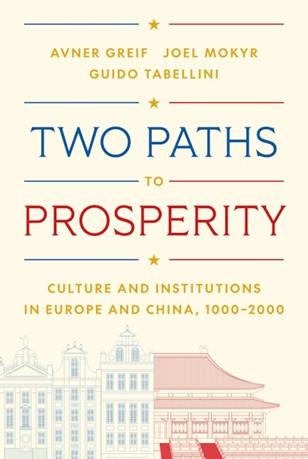
I also try to read as much as I can by Joel Mokyr. One can learn a lot about economic history and the origins of economic growth. I am looking forward to reading his new book (together with Greif and Tabellini) on "Two Paths to Prosperity: Culture and Institutions in Europe and China, 1000–2000".
https://t.co/VcEYLSGwN5
https://t.co/3UnD3ULint