Concrete Cosmos, a Symbiosis short film created by @FlatironInst researcher Adrian Bayer and filmmaker Adonis Williams, reveals the surprising parallels between the structure of the deep universe and daily life on Earth. Watch full film: https://t.co/OHQi9sBzjl
#InfiniteSums #science #math #astrophysics
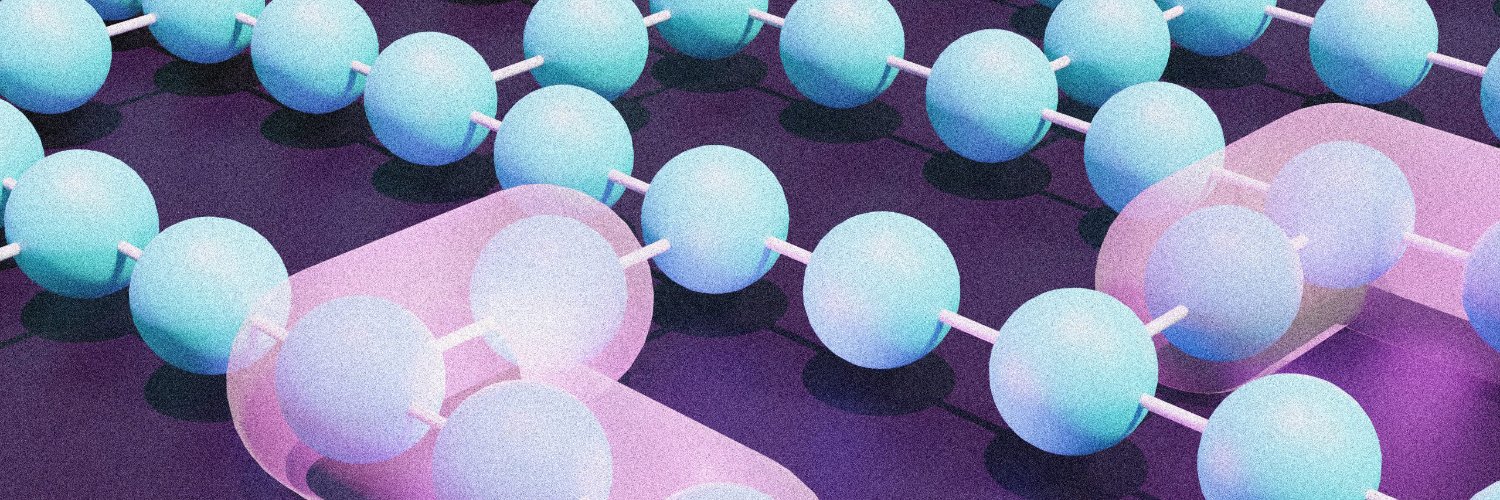
Researchers at the @FlatironInst were skeptical about a daunting quantum physics problem that was supposedly only solvable by quantum computers, so they set out to solve it on a classical computer. And thanks to mathematical structures called tensor networks, they did: https://t.co/cmxw4t7fD8
#science #physics
Simons Foundation president David Spergel has been awarded an honorary degree from @GC_CUNY for his extraordinary achievements in #astrophysics, visionary leadership, and lasting impact through research, mentorship, and commitment to the public good. Congratulations, @DavidSpergel!
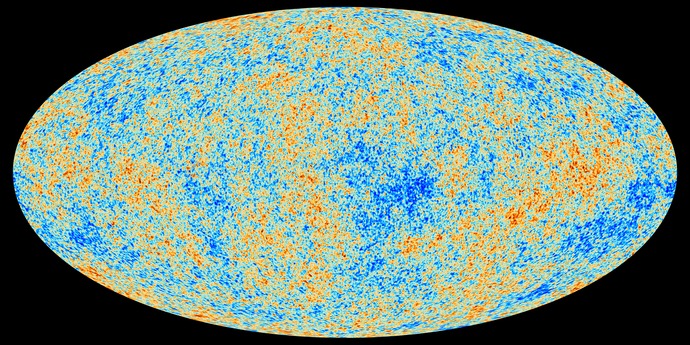
On the largest observable scales, the universe looks nearly the same in every direction. A new paper from Simons Foundation president @DavidSpergel and colleagues proposes initial conditions for the beginning of our universe that could explain this cosmic puzzle: https://t.co/idzMctvfk9 #science #astrophysics
We’re delighted to announce our workshop on the latest open-source tools for neural data analysis.
We have great speakers from UCL & the University of Edinburgh.
Many thanks to everyone involved in organising the workshop @NinaMilo_Lab@AdrianDu_ and the support from @DNS_UOM .
In our recent paper, https://t.co/TULfZsW8ZN, @maxisi, @farrwill, and I looked to see if we can see hints of memory in the whole population of gravitational wave signals observed by the LIGO-Virgo-KAGRA detectors using a fancy technique known as "hierarchical inference". 6/13
#FlatironCCQ quantum physicists and colleagues used tensor networks to tackle quantum physics problems previously thought to be solvable only by quantum computers: https://t.co/QjFug79DYM #science#physics
In a series of new observations, astronomers — including #FlatironCCA's Maximiliano Isi (@maxisi) — nearly doubled the number of black hole collisions ever identified: https://t.co/TxjaJKFfvH #science#astrophysics
Lacunae, a short film created by @FlatironInst researcher Lukas Devos and filmmaker Danya Abt, explores translation as a process of selection and loss using digital video noise, erasure poetry and a riddle translated across multiple languages. Watch full film: https://t.co/6Rif2dCwt4 #science #math #InfiniteSums
Flatiron Institute scientist Pilar Cossio (@PilarCossio2) builds tools to analyze experimental measurements and reveal how environmental changes alter the behavior of RNA: https://t.co/1Gr76H4H0Y #science#biology
Observations of colliding black holes from the LIGO-Virgo-KAGRA collaboration are shedding new light on the universe’s darkest inhabitants. #science#astrophysics https://t.co/lnH95AvhJk
Diffusion models are powerful priors for linear inverse problems, but what about explicit access to the underlying posterior density? Happy to share our ICML 2026 paper; this project started during my internship at @FlatironInst with amazing hosts @FlorentinGuth@EeroSimoncelli
What do control theory and neuroscience have in common? Shared origins in cybernetics — and, lately, “poor cousin” status next to ML. To reconnect them, we’ve been organizing workshops at this interface, most recently at the Flatiron Institute. Thanks to all who joined!
Former @FlatironInst research fellow Kun Chen studies the unexpected behavior of many interacting electrons in solids by developing methodologies originating in other areas of physics. Read our 2024 interview with Chen: https://t.co/dq9xAHYFO1 #science#physics#AAPIHistoryMonth
Using mathematical tools known as tensor networks, @FlatironInst researchers extended the reach of classical computation and tackled a class of problems previously claimed to be solvable only by quantum computers: https://t.co/Rf4WK74tBp #science#physics#FlatironCCQ
Researchers at #FlatironCCQ and @BU_Tweets used tensor networks to crack a daunting quantum physics problem previously claimed to be only solvable by quantum computers. #science#physics https://t.co/QjFug79DYM
Using a conventional computer and cutting-edge tools and code, researchers at the @FlatironInst used classical computers to tackle a class of problems previously claimed to be solvable only by quantum computers: https://t.co/Rf4WK74tBp #science#physics