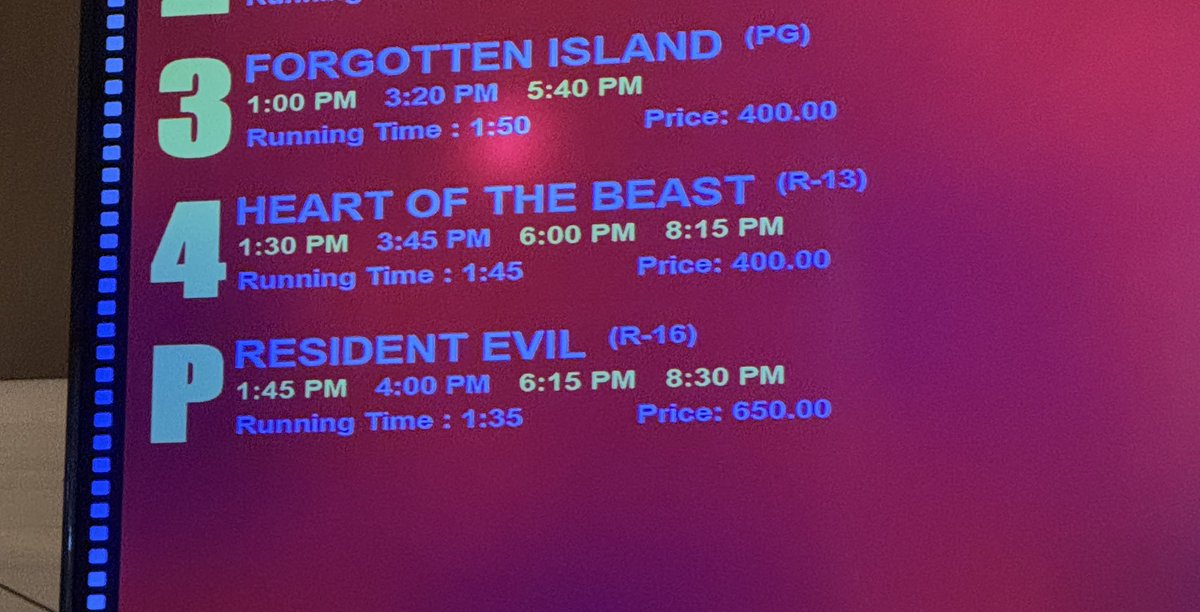
sooo i just happened to watch this AND OMGSJKDMDND THIS SOO GOOOD LIKE SKDBDNND IM CRYINGGG BAWLING SOBBING THIS IS PEAK… youth movies never fail me fr, love it sooo much a good movie jinjja can heal you <333
Sometimes premium clothes last longer; sometimes they don't.
I should note that I have a particular view on clothing budgets. I don't think of buying clothes like you're climbing a pyramid—the more you spend, the better the objects. Instead, I think of budgets as a net. If you can only spend $100 on a jacket, your options will necessarily be more limited than someone with a budget of $1,000. The more options you have, the easier it is to find something you like.
Now, onto the issue of quality. Dissecting clothing quality is beyond what I can cover in this tweet. Broadly speaking, quality has a few basic dimensions. A suit is better when it's fully canvassed rather than fused; sweaters are generally better when they're made from long-staple fibers, rather than short ones.
But much of what I talk about is not purely about longevity or even "quality." Does a handmade buttonhole perform its function better than a machine-made one? No. Does shuttle loom denim last longer than projectile loom denim? Not necessarily.
When I talk about fit and silhouette, I hope to help you train your eye for what looks good on you. When I talk about production techniques, I hope to help you appreciate how something was made.
Most clothes end up in landfills long before the end of their useful life—many still have their tags on. To me, this suggests longevity isn't the main reason people discard clothes. I suspect they discard them because they realize the item doesn't look good on them. Or it's no longer trendy. Often, the defect is not about materiality — the person has simply fallen out of love with the item.
I hope to give you a deeper appreciation for how certain things are made, as well as help you develop an eye for what looks good on you and a clearer framework for what you want to express through clothing. In this way, hopefully your relationship with your wardrobe deepens, and you're more likely to repair things rather than discard and replace them.
When it comes to the longevity of clothes, I think the issue is less about physical durability and more about people's relationship with clothing. "Emotional durability" is just as important as physical durability. And so, when you're able to appreciate certain production techniques, you may be more likely to hang onto the item.
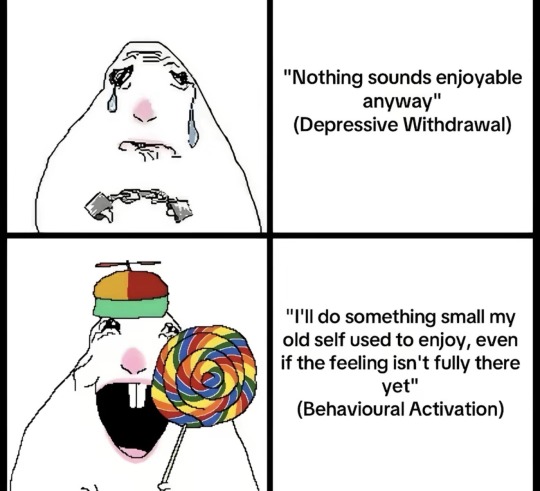
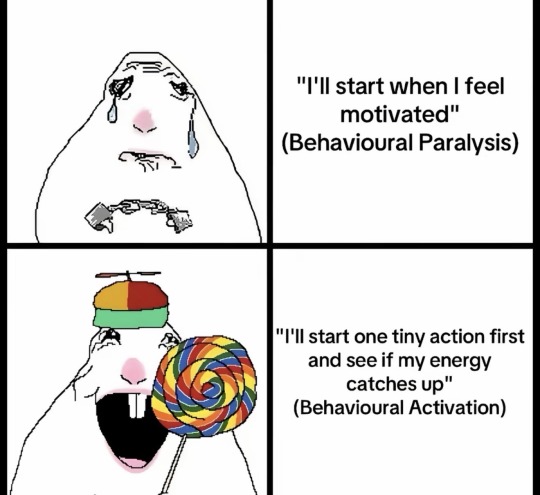
there's a therapeutic technique called behavioral activation which can be a little confusing in therapy speak, but i found these memes that explain it in examples very well ^_^