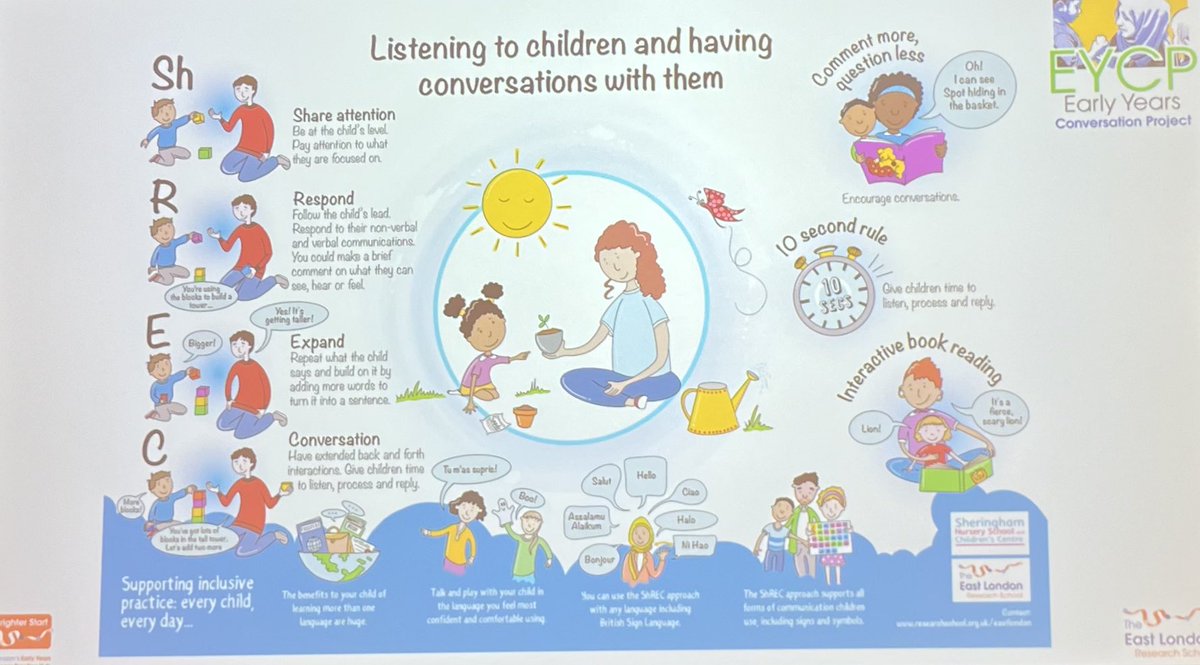
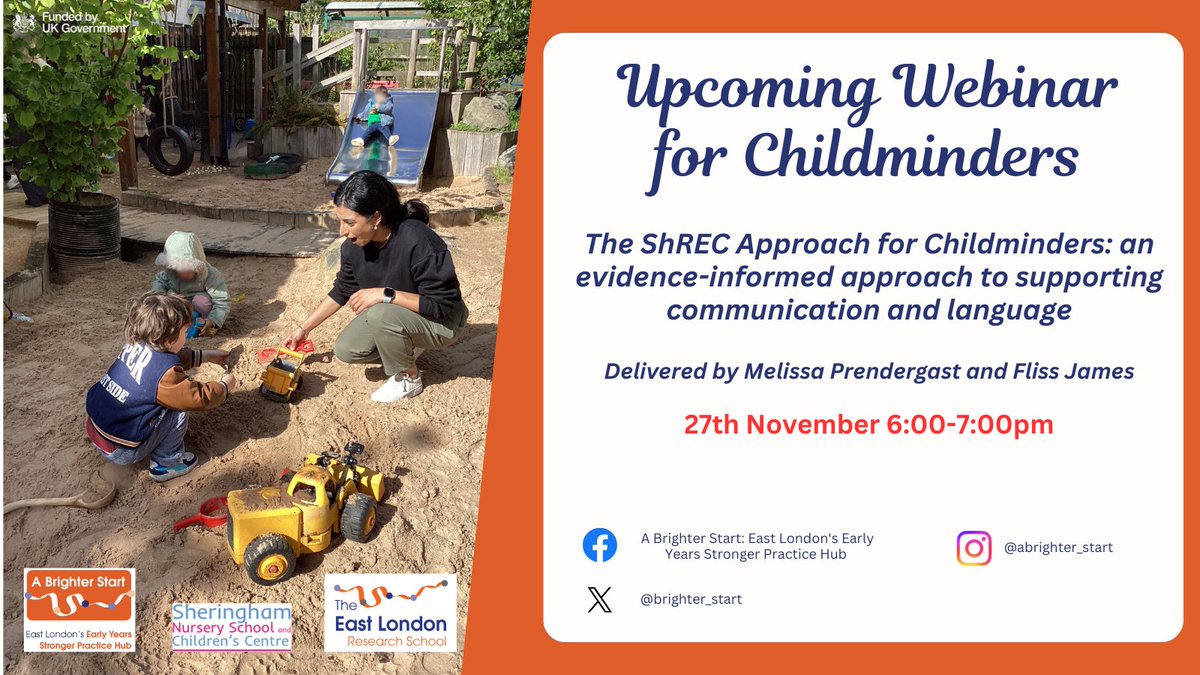
Another helpful summary - practice which puts evidence into action, supporting young children’s communication and language.
@elresearchsch#earlyyears#NewhamEY24
📹 @Flissej of @SheringhamNurs1 introduces the ShREC approach – four evidence-informed strategies to promote high quality interactions in the early years.
Find out more: https://t.co/3NAAhZc41u
‘Stress associated with poverty will damage children’s brains, it will damage child development’ - Sir Michael Marmot
My latest column for @tes considers research evidence about tackling disadvantage in #earlyyears and what schools can (and can’t) do
https://t.co/TiCdHjgXVm
Reading articles like this reminds us why the work we do as a @rs_network is so vital. Working collaboratively to break the link between family income and educational achievement.
https://t.co/1wxwxoa8Ot
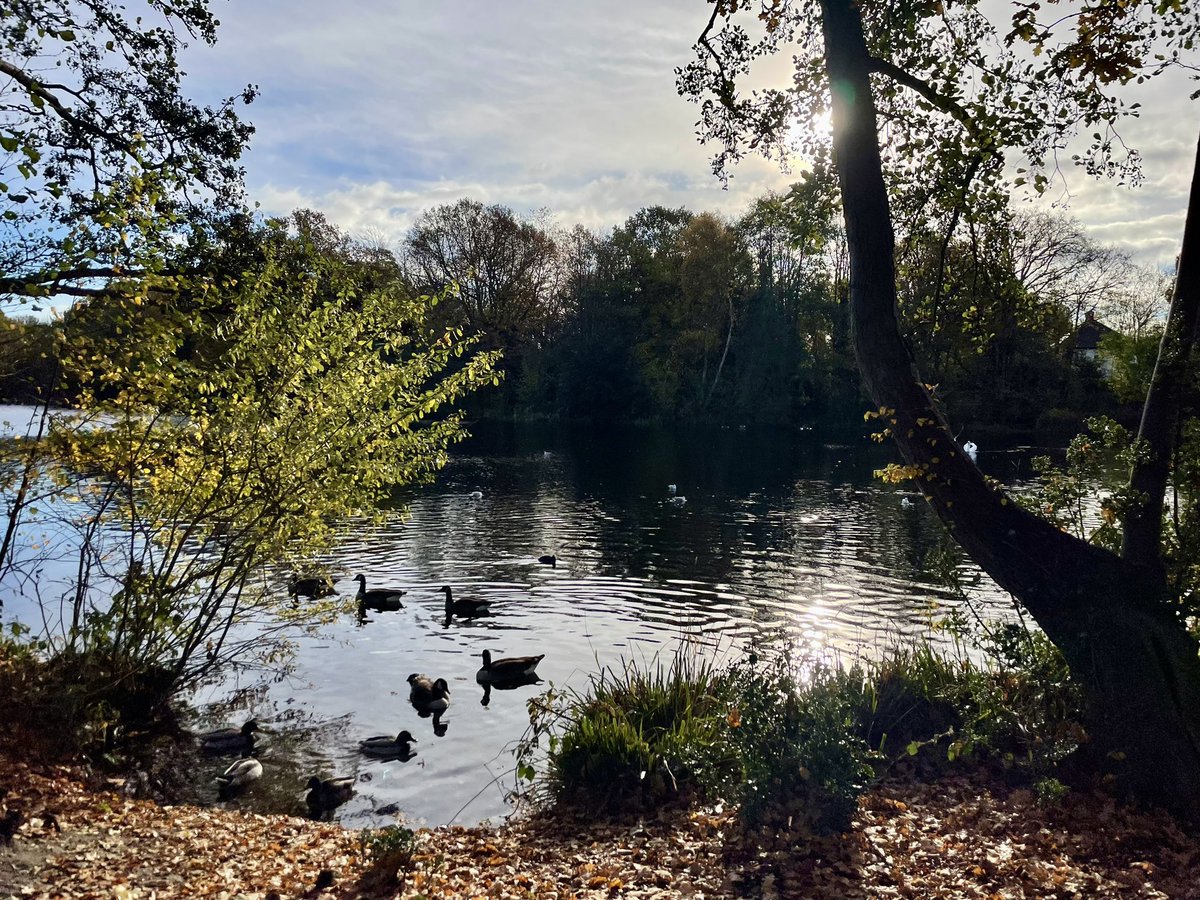
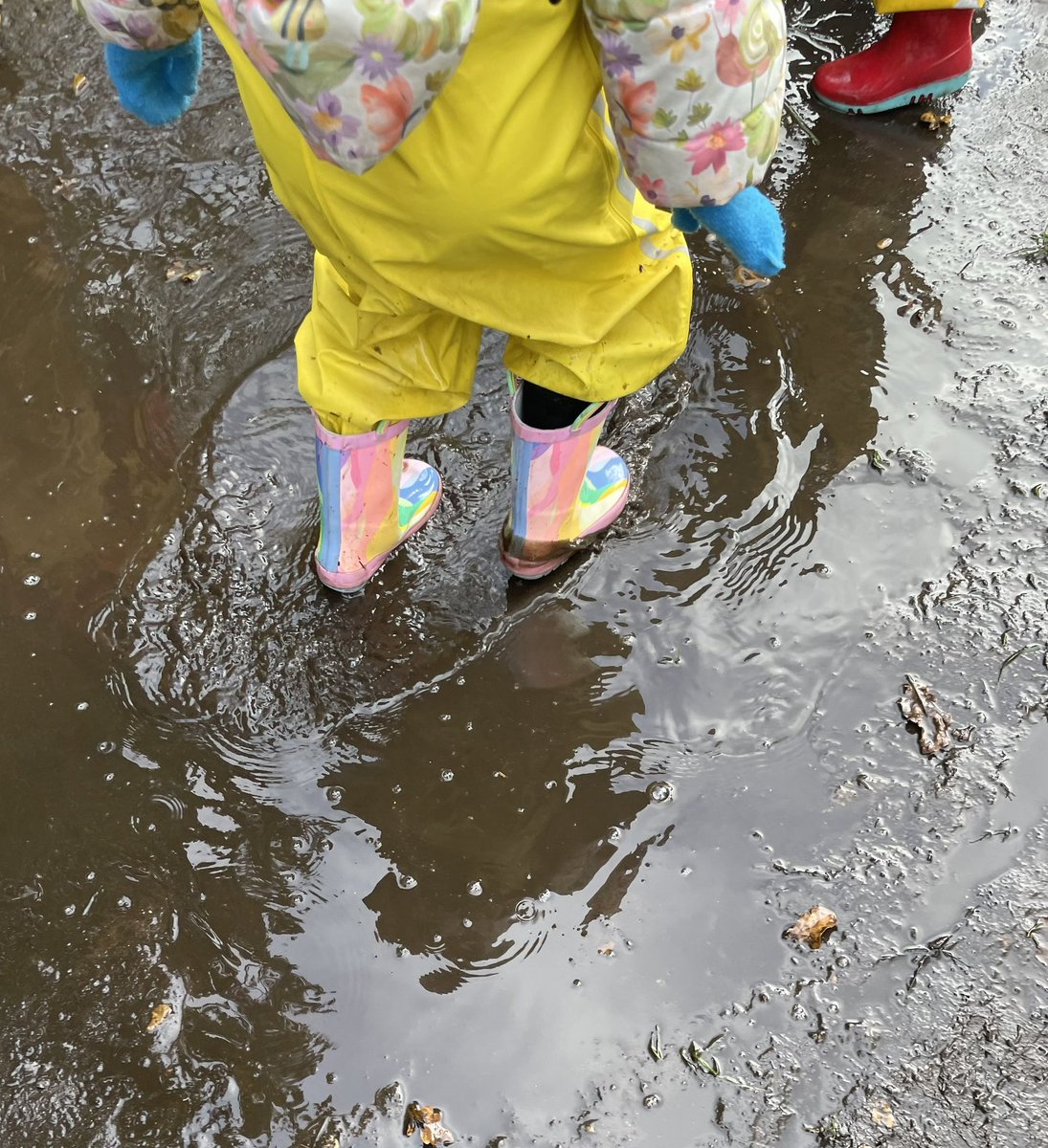
Forest School 🌳🍂🍁💚☺️
🌟The bus journey, jumping in muddy puddles, collecting treasures, climbing trees & basking in nature.🌟
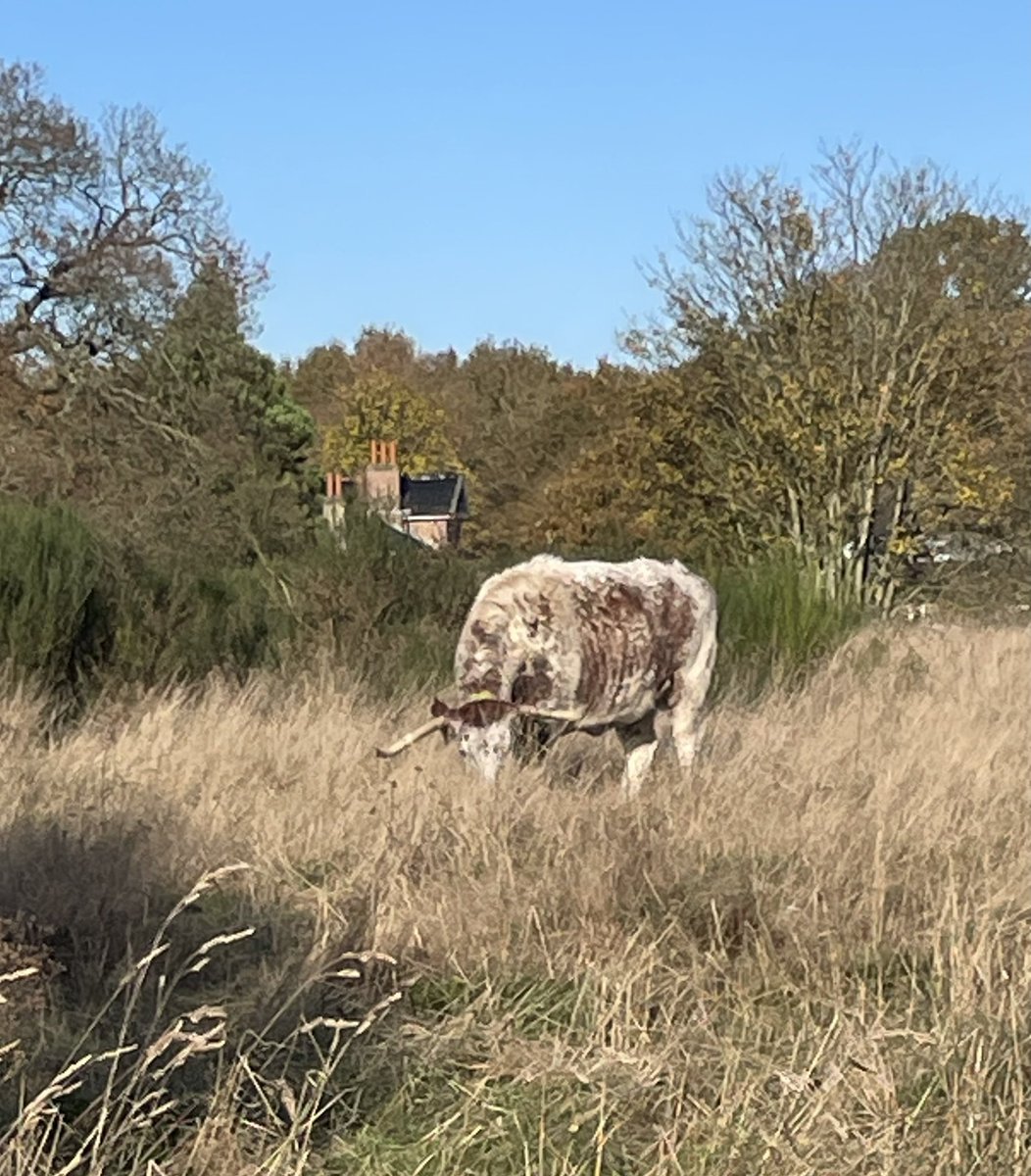
One of the children commented:
‘I’m so happy to be here looking at the cows.’🐮🥹
So much joy, so much learning.
#earlyyears#play#nature
"Self-regulation is best developed in meaningful contexts that are motivating for children, like when they are playing and enjoying themselves."
@SaraBCam considers how nursery rhymes can boost children's self-regulation.
Read: https://t.co/7hoLgopRZ0
#worldnurseryrhymeweek
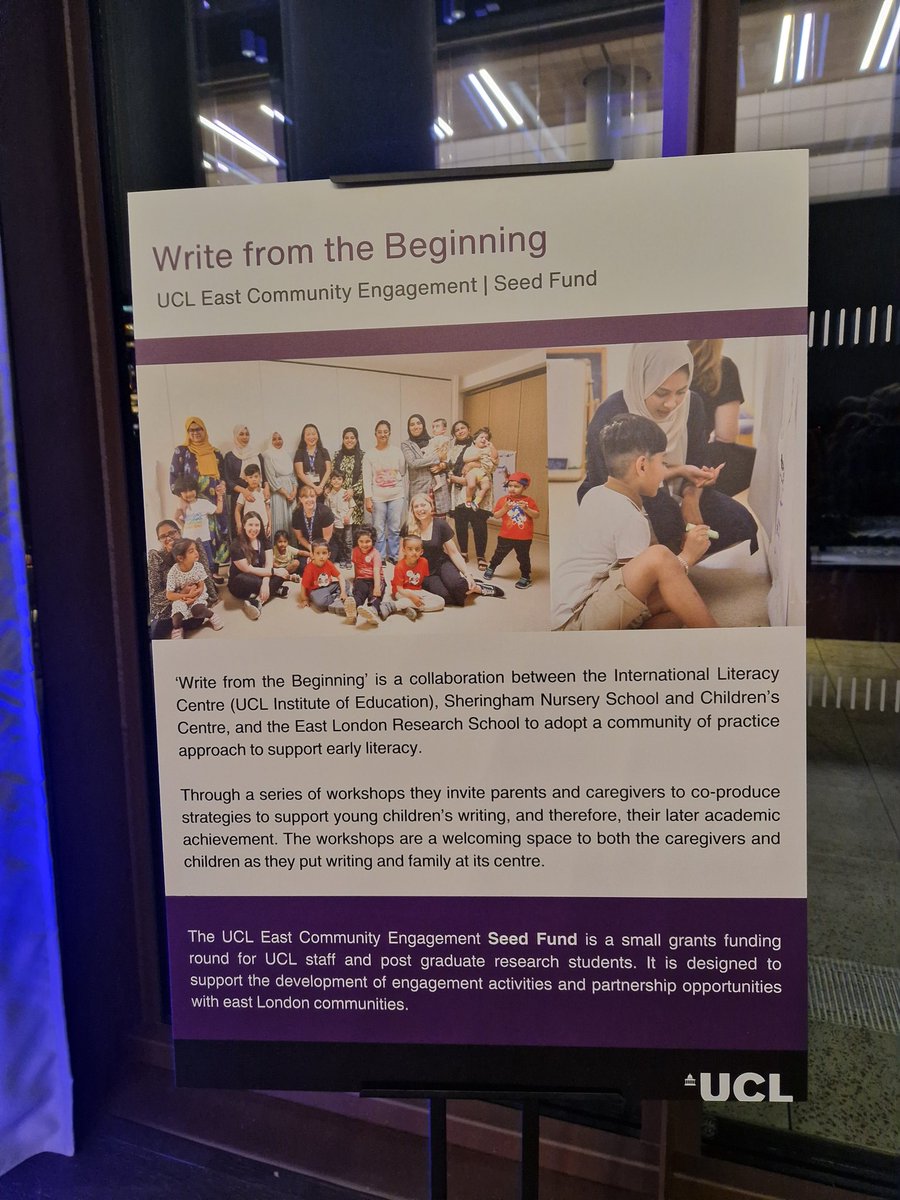
Thank you for inviting me to be part of today’s session! Brilliant to connect with lots of new people who are working hard to make a difference to children’s lives 😊🌟
A really insightful webinar this afternoon with @juliangrenier and @LGrocott_EY from @EducEndowFoundn. It’s so important to question research & evidence rather than taking it at face value. There were important take away messages that I’ll be sharing with my students tomorrow.