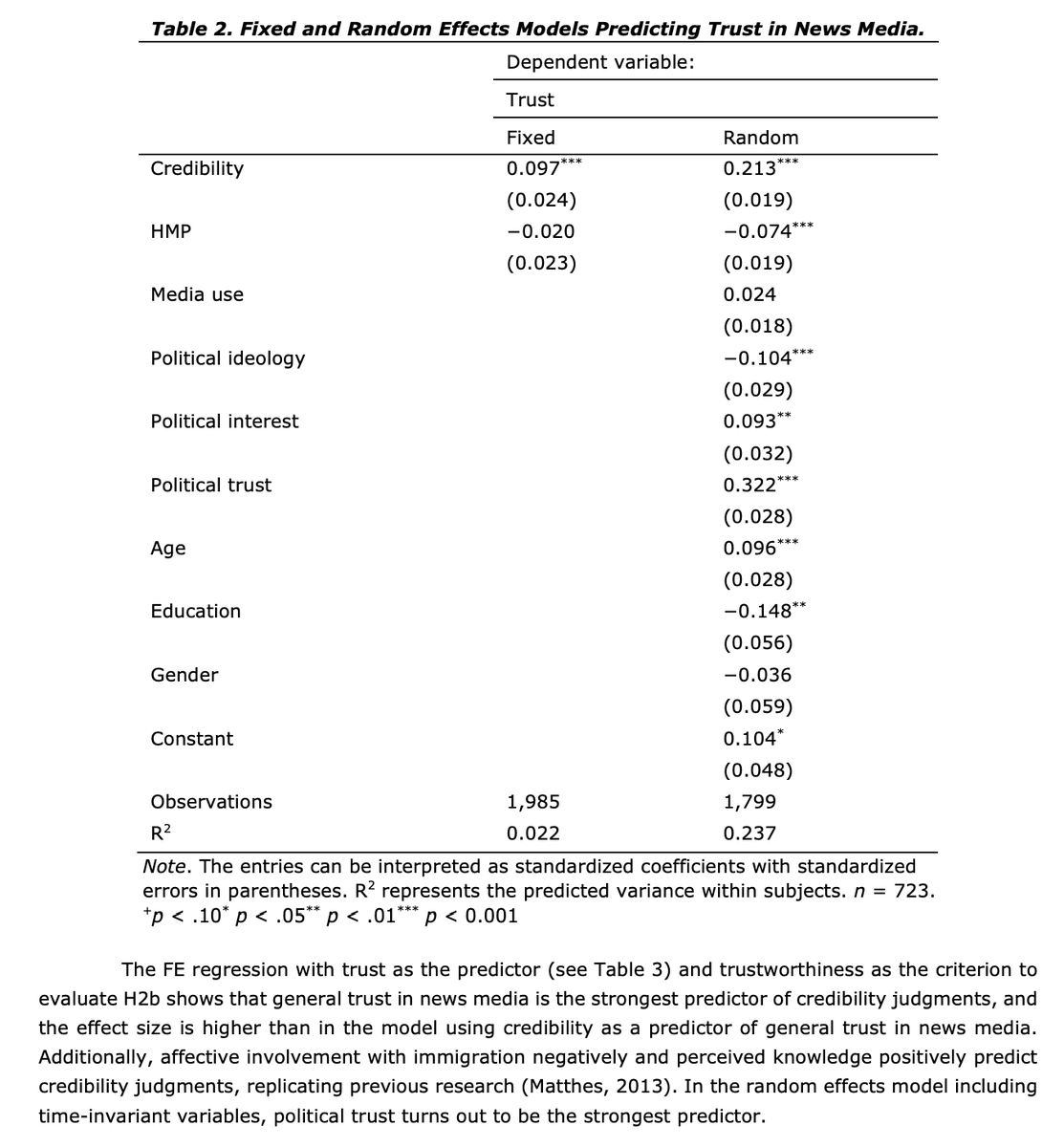
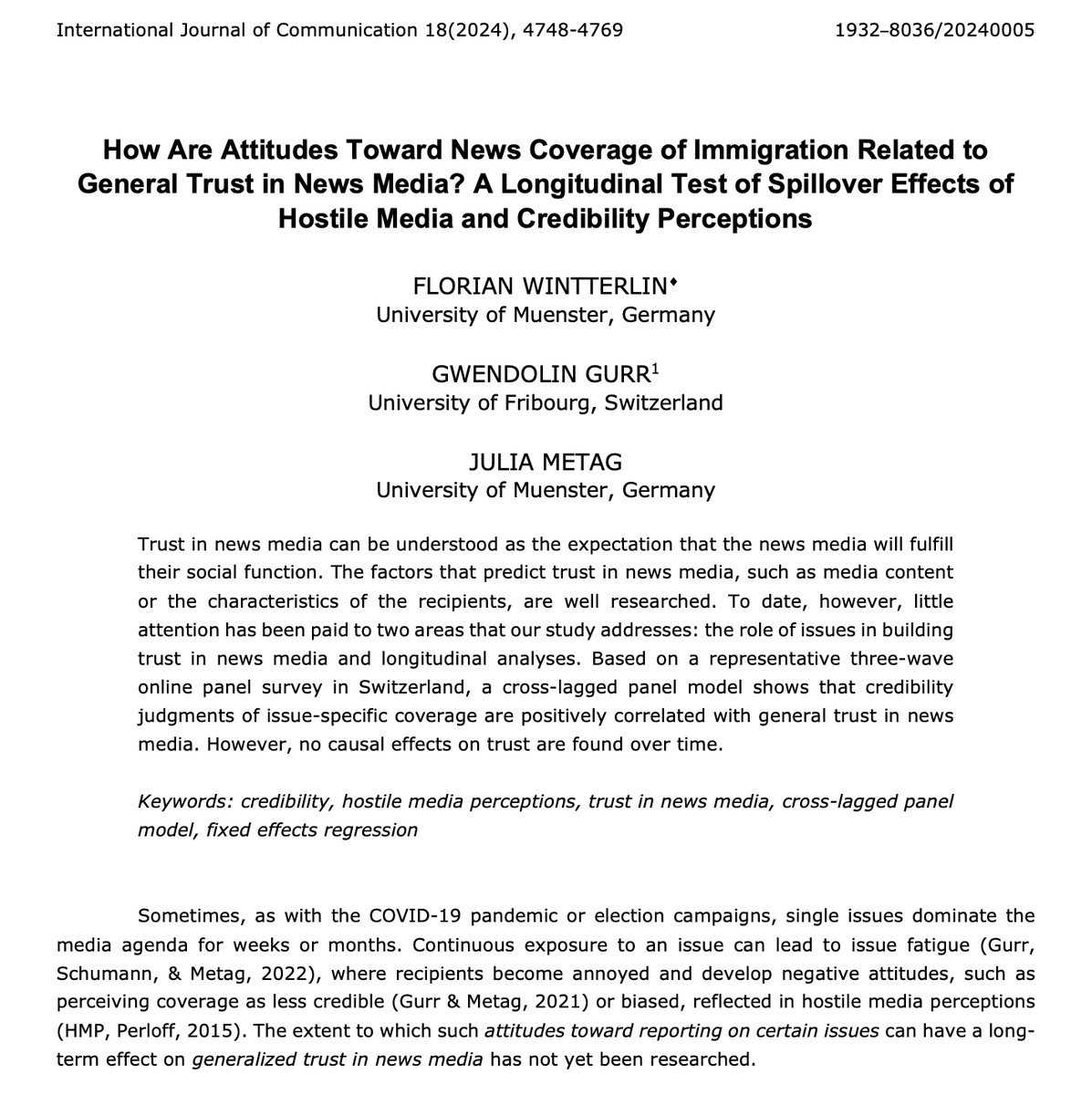
Interesting new study with three-wave panel data examining the relationship between hostile media perceptions and trust in news by @Flo_Wintt @die_Gwen @j_metag https://t.co/VZIpqSa8oF
New Study with @die_Gwen and @j_metag finds: Negative evaluations of topic-specific coverage such as migration do not lead to a loss of trust in the media in general. More in the paper here: https://t.co/97eLsuyJOL
Am @ifkms starten wir eine neue Studie im Bereich Journalismusforschung.🧑🔬🎙️���🎥 Es geht darum, online einen journ. Artikel zu einem spannenden Thema zu lesen und zu bewerten.👍👎 ⏰10min⏰ Freue mich über jede Beteiligung!🙏 Gern teilen! Zur Studie➡️https://t.co/xUhcHln2lA
Our Digital News Report 2024 is out!
📊 47 markets
🌏 95,000 respondents
✍️ Authored by @nicnewman@richrdfletcher Craig T. Robertson @amyross87@rasmus_kleis & our partners
📱Explore now https://t.co/UjcCkX4KXc
🧵Findings in thread #DNR24
Jüngst wird viel geredet über #TikTok-Dominanz der #AfD und deren (möglichen) Einfluss auf #Europawahlen. Oft ohne empirische Belege. Unsere Daten (Befragung, Mai/Juni, 2879 👥) zeigen einen Zusammenhang (≠Effekt!) zwischen der Informationsnutzung und #AfD-Präferenz.
📢 Our new study that digs into the Facebook-content of alternative media across five countries (Switzerland, France, Germany, UK, US) has just been published #OpenAccess 📢
JOB ALERT 📢
We're hiring a PhD student at @DDC_SDU@SyddanskUni for an exciting project titled 'High-choice platform environments and the spreading of intolerance' supervised by @Lenafrescamente
Read more about the position here https://t.co/1SBUoFiftU
After we developed the concept of "source proximity," @markcoddington and I wondered if outlets could be distinguished by their mix of sources and evidence: Do alternative media also have alternative epistemologies? Our research suggests yes: https://t.co/avLIox2J4K
Freude an Kommunikationswissenschaft, Onlineforschung und Methoden? In meinem Team in Münster ist eine Stelle zu besetzen. Wir untersuchen die Raumzeit von Likes 👍, #hashtags und 💬 Kommentaren🙂
https://t.co/tM6Ehft8p0
@DGPuK_DigiKomm@dgpuk_meth
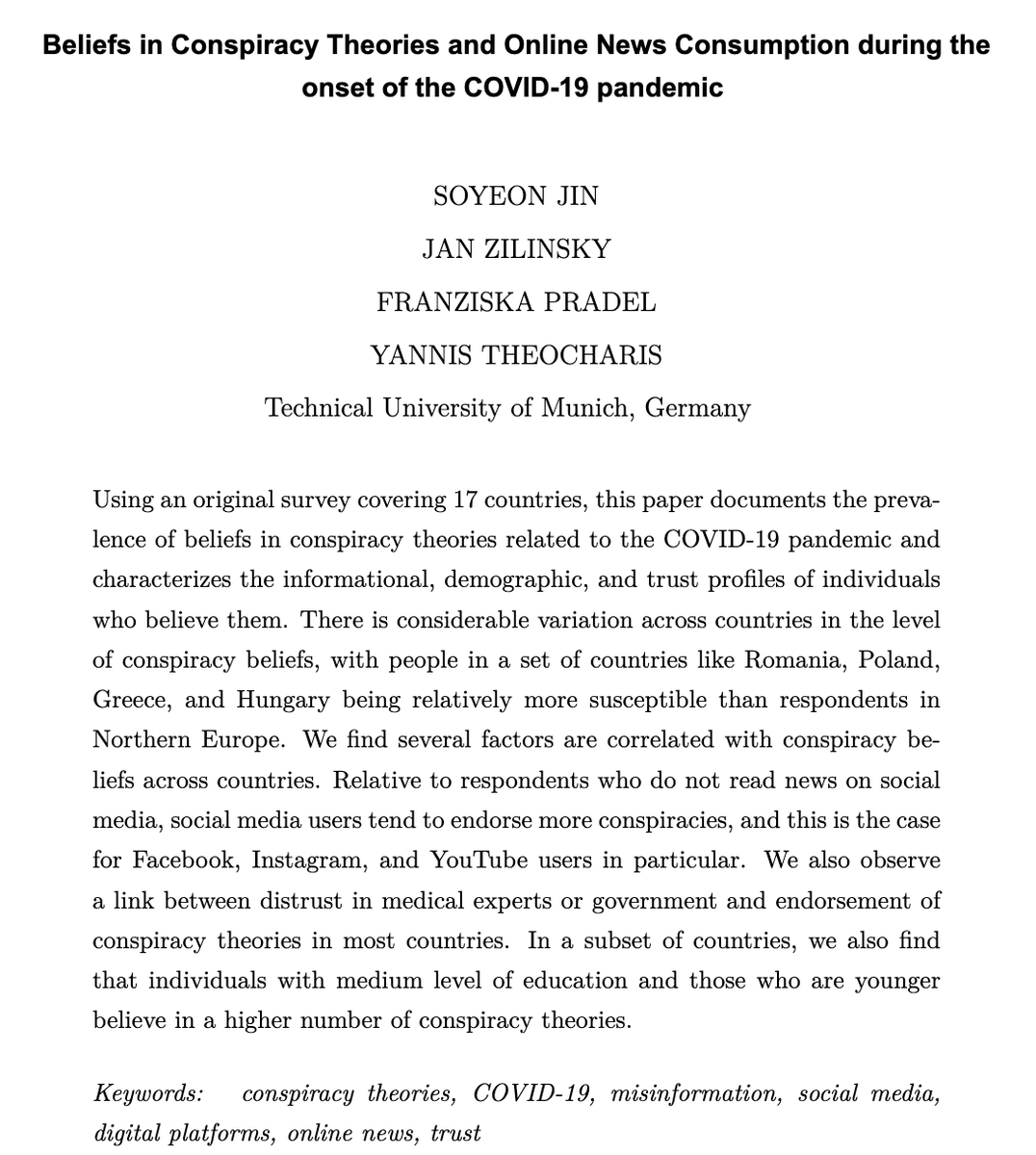
📢 I am very excited that our paper “Beliefs in Conspiracy Theories and Online News Consumption during the onset of the COVID-19 pandemic” is now published! 🎉👍 @Yannis_Theo @janzilinsky@FranziskaPradel (see thread 🧵⬇️)
How do people use #social#media if they overestimate their knowledge about scientific topics like #COVID19?
Our new study shows: In 🇩🇪🇹🇼, overestimation is not linked to social media exposure, but to more engagement – and to #populist views of #science 🔗
https://t.co/CZFte2xe4l
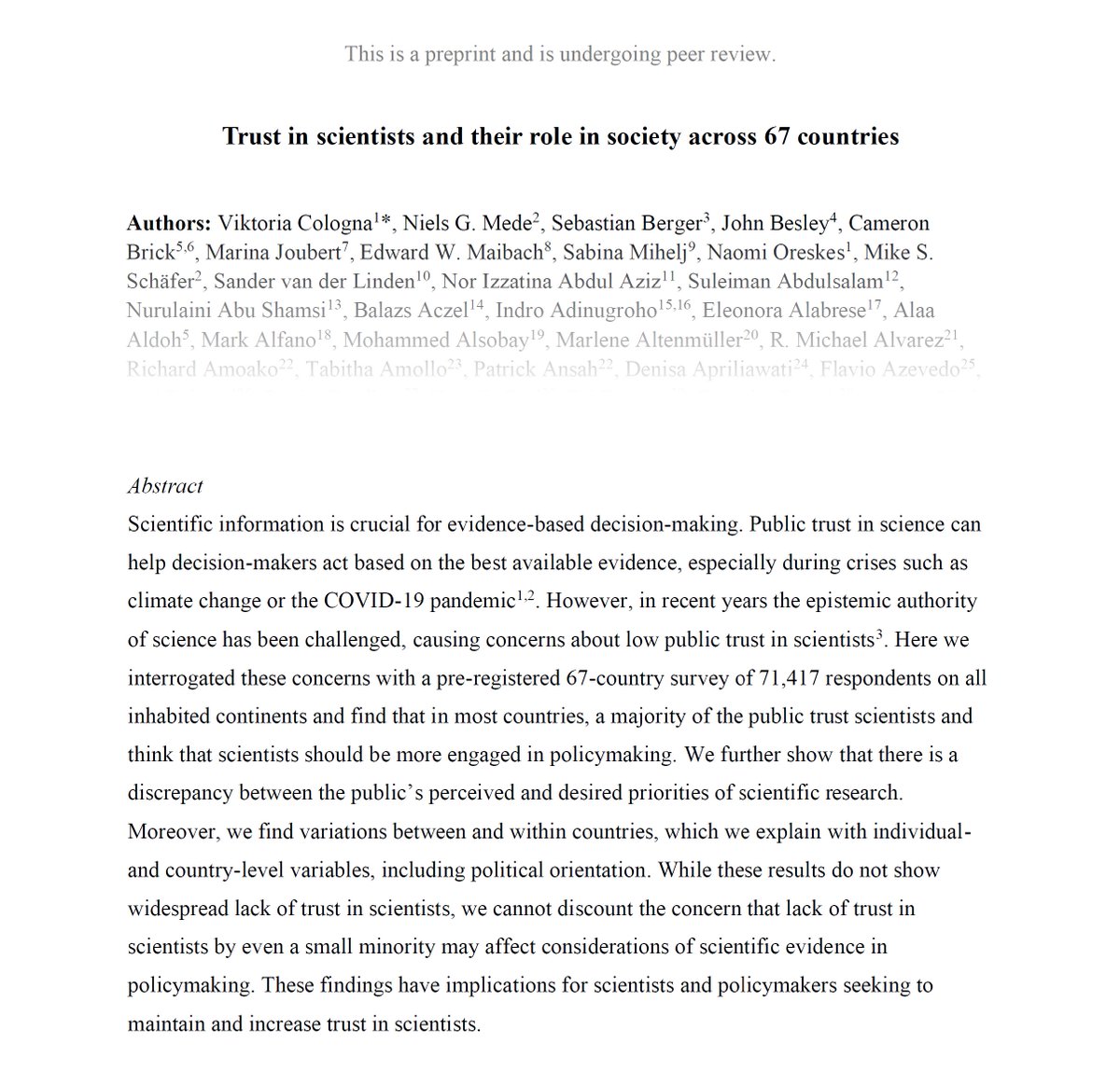
How do people perceive #science and its role in society? Do they #trust scientists? 🧑🏾🔬
We did a global 67-country survey (n=71,417) to test this, working with 239 researchers from all continents – the #TISP#ManyLabs study. It’s now available as #preprint: https://t.co/qFNmD9IeY4
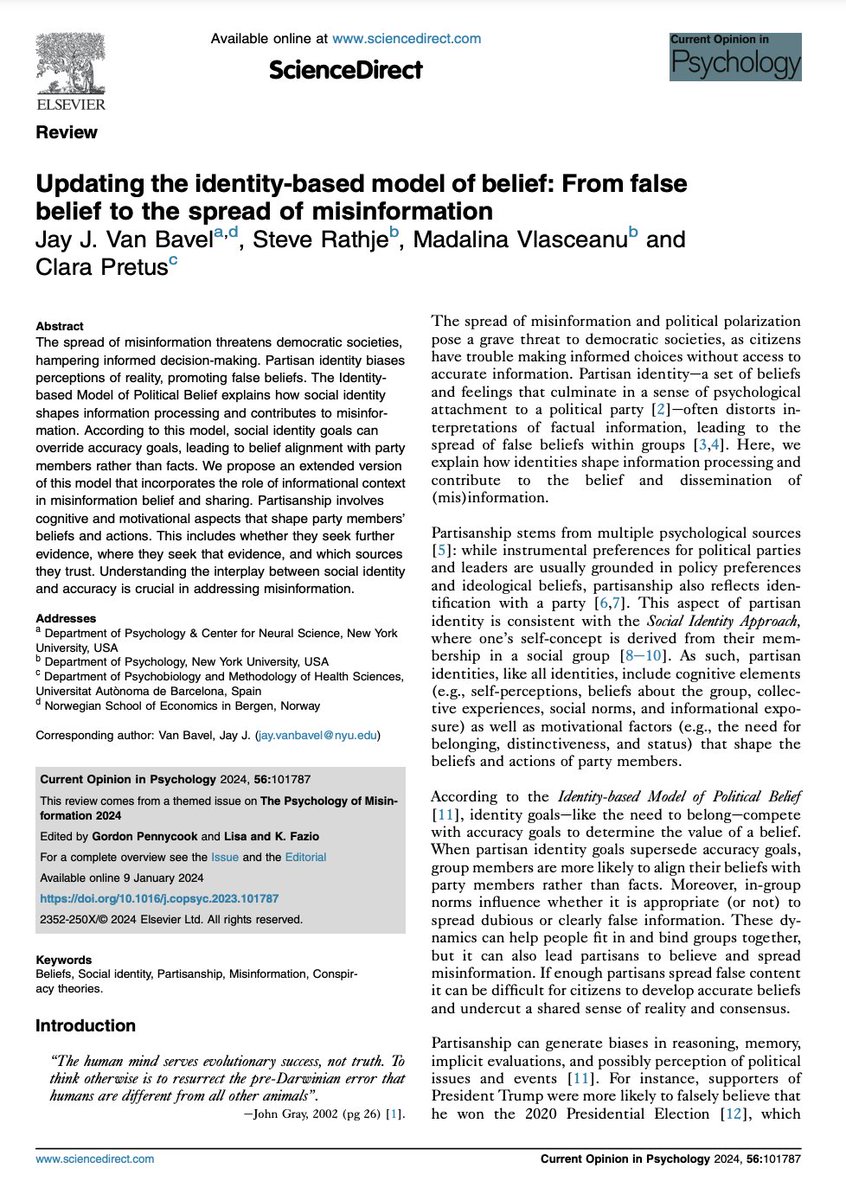
Our new paper describes that "The Identity-based Model of Political Belief" and explains how social identity shapes information processing and contributes to the belief and spread of #misinformation
Partisanship involves cognitive and motivational aspects that shape party members' beliefs and actions. This includes whether they seek further evidence, where they seek that evidence, and which sources they trust.
Understanding the interplay between social identity and accuracy is crucial in addressing misinformation.
To read the full paper:
https://t.co/kaQKFiAqE7
Via @steverathje2 @vlasceanu_mada & @ClaraPretus
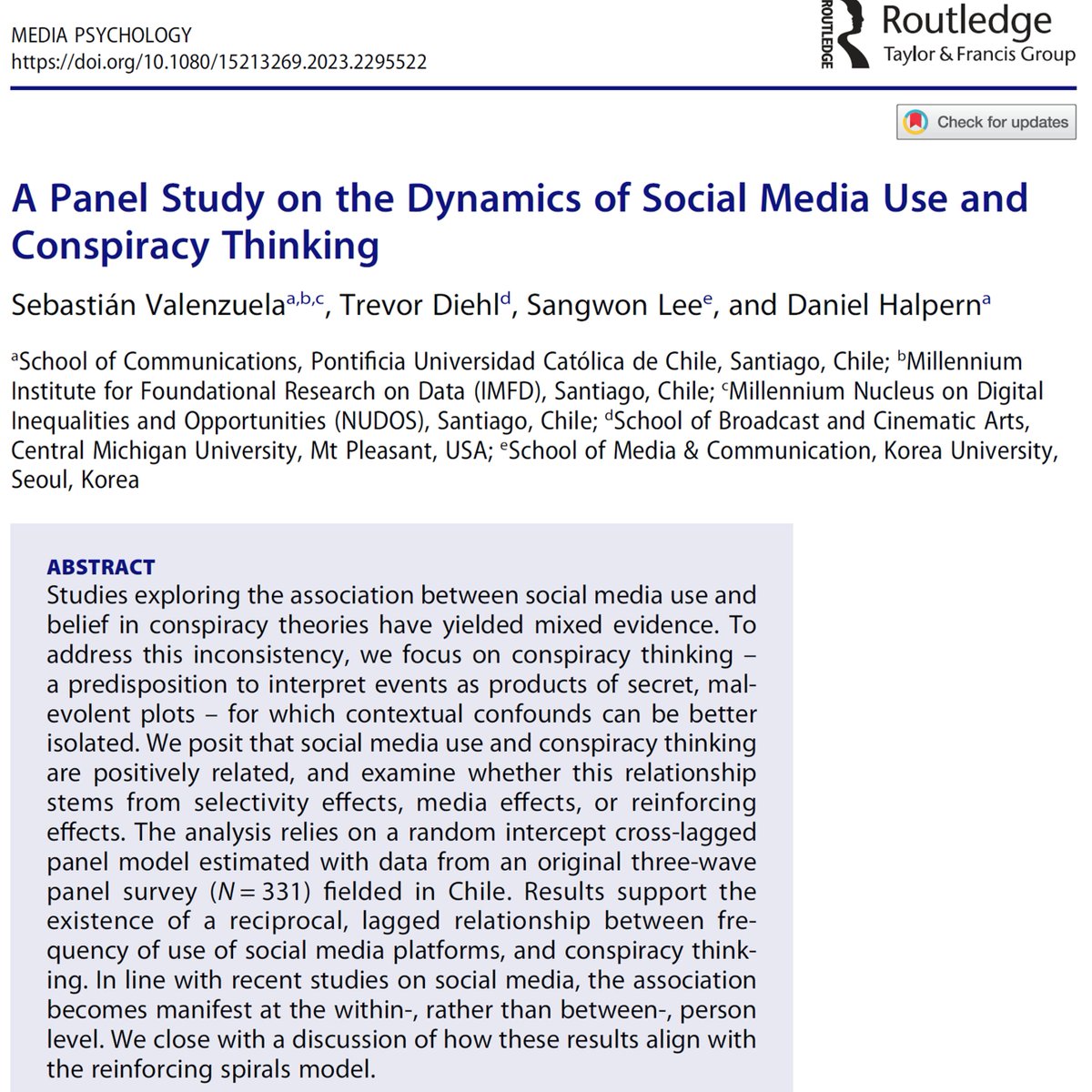
🚨New paper: In "A Panel Study on the Dynamics of Social Media Use and Conspiracy Thinking" (@MediaPsychMEP), we probe the nature of the relationship between social media use and conspiracy thinking. Available at: https://t.co/torxuUiQyj Ungated: https://t.co/0q2mDlGB5p
A 🧵...
I’ve written this piece for the FT about the challenges we face globally with disinformation and the urgent need of a systematic approach to address the root causes of the creation and spread of disinformation, and the positive opportunities that offers.
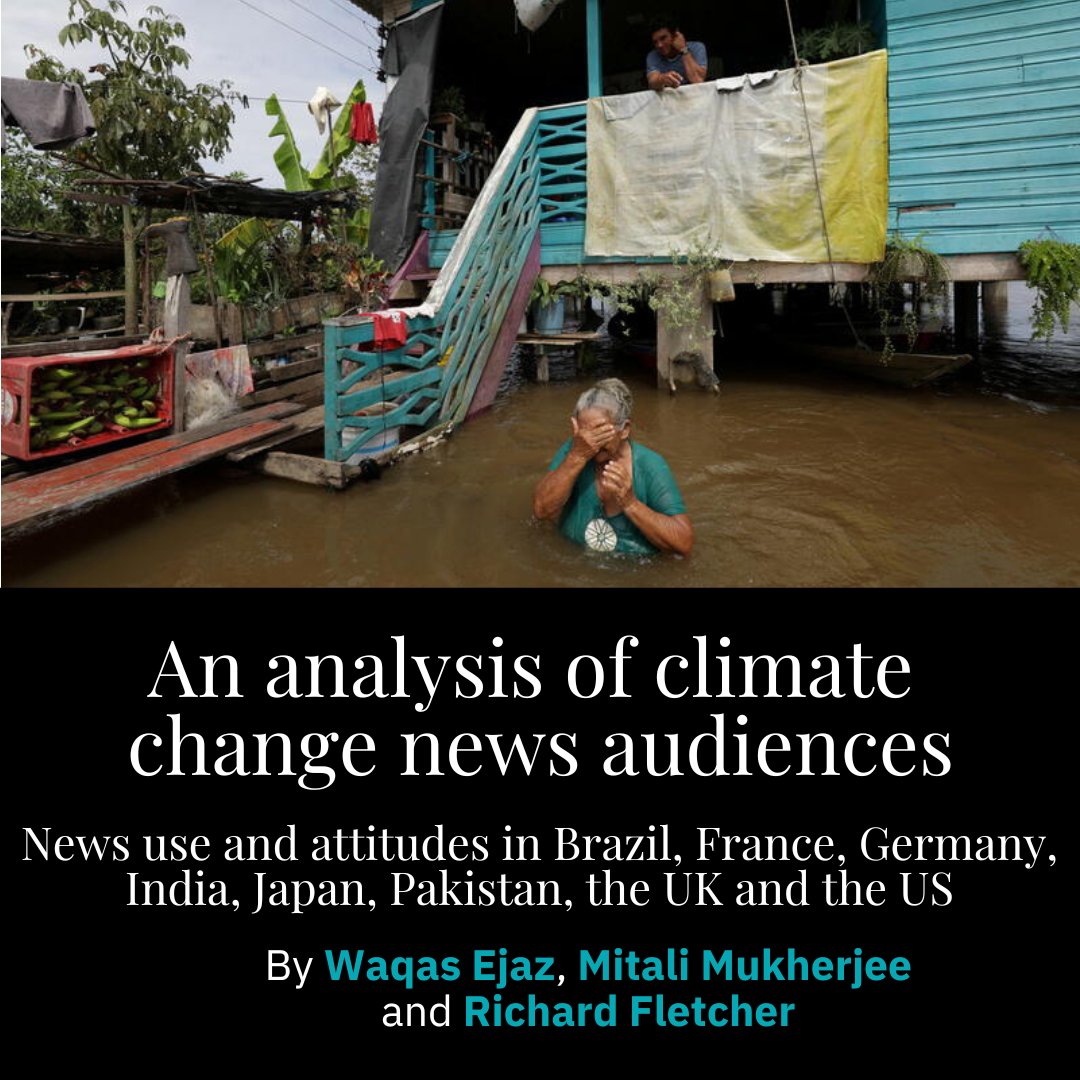
Audiences who follow climate news every week are more likely to think people are affected by climate change now
This is one of the findings of a report by @waqasejazch@MitaliLive@richrdfletcher with data from 🇧🇷🇮🇳🇵🇰🇯🇵🇬🇧🇺🇸🇫🇷🇩🇪 #COP28
https://t.co/bT4sRdpoWN
🧵10 charts below
Twitter’s users are not representative of the wider population
As the chart shows, audiences using Twitter for news are more likely to be men, and tend to be more well-off, well-educated and more interested in news and politics
More in the piece below
https://t.co/gQUbuLaiMi
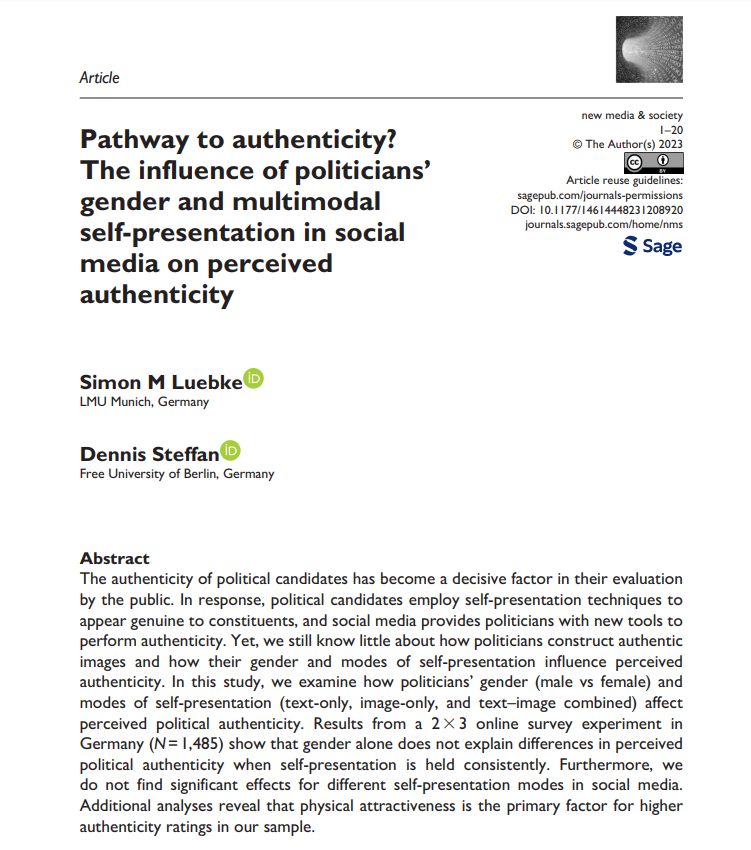
How do politicians’ gender and their self-presentation in social media influence perceived authenticity?
📢Excited to share a new publication in New Media & Society with Dennis Steffan on political authenticity.
@ifkw_lmu & @pukberlin
🔗https://t.co/Dkf58MvCic
Short 🧵👇
Seit 2019 führen wir am @JWI_Berlin eine jährliche Bevölkerungsbefragung zu den Themen Mediennutzung, Bürgernormen, politische Einstellungen und demokratische Teilhabe durch. Wen das interessiert: @TothRol hat uns diesen wundervollen Data Explorer gebaut 👉https://t.co/J34fnVoa4X