this guy won a World Series of Poker bracelet, then became a quant at Susquehanna (a firm with over $500B in market making).
here he breaks down the decision process behind every trade of theirs: incomplete information, time, and EV.
this clip is worth 3 minutes of your day.
HU session vs Sam on @CoinPoker_OFF . Will be streaming on X, Youtube (thevenividi1993) and twitch (vvv1993)
Giving away 1% of my winnings to someone that:
Likes, comments, retweets and follows
Netflix fires their best employees.
On purpose.
And it's the smartest thing they've ever done.
Here's the story behind the most controversial strategy in the world:
The beginning
I was 14 years old the first time I played poker with my friends. Back then, small home games were pretty common in the Netherlands. We'd all pitch in 2 euros for a set amount of chips, and you could rebuy if you busted.
During one game, I found myself drawing to a gutshot straight on the turn. My friend Roger made a big bet, and I called, hoping to hit the nuts. When the perfect card landed, I bet big and got called, feeling pretty pleased with myself for winning a sizable pot. But on the bike ride home (classic Dutchie move), I started reflecting. How lucky had I been to hit that gutshot? What would I have done if I hadn’t? Was it even a smart play? That moment sparked my interest in poker, and it was only the beginning.
A few months after that home game, I walked into my brother’s room and caught him playing poker online on PKR, a platform known for its cool 3D avatars. The games were softer compared to other networks since it wasn't purely focused on poker. I started out playing for fake money, and since no one took it seriously, I quickly rose through the ranks. Soon, though, I was craving a new challenge.
One day, my friend Ward casually mentioned, "Did you know you can enter these tournaments for free? If you go deep, you can win real money." That was all I needed to hear. I began grinding the freerolls with serious dedication. By then, I was 15, and I knew PKR's freeroll schedule better than my own high school timetable. Sometimes, I'd win a few bucks, but I'd usually lose it just as fast at the $0.02/$0.04 NLHE tables.
When my birthday rolled around, I typically got an envelope with 50 euros from my parents (and I still do, haha). This time, I had a different plan—I wanted to put that 50 euros into a poker account under my dad's name. When I brought it up, my parents were understandably hesitant. My mom flat-out disagreed, and my dad didn’t think it was a good idea either. But he had recently read a book on parenting, which suggested sometimes saying "yes" when your instinct is to say "no."
“Listen,” he said, “don’t tell your mom, but we’ll put the money into a poker account in my name. You can give this poker thing a shot. If you lose it, though, you’ll have to drop this dream.” And so we loaded 50 euros, which was about $75 at the time, into a poker account. I chose the username “kidpoker14,” a nod to Daniel Negreanu and the football legend Johan Cruyff.
I lost most of that modest bankroll in the first week. That’s when I made a big mistake—I used my dad’s credit card more than I was supposed to, eventually depositing around $1000 in total. I had to come clean to my dad before he found out on his own. To my surprise, he stayed calm and simply asked if I had lost it all. I told him the entire sum was gone, even though I had $100 left. “We’ll get rid of the credit card and this will be the end of your poker career,” he said. “And you’ll have to pay me back the extra money you took.”
In the six months that followed, I turned that remaining $100 into $16,000. Did I have a real edge over my opponents? I’m not entirely sure. But I felt confident that I was smarter than most of the field, because PKR was incredibly soft at the time. When you're 16, $16,000 feels like a million, so I went downstairs to share the good news with my parents, fully expecting them to be thrilled.
Their reaction? Well, let’s just say it wasn’t what I imagined.
More on that in the next story! If you enjoyed this one, don’t forget to hit like.
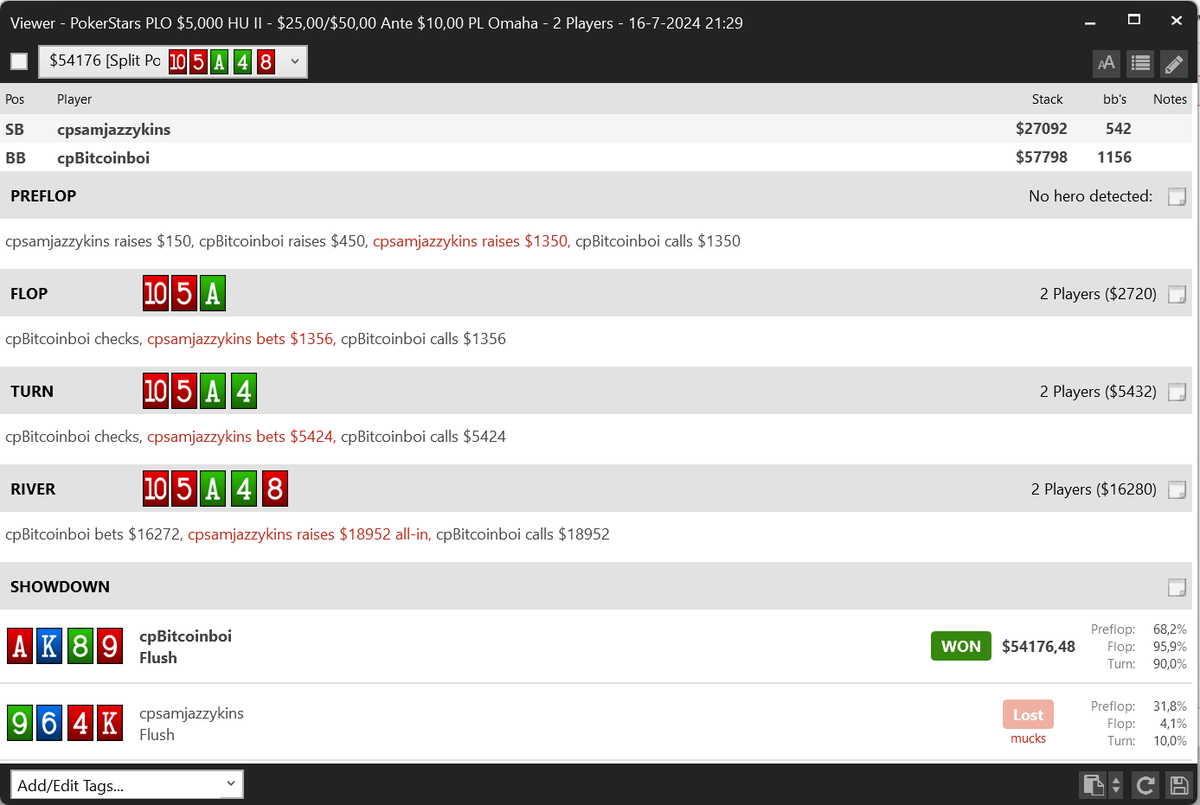
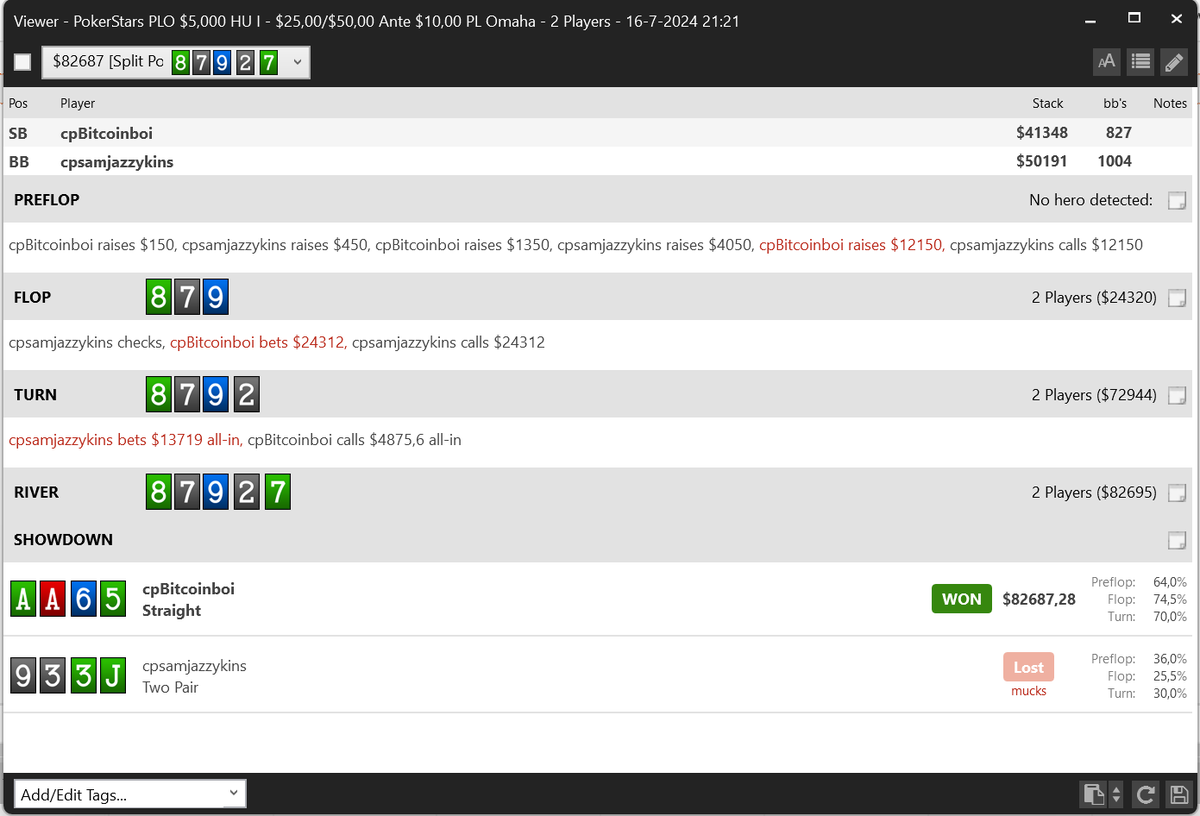
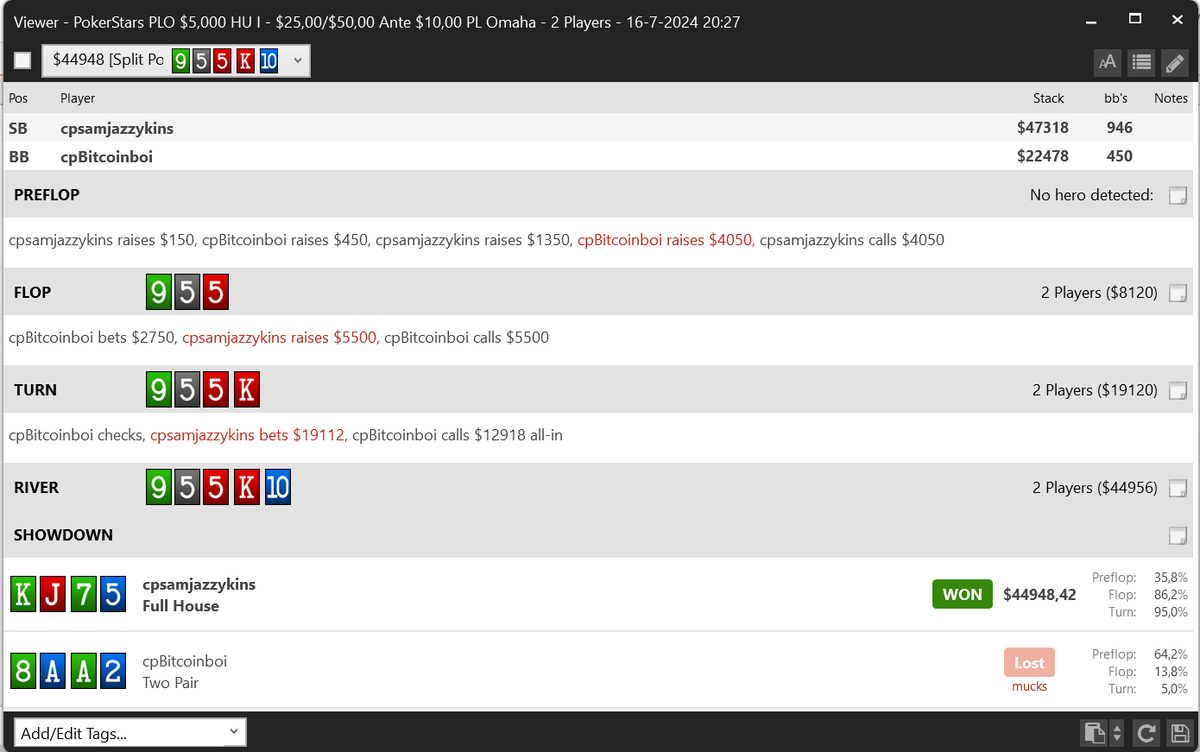
Crazy HU session vs Sam on @CoinPoker_OFF
Stacks were flying and here are some of the biggest pots that we played
Giving away 1% ($1,348) of my winnings to a random person that follows + retweets
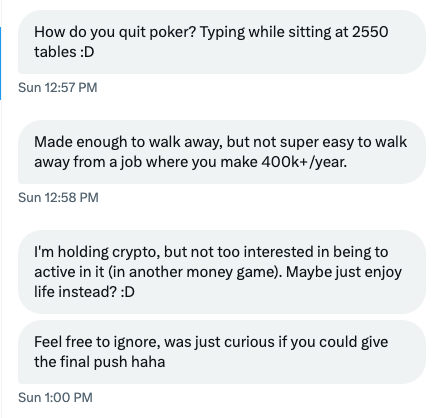
a lot of people have asked me "how do i quit poker and move on to something else?"
it's hard (but doable). if you're a successful pro, you definitely have golden handcuffs to the poker table.
starting over as a white belt at something new is humbling. even if it goes well, it's going to take a while for it to replace your income stream.
i played poker for a living for over a decade. i definitely don't have anything against it, but if you feel like you're ready for something new here's my advice...
(all of this assumes you want to be your own boss. of course getting a job is a totally reasonable option. that's what most people do. but i've never done it and don't know anything about it)
the first thing i'd do is get clear on why you want to move on from poker. if you don't do this, you'll get sucked back in.
you need this to be crystal clear so when a friend texts you about a super juicy game "you need to hop in right now," you know why you're not going to.
you want to be able to actually get some pleasure from not sitting in the game. embrace the feeling of working toward a big picture goal, rather than the FOMO of missing out on some sweet sweet short term gambling dopamine rush.
write your reasons down. put them on a sticky note, and stick it to your computer monitor.
for me, it was a variety of factors:
1. burnout. i had played so many hands of poker across so many years that i was just ready for something new. i no longer had the spark or drive to sharpen my poker axe.
2. i didn't want to be permanently trading my time for money. poker was very lucrative at times. but at the end of the day, i had to be sitting at the table playing. there isn't really an off-ramp to this treadmill. you're not building an asset in a poker career, if anything you're building a growing liability (bc it's harder to move into another field the longer you play).
3. my wife and i were starting a family and i wanted a more flexible career. you might be asking yourself "isn't sitting on a computer playing online poker whenever you want as flexible as it gets?" not when you're as big of a gambling addict as i am. i have no interest in playing a 90 minute session while getting interrupted at the worst possible moment by a crying baby. i'm the type of poker player that needs to lock myself in a room playing 16 hour straight marathon sessions. not exactly conducive to being a great husband or father.
4. the game was headed in a direction that i wasn't excited about. i got out of poker toward the start of the "solver era" when the way in which people studied poker changed a lot. i wasn't motivated to keep up with the latest breakthroughs in solver technology and strategy.
5. online poker was becoming logistically harder and less profitable. i was spending quite a bit of time outside the USA to play on poker sites that wouldn't serve Americans. the ceiling on what top online pros were making was going down every year. i felt like both the lifestyle and profit potential were decreasing.
ok now that you've got your reason for moving on nailed down, here's the key: you need to find a new "game" to attack with the ferocity you put toward becoming a poker pro.
the game you choose next is important. you're going to want to give yourself some time to really think this through and maybe sample a few options, but then pick one and go all-in.
i separate the games available to you into two categories:
1. money winning competitions: day trading, sports betting, NFT flipping, retail arbitrage (buying stuff from Target clearance aisles and marking it up to sell on Amazon) and generally any sort of arbitrage.
2. real business: building a product or service that people get value from and will happily pay $ for.
as a poker player, category 1 is going to come naturally to you. you'll probably be great at it. i'd really step back and consider if it aligns with the reasons you want to move on from poker in the first place though.
for me, i wanted to work on building assets and separating my time input from my income output. don't get me wrong, i love money winning competitions. i still bet sports, invest in individual stocks, and enjoy flipping things. but i didn't want whatever i was focusing the majority of my energy into after poker to be in category 1.
if you want to do category 2, you've got a lot of brainstorming to do. my one recommendation is that even if your initial idea is "small" you have a pie-in-the-sky roadmap to a huge outcome if things go very well. winning money at a negative sum game like poker is HARD. don't sell yourself short. give yourself a chance to hit out of the park. you don't have to start big, but give yourself some runner-runner outs to end up big if you run hot.
ok now for the logistics of the next question i always get "yea but i'm making a bunch of money in poker and if i start something new i won't be."
you've gotta be OK with making a short term income sacrifice for the chance to achieve your long term goals.
if you can afford to, quit poker cold turkey for a set period of time while you pursue the next chapter in your career.
if that's not realistic, take the number of hours per week you play poker. divide that number by 4, and schedule these hours into set time slots throughout the week. you'll almost certainly make half of your previous poker income in 25% of the time. you are not allowed to play or think about poker outside of these hours. as you start getting some momentum in whatever you do next, gradually trim your poker schedule even further until you're not playing.
now that your schedule has opened up, spend some time thinking about what game you want to play next. brainstorm business ideas; the more the better, coming up with ideas is a skill that you have to practice like anything else.
then pick one (not two, not one and maybe a backup you'll switch to in a few weeks). don't get distracted with anything else. until you have booked a solid win outside of poker, a degenerate level of focus is going to be your secret weapon. take action, and attack this one business idea with the same intensity you did when you were diving into poker.
finally, the last and most important step: if you do all of this and start something new, let me know so i can give you some money and be along for the ride (if you've read this far, you know luck is real and my $ is some of the luckiest 🎲).
i love working with and investing in poker pros as they move on to the next game they are going to crush. my business partner is an ex poker pro. so is our ecom business' warehouse manager. most of the people i invest and brainstorm with are ex poker. hopefully you're next.
good luck 🤞🏻
LVMH consolidated luxury to a point where we don't have luxury anymore. Last man standing is Hermès and a couple of diamond dealers against cookie-cutter commodity chic that is bankrupting the middle class and forcing wealthy people shop for vintage and employing a tailor
I’m 33.
When I was young, I wasted years drinking, smoking, and being a degenerate.
Then I discovered Naval Ravikant and he changed my life forever.
Here are 20 teachings from the wisest person of this century (that will change your life too):
Charlie Munger spent his entire life studying why humans make terrible decisions.
The result?
A list with 25 of the most power psychological tendencies in life 👇
Small business acquisition is one of the greatest opportunities of 2023.
I've mentored 100s of biz-buyers... But half of them start with the wrong deals.
Here are 5 businesses NOT to buy:
22 truths I wish I knew at 22:
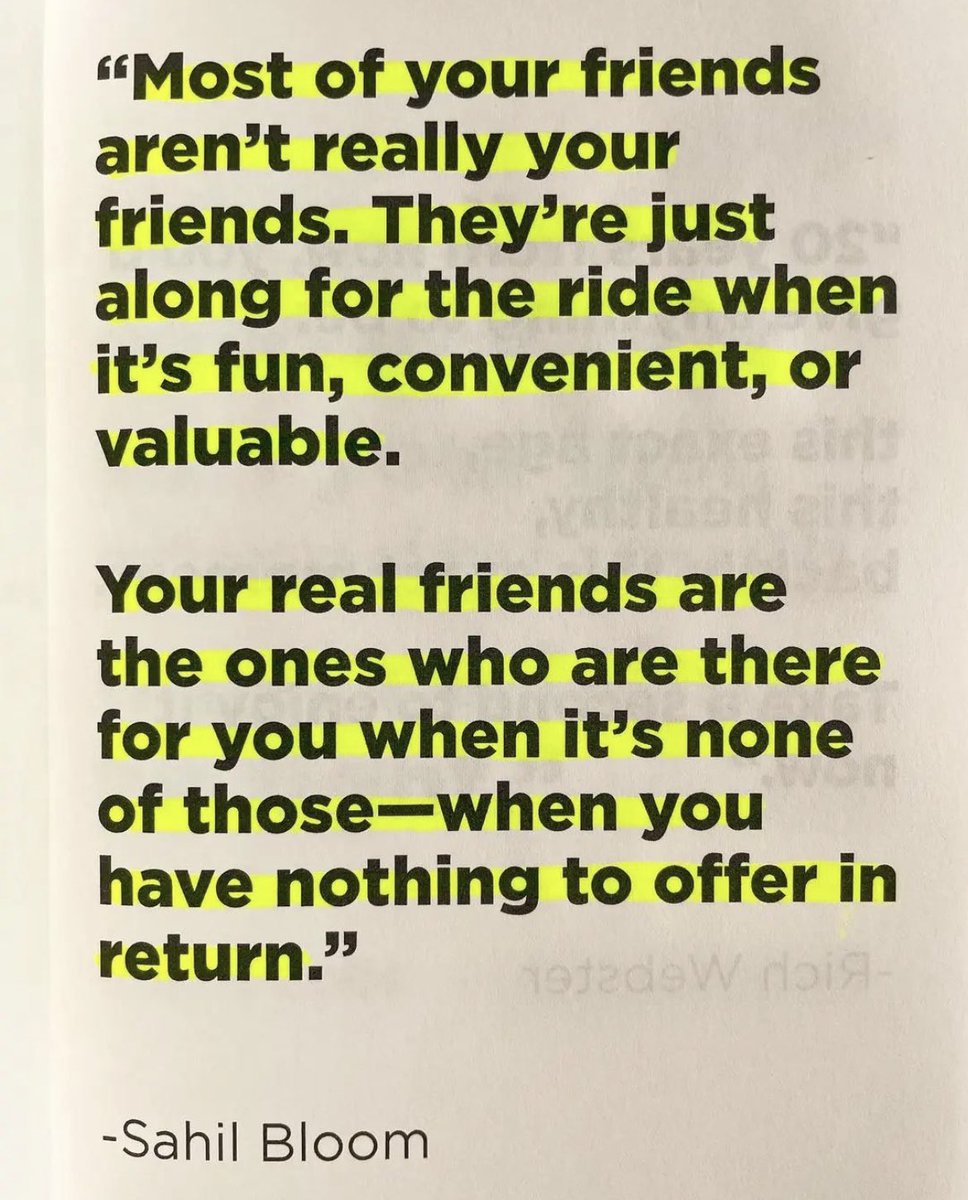
1. Most of your friends aren’t really your friends. They’re just along for the ride when it’s fun, convenient, or valuable. Your real friends are the ones who are there for you when it's none of those—when you have nothing to offer in return.
2. Your success in life is proportional to the number of difficult conversations you're willing to have.
3. Nothing good happens after midnight (especially when you've been drinking).
4. Stand up straight and look people in the eye. Two old fashioned things that stand out and never go out of style. The way you carry yourself dramatically impacts how the world will engage with you.
5. Waking up early and working out will completely change your life. One tiny action with massive ripple effects.
6. Make decisions that your 80-year old self and 10-year-old self approve of. The former cares about the long-term compounding of actions, while the latter reminds you to have some fun along the way.
7. The time you spend comparing yourself to others is much better spent investing in yourself. The only comparison worth making is to you from yesterday.
8. When you think something nice about someone, tell them right then. It's a tiny habit that will pay long lasting dividends.
9. Social media is designed to make you wish you were someone else, somewhere else, and with someone else. Curate your consumption and eliminate what brings negative emotions.
10. Prioritize spending time with people who make you better—who lift you up and make you want to grow.
11. Call your parents more often—they won't be around forever.
12. Focus on making money, you'll do ok. Focus on creating value, you'll do great.
13. The "sleep when I'm dead" mentality is broken. Great sleep is an essential ingredient of great results.
14. Give people a second chance, but never a third. If they're holding you back, cut them out of your life.
15. Trying is the coolest thing you can do. If you're going to do something, do it well.
16. Stop trying to be interesting and focus on being interested. You become interesting by being interested.
17. You'll never know what you want to be when you grow up—and that's fine. Prioritize asking great questions and having a bias for action and you'll always make it.
18. Finding the truth is more important than being right. Stop arguing to win—start listening to learn.
19. Grades won't matter much, but energy for learning will.
20. Stop worrying about what other people think of you. Most people aren't thinking about you at all.
21. Not all decisions are reversible, but most of them are.
22. Go on a few wild and crazy adventures that you'll be excited to tell your kids about someday.
***
If you enjoyed this or learned something, follow me @SahilBloom for more.
Fired 6 bullets in the 10k. Got completely destroyed. I Still made it in the money but lost 50k in total.
Every session I lose, it hurts. I am competitive. I want to win. Always.
Easy to self-doubt, to self-criticize. Is something wrong with me? No.
I appreciate that. I have met many people who wish to be more motivated, ambitious, driven, and competitive.
Some enjoy the hustle, the grind. They don't need nightclubs.
If you had a nasty session, keep your head up champ. Appreciate your competitiveness and your drive. No need to feel bad about it. This makes you hungry in the first place. Remember, millions of people would love to have your fire. They need to be motivated to start working on their goals. You don't. You start.
But it comes with a price. And being competitive, hungry, and ambitious comes with the cost of self-doubts, with worrying a lot more than others. Thats normal. This is who you are.
Understanding this in times when you doubt yourself makes it easier to continue going and to appreciate the person you are. A different perspective helps to be more calm and reflective during self-doubt.
If you let it slip, it can turn unhealthy to the point where you burn out. Don't let it happen. Appreciate the good sites of being competitive, hard-working, and ambitious; it will stay healthy. Remember, more people would instantly trade with your level of ambition, motivation, and drive and happily pay the price you have to pay.
I had to go through the same stuff. Having succeeded in Poker for many years but still being very hard on myself and worrying for "no reason." Once my mentors and coaches helped me change my perspective on it, I had a healthier relationship. Still, to this day, I worry; I hate losing, but I can reflect better, see the good in it, and keep moving. I appreciate that my fire will never extinguish. If you don't have the desired results yet, and you worry, you self-doubt, try to change your perspective. Try to see the good in it.
There is nothing wrong with that. Keep fighting champ. You got this.