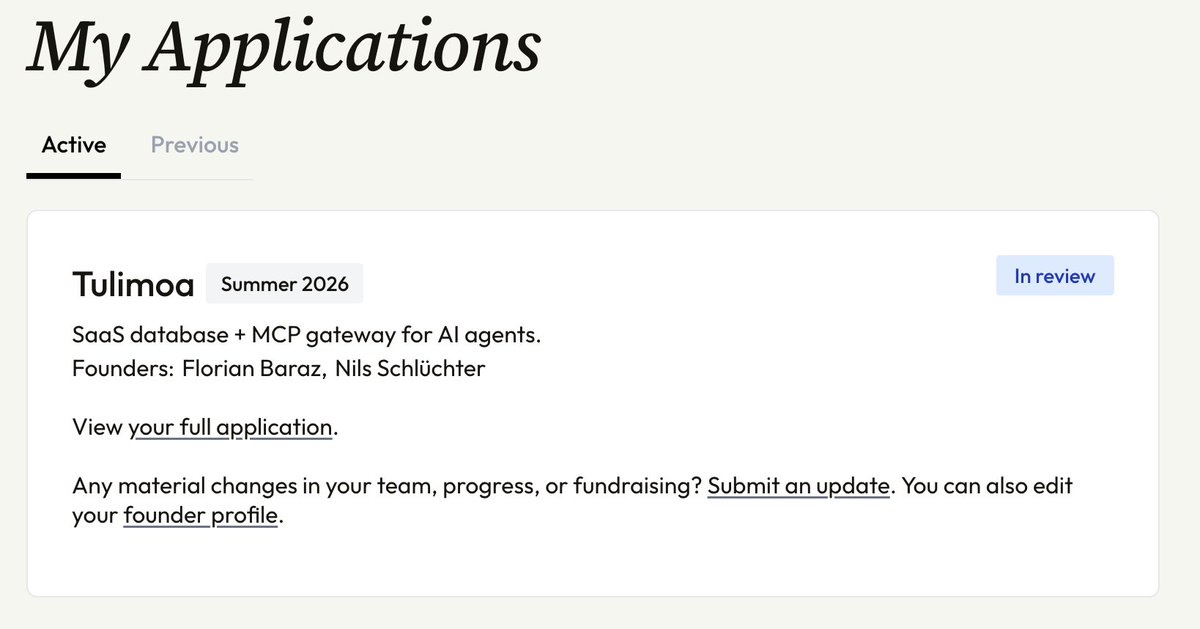
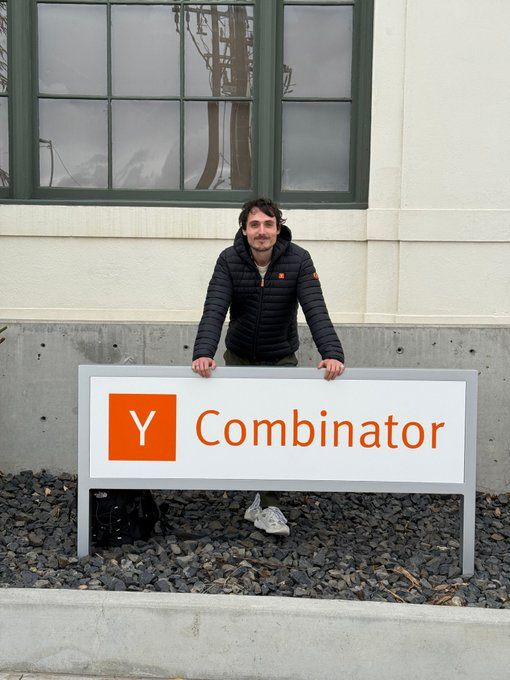
Just submitted our @ycombinator application for Tulimoa.
What pushed us to apply now: the $2M in @OpenAI credits for batch companies. For what we're building (connecting software to AI agents through MCP), inference cost is the whole game. Those credits turn 12 months of build into 3.
@NilsSchluechter@gettulimoa
Last chance to fill out the annual AI Engineering Survey this weekend and win great Vercel + Notion + AIE tix!
link below
we had @devinai analyze registered attendee list and output a live chart of the people coming to the conference. it ended up being the single best data driven storytelling i've ever seen on what kind of community we are gathering in two weeks.
survey link here!
https://t.co/2oilc5lCDm
no lurking, fill it out pls
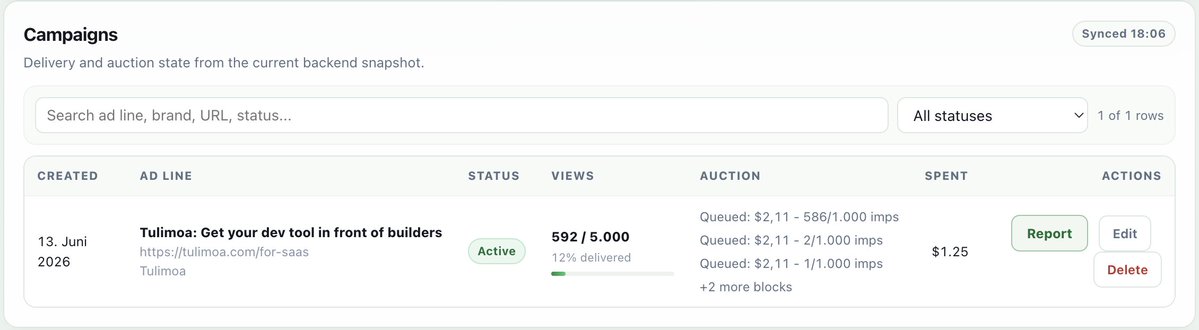
ok this is kind of wild. you can now run ads inside AI coding tools like Claude Code. just put Tulimoa's first one live via https://t.co/itIDqw7Yur from @andrewmccalip. no clue yet if it works but reaching devs right where they code feels too good not to try
ok this is kind of wild. you can now run ads inside AI coding tools like Claude Code. just put Tulimoa's first one live via https://t.co/itIDqw7Yur from @andrewmccalip. no clue yet if it works but reaching devs right where they code feels too good not to try
The US government, citing national security authorities, has issued an export control directive to suspend all access to Fable 5 and Mythos 5 by any foreign national, whether inside or outside the United States, including foreign national Anthropic employees.
The net effect of this order is that we must abruptly disable Fable 5 and Mythos 5 for all our customers to ensure compliance.
Access to all other Claude models is not affected.
We apologize for this disruption to our customers. We believe this is a misunderstanding and are working to restore access as soon as possible.
Read our full statement: https://t.co/bwn0sximKZ
We went from 0 to 2,200 paying customers in under a year by following @ycombinator's 15 rules:
1/ Do things that don't scale. Get your first 10 customers by hand.
2/ Launch now, not when it's "ready". A mediocre product in front of real users teaches you more in a week than 6 months of polishing in the dark.
3/ Charge from day one. If nobody will pay, you don't have a startup, you have a hobby.
4/ Talk to users every single day. The roadmap you need is sitting in your customers' heads, and they'll hand it to you for free
5/ Always hunt the 90/10 solution. For almost any feature there's a way to capture 90% of the value with 10% of the effort.
6/ There are only two real jobs: write code and talk to users. Everything else (conferences, press, VC coffees, corp dev calls) is fake work.
7/ You pick your customers as much as they pick you. 10 users who love you beat 1,000 who kind of like you.
8/ Growth is an output, not a strategy. Grow before product market fit and all you're buying is churn.
9/ Do less, really well. Pick one or two metrics and judge every task against them.
10/ Know if you're default alive. Paul Graham's question: on current growth and current burn, do you reach profitability before the money runs out?
11/ Don't hire until it hurts. Headcount is not progress, it's burn. Every great startup was embarrassingly small for embarrassingly long.
12/ Momentum is the only real moat in year one. Ship something every week, even something tiny.
13/ Every great startup is badly broken at some point. The game isn't avoiding fires, it's how fast you put them out. Again. And again
14/ Ignore your competitors. Startups die of suicide, not murder. In year one, the only company that can kill yours is your own
15/ Startups rarely die from running out of money. They die because the founders fall out. Brutal honesty with your cofounder is the cheapest insurance you'll ever buy
Good luck !