Staatliche Kosten pro Jahr 🇩🇪
Elterngeld: 7,5 Milliarden Euro
Bürgergeld-Empfänger: 60 Milliarden Euro
Steuerzuschuss zur Rente: 130 Milliarden Euro
Entwicklungshilfe: 26 Milliarden Euro
Dass jetzt ernsthaft diskutiert wird beim Elterngeld zu sparen, zeigt in was für einem kranken Zustand sich Medien, Politik & Gesellschaft in Deutschland mittlerweile befinden.
After 2 years of development my 20 house pack and neighborhood for Unreal Engine has been released and available on FAB!
All designs and assets were custom created for this project!
Youtube and FAB links below!
Indoor scene using my three.js SSR denoiser
Glossy reflections in real time has always been a hard challenge.
Here, it's using a recurrent denoiser and a special temporal reprojection pass with hit point reprojection.
Publishing soon, just need to clean it up for a PR 👀
Auto-framing is working much better now. It also handles prescriptive bracewalls, floor framing, and roof framing automatically, updating programmatically based on region. Soon you'll just enter the address and it will pull the design criteria for your zone and apply those prescriptive measures.
Live now at https://t.co/vZiN7sK2Ec for testing only, not for construction. For dev and testers only. No login required.
The goal: generate permit-ready plans within minutes.
Updates rolling out soon:
Auto-solar design (one click)
Auto-Title 24 energy calc (Calcs as you design)
Auto-site plan (Import GIS data and terrain)
Introducing World Tracing
Generative pixel-aligned geometry, beyond the visible.
Faithful to your pixels. Complete in 3D.
One image in — objects, scenes, even dynamic worlds emerge in full geometry, every point traced back to the pixel it came from.
🌐 https://t.co/SWTUhlXAP8 🧵 [1/6]
HALO REACH'S MAPS TOOK BUNGIE'S LEVEL DESIGNERS YEARS TO PROTOTYPE AND BUILD.
I generated these environments in Mint in minutes and exported them into Unreal Engine, Unity, and Blender.
Describe the world. Walk it. Export it.
The blank canvas in your game engine is gone.
La "Golden Age Thesis" de Marc Andreessen est probablement le take le plus intéressant sur l'IA en ce moment, et personne n'en parle assez.
L'idée centrale : l'IA n'arrive pas trop tôt, elle arrive pile au bon moment. Les économies développées font face à deux murs simultanés 1) déclin démographique (population vieillissante, taux de natalité en chute, pénurie de main-d'œuvre qui arrive) et 2) stagnation de la productivité depuis 20 ans.
Sans IA, on allait droit dans le mur : moins de travailleurs, pas de gains de productivité pour compenser, donc effondrement mécanique du niveau de vie.
L'IA renverse complètement l'équation. Là où le débat public se polarise sur "l'IA va tuer les emplois", Andreessen pointe que le vrai problème de fond, c'était l'inverse : pas assez de bras pour faire tourner la machine. L'IA arrive comme une force de travail élastique au moment exact où la force de travail biologique se contracte. Le timing est presque suspect tellement il est bon.
Deuxième couche de l'argument : l'IA n'est pas juste un outil de plus, c'est un superpouvoir cognitif distribué. Tout le travail répétitif et à faible valeur ajoutée (celui qu'on faisait par défaut parce qu'il fallait bien que quelqu'un le fasse) devient automatisable. Le capital humain se redéploie vers le créatif, le stratégique, le relationnel. Ce n'est pas une destruction d'emplois, c'est une réallocation massive vers ce que les humains font réellement mieux.
Troisième point: l'analogie n'est pas l'internet ni le cloud, c'est le microprocesseur. Un nouveau type d'ordinateur. Ce qui veut dire que tout ce que les ordinateurs font aujourd'hui va être reconstruit. Pas optimisé — reconstruit. Les 30 prochaines années de création de valeur économique sont devant nous, pas derrière.
Si Andreessen a raison (et empiriquement, regardez les courbes de productivité des équipes qui ont adopté les agents sérieusement) on est au début d'un âge d'or comparable à la révolution industrielle. Pas malgré l'IA mais grâce à elle.
Le pessimisme ambiant sur l'IA est compréhensible mais il rate le contexte macro. Le bon réflexe en ce moment n'est pas de se demander "qu'est-ce que je vais perdre" mais "qu'est-ce que je vais pouvoir construire que je n'aurais jamais pu construire avant".
BREAKING: vibe coding 2.0 is here.
From today on, Claude Opus 4.7 in Shipper can build and run a full business by itself, without any human contact.
We just launched Shipper. It's a army of agents for Claude to:
→ Build web/mobile apps and Chrome extensions
→ Code, design, monetize, launch
→ Do email marketing for you
→ Translate the entire app instantly
→ Self-maintain in the long run
Opus 4.7 can now do all of that from a <10 word prompt, for as low as $0.28/app... And it takes minutes!
Simply go to Shipper, then ask Claude to "create a talent-hiring platform" or "build an analytics SaaS that charges $29/mo"!
To celebrate the launch, we're giving away free credits randomly. Repost rand comment "SHIPPER" and we'll pick the winners.
I just visited a company in Finland that can turn any transparent surface — windows, glasses, plastic, anything — into a 3D display that perfectly augments what you see behind it.
Welcome to Distance . One of the most exciting companies in Europe right now. And they're only two years old.
We're not talking about a tiny rectangle in the corner of your windshield. The entire glass becomes your screen.
They showed this to Kia's design team. It led to a concept car with a full edge-to-edge 3D windshield that paints navigation onto the actual road, shows you what the car sees, highlights threats, and yes, could theoretically replace every Pepsi billboard with a Coke one.
But the defense side is where it gets serious.
As a neighbor to Russia, Finland feels the pain of Ukraine very directly. The Distance team wanted to be part of the solution.
Their field operator headset gives soldiers jet fighter-grade situational awareness.
Any sensor (thermal, infrared, multispectral) overlaid onto what you actually see. Tested in over a dozen field trials with the Finnish army. Driving armored vehicles in arctic conditions in the middle of the night with full 3D perception.
The field operator headset effectively allows soldiers to see through smoke, and with extra cameras even behind walls.
Some of what they showed us had never been shown publicly before. And there's more cooking under the hood they couldn't share yet.
Two years in. Moving at the speed of light. Welcome to Europe!
We started with a simple question.
Why is creating software for physical buildings still so difficult?
The deeper we went, the more obvious it became.
Every CAD app depends on a Geometry Kernel.
And nothing out there felt built for the future we wanted.
So we wrote our own @opengeometry
Actual geometry infrastructure designed for modern CAD and AI workflows.
#cad #bim #opensource
World's first - AFAIK: unlimited 3D grass in our new material library for https://t.co/tscREaW5Lh
It's a big hack, and in some situations you notice it is
But we got unlimited 3D grass working in the browser on our potato laptop with almost no frame rate impact
#threejs
Update 22:30: Schwer an Infomationen zu kommen, da viele Websites (auch Störungsmeldungsseiten betroffen sind). Scheint wohl etwas grösseres zu sein, womöglich auch losgelöst von Strato.
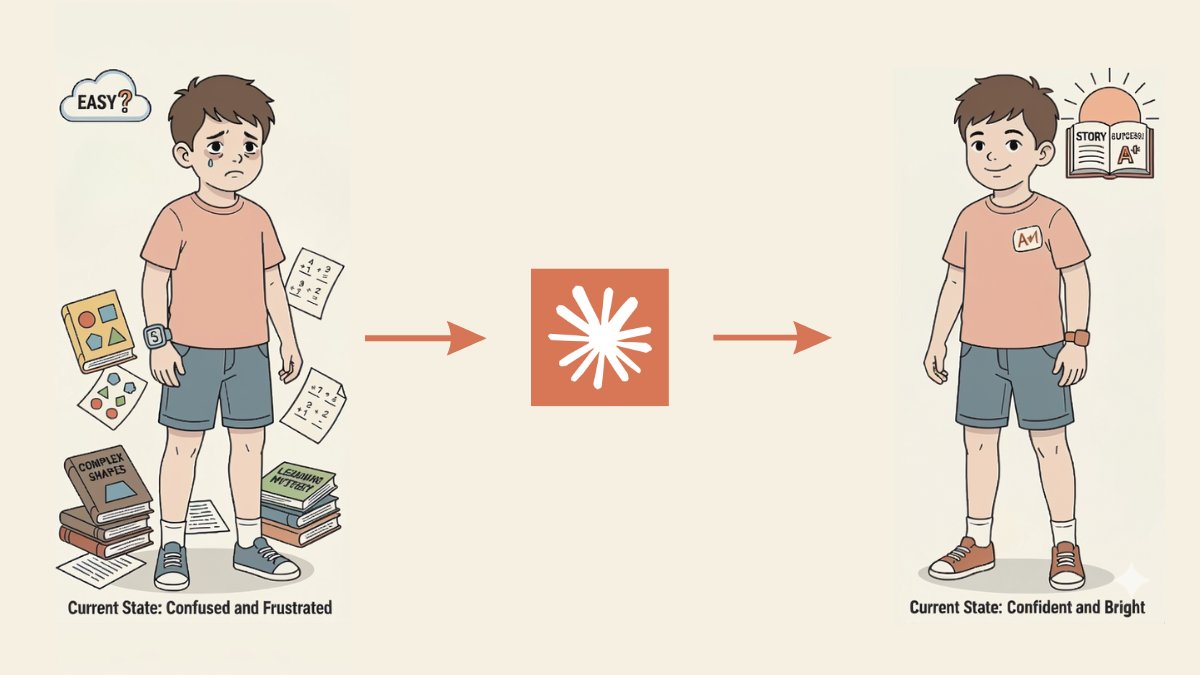
Claude can now teach your kids any school subject like a $100/hour private tutor from Khan Academy. For free.
Here are 12 prompts that explain math, science, history, and English at any grade level in minutes:
(Save this before it disappears)
🤯 Anthropic lässt jetzt komplette KI-Agenten für 8 Cent pro Stunde in ihrer eigenen Cloud laufen.
Sandbox. Skills. State Management. Tool-Bindung.
Alles inklusive. Du definierst nur noch Prompt und Skills.
Das Produkt heißt Claude Managed Agents.
Und genau das zeigt, was gerade passiert.
→ 8 Cent pro Session-Stunde, etwa 58 Dollar pro Monat bei 24/7
→ Du zahlst nur aktive Arbeitszeit, Idle-Phasen kostenlos
→ OAuth-Anbindung zu Slack, Drive, GitHub mit einem Klick
→ Neuer Advisor Mode senkt deine API-Kosten um das Sechsfache
Aber hier ist, was die meisten komplett übersehen:
Es geht nicht um Managed Agents an sich.
Es geht um die Infrastruktur, die dahinter verschwindet.
Bisher: AWS Lambda, n8n oder https://t.co/tEpHm0fnI3. Eigene Sandbox. State Management. API-Key-Security. Wochenlanges Setup.
Jetzt: System-Prompt, Skills, fertig.
Die Hürde, Agentic Workflows an Team oder Kunden auszurollen, bricht Stück für Stück komplett weg.
Und jeder der noch n8n und Hostinger Prediger schaut verliert jeden Tag immer weiter den Anschluss!
Du brauchst keine Automation-Tools mehr. Du brauchst eine eigene Agent-Plattform. Und das verändert alles. Egal ob du Führungskraft bist, Agentur, Berater oder Unternehmer.
Ein weiterer großer Hebel liegt im Advisor Mode.
Klassisches Muster das mittlerweile alle kennen: Opus als Lead, Haiku als Subagent.
Neues Muster: Haiku als Executor, Opus greift nur bei komplexen Fragen beratend ein.
Subagents werden invertiert!
Mein Test mit einem Hotel-Support-Agent:
Komplexe Anfrage mit Advisor Mode: 0,8 Cent.
Dieselbe Anfrage mit Opus Solo: 5 Cent.
Sechsmal günstiger. Identische Antwort-Qualität.
99 Prozent der Teams haben noch nicht gecheckt, wie sich der gesamte Markt gerade verändert und dies sind nur kleine Entwicklungen in einem großen Bild.
Jetzt kannst du dir den Vorsprung aufbauen, bevor die breite Masse es versteht.
Deshalb habe ich Managed Agents, Ultraplan und den Advisor Mode komplett durchgespielt. Live-Demo, Kosten-Vergleich, ein Hotel-Use-Case von A bis Z.
Das komplette Video ist jetzt auf YouTube live.
Game Developers and 3D artists can now generate 8K seamless PBR textures from text or an image!
I've been testing a new image model called "PATINA" on @fal and it works great with @UnrealEngine
Full video coming soon...
This is so fire. 🔥
Once you have PBR maps you can apply them to any 3D mesh. Character. building. rock. Anything. The mesh just needs UV mapping. That means instructions for how a 2D image wraps around a 3D surface. Like unwrapping a box into a flat shape.
PBR uses five maps:
Base color: What color is this spot. That is it.
Normal map: Which direction is this spot facing. The engine uses that to calculate how light hits it. Makes flat surfaces look detailed.
Roughness: Does this spot reflect light or absorb it.
Metalness: Is this spot metal or not. Metal reflects the scene around it. Non metal does not.
Height: Is this spot raised or sunken. Raised parts catch light. Sunken parts collect shadow.
You get all 5 maps from one phone photo.
This will be so nice primitives, terrain, etc.
🚨BREAKING: China just released an AI employee that runs on your own computer.
It can search the web, write code, build websites, make slides, and create videos. All by itself.
It even comes with its own built-in computer.
100% Open Source.