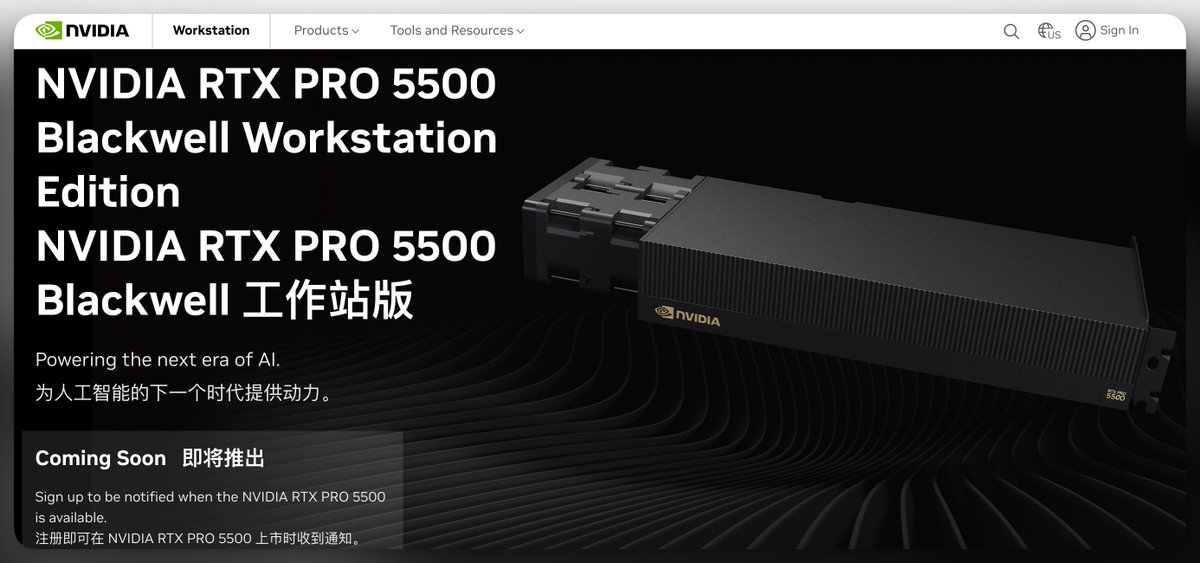
路透社消息称:字节跳动、阿里巴巴和腾讯已订购逾300万块英伟达RTX PRO 5500显卡,每块显卡售价约8.5万元人民币,合计订单价值超过350亿美元。
英伟达告知其他客户,由于需求远超计划产量,无法保证如期履行订单,可能只能获得所要求RTX PRO 5500数量的5%-10%。
🗒️RTX Pro 5500的性能不及英伟达H200和B300芯片,也并非专为大规模互联以及最严苛的AI训练和部署工作负载需求而设计。
Hope to see more evaluation from the real world use case instead of just benchmarks.
In addition to the “OAI $70B ARR”, another key thesis the bulls holding was “active anti-distillation measures plus much shorter thinking chain from the model architecture improvement, will help to enlarge the gap between models and open models”.
If DS’s latest release is indeed this powerful, this thesis would be invalidated as well 🥹
This is a really interesting chart.
I attended the TrendForce San Francisco roadshow yesterday, and this chart got me thinking about a lot of things.
China is now expected to localize more than half, or close to half, of most equipment categories, excluding lithography and track.
What does this mean? It means China can now expand mature node capacity far more easily than before, using equipment made domestically within China.
Mature node foundries are booming right now, right? That's thanks to the AI supercycle driving demand for PMICs, power semiconductors, and so on.
Samsung and TSMC shutting down their mature node capacity has also helped a lot.
But here's what I imagine... that China could oversupply mature foundry capacity.
Think about it. If China can be self sufficient in equipment, there's no limit to how far it can expand capacity. Then are companies like TI, with large revenue exposure to China, really safe?
I think it's time to take another look at Western mature foundry companies with a high share of China revenue.
Of course, I'm not saying sell TI right now. I'm just saying we should think about whether it makes sense to hold them for 10 years or more, like Coca Cola.
If you have a different view, please feel free to share it. I’d love to learn.