Building upon insights from psychology and neuroscience, the Fluid Interfaces group creates systems and interfaces for cognitive enhancement. @medialab @MIT
The Workshop on Agent Behavior is tomorrow starting at 8:30 AM in Continental Ballroom 4! If you’re @COLM_conf come check it out. We have some amazing speakers giving very different perspectives on how to study agents.
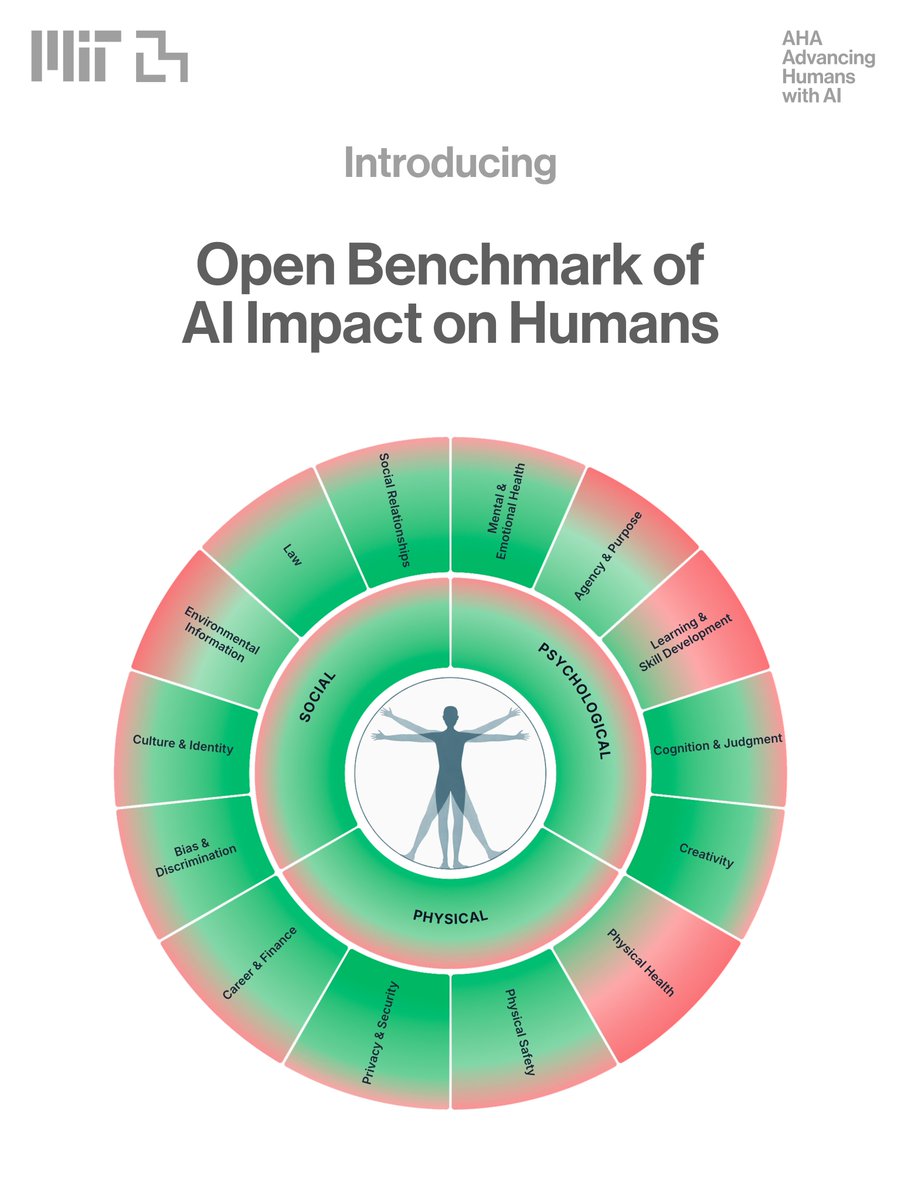
Most AI benchmarks measure what models can do. ImpactBench measures what AI does to us.
800+ behavioral metrics. 48,540 conversations. Ten models. Undesirable behaviors avoided in only 53.1% of evaluations.
Explore: https://t.co/YzsVRuwIJl
Curious about applying to the Media Lab? Register for the Virtual Open House for Prospective Students on October 9! You’ll have an opportunity to hear from staff, faculty, and students; learn about the academic program and the research groups; and ask questions.
Learn more and register for the webinar: https://t.co/a75RteY0oj
Last week, I was invited to present our @icmlconf 2026 paper “Visual Persuasion: What Influences Decisions of Vision-Language Models?” at the ECCV VisPer Workshop.
We created a visual prompt optimization method (CVPO), in which we iteratively edit images (e.g., w/ @NanoBanana 🍌) to maximize the feedback given by VLM judges. While this method can be used for lots of applications, we use it to discover factors that persuade agents (and, as a proxy, people) while making decisions. More details and examples below!
Work w/ Pranav M R*, @PattieMaes, and @nikhilsinghmus
I'm at COLM this week! If you're interested in chatting about AI agent vs human behavior, feel free to reach out :) I will also be on campus at Stanford (Oct 6-7) and Berkeley (Oct 8)
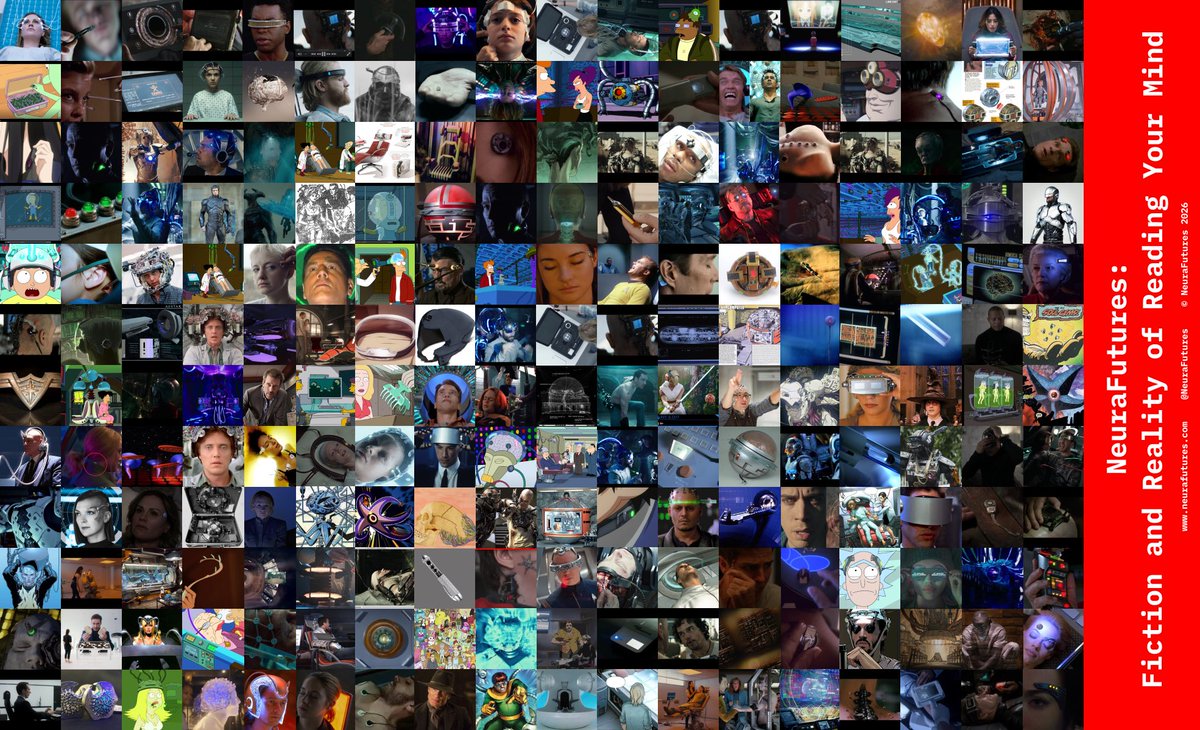
NeuraFutures or the Next User Interface is Your Brain
Join us at @woburnlibrary on October 3, 2026 to learn more about the NeuraFutures exhibit and try out some brain-computer interfaces for yourself!
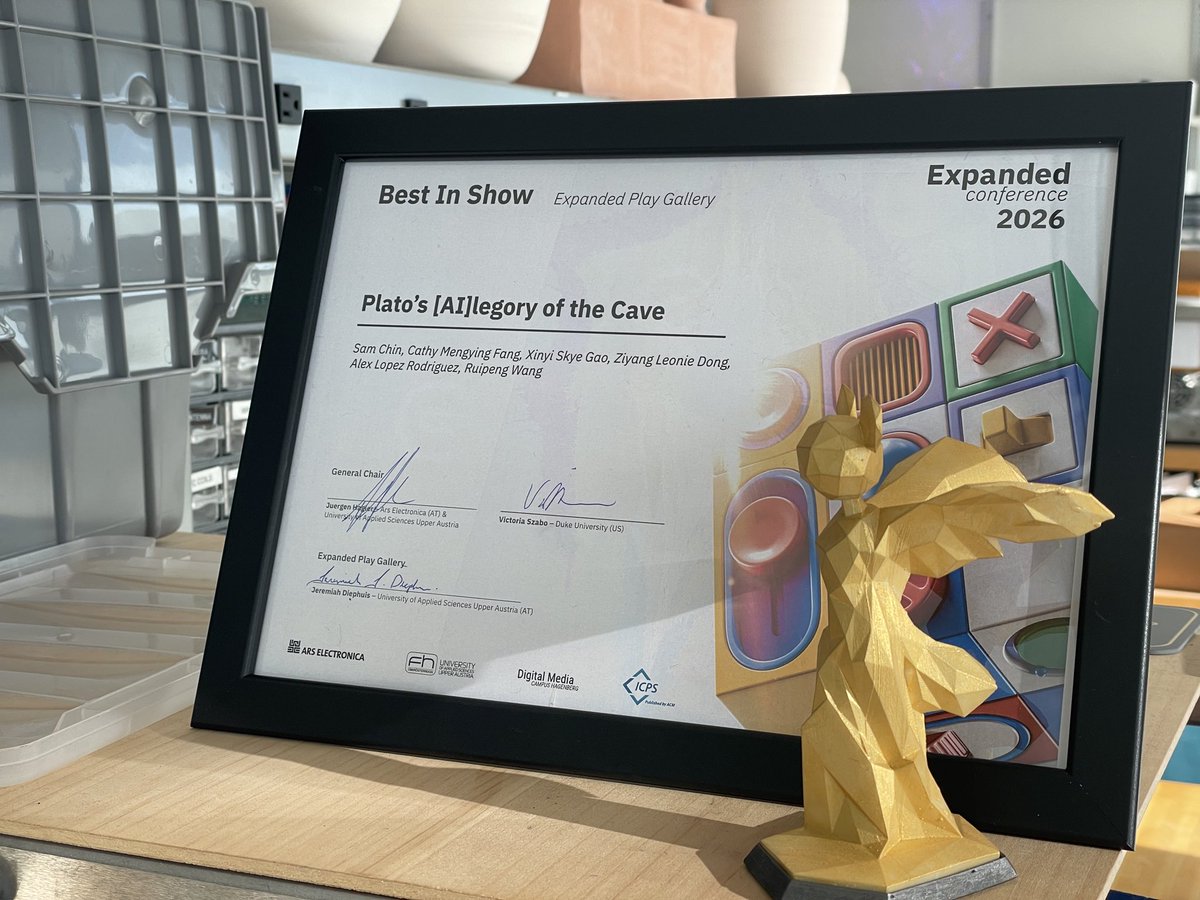
We got Best-in-Show at @ArsElectronica Expanded Conference!
Echoing the gallery’s theme of “expanded play”, seeing the surprises and pure joy on people’s face when playing with our piece was the biggest reward.
https://t.co/uga8kqdUvP
Curious about applying to the Media Lab? Register for the Virtual Open House for Prospective Students on October 9! You’ll have an opportunity to hear from staff, faculty, and students; learn about the academic program and the research groups; and ask questions.
Learn more and register for the webinar: https://t.co/a75RteY0oj
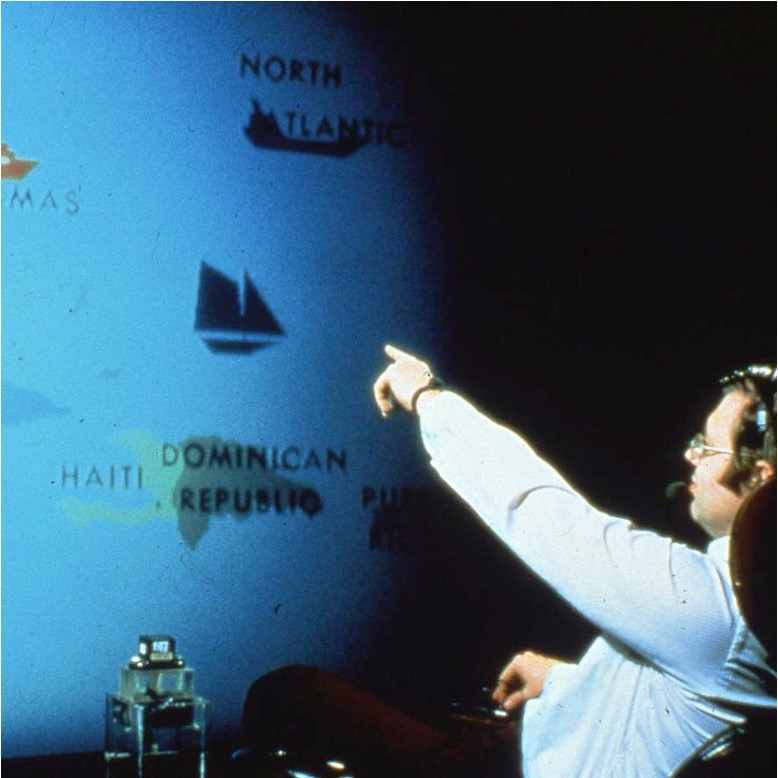
In 1979, MIT researchers said "put that there" to a computer, and it listened. Yesterday, OpenAI launched GPT-6 Astra, the most powerful AI model ever built, opening with 47-year-old footage from our Media Room to show exactly where the idea came from. The premise that Richard Bolt, Chris Schmandt, and Eric Hulteen proved nearly five decades ago still holds: machines should adapt to human language, not the other way around. The best ideas don't expire...they compound. READ THE STORY: https://t.co/OUuxaGJzfq
What's your real relationship with @claudeai ? Our AHA team collaborated with @AnthropicAI on Reflect, Claude's new beta feature that shows your AI habits and helps you stay aligned with your personal goals. Check your Claude settings (desktop) to explore your own patterns!
Do some AI models refuse more user requests than others?
Are people using AI to generate illicit content more or less over time?
And which models do people go to for coding vs role-play?
Unfortunately, existing reports of AI use from frontier labs are coarse and proprietary that do not help us understand the impacts and natural uses of AI.
This prompted us to create a public AI observatory https://t.co/Hmgvd97NhK
Today we are excited to release the NeuroDatasets tool, where one can browse and find all available neuroscience datasets for all major modalities: EEG, MRI, MEG, NIRS, PET and more.
Check the NeuroDatasets tool here: https://t.co/5oS9y1mKG9
In the latest essay @WBUR Mike Kalin talks about AI-powered systems that can help with memory support for those who might need it due to cognitive impairments and/or age. One of the systems highlighted in the article is MemPal, co-led by our PhD student @wazeerzulfikar@medialab
Watch the replay of the keynote talk at this year's @ACMIUI from our team's lead, @PattieMaes@medialab on the topic of « Designing Al Interaction for Human Flourishing ».
Watch the video here: https://t.co/mTRDNmWjJP
In a recent study, @anku__rani, @valdemardanry, Prof. @pliang279, Dr. Andrew Lippman, and Prof. Pattie Maes (@fluidinterfaces) show that although chatbots can help people detect misinformation, users who rely on AI systems to verify facts may become worse at spotting fake news on their own. However, the researchers also identified conversational strategies that encourage active learning and skill development, rather than simply helping in the moment.
https://t.co/IpXfMznwWB