DOOR OF HOPE is an organisation that looks after abandoned babies. These are babies that are sometimes given to them through an anonymous “hole in the wall” but often babies are dumped in unimaginable places ! 😢 Please support our charity ! https://t.co/KBM5DnIqFf PLEASE SHARE!
MAKERS OF HISTORY
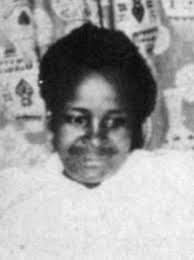
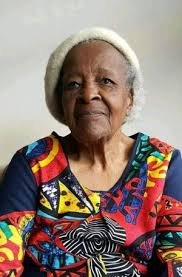
Stella Madzimbamuto (13 April 1930 – 30 June 2020) a nurse, civil rights activist and nationalist was a South African-born Zimbabwean nurse and plaintiff in the landmark legal case of Madzimbamuto v Lardner-Burke. Born as Stella Nkolombe in District Six of Cape Town in 1930, she trained as a nurse at South Africa's first hospital to treat black Africans, earning a general nursing and a midwifery certification. After working for three years at Ladysmith Provincial Hospital, she married a Southern Rhodesian Daniel Madzimbamuto and relocated. From 1956 to 1959, she worked as a general nurse at the Harare Central Hospital. In 1959, her husband, Daniel Madzimbamuto, was detained as a political prisoner. He would remain in detention until 1974, while she financially supported the family. Stella Madzimbamuto worked as the nurse in charge of Ward B6, the Spinal and Head Injuries Unit, of Harare Hospital. She was trained by the only Africa-based neurosurgeon at the time, British physician Laurence Levy. He arranged for her to study abroad at Stoke-Mandeville National Spinal Injuries Centre in Buckinghamshire and the National Hospital for Neurology and Neurosurgery in Queen Square, London, earning certifications in the treatment of neurological and spinal injuries. Upon her return to Rhodesia, in 1965, she developed a curriculum based on her studies to train junior nurses. She worked as the lead nurse in Ward B6 until 1982. That year, she became the night matron of Harare Hospital and served in this role until her retirement in 1995.
In 1965,Madzimbamuto challenged the detainment of her husband in a lawsuit, maintaining that if the government of Rhodesia, which had declared independence from Britain, was illegal, then the detention orders the government had issued were invalid. Her case was defeated in the Rhodesian courts, but she appealed to the Judicial Committee of the Privy Council, which was the highest court for many Commonwealth countries, including Rhodesia. The Judicial Committee reversed the decision of the High Court of Rhodesia. It declared the Rhodesian government to be illegal, laws and proclamations issued by it to be invalid, and ordered Madzimbamuto's husband to be released. The Rhodesian government ignored the decision, but it has become a landmark decision regarding the issue of state sovereignty.
@WorldRemit@EcoCashZW Nothing to add in secret DMs. Your service is not working as it should (for over a week) and I can’t send money to those that need it for food. I contacted your help center three days ago and they said it would be fine within 24hrs. Why ?
@WorldRemit what is wrong with your service? Can’t use any of the services including @EcoCashZW and Visa ? Can’t even send for collection from a centre ?
Before Great Zimbabwe, before Mapungubwe, there was Kalanga. BaKalanga have called Western Zimbabwe & Eastern Botswana home for over 1,000 years, pioneers of iron, stone cities & trade empires.
Their story begins not in the south, but in Northeast Africa.
"You are never too young to lead and you should never doubt your capacity to triumph where others have not." -- Kofi Annan (1938-2018)
#MondayMotivation
Yesterday I shot a hole-in-one and the tradition is that I must share the luck and buy drinks.This is expensive & good insurers cover the lucky golfer. So I claimed @NakedCover_SA & was https://t.co/dXEpsvtfNQ they aren’t the insurer for my risks.Taking quotes from good insurers?
How did 8-year-old Tinotenda Pudu survive five days in Zimbabwe's lion-infested Matusadona National Park? Watch his incredible rescue story here. 🦁✨ #Zimbabwe
Everyone just “knows” that “corruption” is the primary cause of Africa’s continued underdevelopment. However, Professor Grieve Chelwa holds a different view and argues the West has, in fact, “Wielded ‘corruption’ to privatise life in Africa”.
[Thread]
I think Africa’s problem, in general, is that politics is a lucrative occupation.
If a minister had similar earnings to the average civil servant and had no other pecuniary benefits the role might attract those who wish to serve.
I believe in the Nordic countries they have achieved this.