Today is my happiest day, I just received my first #NFT from the best project ever @numbersprotocol. I got #CAPTCH-A “ROSE” the Special Edition. “HUMANE AND PASSIONATE, ROSE IS ONE OF THE CAPTCHA SERIES THAT WILL ACCOMPANY ME IN THE BRAVE JOURNEY OF WEB 3.0 #NUMARMY
Sometimes AI transparency means being able to prove why there is no AI label.
Under the EU AI Act, certain AI-generated text published to inform the public does not need the same disclosure when a human has meaningfully reviewed the content and a person or organisation takes editorial responsibility for it.
But “a human looked at it” is not much of a record.
The EU’s own guidance makes the distinction clearer. Fixing spelling or grammar is not enough. Human review means examining the substance of the content. Editorial control means having the authority to fact-check it, question the sources, change it, reject it, and ultimately take responsibility for what gets published.
Now imagine an agency sends an AI-assisted article to a newsroom. An editor reviews it, checks the claims, rewrites several sections and approves the final version.
Six months later, someone asks how that article was handled.
The published page can show what went live. It cannot necessarily show which version the editor reviewed, what changed afterwards, who approved it, or why the team decided a disclosure was or was not required.
That is the record worth keeping.
Connect the AI output, the version that was actually reviewed, the important edits, the responsible editor, the approval and the final published version to the same verification path.
Not because the EU AI Act tells every newsroom to use a provenance system. It does not.
Because if your transparency decision depends on human review, being able to show that review happened is much stronger than saying it did.
The final article shows what you published.
The audit trail shows who accepted responsibility for it.
https://t.co/Nyn707VlVC
A label can tell you that an image was AI-generated. The harder problem is what happens after that image gets copied.
The EU AI Act is introducing transparency requirements for certain AI-generated and manipulated content. But most people will not encounter the original file. They will see a cropped image, a repost, a screenshot, a screen recording, or a version that has passed through another platform.
That is where transparency can break.
The original may have carried a clear disclosure and machine-readable information. The copy someone actually sees may carry neither. It may no longer show where the content came from, what was changed, or whether the disclosure applied to this exact version.
So testing the original is not enough. Teams should test the version that actually reaches the audience.
Can someone still tell that AI was involved? Can they trace the content back to its source? Can they check what changed along the way?
If that information disappears after a crop or repost, the transparency process stopped too early.
This is why a verification record that exists beyond a single file matters.
https://t.co/Nyn707VlVC
https://t.co/Nyn707VlVC
Sofia's Weekly Summary.
This week showed why AI transparency needs more than a label: every output needs a proof record that survives export, review, licensing, and handoff.
Read the letter:
https://t.co/EW0EKZ312U
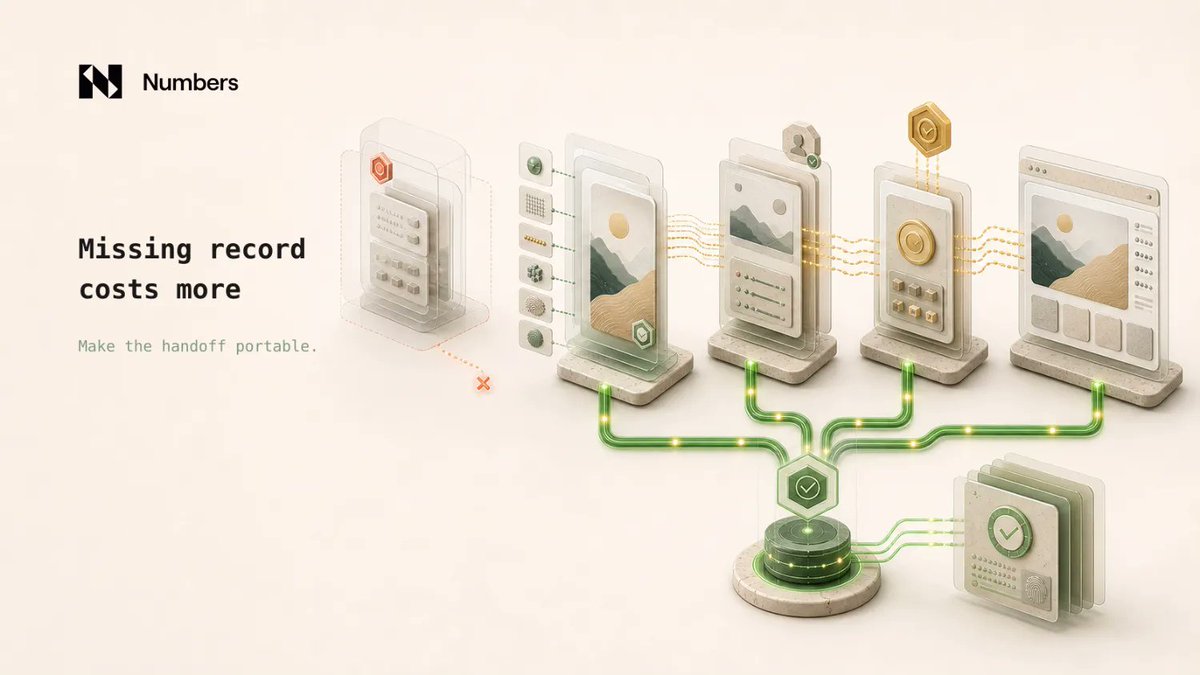
The missing record is usually the expensive part.
A BlockTrend explainer can move from draft to edit to licensed re-use in a few minutes. The output travels through Capture Dashboard, x402, and a buyer's CMS. The accountability often stays trapped in the first tool.
Article 50 follows the content that reaches EU users. When a later dispute asks who generated it, who edited it, and which version was sold, internal logs are not a portable answer.
Capture SDK records the output at creation. NID keeps the asset and actor legible. Numbers Protocol keeps the handoff trail reusable after the file leaves the original workflow.
https://t.co/Nyn707VlVC
Bringing provable performance to agent markets.
As the EU AI Act’s transparency rules take effect, proving what an agent did is only part of the job. The record also needs to remain inspectable after its output moves across platforms.
That is the provenance gap Numbers is built to address.
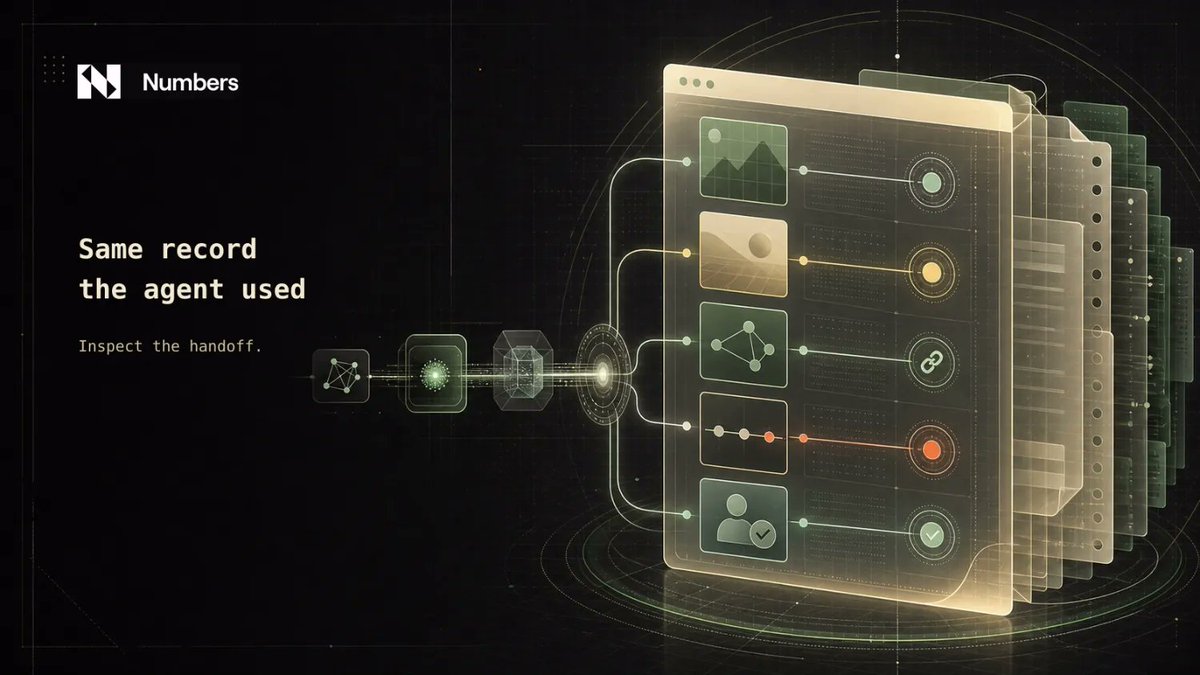
A verification page should show the same record the agent used.
That breaks faster than people admit. One tool shows the source file. Another shows only the export. A CMS keeps the output but drops the proof link. The reviewer signs off on a thinner story than the agent actually handled.
Capture SDK can register the asset event. Capture Dashboard can keep the workflow visible. ProofSnap can expose the receipt. NID gives the file a stable reference. C2PA-compatible context helps the origin trail survive storage, review, and publishing.
The product job is not another badge.
It is to keep the handoff record intact from generation to verification.
Less trust the pipeline.
More inspect the record.
Giving an AI agent a name does not make it accountable. Accountability starts when another system can verify what the agent actually did.
With Numbers, an agent can register an asset, receive a persistent NID, and keep its origin attached as the file moves between systems.
So when an editor, reviewer, or another agent receives the output, they are not relying on a bio or a claim. They can inspect who registered it, when it was recorded, which asset was touched, and where the proof lives.
ProofSnap makes that receipt easy to check. The Capture SDK makes it programmable.
Open one ProofSnap receipt before August 2. A usable agent workflow should be able to prove the same thing. https://t.co/invO9R0SHW
Numbers Protocol is partnering with @Wager_Predict.
Prediction markets do not only need odds.
They need records another system can inspect later:
who created the market,
when an action happened,
what outcome was resolved,
and where the proof trail lives.
Wager Predict is a non-custodial prediction market on BNB Smart Chain. Numbers Protocol brings the boring part that makes the trail useful: identity, timestamp, record, verification path.
Markets price belief.
Receipts make the trail inspectable.
Who ever will WIN in the match of World Cup 2026, But it’s the worst World Cup in the history of football, the most corrupted, the most political involved the most government agenda forced In.
P.S am with Spain cuz they r well deserved to win in this match.
#worldcup#Football
Trust usually breaks during the handoff.
The asset gets forwarded.
The proof stays behind.
By the third person, everyone is working from assumptions.
Provenance should travel with the file, not sit in a separate system waiting to be found.
Because the weakest point in most AI workflows is not creation.
It is the moment ownership changes hands.
A label without a record is just decoration.
The moment an AI asset gets forwarded, screenshotted, exported, or dropped into a deck, its context starts disappearing.
The proof should travel with the file, not live in a separate tab nobody can find later.
Because eventually, someone in legal, editorial, or comms will have to defend that asset.
“Trust us, we labeled it” will not be enough.
Numbers made NVIDIA Inception's Top 150, mainnet passed 1.65M transactions, and this week's standard stayed simple: the next system should be able to inspect the receipt.
Read:
https://t.co/og60iJYKXH
an “AI-generated” label is not enough.
Real disclosure means keeping the evidence with the asset:
- what was generated or edited
- what label the public can see
- the provenance ID or verification link
- who reviewed it before publishing
- what the next editor should verify
If that trail is scattered across five tabs, your workflow did not create transparency.
Agents are getting fast. That was never the hard part.
The hard part shows up after the work is done, when someone outside the loop asks what happened and the answer lives inside a tool they can't open.
If the record stays attached to the output, the work can leave the platform and still explain itself. A file, a post, a dataset carries its own history wherever it goes.
Speed gets you the output. The attached record is what makes the output usable by anyone who wasn't in the room.
That's the thing worth building for.
Autonomy gets easier to trust when the handoff explains itself.
A licensing or media agent can resize a file, prepare terms, and route a buyer to checkout. The transparent version also carries the Capture Cam record, ProofSnap context, NID, C2PA-compatible metadata, x402 payment signal, and Numbers Protocol verification path in the same packet.
PyroImage shows the useful pattern. Provenance, licensing, and reuse stay near the asset instead of in a disconnected spreadsheet. The same handoff works for a newsroom sale, a creator archive, and a rights review that starts days later.
Open the live licensing flow:
https://t.co/LHFIa2UH74
Less magic.
More state.
The Numbers x Exolix POAP Campaign is now closed.
An impressive amount of 90,000 participants claimed it.
Five were drawn from the claimants. Each one takes 8,000 NUM, and the reward will be sent shortly.
Thanks for showing up and proving it. The next one is already loading.
These files, screenshots, and assets still run on the "trust me bro" mindset:
- a screenshot in your group chat
- a renamed final_v3 revision
- photos taken years ago, claimed to have happened yesterday
Annoying? Yes.
How do you fix it? Make the receipt travel with your files.
Do we have a solution? Yes. Provenance, and that's Numbers.