— ¿Cree que los jóvenes deben interesarse por la política?
— Yo no sé. A mí no me interesó nunca la política. Me interesa más la ética. Creo que si cada uno actúa éticamente eso puede tener un efecto político muy grande.
#Entrevista
A Japanese immunologist spent 20 years proving that the chemicals trees release into the air walk into your bloodstream, hunt down your stress hormones, and arm your immune system in ways no therapist or pharmaceutical has ever matched, and most of the data has been sitting in Japanese medical journals for two decades waiting to be translated.
His name is Qing Li.
He is a clinical professor at Nippon Medical School in Tokyo and the president of the Japanese Society of Forest Medicine. The Japanese government has been funding his research since 2004, and the body of work he has produced is the reason forest bathing is now an officially prescribed clinical therapy in Japan and Korea.
The story actually starts in 1982, when the Japanese Ministry of Agriculture, Forestry and Fisheries coined the term shinrin-yoku to describe the practice of slow, mindful walking in a forest. They did it for a practical reason.
Japan was urbanizing fast, stress-related illness was climbing, and the country had thousands of square kilometers of forest sitting unused. The idea was to give people a reason to walk into the trees... They had no idea what was actually happening to the human body during those walks until Qing Li ran the first proper experiment in 2005.
He took twelve healthy adult men on a three-day, two-night trip to a forest park. They walked for a few hours each day. Nothing strenuous. No prescribed routes or breathing exercises. They simply walked slowly through the trees, breathing the air, looking at the forest.
Li drew blood and urine samples before the trip, on the second day, on the third day, on day seven after returning home, and again on day thirty.
The numbers that came back from the lab were not what anyone expected.
The activity of a specific type of immune cell called the natural killer cell, which is the cell your body uses to hunt down cancer cells and virus-infected cells before they can spread, had jumped by roughly 50 percent during the forest trip. The actual number of natural killer cells circulating in the bloodstream had increased significantly.
Three different anti-cancer proteins that those cells produce, called perforin, granzymes, and granulysin, had all risen sharply. And the effect did not disappear when the men went home. The immune boost was still measurable on day seven and was still partially present on day thirty.
Two hours a day in a forest had upgraded the immune system for a full month.
Li ran the same experiment with women a year later and found nearly identical results. Then he ran it with a control group who took a three-day trip through an urban area with the same amount of walking, the same hotel quality, and the same diet.
The urban group showed no measurable change in natural killer cell activity at all. The forest was doing the work, not the vacation.
The mechanism turned out to be a class of airborne molecules called phytoncides. Trees produce these compounds to defend themselves against insects, bacteria, and fungi. Pine, cedar, oak, and cypress trees release them in particularly large amounts, especially in warmer weather and after rainfall.
When you walk through a forest, you are inhaling those molecules into your lungs and absorbing them through your skin, and once inside your body they appear to directly stimulate the production and activity of the very immune cells Li was measuring in his lab.
Roughly 50 percent of the health benefit of a forest walk, according to Li's data, comes from the chemistry of the air itself. The other half comes from what the forest is doing to your nervous system.
This is where it stops being only about the immune system and starts being about stress.
A separate Japanese research team measured cortisol, the body's main stress hormone, in 84 participants across 35 different forest sites. They drew samples before and after a 30-minute walk in each forest and compared them to control walks in matched urban environments. The cortisol levels of the people who walked in the forest were lower than the cortisol levels of the people who walked in the city by a significant margin. Their heart rates were lower. Their blood pressure was lower.
The activity of their parasympathetic nervous system, which is the part responsible for rest and recovery, had gone up. The activity of their sympathetic nervous system, which is the part that drives fight or flight, had gone down.
Then a researcher at the University of Michigan named MaryCarol Hunter ran the cleanest version of this experiment ever done. She recruited participants from a city and told them to take a nature pill three times a week for eight weeks.
They were free to choose the time, the place, and the duration of the nature experience, as long as it was outside, in daylight, and free of phones, conversations, and aerobic exercise. They sent her saliva samples before and after each session so she could measure cortisol changes accurately and rule out the normal daily drop in stress hormones that happens to everyone.
The result was that participants experienced a 21.3 percent drop in cortisol per hour spent in nature, with the biggest payoff happening between minutes 20 and 30 of the walk.
After that, the cortisol kept dropping, but more slowly. The threshold dose for measurable stress relief was just 20 minutes outside in something that looked and felt like nature.
What none of this means is that nature is a substitute for therapy or for medication when someone genuinely needs them. Therapy treats different things than a walk does, and Li himself has been careful in interviews to call forest bathing a complementary intervention rather than a replacement for clinical care.
But what the research has settled is that the human body has a physiological response to being among trees that operates on the same biological systems modern medicine is trying to reach with drugs and clinical protocols, and that response is fast, measurable, and free.
The strangest part of Li's work is the implication he keeps repeating in interviews. The average person now spends more than 90 percent of their life indoors. Their cortisol stays elevated. Their natural killer cells stay sluggish.
Their parasympathetic nervous system rarely gets a chance to take over. The system that was tuned by millions of years of life under a canopy of trees is being asked to run permanently inside a box made of drywall and screens.
Your body has not forgotten what it is supposed to do in a forest. It is waiting for you to walk into one.
Dato del contador @bergems
•Empresa extranjera nueva en Argentina. Constituye una SA local. Se inscribe en ARCA y Convenio para las provincias donde va a operar. La primera acreditacion bancaria es la integracion del capital. Sin operaciones aún, Tucuman ya le retuvo IIBB sobre el aporte.• 🤦♂️
#Argentina #Impuestos #IngresosBrutos
“Tal vez la jueza Preska jamás podría haber dictado un fallo sancionando a la Argentina con una indemnización de US$16.000 millones si se hubiera demostrado que la entrada de los Eskenazi en YPF era un acto de corrupción de Néstor Kirchner.
¿Cómo se podría haber probado eso? Si el juez Ariel Lijo hubiera avanzado con la causa que tiene dormida desde el año 2008 por una denuncia de Elisa Carrió”
Editorial de Carlos Pagni.
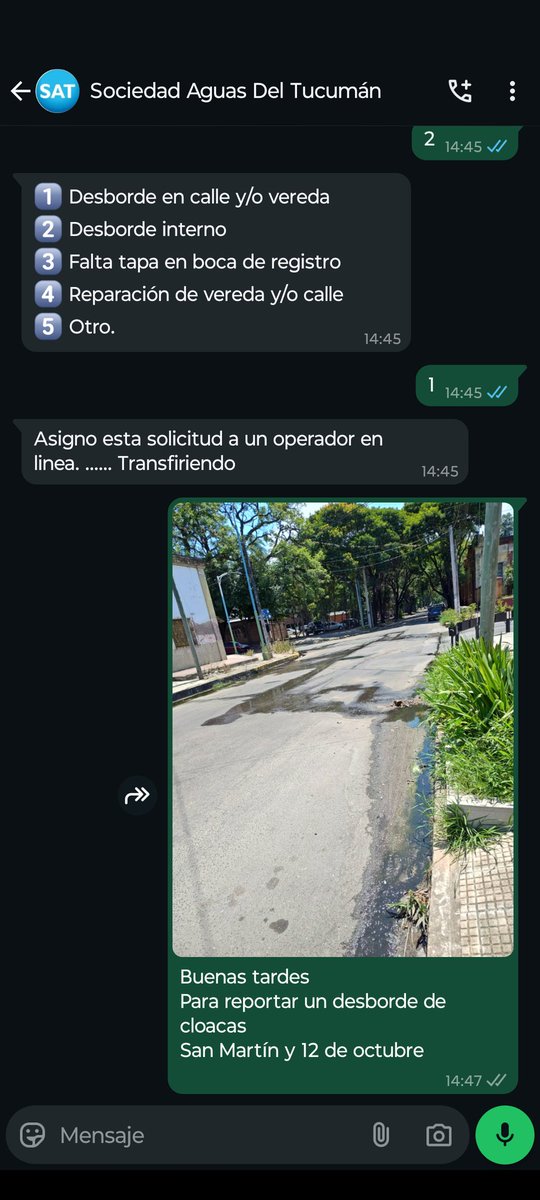
@RossanaChahla podrás ayudarnos con el eterno derrame de cloacas en San Martin y 12 de octubre, a la vuelta de maternidad.
SAT no responde nunca
CC: @LuisMedinaRuiz4
Antes vos decidías en redes sociales qué mirar, a quién y cuándo. Pero TikTok —y después Instagram— cambiaron las reglas del juego. Primero, alteraron el orden. Y después, dieron el golpe maestro: el contenido que ves dejó de depender de tus elecciones, tampoco ya es en orden cronológico. Ya no ves lo que elegiste seguir, ves lo que te muestra el algoritmo. Eso se llama "contenido desconectado". Y lo más inquietante es que funciona tremendamente bien. Tanto, que empezás a abandonar tu propia curaduría. ¿Para qué cuidar a quién seguís si igual no importa? El resultado es la cesión total del control de lo que consumís. Y ese control importa. Así como lo que comés define la salud física de tu cuerpo,lo que consumís digitalmente moldea tu cabeza y tu salud mental. Y el criterio de selección no es tu bienestar. No es tu crecimiento personal. Es uno solo: tu retención. ¿Cuánto tiempo más pueden mantenerte ahí, scrolleando? Esa es la métrica sagrada. Y para lograrlo, apelan a nuestro viejo enemigo: la tentación del placer inmediato frente al propósito a largo plazo. Dopamina mata sentido. La tentación irresistible del menor esfuerzo mental. Se generó un "race to the bottom": una carrera donde todos compiten para atraparte más, aunque eso implique arrastrarte cada vez más abajo. Gana el que logra hacerte más dependiente, mientras vos sentís que sos el que toma las decisiones. La diferencia entre obligar a alguien y manipularlo es que cuando te obligan te das cuenta, te sentís violentado. Cuando te manipulan, sentís que sos el que toma las decisiones libremente. Nadie te obligó a quedarte todo el fin de semana encerrado maratoneando una serie o a estar 4 horas por día mirando videítos divertidos. La culpa de las malas decisiones queda 100% de tu lado."Si no te gusta la plataforma, podés irte." ¡Sí, claro! Como si fuera tan fácil. Como si no estuvieras ya atrapado en la telaraña.
@RossanaChahla
Por favor podrás ayudarnos con el eterno derrame de agua y cloacas en calle San Martín y 12 de octubre, esquina de la maternidad. La SAT no hace nada con los reclamos
Hola @RossanaChahla @aguas_sat
Hay un desborde de cloacas pestilente en San Martín y 12 de octubre, atrás de la maternidad.
Por favor podrán resolver?
Reclamé a SAT sin respuesta.