Google wrote the paper that made ChatGPT possible. Then decided not to build ChatGPT. Sergey Brin just explained why on stage at Stanford and the reason is more embarrassing than anyone expected.
In 2017, Google published the transformer paper. The architecture that powers every major AI model today. It came from their own researchers. Their own labs. Their own compute.
Then they sat on it.
Sergey was blunt about why. They underinvested in scaling the compute. They did not take it seriously enough. And when they finally had something worth shipping, they got scared. Chatbots say dumb things. Google had a reputation to protect. So they protected it instead of shipping.
OpenAI was not scared.
Ilya Sutskever, trained at Google, left and went there. Other Google researchers followed. They took the transformer architecture, scaled it, shipped it anyway, and captured the entire generative AI wave while Google watched.
Sergey called it a mistake at Stanford in front of hundreds of students.
The company that invented the technology did not build the product. The company that built the product did not invent the technology.
That is the most expensive case of corporate hesitation in the history of the industry.
---
Watch the full interview YT.
Search: "Big ideas begin here: Sergey Brin at Stanford"
@stats_feed It also shows how tiny Luxembourg is, as French, one of its official languages and spoken by around 50%, does not even make it into the list.
“Cuando se deja de creer en Dios, no se pasa a no creer en nada; se pasa a creer en cualquier cosa.”
— G. K. Chesterton
«Yo no soy creyente
¡Uy, una mariposa! Igual es mi madre!»
— Señora de gafas rojas.
Hasta el Papa acaba de hablar de la Escuela de Salamanca en su discurso en el Congreso frente a un gobierno que ha preferido concederle exenciones fiscales al Primavera Sound frente al V centenario de unos hechos que sentaron las bases del derecho internacional.
@pamplinero Se propuso al gobierno que
una efemérides como V centenario de la fundación de la Escuela de Salamanca que sentó las bases del derecho o internacional, contara con exenciones fiscales, pero nos las negaron.
Consideraron más relevante el 20 aniversario del Primavera Sound. 🤷
Ayer.
El padre de mi amiga, 80 años, vasco en Palencia, cae y se abre la cabeza.
Traumatismo craneoencefálico, hemorragia y traslado urgente en ambulancia al hospital provincial.
—¿Qué medicación toma?
—No estoy segura, ¿no puede mirarlo usted en su historia clínica?
—No; no tenemos acceso.
Literal.
Yo sé que hay un proyecto del SNS para compartir la historia clínica entre los servicios autonómicos de salud. He leído memorias e informes sobre eso. He utilizado el servicio HCDSNS. Pero, ¿en el hospital de Palencia no pueden consultar la historia de un paciente de Bilbao?
El hombre, inconsciente, postrado en una camilla, y el médico no puede acceder a su historia clínica. ¡Qué puñetera vergüenza de país!
Le hacen pruebas y analíticas. Días después, mi amiga gestiona un transporte urgente en ambulancia hasta Bilbao.
Pero necesita llevar a Osakidetza los resultados de las pruebas médicas —varios TAC, analíticas…— que hicieron a su padre en Palencia.
Dicen que no lo pueden enviar por correo electrónico.
Dicen que no se lo pueden guardar en un pendrive.
Al final le guardan los resultados… ¡en un puñetero CD-ROM!
Llega ayer mi amiga agotada y angustiada a mi casa —en Santander—, desde Palencia, pidiéndome leer el CD-ROM del Servicio de Salud de Castilla y León (SACYL) para enviarlo por email al médico del Servicio Vasco de Salud (Osakidetza) y después salir corriendo otra vez en coche hacia Bilbao.
De verdad, ¡idos todos a la mierda!
De viaje en Valladolid, a mi suegro se le ha movido un stent y tienen que hacerle un cateterismo, pero no pueden acceder a su historial médico, gestionado por el Sergas gallego. Como si estuviera en un país extranjero.
No sé como alguien puede justificar este disparate.
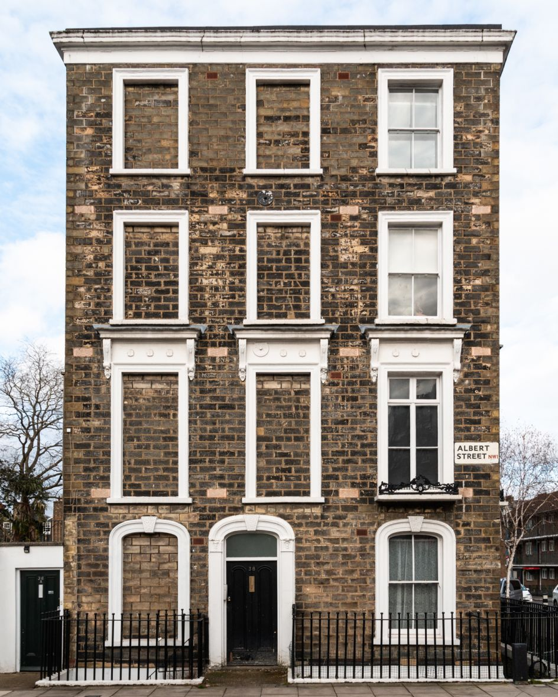
In 1696, the British government decided to tax sunlight. Under the Window Tax, households were charged according to the number of windows in their homes. To avoid paying, many people simply bricked up or boarded over their windows, choosing to live in darkness rather than hand money to the state for daylight.
The tax was presented as a fair way of taxing wealth, since larger houses tended to have more windows. In practice, it proved crude and damaging. Tax inspectors were given the power to enter homes and count the windows, which was widely resented as an invasion of privacy.
The consequences were severe. Poorer families, in particular, bricked up windows to reduce their liability, leaving homes darker, damper and poorly ventilated. This contributed to higher rates of disease, including tuberculosis and rickets. Architects began designing houses with fewer windows to minimise the tax, resulting in buildings that were less healthy and less pleasant to live in.
Far from being an efficient revenue raiser, the Window Tax distorted behaviour, harmed public health and became increasingly unpopular over time. Yet it remained in place for 155 years until it was finally abolished in 1851. The Window Tax required invasive enforcement and created more resentment, hardship and economic distortion than revenue. It is a classic example of the unintended consequences of taxation.
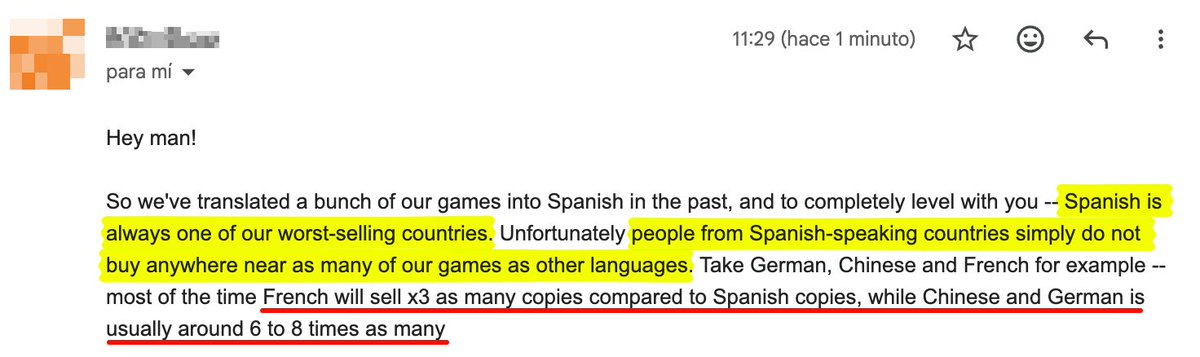
Por si a veces no entendéis por qué no traducen un juego al Español, pero lo veis traducido al Francés o Alemán, pese a tener muchos menos hablantes...
Esta imagen es la respuesta de un dev que me contactó para jugar su juego. Lo miré en Steam, parecía interesante, pero vi que pese a estar traducido a 7 idiomas (incluyendo Coreano, Francés o Alemán), NO estaba en Español.
Dado que el juego está altamente basado en texto, que no es igual de difícil de traducir que voces, le pregunté el por qué no traducir al Español también, 4º idioma más hablado del mundo tras Inglés, Mandarín e Hindi.
Pues he ahí su respuesta. No les sale a cuenta. Sin más. 🤷🏻♂️