@karpathy It's what I've been calling "natural interfaces".
I agree it's a shift, but we have been doing it for more than 6 months, while allowing not just a single @ to be tagged but all of our AI workers.
@gregisenberg Very good points. I felt that way as well and used to pitch others that not having time was not true. But "filler cutter" is a very nice and precise way of putting it.
So just keep those kids coming!
Got my 3rd 10 years apart from the oldest. :)
@kangminlee It's like in ancient history, where the rich were seen as the ones blessed by God.
Humans still associate money with authority.
There's nothing new under the sun.
Elon Musk avait dit un truc qui m'avait marqué sur l'allocation de ressources. En substance : passé un certain niveau de richesse, l'argent n'est plus de la consommation, c'est de l'allocation de capital.
Cette phrase change tout.
L'économie, dans le fond, c'est juste un problème d'allocation. Tu as des ressources finies et des usages infinis. Qui décide où va quoi ?
Imagine une cour de récré. 100 enfants, des paquets de cartes Pokémon distribués au hasard. Tu laisses faire. Très vite, un ordre émerge. Les bons joueurs accumulent les cartes rares, les collectionneurs trient, les négociateurs trouvent des deals. Personne n'a planifié. Et pourtant chaque carte finit dans les mains de celui qui en tire le plus de valeur. Le système maximise le bonheur total de la cour. C'est ça, la main invisible.
Maintenant fais entrer la maîtresse. Elle trouve ça injuste. Léo a 50 cartes, Tom en a 3. Elle confisque, redistribue, impose l'égalité. Trois effets immédiats. Les bons joueurs arrêtent de jouer, à quoi bon. Les mauvais n'ont plus de raison de progresser, ils auront leur part. Les échanges s'effondrent. La cour est égale, et morte. Elle a maximisé l'égalité, elle a détruit le bonheur.
Le problème de la maîtresse, c'est qu'elle ne peut pas avoir l'information que la cour avait collectivement. C'est le problème du calcul économique de Mises, formulé en 1920. L'URSS a essayé de le résoudre pendant 70 ans avec le Gosplan. Résultat : pénuries, queues, effondrement. Pas parce que les Soviétiques étaient bêtes, parce que le problème est mathématiquement insoluble en mode centralisé.
Quand Musk a 200 milliards, il ne les consomme pas, il les alloue. SpaceX, Starlink, Neuralink, xAI. Chaque dollar est un pari sur le futur. Et lui a un track record. PayPal, Tesla, SpaceX. Il a démontré qu'il sait identifier des problèmes immenses et y allouer des ressources avec un rendement spectaculaire.
L'État aussi a un track record. Hôpitaux qui s'effondrent, éducation qui décline, dette qui explose, services publics qui se dégradent malgré des budgets en hausse constante. Le marché identifie les bons allocateurs, la politique identifie les bons communicants.
Le profit n'est pas une finalité, c'est un signal. Il dit : tu as alloué des ressources rares vers un usage que les gens valorisent suffisamment pour payer. Plus le profit est gros, plus la création de valeur est grande. Quand Starlink est rentable, ça veut dire que des millions de gens dans des zones rurales ont enfin internet. Quand un ministère est en déficit, ça veut dire qu'il consomme plus qu'il ne produit. L'un crée, l'autre détruit, et on appelle ça redistribution.
Dans nos sociétés il y a deux catégories d'acteurs. Les entrepreneurs et les bureaucrates. L'entrepreneur prend un risque personnel pour identifier un problème, mobiliser des ressources, créer une solution. S'il se trompe il perd. S'il a raison, ses clients gagnent, ses employés gagnent, ses fournisseurs gagnent, l'État collecte des impôts. Il est la cellule de base du progrès humain.
Le bureaucrate ne prend aucun risque personnel. Son salaire est garanti. Au mieux il maintient une rente existante. Au pire il la détruit par excès de réglementation, mauvaise allocation forcée, incitations perverses qui découragent ceux qui produisent. Mais dans aucun cas il ne crée.
Regarde les 50 dernières années. iPhone, internet civil, SpaceX, Tesla, Google, Amazon, Stripe, mRNA, ChatGPT. Toutes des inventions privées, portées par des entrepreneurs, financées par du capital risque. Pas un seul ministère n'a inventé quoi que ce soit qui ait changé ta vie au quotidien.
La France est devenue le laboratoire mondial de la dérive bureaucratique. 57% du PIB en dépenses publiques, record absolu. Une administration tentaculaire, une fiscalité qui pénalise la création de richesse. Résultat : décrochage face aux États-Unis, à l'Allemagne, à la Suisse. Fuite des cerveaux. Désindustrialisation. Dette qui explose.
Et le pire c'est que la mauvaise allocation s'auto-renforce. Plus l'État prélève, moins les entrepreneurs créent. Moins ils créent, moins il y a de base fiscale. Plus l'État s'endette et taxe. Boucle de rétroaction négative parfaite. La maîtresse pense qu'elle aide, et chaque année la cour produit moins.
Dans nos sociétés, ce sont les entrepreneurs, toujours, qui font avancer la civilisation. Les bureaucrates au mieux maintiennent une rente, au pire la détruisent. Aucune société n'a jamais progressé en taxant ses créateurs pour subventionner ses gestionnaires.
La question n'est jamais qui a combien. C'est qui alloue le mieux la prochaine unité de ressource pour maximiser le futur de l'humanité. La réponse depuis 200 ans n'a jamais changé. Ce ne sont pas les fonctionnaires.
@jedifractal Very good! Building AI agents for everyone in our product, I completely agree markdown files are no silver bullet (despite the pour of posts about their awesomeness).
@Grantblocmates@zerototom Reminds me of this: https://t.co/fZiTrJ4pbk
Need to go out of the comfort zone and expose oneself in order to keep moving and growing networks and experiences.
There's a physicist at Stanford named Safi Bahcall who modeled this exact principle and the math is wild.
He calls it "phase transitions in human networks." When you're stationary, your probability of a lucky event is limited to your existing surface area: the people you already know, the places you already go, the ideas you've already been exposed to. Your opportunity window is fixed.
When you move, your collision rate with new nodes in a network increases nonlinearly. Double your movement (new conversations, new cities, new projects) and your probability of a serendipitous encounter doesn't double. It roughly quadruples. Because each new node connects you to their entire network, not just to them.
Richard Wiseman ran a 10-year study at the University of Hertfordshire tracking self-described "lucky" and "unlucky" people. The single biggest differentiator wasn't IQ, education, or family money. Lucky people scored significantly higher on one trait: openness to experience. They talked to strangers more, varied their routines more, and said yes to invitations at nearly twice the rate.
The "unlucky" group followed the same routes, ate at the same restaurants, and talked to the same 5 people. Their networks were closed loops. No new inputs, no new collisions.
Luck isn't random. Luck is surface area. And surface area is a function of movement.
The lobster emoji is doing more work than most people realize. Lobsters grow by shedding their shell when it gets too tight. The growth requires a period of total vulnerability. No protection, no armor, soft body exposed to the ocean.
That's the cost of movement nobody posts about. You have to be uncomfortable first. The new shell only hardens after you've already moved.
@ideabrowser https://t.co/v4Gbj9RhO1
AI for everyone. Very low entry barrier.
Each worker is like a full OpenClaw you don't have to worry about setting up, keeping running, or securing.
Now imagine multiple workers working as a team.
Get them their own accounts.
Delegate from anywhere.
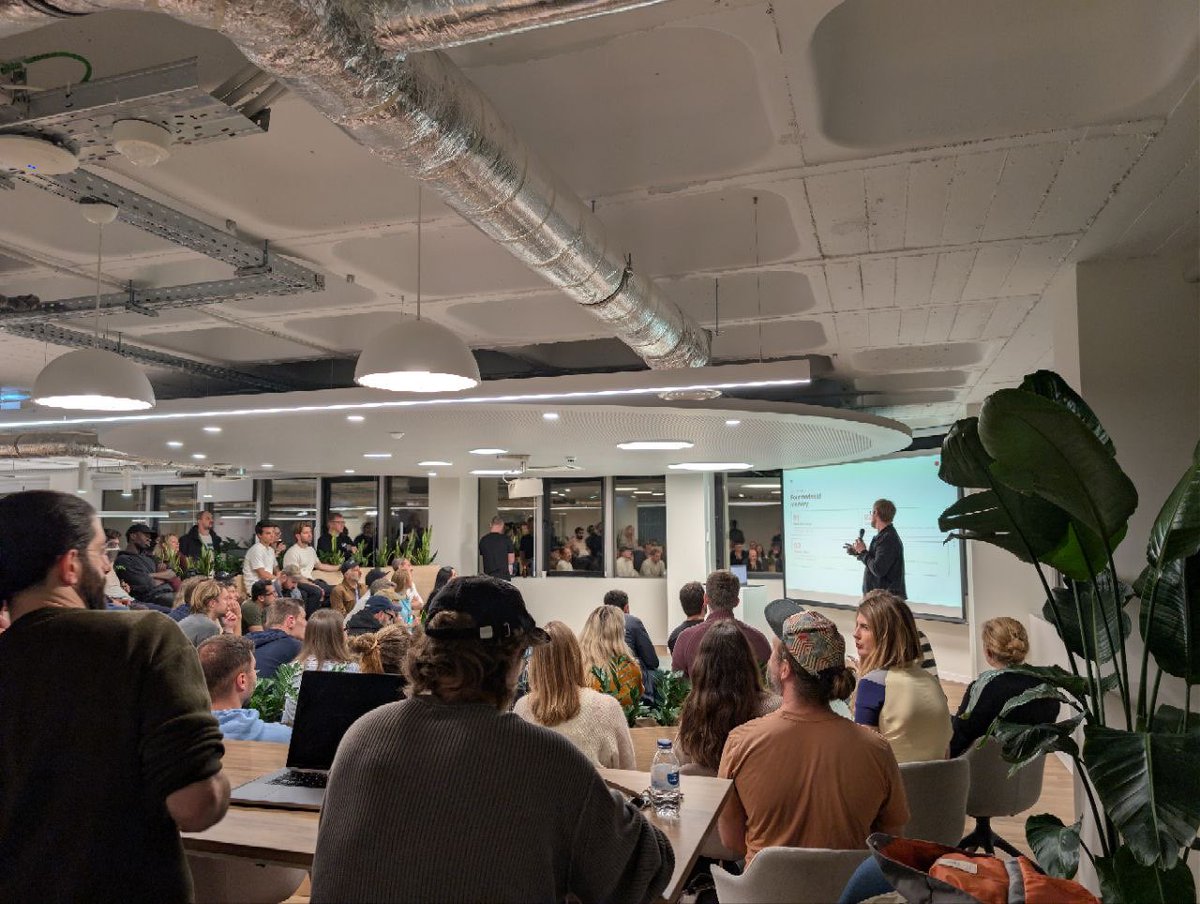
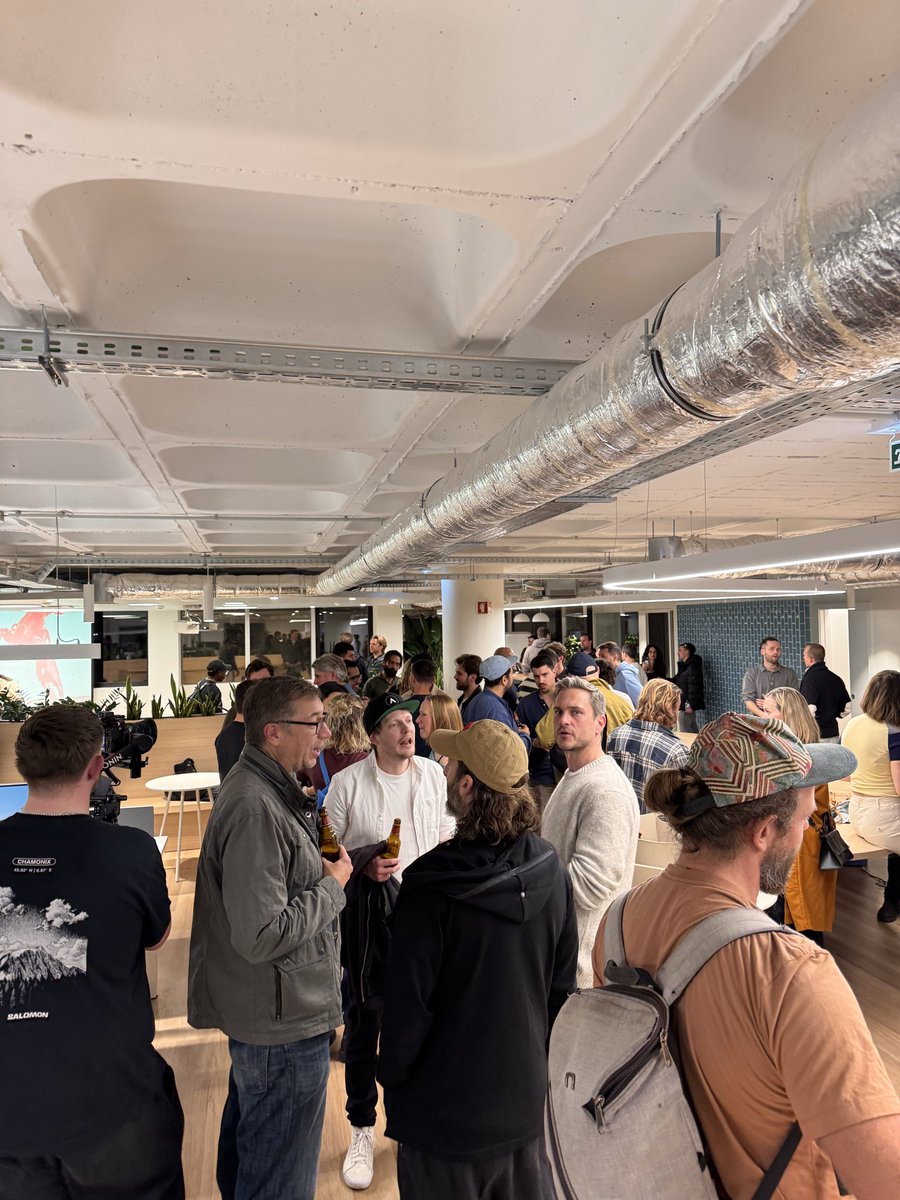
Lisbon’s AI scene is thriving
Thanks to everyone who came down last night!
Special thanks to @ampli_inc and @refine_dev for sponsoring!
The talks were awesome and a ton of great questions too
More info on the next one soon™️
@startupideaspod my AI worker after reading this article:
"https://t.co/v4Gbj9RhO1 already does this natively. Worker memory, learned skills, MCP tool connections, task scheduling, team structures with specialized workers per function. This post is the DIY version of what our platform ships.🚀"
Posição do Brasil no Ranking da Imparcialidade da Justiça (142 países).
🇺🇾Uruguai: 25º
🇨🇱Chile: 55º
🇦🇷Argentina: 62º
🇵🇪Peru: 99º
🇵🇾Paraguai: 105º
🇨🇴Colômbia: 113º
🇪🇨Equador: 114º
🇧🇴Bolívia: 123º
🇧🇷Brasil: 141º (2º pior do mundo)
🇻🇪Venezuela: 142º (pior do mundo)
Sim, temos o 2º mais injusto e corrupto Judiciário do mundo, ganhando apenas da Venezuela.
Como a ditadura bolivariana caiu, é provável que em poucos anos NÓS tenhamos o PIOR, MAIS INJUSTO e MAIS CORRUPTO Judiciário do mundo.
Ainda há quem acredite que está tudo bem.
I’ve noticed a sharp uptick in truly outrageous responses from the Left over the last week. From the Somali daycare fraud scandals, to the near total silence when Iranians risk their lives to overthrow their Islamist oppressors, to the grotesque apologetics for narco dictator Maduro while Venezuelans themselves beg Americans to stop defending him. Add to that the open indulgence of Hamas and the sustained contempt for Jews over the last couple of years and the pattern is impossible to ignore.
Here’s my conclusion. Liberal activism has become a psychological outlet for young, poorly informed, emotionally unstable people who are desperate for meaning and significance. It offers instant moral status without the burden of understanding the consequences or doing anything about it. The policies they champion routinely harm the very people they claim to defend, which is why the activism itself functions more like an adolescent tantrum than a reasonable or effective solution.
This unhealthy mix of unwarranted moral superiority and counterfeit righteousness allows the unimportant and uninformed to feel important and wise. Worse still, it’s socially reinforced. They gather in echo chambers, congratulating one another for their courage and brilliance, mistaking applause for truth and agreement for wisdom. The result is a shared delusion where outrage replaces thought and moral signaling replaces moral reasoning.
To be clear, this sickness isn’t exclusive to the Left. The Right is fully capable of the same performative stupidity, tribal blindness, and emotional reasoning, but the Right expects debate and disagreement whereas the Left treats internal dissent as heresy. Question the narrative and you’re exiled from the island. Refuse the script and you’re branded immoral.
That’s not moral courage. It’s a cultish religion built on grievance, sustained by ignorance, and enforced by fear. And like every cult that replaces truth with feelings and virtue with noise, it eventually collapses under the weight of its own lies.
Far Left movements and militant Islamist movements already form a strange alliance (and have for some time). But the horseshoe effect reveals something even stranger. Far Right nationalism ends up circling back and standing shoulder to shoulder with the very forces it claims to despise. At the extremes, everything looks the same.
All three worship power. They disagree on who should wield it, but they agree that someone should. The far Left wants the State in total control. Islamism wants religious authority in total control. Nationalism wants the nation, tribe, or ethnic identity in total control. Different idols, same instinct.
And they all fear freedom. Why? Freedom threatens every authoritarian system because free people cannot be easily controlled. The Left fears economic freedom, Islamism fears religious freedom, and nationalism fears cultural freedom. They do not trust real liberty because liberty loosens their grip.
All three are totalizing and revolutionary. Marxism demands loyalty to the revolution. Islamism demands loyalty to the ummah. Nationalism demands loyalty to blood and soil. Each one claims a kind of devotion that belongs only to Christ and His Kingdom. This is why they're dangerous knock-offs. They promise salvation through identity and power and punish anyone who steps out of line.
And they all require an enemy to survive. The far Left hunts "oppressors," Islamism hunts infidels, and nationalism hunts outsiders. The labels change, but the method remains the same. Fear becomes fuel, and these movements grow through anger, suspicion, and conflict.
In the end they all collapse into tribalism because that is where all idolatries lead. Once you reject transcendent truth, you cling to the tribe. Once you lose God, you replace Him with blood, class, or ideology. The far Left, far Right, and militant Islam start to look eerily similar. Angry. Authoritarian. Identity driven. Anti-Christian. And deeply allergic to the idea of God given dignity.
This is why every one of them end up opposing Christ and His Gospel, because gospel threatens their project. Christianity refuses to idolize race, class, party, religion, or state. Christianity insists that every person has worth because they bear the image of God, and therefore anyone may become a brother or sister in Christ. Christianity refuses to let power define truth. And Christianity claims an authority that no movement can co-opt or control.
Different banners, same battlefield. Different goals, same methods. Different gods, same idols. And standing in their way is one King and one Kingdom that will not bow to the powers or methods of the world.
“The Christian ideal has not been tried and found wanting. It has been found difficult; and left untried.” -G.K. Chesterton