New York, September 24th, 2026, Chainwire
The world is racing to rebuild how money settles. Konnex is making sure machines that move are part of it.
Full article:
https://t.co/TAvgIWoLXw
Delos Data raised $100M to move information faster between GPUs inside AI data centers.
That fixes how fast data travels once it already exists.
It does nothing for where that data comes from. Perceptron's existing global network solves the earlier problem: sourcing it.
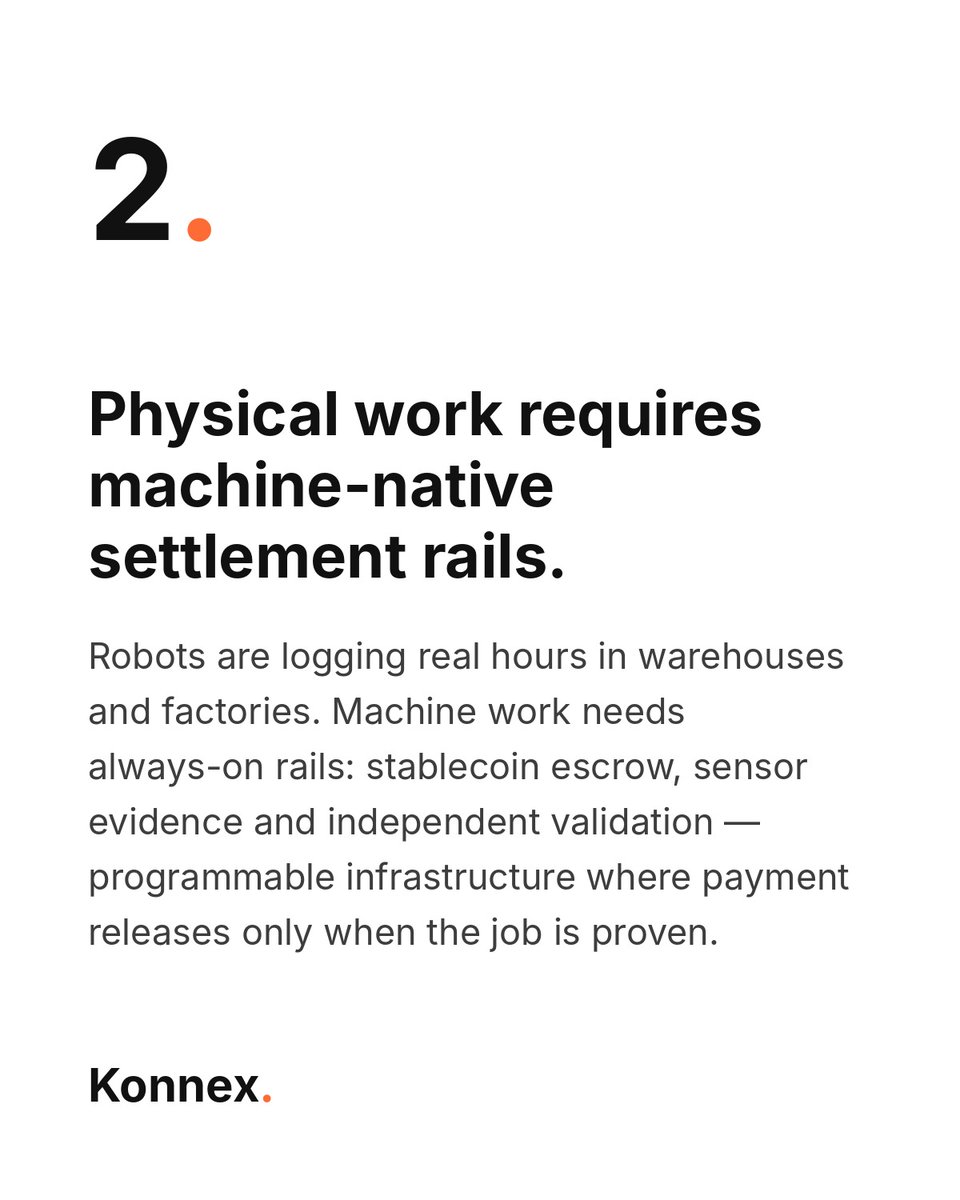
The world's largest asset manager just described machine-to-machine commerce:
Agents paying for compute on programmable rails, in stablecoins.
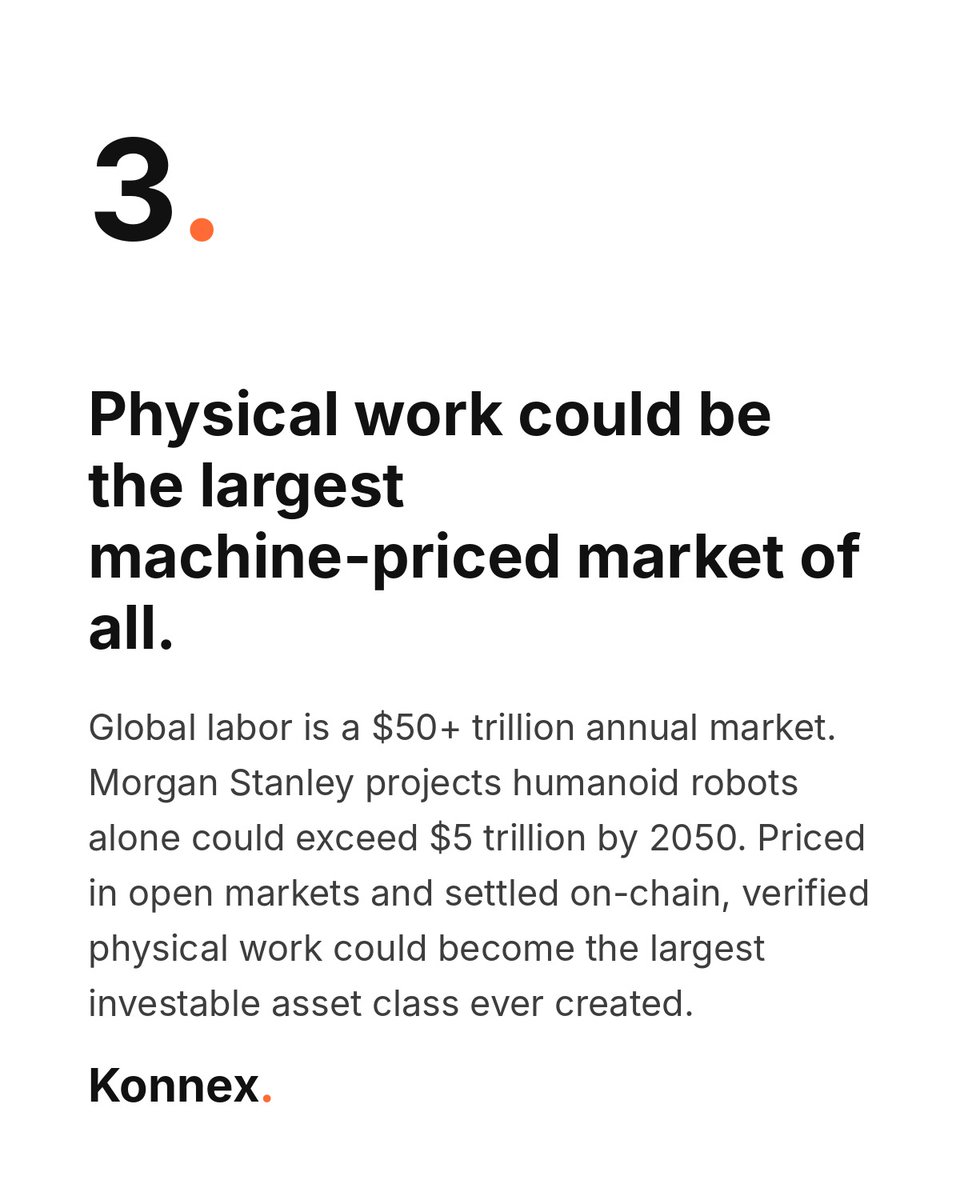
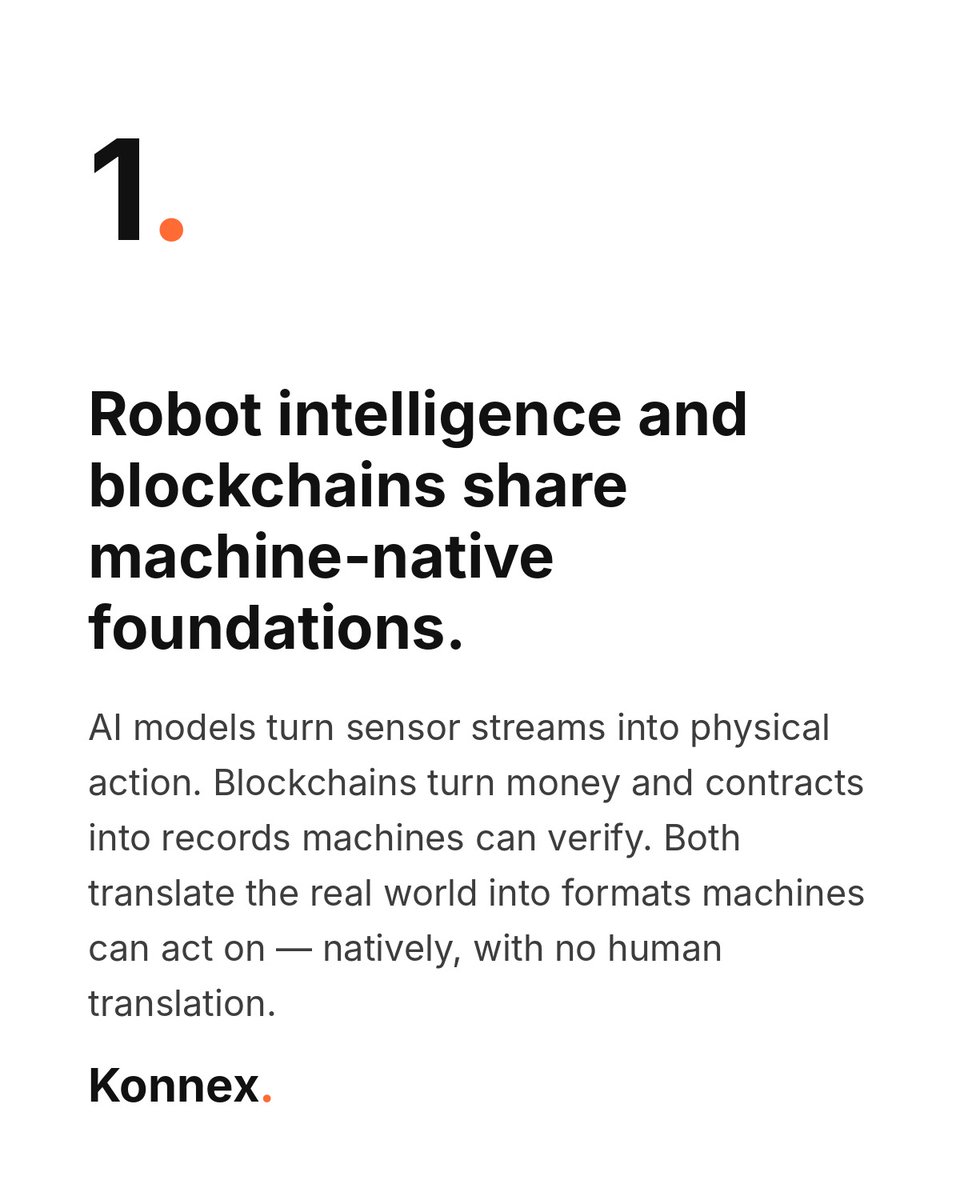
Konnex is building this for physical AI.
Robot labor priced in open markets, settled in stablecoins, proven on-chain.
Your trading agent can already execute.
Proving it deserves capital is the hard part.
That's where Agentics Credit comes in: the credit layer for autonomous trading.
Connect and start paper trading today to win your share of $5,000,000.
https://t.co/PLwr1g3Tc5
OpenAI just built its own chip, and it's beating Nvidia's best on performance per watt.
That's a compute-efficiency race. It still has nothing to do with where the training data comes from.
Perceptron sits in the part of the stack that race doesn't touch.
An AI model can sound certain and still be wrong.
Confidence isn't the same as correctness, and most pipelines have no way to tell the difference.
Perceptron's contributors exist to catch exactly that gap, checking machine output against what's actually happening right now.
NVIDIA put $2B into Nebius. Michael Burry is now shorting the same stock.
If you're watching that trade, both bets are about compute. Neither is about where your data comes from.
Perceptron operates one layer down, collecting the kinds of data both sides are ignoring.
The world's stock of high-quality public text sits at roughly 300 trillion tokens.
Stanford's 2026 AI Index says models could exhaust it by 2032.
Perceptron's 800K+ nodes generate fresh real-world data daily, a supply that keeps replenishing itself.
.@OpenAI just signed a $250M, five-year deal with News Corp for licensed text data.
That's the price of one publisher's archive, once.
Perceptron's node network generates live data every day, without an expiring contract.
Most networks separate the people who build them from the people who profit from them.
Perceptron's nodes collect data, the network provides it to AI companies and DeAI ecosystems, and rewards flow back to contributors.
The incentive model is built into the infrastructure, not an afterthought.
Synthetic data was supposed to close the gap.
Models trained on their own outputs drift from reality. Errors compound with each generation.
Perceptron's network collects real signal from real people. No feedback loop. No decay.