Looking to identify the swing components that all great hitters have in common. Attempting to piece it all together. Hitting companion to @HittingMindset
"We are like dwarfs sitting on the shoulders of giants. We see more, and things that are more distant, than they did, not because our sight is superior or because we are taller than they, but because they raise us up, and by their great stature add to ours."
- Sir Isaac Newton
"Those days were very tough.
All my teammates are white, and it was a different time.
I couldn't go out to eat with the white players;
I had to wait until someone brought something out to the bus.
We couldn't stay in the same hotels."
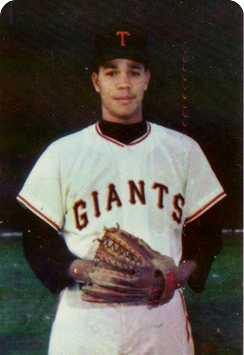
Juan Marichal.
"Even when Sandy Koufax was around, I always thought Juan Marichal was the best. Koufax was a thrower.
Marichal is a pitcher."
Dick Allen.
"The most amazing thing about Juan Marichal is that, if you add together his 1963, 1964, 1966 and 1968 seasons, his overall record, 97-31, is better than that of the four Cy Young winners."
Bill James.
“The Dominican Dandy.”
Juan Marichal pitched a 89-pitch no-hitter against the Colt .45`s.
Then defeated Warren Spahn and the Braves 1–0 in 16 innings, allowed only 8 hits.
“No longer did Bauers worry about every mechanical detail. He was more focused on seeing the ball, attacking it the right way, being more athletic. ‘I felt like I’ve cycled through mechanical possibility. When is enough going to be enough? When are you just going to go play?’
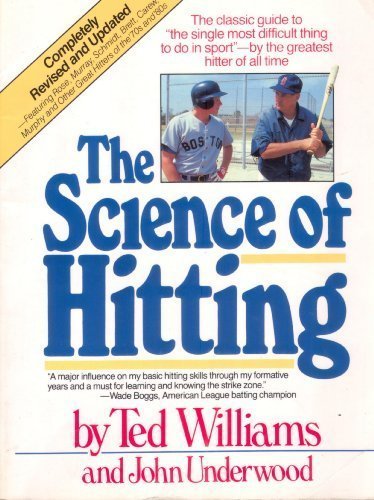
@redturn2 Ted Williams said something along those lines in his book (1970): "A slight upswing - again led by the hips coming around and up - puts the bat flush in line with the path of the ball for a longer period - that is 12 to 18 - inch impact zone." (TSOH,pages 62-63).
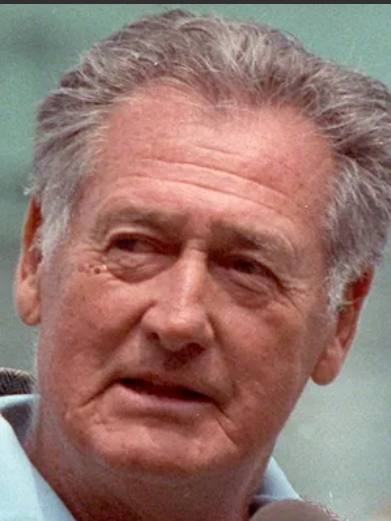
"Don Brown, a former counsellor at the "Ted Williams Baseball Camp", recalls that one kid who wasn’t awestruck by Ted Williams was Joe Coleman, a local high school pitching phenom who would go on to pitch in the major leagues.
Joe Coleman was also the son of the Philadelphia Athletics pitcher of the same name who had been Ted’s roommate in 1942 at Amherst College, Williams’s first stop during World War II.
"Joe Coleman was pitching and striking everyone in camp out.
Ted Williams came over to the field in his street clothes to watch and Joe Coleman was actually taunting him:
"You couldn’t hit me, old man!"
Ted never said a word.
Williams just grabbed a bat, went up to the plate and hit the next four pitches out, into the oak trees four hundred feet away, then put the bat down and walked out.
Never said a word.
Ted Williams was about five years out of the game. In street clothes."
"The Kid: The Immortal Life of Ted Williams." Ben Bradlee Jr.
"The Ted Williams Camp" opened in 1958 and closed in 1986, having instructed thousands of boys from age 7 through their teens, with frequent appearances by the "Splendid Splinter".
Swing down comes from the feel of the lands at launch. Look at the right side of the graphic, the arc is going down. The barrel planes out behind the hands working down. That’s where the “feel” part comes into play.
When you tell a kid to swing “up” or dump the barrel behind him, that creates an exaggerate barrel drop that then becomes loopy, dippy path. The kid will drop his shoulders trying to artificially produce that result.
If you notice on the Ted Williams graphic, the barrel doesn’t begin to increase
in plane angle until the barrel is more out in front.
Launch angle is created by contact point out in front, not by swinging up at launch or dumping barrel behind your head early.
Watch Albert’s hands first move below. Down, knob to ball, and barrel follows plane of shoulders. Back shoulder dips early, and a barrel drop when that happens.
Yoshinobu Yamamoto throws 97+ at a (generously listed) 5'10".
Short levers tend to be a strike against top-end velo, so throwing hard requires leveraging other aspects:
✅ Smoothness & efficiency
✅ Mobility/range of motion
✅ Being freaky fast twitch & explosive
Nick Saban warns against the biggest enemy to continued success.
"Complacency...when you get satisfied - it creates a blatant disregard for doing the right things."
"You start to resent the very things that got you where you were."
You no longer pride yourself in hard work and earning it.
"We pride ourselves in hard work. Then it becomes: 'I resent that. I resent the hard work that you're making us do.'"
"'Why do I have to do this? I just had a great month. I just sold however many cars. We won so many games. Why do I have to do this?'"
That's the trap. You start questioning the process that built you.
Then he dropped the truth:
"Success is momentary. It's not continuous. It's right then - this is what you did - that's over and done with."
"You better be where your feet are and move on to the next one."
"Because when you are successful, you just become the target."
Success doesn't protect you - it exposes you.
It's a continuous process. You have to keep earning it.
This is why people tell you to stay hungry and stay humble because you can't resent the work that got you there.
(🎥CBT Automotive )
@abarkett17 The question is - when does a hitter start down with his hands and when does he go around like ARod did in your clip? Or, does hand/barrel path just depend on pitch location? (Correa, Ruiz, Schwarber, Machado)
HOW SIMPLE IS THIS HR BY WILLIAM
CONTRERAS?
Two strike 406’opposite field HR off of a 99.4 mph up & out fastball. Widish base with his bat on his shoulder. Starts with controlled toe tap & lifts his bat off his shoulder. Balanced “effortless effort” swing.