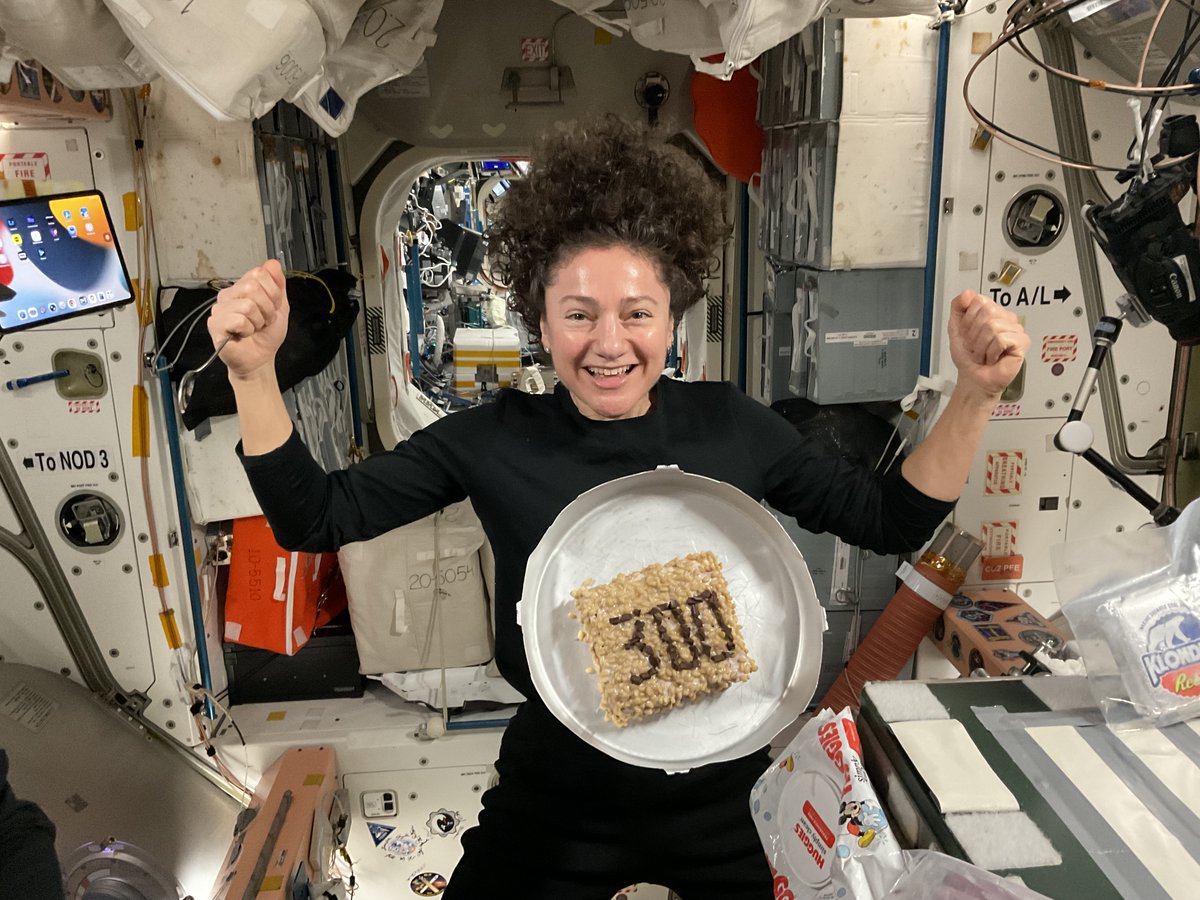
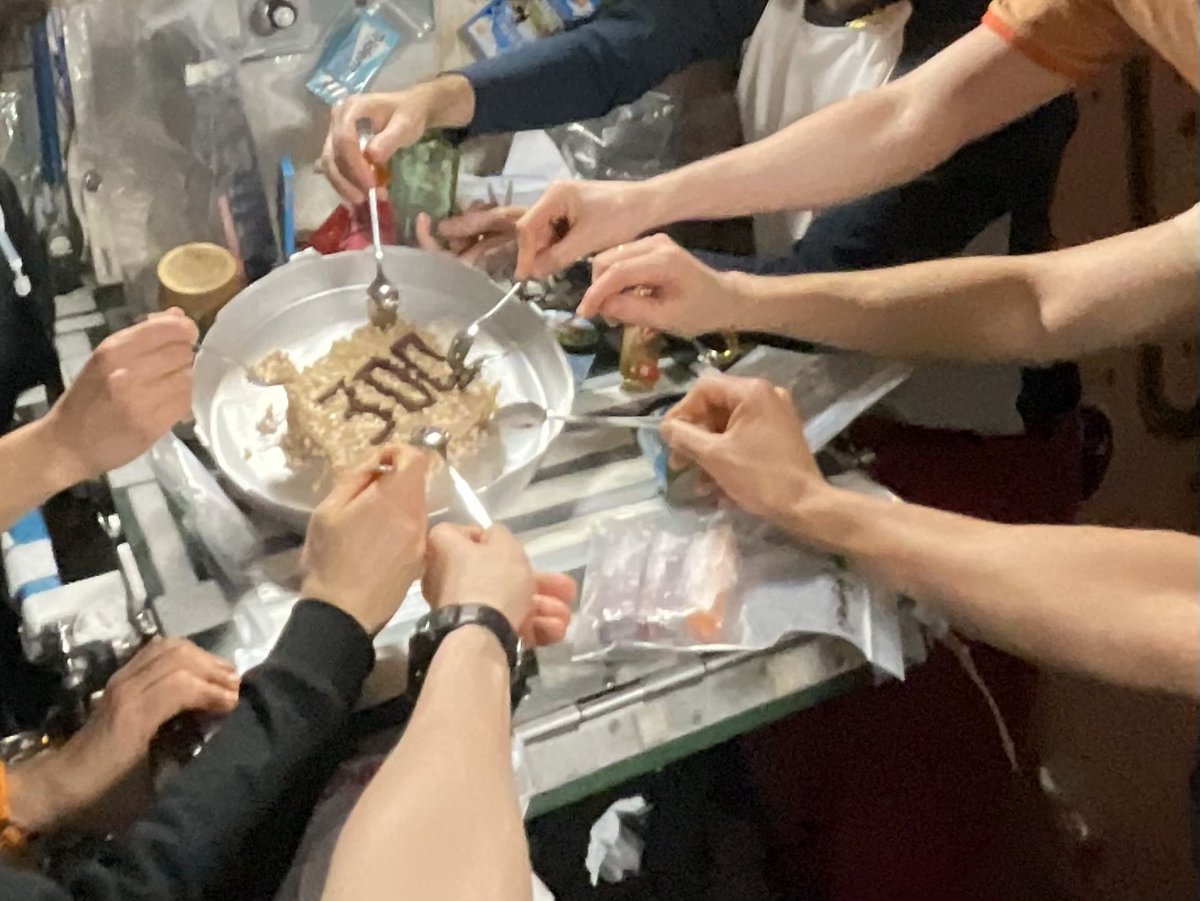
Behold the “space cake.” Making cakes on the @Space_Station with our rather limited “baking” supplies is an art, requiring creativity and resourcefulness. I loved making cakes for my crewmates on my first mission and considered myself adept, but our cosmonaut colleagues on Expedition 74 have certainly taken it to the next level. Here’s an example of their recent work, in celebration of 100 days in space for @astro_hathaway and @Soph_astro, and my 300th day. It tasted even better than it looked!
This may look like abstract art, but it’s agricultural data taken by the NISAR satellite.
Collected over the Maize Triangle in South Africa, each color in the data provides clues about crop types and how they changed over the growing season.
Many molecules appear as two mirror images that have different chemical and biological effects. Creating these compounds in the laboratory always produced an equal mixture of the two mirror forms – until in 1968 when William Knowles found a way to make more of one than the other.
A new Science #Robotics study demonstrates that robots with dynamic symmetry, or the ability to generate force uniformly in all directions, are multifunctional, can adapt to challenging terrain, and are robust to hardware failures. https://t.co/zlYlfRxrDG
Argus, a spherical robot with 20 symmetric legs and cameras, can monitor and navigate diverse terrains, climb walls, and move while carrying payloads. @Boyuan__Chen
Learn more in Science #Robotics: https://t.co/zlYlfRxrDG