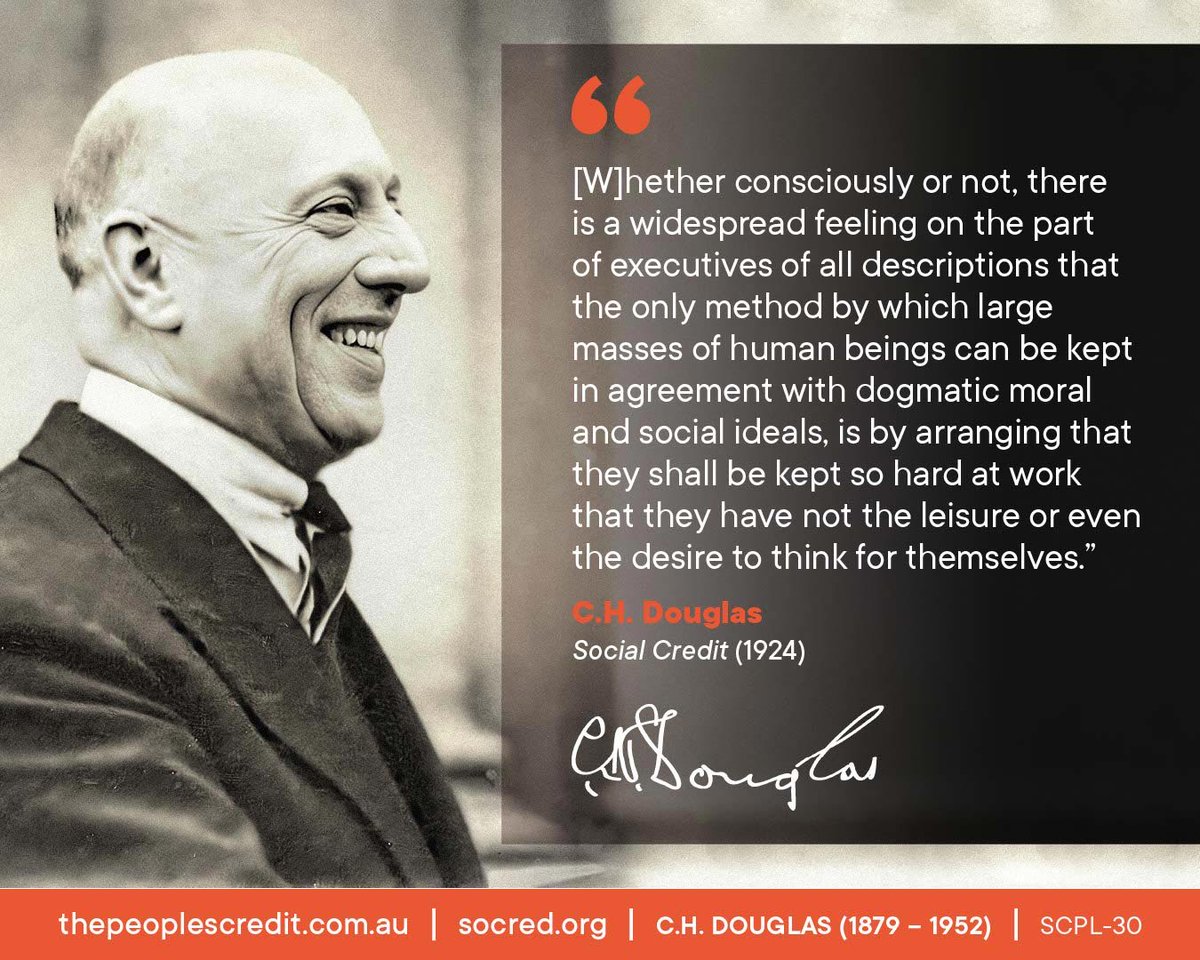
A bit of intuitive reasoning. When you make people poorer, they spend more time and energy worrying about putting food on the table and paying their bills, and less time engaging in politics. That’s how democracy dies.
Post-Keynesian/MMT economics is a feasible route out of neoliberalism. Melenchon calls out for it. McDonnell considered it in 2016 but ex-SWP James Meadway becomes an 'adviser' and scuppers it. Polanski adopts it, Meadway sets up a Green think tank and advises against it. I join Rethinking Economics as a solidarity supporter, a global organisation of young economists also considering it. Guess who turns up? Gets around, this lad, doesn't he?
"James Meadway is a Trustee at Rethinking Economics International, and a former adviser to the former Shadow Chancellor, John McDonnell MP."
https://t.co/XZF1gPjnBx
While the European Commission spends sleepless nights figuring out how to make life harder for the poor average Russian, Anatoly Chubais, the architect of the fraudulent privatization of Soviet assets, lectures at European universities on how he and the oligarchs plundered the people’s wealth.
@farmerrf I’m not sure I understand what the issue is. Suppose a paper is flagged as being 100% AI generated. What is an editor to do? Reject outright? Surely not. The question is whether the paper contribute in a meaningful way to our knowledge. But then this is the job of the referee.
Households in macroeconomics textbooks: solve an intertemporal optimization problem over an infinite horizon.
Households in real life: forgot to cancel their free trial.
La econometria basica tiene 5 formulas tatuables en un brazo:
1) MCO
2) FWLT
3) Sesgo por variables omitidas
4) Varianza de MCO bajo iid
5) Variables instrumentales
Listo el pollo. ¿Una mas?
6) test t/F/Wald para restricciones lineales generales
The St. Louis Fed has published a description of its DSGE model. In place of a single representative household, it features workers and capitalists with different MPCs.
From a Post-Keynesian perspective, the model still has several limitations.
1. It has no explicit commercial banking sector or mechanism for deposit creation through bank lending.
2. Investment follows from capitalists’ intertemporal optimization and depends on marginal Tobin’s q and investment adjustment costs.
3. Potential output is calculated in a counterfactual economy where prices and wages adjust freely and both price and wage markups are held constant.
4. The economy is closed. A measurement error term in the equation for observed real GDP growth accounts for omitted fluctuations in the trade balance.
5. Tax rates on labor and capital income respond to deviations of the previous quarter’s public debt-to-GDP ratio from its steady-state value.
6. Firms’ desired price markups follow an exogenous stochastic process, leaving no role for distributional conflict in determining them.
Who receives an extra dollar of income matters for aggregate demand. The St. Louis Fed incorporates this long-standing Kaleckian insight while retaining the standard NK framework.
@tblrj@ProfSteveKeen Perhaps the Bolsheviks chose this translation because quantification is not inherent in the Russian word “tsennost” (value). So it goes.
I've just read @ProfSteveKeen's "A Marx for Post Keynesians" and was reminded of a longstanding issue with the Russian translation of Marx's Capital. The German term "Wert" (English: "value") was translated as "stoimost" (semantically closer to "cost") rather than "tsennost" (semantically closer to "value"). Just imagine how confusing things get when "use-value" reads more like "use-cost" in Russian.
@wsosaescudero I’d also add White’s robust covariance matrix formula, just in case the homoskedasticity assumption doesn’t survive contact with reality.
How adorable are these folks who trust Pangram unconditionally. Perhaps we should revive the 19th-century practice of writing scientific papers as works of literature.
Is a Pangram flag of 100% AI-generated text (not 10%, not 20%, not 30%) an informative signal that, at least as of today, there was not much thinking in a paper in economics?
Yes.
Think about this from the perspective of 2010, well before AI became a thing.
Someone submits to the journal you edit a paper claiming he has cured cancer. You don’t have much reason to trust him: he is not a well-known researcher, he is not affiliated with a reputable university, and the paper is not professionally typeset.
Now you need to allocate your limited time. You can spend one hour figuring out whether he is right, or you can spend one hour helping to improve the paper from a well-respected group of oncologists at Mount Sinai in New York, in which they show they can increase life expectancy for a small group of cancer patients by a month, nothing spectacular, but not zero either. And, sorry, days have 24 hours. Do not play the parlor game of inventing extra resources.
Where would the social planner allocate your time? I find it very hard to give any answer other than the team at Mount Sinai. Yes, a cure for cancer is worth vastly more than one extra month for a few patients. But multiply that value by the probability that he is right, and the expected payoff of your hour is still higher at Mount Sinai.
Life is full of signals, and, like it or not, observables that are cheap to check tend to correlate quite well (not perfectly, but quite well) with observables that are expensive to check. Today, a Pangram flag is one more signal of this kind.
Does this mean that the allocation would always be optimal ex post? No. But, ex ante, it is probably a darn good rule. Bayesian reasoning goes a long way in life.
The screenshot is from a paper I had to handle this morning.
Households in macroeconomics textbooks: solve an intertemporal optimization problem over an infinite horizon.
Households in real life: forgot to cancel their free trial.