Starting up is exciting ... and overwhelming. From clarifying your vision to building your MVP, finding your first customers, and finally scaling ... most founders don’t just need capital, they need clarity, speed, and the right gameplan https://t.co/YSuslUC5Fr
FounderHelpDesk - from idea to durable company.
We combine:
founder guidance
venture infrastructure
operational support
governance systems
execution discipline
strategic thinking
ecosystem collaboration
…into one connected platform. https://t.co/dHkRK1cXCu
This is big: all access to Mythos and Fable AI models disabled for everyone outside America.
First thoughts:
1. Technology is the ultimate weapon. National sovereignty, national security, all of it is now about technology.
2. Globalization is dead and Bharat must find her own way ahead.
We must keep these two ideas in mind.
What can our government do right now? Ensure that orgs in India embrace smaller models, both Indian and Chinese open source ones. With a bit of effort, we can make them work. Anyway, why pay money to people who don't even want to sell to you?
We must deepen our R&D. Sarvam has been on it and we have been on it but remember that the latest models cost not only huge GPU budgets to train, the GPUs themselves are restricted. So we can't afford the scale of money (of the order of $100+ billion to even get in the game!) and even if we could come up with the money, we can't get all the GPUs. I would not like to ask the government to fund tens of billions of dollars on this anyway - the money has far better uses.
Zoho has been pursuing alternative R&D approaches that are far, far less expensive but by its nature cutting edge R&D takes time and we are patient. I am confident we will get there.
Any remaining people in India who have delusions about globalization should wake up now.
Most tools assume #founder is already formed.
Notion assumes clarity
OKRs assume stable intent
AI copilots assume confidence is real
Founders don’t live in clarity ... The real bottleneck is not productivity. It’s coherence.
#ideas#startup
https://t.co/apyowc54vA
Yesterday one of our experienced engineers who works in my R&D team, showed me an assembly and machine code security tool he built in his spare time over the past month. I did not know he was building it. I was blown away by the depth and breadth of the tool.
He has developed this alone, in a month, what a team of 3-4 would have taken a year at least.
He told me he found the Opus 4.5 AI model to be a game changer. Until that model, he was not all that enthusiastic about AI generated code but now he has revised his opinion.
This is how we learn in Zoho - we let smart people experiment and find new path ways.
Anyway, powerful machine looms have arrived for software development (challenging the handloom weavers that we have been in software) and the implications are enormous.
At Zoho, we have our work cut out, and as Chief Scientist, I am under pressure. Wish us luck 🙏
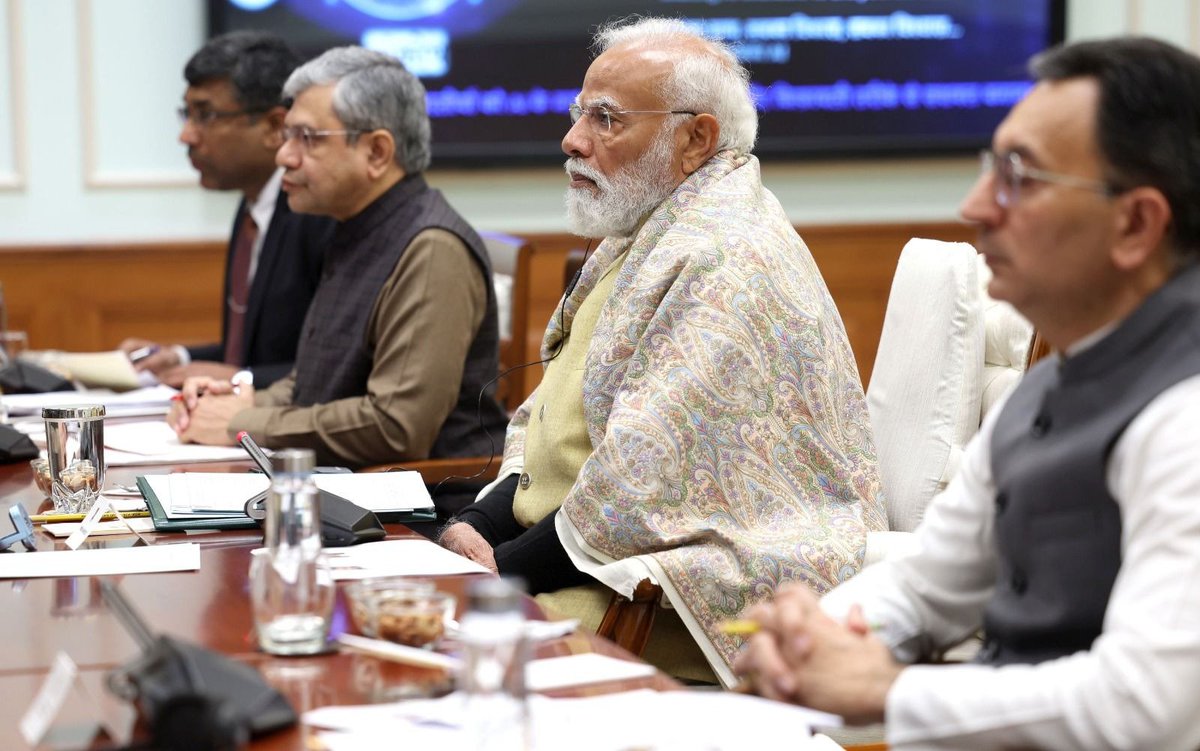
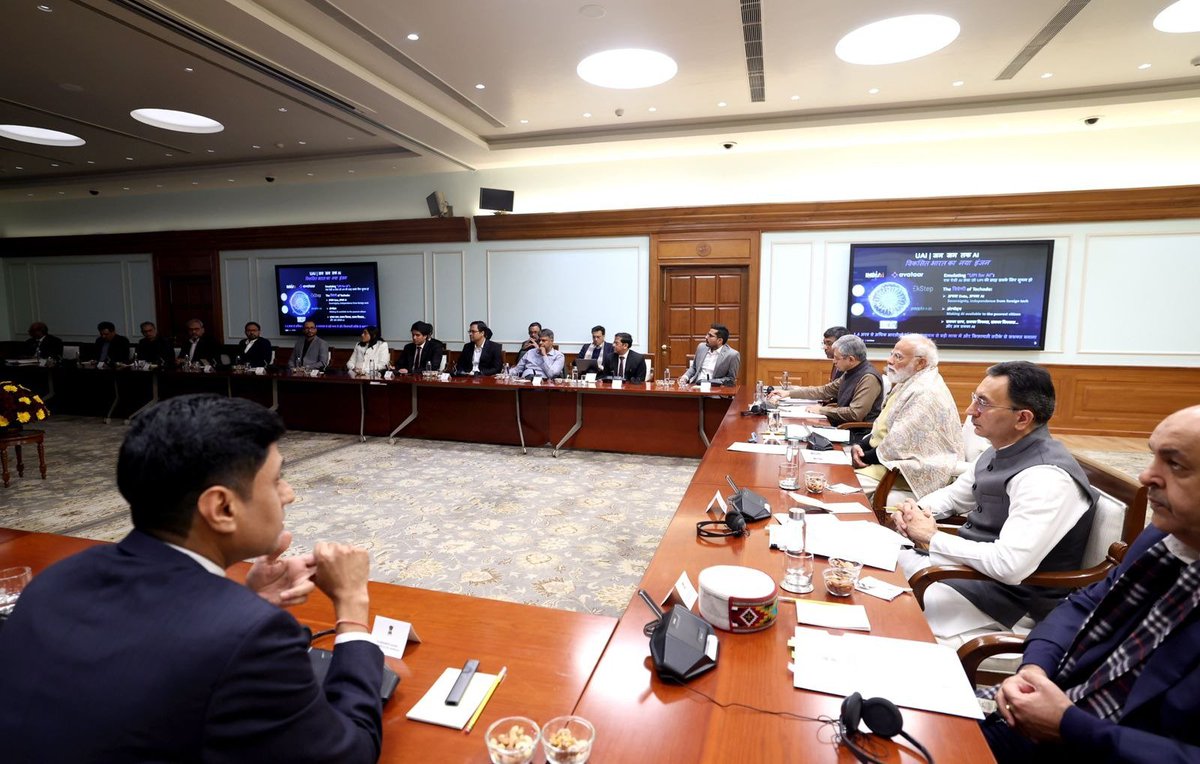
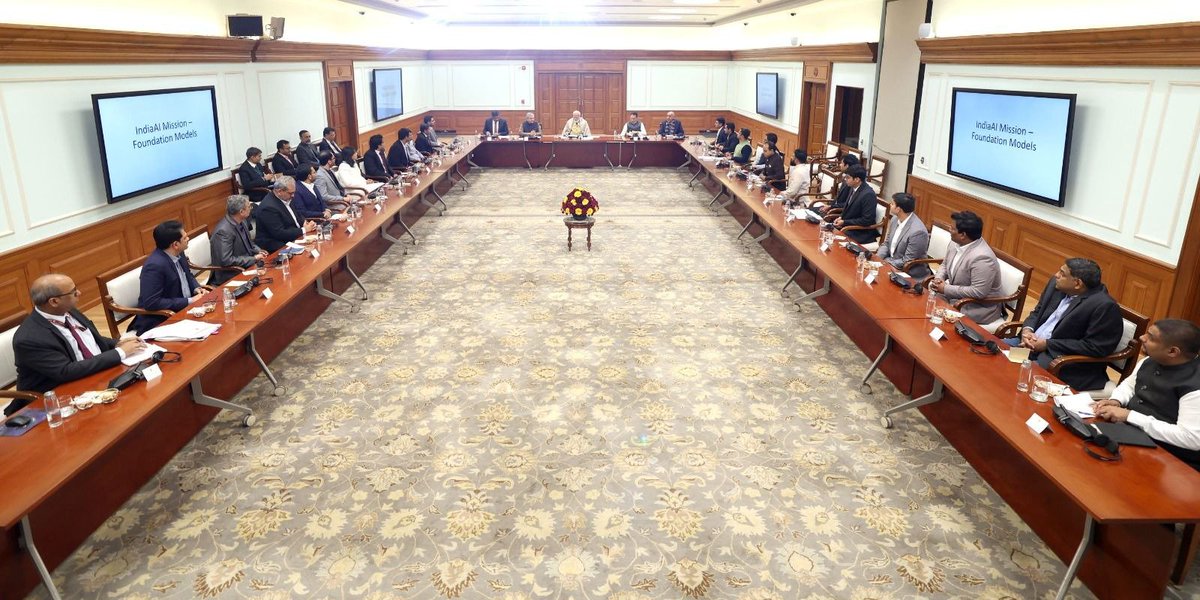
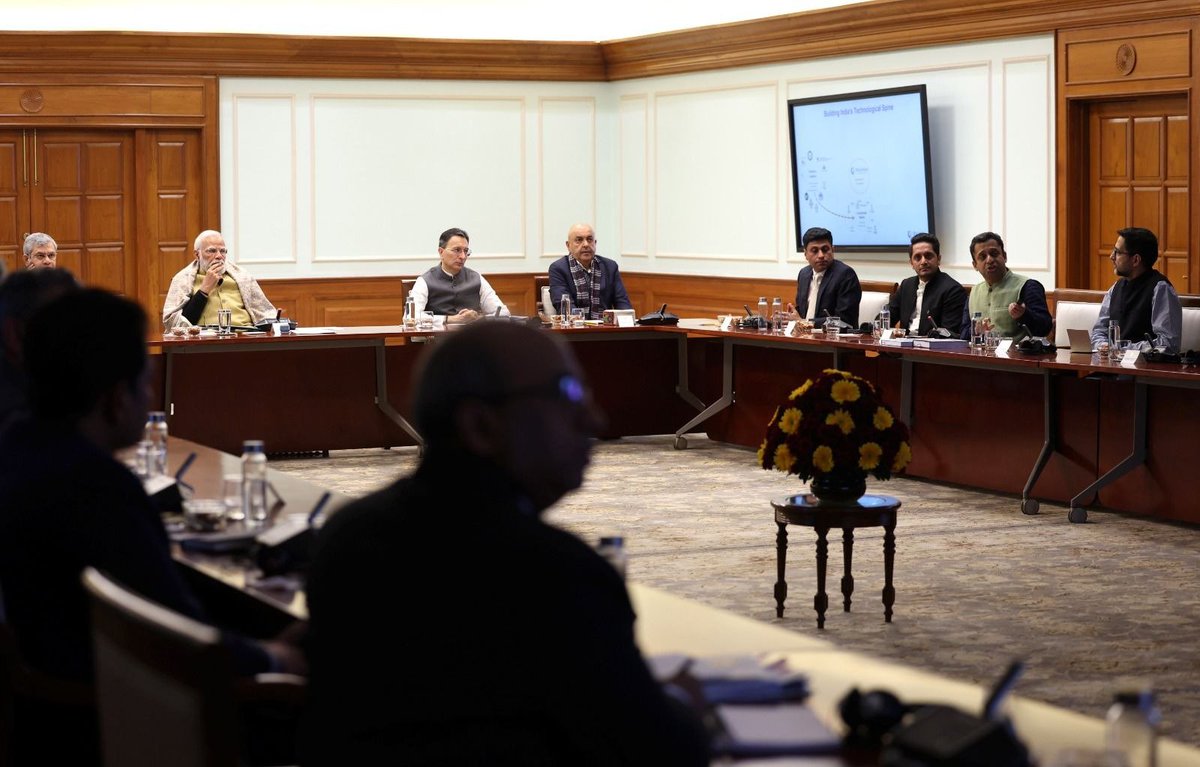
Talked AI with youngsters from the Indian StartUp world. It was a memorable and insightful interaction, in which they shared their vision and work on how India is transforming the world of AI. It is commendable how these StartUps are working on diverse fields such as e-commerce, marketing, engineering simulations, material research, healthcare, medical research and more.
https://t.co/vnv5efdDVk
Airbnb founder Brian Chesky explains the concept of designing a 7-star product experience
As Brian points out, the status quo for the Internet is 5-star reviews. But the problem with 5 stars is that the bar is really low.
“If you rate an Uber four stars, your life might have been in danger, right?”
But in the early days of Airbnb, they wanted to design a product experience users loved so much they would tell everyone about it. They wondered:
“What if you booked an Airbnb and you didn’t leave 5 stars, but you emailed the company asking for a 6th star because the product was so you had to almost go above and beyond?”
After some brainstorming, they thought a 6th star might be if the Airbnb host picked you up from the airport.
Then they asked, what’s a 7 star experience?
“Well 7 stars, they don’t pick you up at the airport. They send a limousine, and you open the limousine door and there’s coconut water and they know you’re into surfing and there’s some surfing magazines.”
They did this all the way up to 10 stars, which they decided is Elon Musk picking you up from the airport and taking you to space.
As Brian explains:
“It’s very easy to take for granted that the 5 star experience is what people expect. But to build something people love, you need to do something more than they expect. And every moment is an opportunity to do something slightly more than people expect.”
Obviously Elon Musk won’t be able to take every Airbnb guest to space, but offering an airport pickup service might be something they could offer.
There’s also a really important point here that your product is not just a mobile app or a web page, but the whole experience — every point of contact with the customer is an opportunity to delight them.
Video source: @Greylock (2015)
In 1982, Ray Dalio was overconfident & making bold bets ... leading to bankruptcy ..
His Eureka: “future-Ray” had no access to reasoning of “past-Ray.”
Can we build around this?
AI PM Masterclass 5: FH DOS - A #founder Operating System For Coherence
https://t.co/PwXnwXiWrW
Are AI-assisted CEOs confusing info with judgment?
What exactly is the CEO role ...( schizophrenic ;-)) ?
A CEO OS cannot be designed as an end-to-end system, at least to begin with.
AI Product Management Lesson #4
Starshot: Building a CEO OS
https://t.co/nQKfc7DYVV
Naval Ravikant: “The future will be almost all startups”
“I firmly believe that the efficient size of a company is shrinking very rapidly, and so the future will be almost all startups.”
In the clip below from a 2012 interview, Naval speculates that information technology will reverse the centralizing force of economies of scale following the Industrial Revolution.
“I think the contract work trend is going to increase, and I think the size of your average company is going to decrease. I think we’re going to see more and more billion dollar businesses built by four or five people, and it’ll stay at that.”
He doesn’t think we’ll see many more companies like Facebook or Google with tens of thousands of employees:
“I think any entrepreneur worth their salt could today build Facebook with a few hundred people… Facebook and Google are in the situation that large companies end up in where the founders know that 80% of the people are not really needed, they just don’t know which 80%.”
Cloud pretends to be boring.
Margins stabilize. Architectures standardize ... then, quietly, underneath the noise, the center of gravity moves.
By the time most people notice, the game is already being played somewhere else.
That is where we are again.
https://t.co/KNxFu3pgUa
SaaS/Startup founders
What are you building currently?
Show your amazing product below, join 100+ founders here every week.
#indiehackers#buildinpublic
Over the last two years, something quiet but decisive has happened in cloud.
The biggest acquisitions haven’t been about features, regions, or even “AI capabilities.”
What recent cloud acquisitions reveal once you stop reading the headlines
https://t.co/KNxFu3pgUa
Feb 2019, OpenAI did something unprecedented.
They withheld the full model.
Not permanently. Not secretly. But intentionally.
They released a smaller version ...
TLDR: We do not yet know what happens if we release this.
#preparedness
https://t.co/zCgFsqwQhR
SaaS/Startup founders
What are you building currently?
Show your amazing product below, join 100+ founders here every week.
#indiehackers#buildinpublic
The best kind of personal victories are silent — overcoming a fear, getting fit, or realising a new life-changing insight.
But because these step-changes in life are silent, it’s easy to discount their worth, and that’s a mistake.
Celebrate your wins, even if no one sees them.
Jeff Bezos: “Thinking small is a self-fulfilling prophecy”
Bezos is asked where he gets the confidence to even attempt to build companies of such massive scale, like Amazon and Blue Origin.
He responds:
“I think it’s generally human nature to overestimate risk and underestimate opportunity. And so I think entrepreneurs in general would be well-advised to try and bias against that. The risks are probably not as big as you perceive, and the opportunities may be bigger than you perceive… You say it’s confidence, but maybe I’m just accepting that human bias and trying to compensate against it. The second thing I would point out is that thinking small is a self-fulfilling prophecy.”
Video source: @nytimesevents (2024)
Most people don’t fail at startups.
They miss choosing what’s worth building.
FounderHelpDesk exists for you if you want clarity before speed,
thinking before execution,
and privacy before noise.
If want a serious thinking partner:
DM “CLARITY”.
https://t.co/CoSxLVFeZe