Très honorée d’être lauréate du Prix Jacques Mirouze-Servier 2023 attribué par l’@acadmed pour récompenser des travaux en diabétologie. Tous mes remerciements vont aux membres de l'Académie et à son jury.
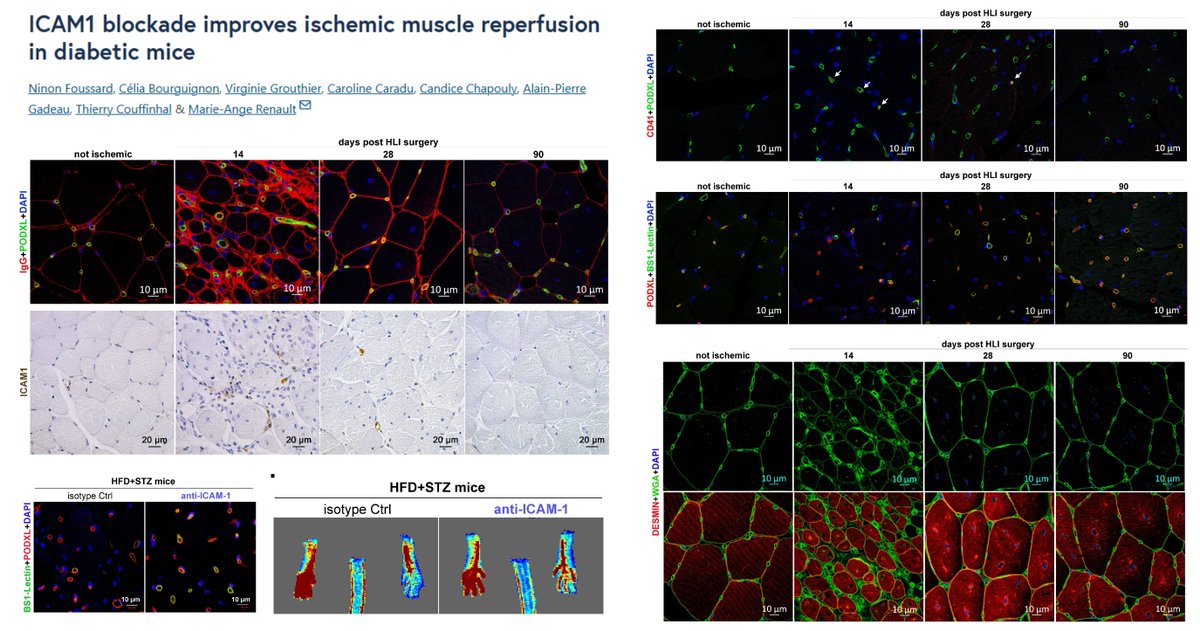
ICAM1 blockade improves ischemic muscle reperfusion in diabetic mice. Importantly, the increase in blood flow between day 14 & 90 post-HLI surgery is not associated with an increased capillary density but with an improved functionality of capillaries. https://t.co/gnxdOkBkTw
Une pensée, aujourd'hui, pour Pascal Foussard, qui va pouvoir entamer sa retraite après une dernière journée de boulot dont tout le monde rêverait : un titre olympique avec l'équipe de France de volley. Le visage du volley tourangeau, du @ToursVolleyBall, est au Panthéon !
DO GLP-1 Agonists Really Cause Eye Disease
There has been a huge amount of press about a report showing an association between the use of GLP-1 agonists and Nonarteritic anterior ischemic optic neuropathy (NAION)
https://t.co/IjBl0wN10a
Because of it being heavily promoted by JAMA, the article has an Altmetric score of 1982. However, despite wide dissemination of the study's conclusions, very few people actually read the article (only 3,918 downloads-consider the denominator here: 1 million physicians in the US and 10 million healthcare providers).
The conclusions should not be accepted without critical analysis of the study itself. There are limitations:
1) This disease occurs in patients with diabetes. GLP-1 drugs are generally used for more advanced cases of DM. There was no control for diabetes severity in the study. It is likely that the NAION was more likely to occur in patients with more severe DM - the same population more likely to be prescribed GLP-1 agonists. The lack of control for DM severity is a major limitation and probably should negate any conclusion about the relationship between GLP-1 agonists and eye disease.
Note form the limitations section: "our study also is
limited in that the severity of confounding factors could not be adequately assessed,"
At a minimum, this analysis should have controlled for HgA1c levels.
2) The study had an extremely small number of patients and the population was not representative of the average patient with DM. Of 979 eligible patients, only 32 had NAION. Of these 27 were treated with semaglutide and 5 with other drugs. Semaglutide is not a 1rst line treatment for DM. That the majority of patients in this study were being treated with this drug suggests that the patients had severe, probably poorly controlled DM. Note #1 above- the statistical analysis for this study did not include control for DM severity.
See: DM Standards of Care from the ADA: https://t.co/hFlR9wPj25
The first line treatment for DM is diet control, weight loss and metformin. GLP-1 agonist drugs are advised when these fails or if treating patients with a high risk for DM complications.
2) From the methods: Propensity matching was used to assess whether prescribed semaglutide was associated with NAION in patients with type 2 diabetes (T2D) or overweight/obesity. Propensity methods do not balance unmeasured risk variables or confounders. They also result in loss of information and power by excluding patients who cannot be matched. In the study, there were 32 patients with a NAION event. Of these only 23 were studied after a propensity score match and 18 after propensity score and exact matching. How the excluded patients might affect the results is unknown.
3) As mentioned in a previous tweet (X?), the confidence intervals for the study results were huge. This happens when there are too few events to reliably analyze.
From the abstract:
"A Cox proportional hazards regression model showed higher risk of NAION for patients receiving semaglutide (hazard ratio [HR], 4.28; 95%CI, 1.62-11.29); P < .001)."
"A Cox proportional hazards regression model showed a higher risk of NAION for patients prescribed semaglutide (HR, 7.64; 95%CI, 2.21-26.36; P < .001)."
As a general rule, findings with very large confidence intervals should be considered suspect-In other words, there is not a lot of confidence in the results.
The figure got a lot of attention. Note that the effect was magnified by an insert showing survival probabilities between 90 and 100. the figure looks dramatic because of this. this got the public's attention but is misleading. There are no confidence intervals in this graph to show how well separated the groups survival really was. Given the very small numbers of patients, the CIs probably showed significant overlap.
The major problem here is that this research really does not show an association between NAION and GLP-1 drugs-Yet, it was widely summarized by the press and made its rounds through social media. It came to my attention when someone sent e the article suggesting that our group look at this problem in more detail.
It would be nice if there was more critical review of findings like these before the public absorbed the conclusions.
I am sure there is more to this article than I picked up on and look forward to more discussion about it.
Social media is probably a better venue for peer review for scientific findings than journals-This comes from someone who was a JAMA editor for many years. SM enables broader audience to draw upon for comment and facilitates expression of a diversity of views.
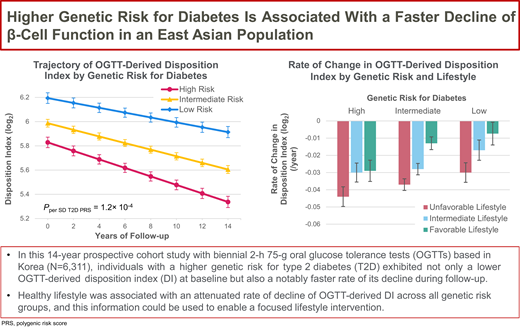
In a 14-year prospective cohort study, having a higher genetic risk for diabetes was associated with a faster deterioration of β-cell function, which was attenuated by healthy lifestyle. @ADA_Pubs
Read Here➡️https://t.co/XWeEW7dhI9
#Étoile
Sur proposition de José Martinez (@josecmart2504), Alexander Neef a nommé Bleuenn Battistoni Danseuse Étoile à l’issue de la représentation du ballet #LaFilleMalGardée, dans lequel elle interprétait le rôle de Lise, ce 26 mars au Palais Garnier.
Félicitations 👏
Le groupe de jeunes #chercheurs du département Sciences Biologiques et Médicales, SBM’s Young a organisé sa 5ème battle jeudi 15 février. 7 jeunes chercheurs ont débattu sur le thème de "l’IA : la #recherche sans chercheur, la #médecine sans #clinicien ?"
https://t.co/O4GWjMO7AX
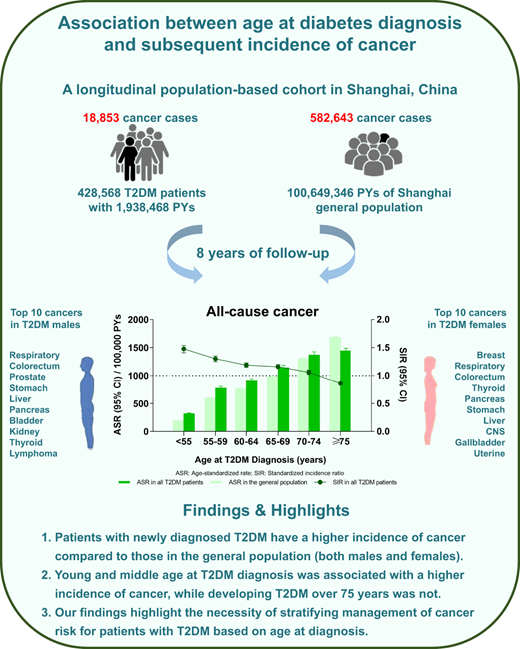
Young and middle age at diagnosis of T2DM was associated with higher incidence of subsequent cancers, which highlights the necessity of stratifying management for T2DM based on age at diagnosis. @ADA_Pubs
Read Here➡️https://t.co/b0sbVrVy4W
Nouvelle étude de randomisation mendélienne suggérant un lien causal entre syndrome métabolique et différent troubles psychiatriques, notamment le #TDAH. #ADHD
https://t.co/j8ZfSmAkXn
Très honorée d’être lauréate du Prix Jacques Mirouze-Servier 2023 attribué par l’@acadmed pour récompenser des travaux en diabétologie. Tous mes remerciements vont aux membres de l'Académie et à son jury.
@insermU1034 Merci enfin au Pr @anne_sauvaget du CHU de Nantes, lauréate du prix Jansen, pour ce moment partagé; ainsi qu'aux Pr Vincent Rigalleau et Antoine Tabarin du @CHUBordeaux pour leur suivi depuis mon début d’internat.






![ehlJAMA's tweet photo. DO GLP-1 Agonists Really Cause Eye Disease
There has been a huge amount of press about a report showing an association between the use of GLP-1 agonists and Nonarteritic anterior ischemic optic neuropathy (NAION)
https://t.co/IjBl0wN10a
Because of it being heavily promoted by JAMA, the article has an Altmetric score of 1982. However, despite wide dissemination of the study's conclusions, very few people actually read the article (only 3,918 downloads-consider the denominator here: 1 million physicians in the US and 10 million healthcare providers).
The conclusions should not be accepted without critical analysis of the study itself. There are limitations:
1) This disease occurs in patients with diabetes. GLP-1 drugs are generally used for more advanced cases of DM. There was no control for diabetes severity in the study. It is likely that the NAION was more likely to occur in patients with more severe DM - the same population more likely to be prescribed GLP-1 agonists. The lack of control for DM severity is a major limitation and probably should negate any conclusion about the relationship between GLP-1 agonists and eye disease.
Note form the limitations section: "our study also is
limited in that the severity of confounding factors could not be adequately assessed,"
At a minimum, this analysis should have controlled for HgA1c levels.
2) The study had an extremely small number of patients and the population was not representative of the average patient with DM. Of 979 eligible patients, only 32 had NAION. Of these 27 were treated with semaglutide and 5 with other drugs. Semaglutide is not a 1rst line treatment for DM. That the majority of patients in this study were being treated with this drug suggests that the patients had severe, probably poorly controlled DM. Note #1 above- the statistical analysis for this study did not include control for DM severity.
See: DM Standards of Care from the ADA: https://t.co/hFlR9wPj25
The first line treatment for DM is diet control, weight loss and metformin. GLP-1 agonist drugs are advised when these fails or if treating patients with a high risk for DM complications.
2) From the methods: Propensity matching was used to assess whether prescribed semaglutide was associated with NAION in patients with type 2 diabetes (T2D) or overweight/obesity. Propensity methods do not balance unmeasured risk variables or confounders. They also result in loss of information and power by excluding patients who cannot be matched. In the study, there were 32 patients with a NAION event. Of these only 23 were studied after a propensity score match and 18 after propensity score and exact matching. How the excluded patients might affect the results is unknown.
3) As mentioned in a previous tweet (X?), the confidence intervals for the study results were huge. This happens when there are too few events to reliably analyze.
From the abstract:
"A Cox proportional hazards regression model showed higher risk of NAION for patients receiving semaglutide (hazard ratio [HR], 4.28; 95%CI, 1.62-11.29); P < .001)."
"A Cox proportional hazards regression model showed a higher risk of NAION for patients prescribed semaglutide (HR, 7.64; 95%CI, 2.21-26.36; P < .001)."
As a general rule, findings with very large confidence intervals should be considered suspect-In other words, there is not a lot of confidence in the results.
The figure got a lot of attention. Note that the effect was magnified by an insert showing survival probabilities between 90 and 100. the figure looks dramatic because of this. this got the public's attention but is misleading. There are no confidence intervals in this graph to show how well separated the groups survival really was. Given the very small numbers of patients, the CIs probably showed significant overlap.
The major problem here is that this research really does not show an association between NAION and GLP-1 drugs-Yet, it was widely summarized by the press and made its rounds through social media. It came to my attention when someone sent e the article suggesting that our group look at this problem in more detail.
It would be nice if there was more critical review of findings like these before the public absorbed the conclusions.
I am sure there is more to this article than I picked up on and look forward to more discussion about it.
Social media is probably a better venue for peer review for scientific findings than journals-This comes from someone who was a JAMA editor for many years. SM enables broader audience to draw upon for comment and facilitates expression of a diversity of views.](https://pbs.twimg.com/media/GR2vsekawAA_UV0.png)