When we finally have a New Nigeria, I believe we will remove our institutions from politics and teach all public officers decorum in their speech and writing even on their personal pages. Institutions will not look at your political information before they reply...
Chance Visits to INEC Registration Centres
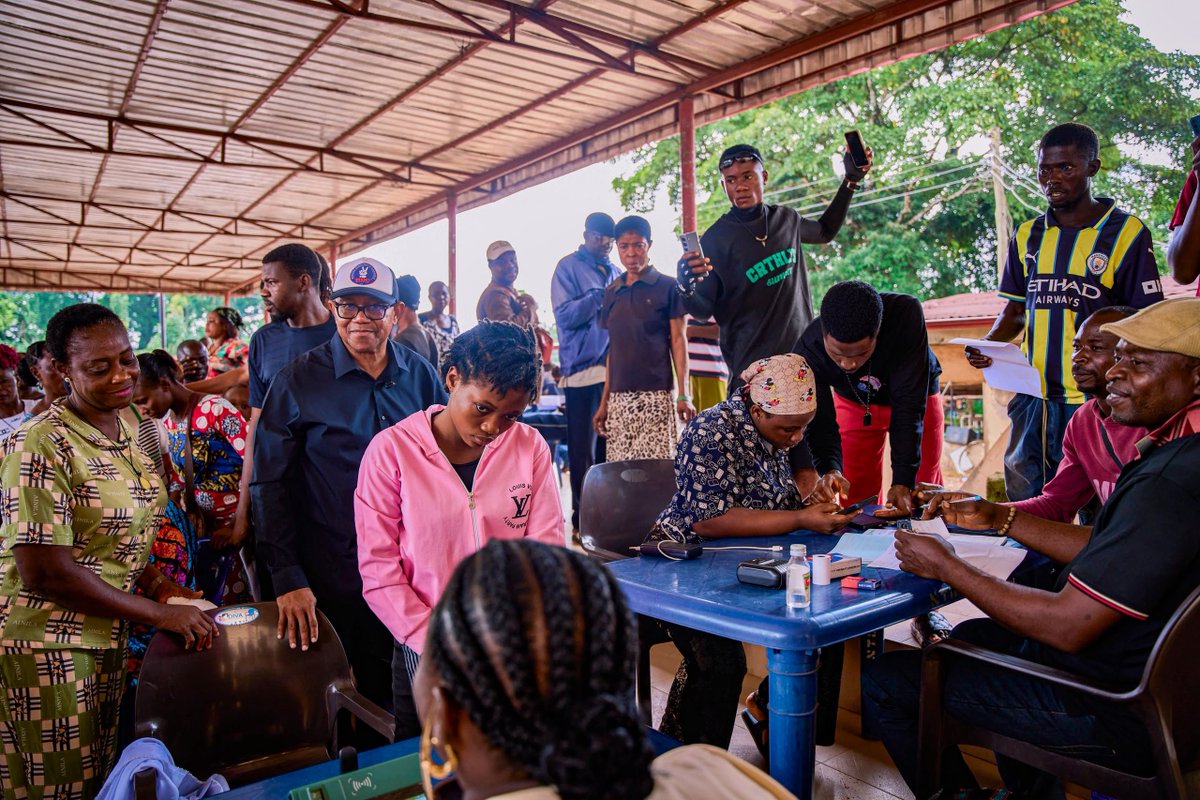
On my return to Anambra State yesterday, and on my way to attend some scheduled engagements, I made impromptu visits to the INEC voter registration centres at the Civic Centre, Nibo, and Nrijiofor Primary School, Nri.
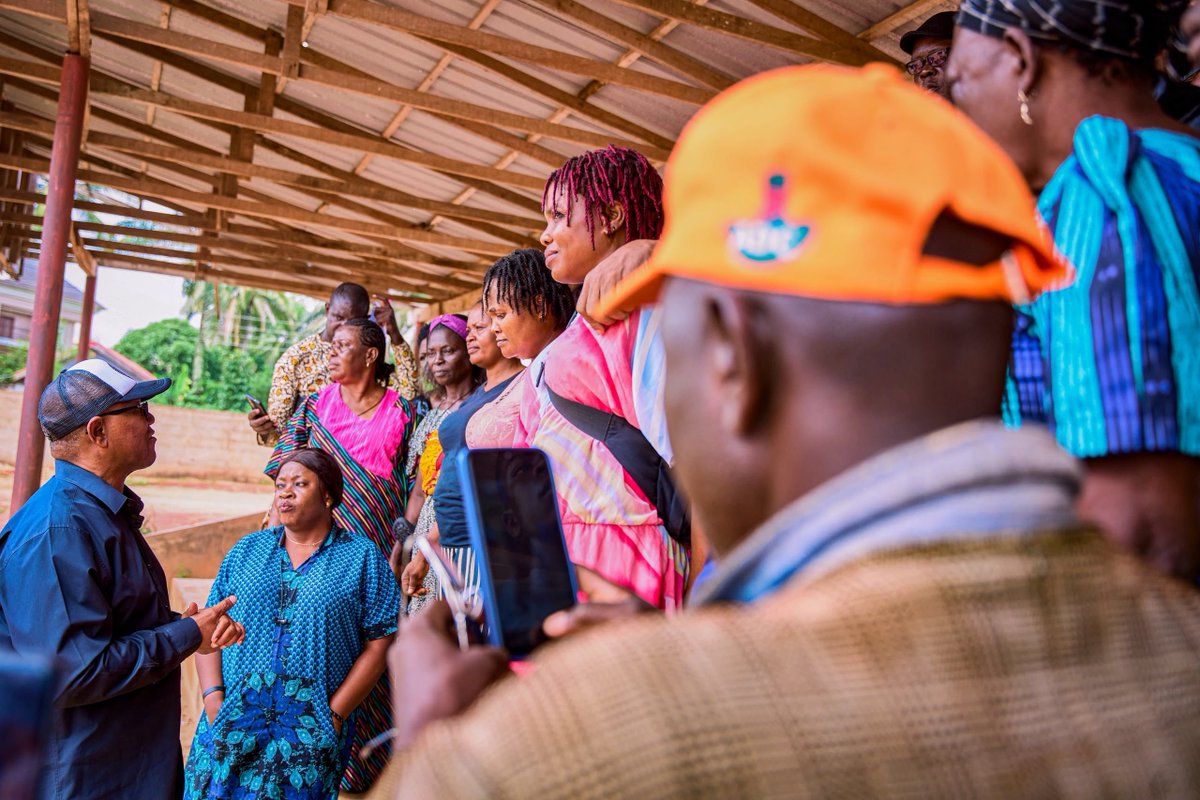
I was pleased to see Nigerians registering to vote. I took the opportunity to commend those who had turned out and to encourage every eligible citizen to do the same. I reminded them that the journey to good governance does not begin on Election Day; it begins with voter registration. Registering to vote is not just a civic responsibility — it is an investment in the Nigeria we all desire.
I urged everyone who is eligible but has not yet registered to do so without delay. I also appealed to those who have already registered to encourage their family members, friends, neighbours, and colleagues to take advantage of the ongoing exercise before the deadline.
Every registered voter strengthens our democracy and brings us one step closer to building the secure, united, productive, and prosperous Nigeria we all seek.
A New Nigeria is POssible. -PO
Education Crisis: Calls for Fundamental Change, Not Just Policy
The Federal Government has finally admitted to its poor management of the education sector. Recently, the Minister of Education acknowledged that the policy separating junior and senior secondary schools has failed to improve educational outcomes. This is evident in recent examination results. In 2024, the West African Examinations Council (WAEC) reported that only 38.32% of candidates passed English and Mathematics in the WASSCE. In 2025, only 32% passed the computer-based WASSCE. This poor performance has been consistent across major examinations over the past two years.
This admission is tragic because education is the most vital contributor to human capital development, which forms the foundation for growth and economic development of any society. We cannot overcome economic stagnation without prioritising education, healthcare, and job creation to lift millions of unemployed youths out of poverty. As successful Asian nations have demonstrated, educational excellence requires sustained investment in curriculum development, motivated teachers, and better learning environments.
Unfortunately, the government continues to neglect the sector. In the 2026 budget, education received only ₦3.52 trillion, just 6.17% of total expenditure, down from 7.87% in 2025, and well below UNESCO’s recommended 15–20%. This low allocation indicates a failure to recognise education as a driver of sustained economic growth.
Education advocate, Mr Alex Onyia @winexviv , recently revealed that Nigeria failed to sponsor students to the International STEM and Mathematics Olympiads due to a lack of funding. It is heartbreaking that the government can sponsor hundreds to irrelevant international conferences yet fail to support its brightest students on the world stage.
The Minister’s admission reflects a broader failure of public leadership. The issue is not the JSS/SSS policy itself, but the lack of commitment to properly fund, manage, and deliver quality education.
In Anambra State, we proved that committed leadership can transform educational outcomes. Through effective funding, oversight, provision of laptops, generators, internet connectivity, and other learning aids, we turned the sector around. For example, our effort in providing computers across all secondary schools (public and private in the state) was recognised by HP Africa Head, who declared that Anambra had procured the largest number of laptops for school children of any subnational government in Africa.
For the future of our society, we must deliberately invest in education, healthcare, and job creation. As I have always said, failing to do the right things is equivalent to abusing society, and the society we abuse today will take its revenge on us and our children tomorrow.
A New Nigeria is POssible. -PO
The Disturbing Reports from Osun State University
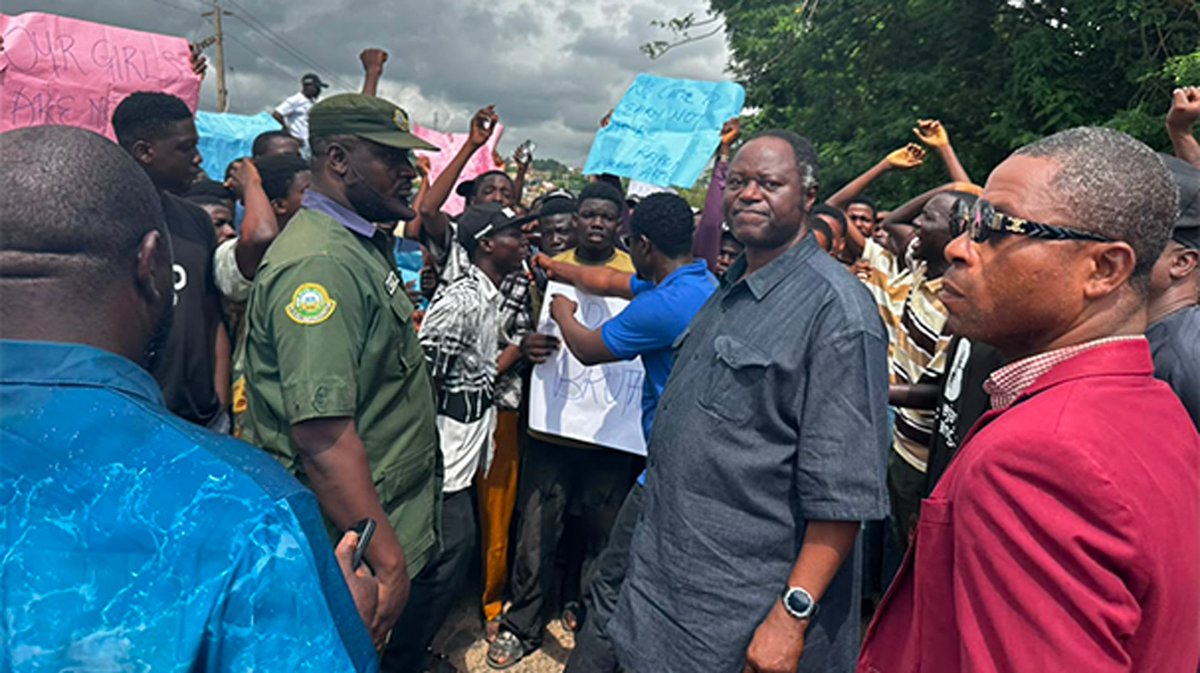
I have read with deep concern the troubling reports of soldiers invading students’ hostels at Osun State University, Osogbo, during which students were allegedly assaulted, humiliated, dispossessed of their personal belongings, and female students subjected to degrading treatment, including rape.
Every Nigerian deserves to be treated with dignity and respect. Our Armed Forces are renowned for their courage, discipline, and sacrifice in defending our nation. They are not known for such barbarity against the very citizens they are sworn to protect.
I therefore urge the military high command to conduct a thorough, transparent, and impartial investigation into these allegations. Anyone found culpable should be brought to justice. Holding offending personnel accountable will not only ensure justice for the victims but also preserve the honour and integrity of our Armed Forces while serving as a deterrent against future abuses.
A nation that respects human dignity builds confidence in its institutions. We must never tolerate impunity or the abuse of power.
A New Nigeria is POssible. -PO
Voter Registration: The First Step in the Journey to a New Nigeria
Yesterday, while passing through Waru Wazobia in Abuja, I made a chance stop to interact with our people. I seized the opportunity to encourage them, especially our youths and women, to take advantage of the ongoing voter registration exercise.
The power to change Nigeria does not begin on Election Day; it begins with voter registration. Registering to vote is not just a civic responsibility; it is an investment in the future we all desire.
I urge every eligible Nigerian who has not yet registered to do so without delay. Those who already have their voter cards should encourage their family members, friends, neighbours, and colleagues to register as well.
A new Nigeria will not happen through wishful thinking. It will be built by citizens who participate, who believe, and who act. Let us continue to choose hope over despair, participation over apathy, and nation-building over division.
A New Nigeria is POssible. -PO
My Vision for a Productive and Prosperous Nigeria
Today, being the 1st of July, 2026, I wish to humbly recall that when I decided to contest for the office of President of Nigeria, I pledged to place Nigeria on the path of unity and national transformation. Now, as the Nigeria Democratic Congress (NDC) candidate, I will, in the coming weeks and months, provide insights into the roadmap that I am confident will help curb abuse in government, halt the decline in the quality of life of Nigerians at all levels, and usher in an era of unity, peace, sustained progress, and prosperity.
This vision is anchored on a commitment to unity, inclusion, social justice, equity, and the freedom of every citizen to pursue lawful dreams.
Central to this proposed roadmap are significant reforms in education and healthcare, which are at the core of human capital development.
Robust human capital is indispensable infrastructure for national progress. It serves as the fundamental capital upon which daily life, economic expansion, and the delivery of essential public services depend.
These are foundational areas that we must reform with energy and determination if we are to reap the demographic dividend of our youthful population.
From the outset of my presidency, we will establish a task force dedicated to drastically reducing the menace of out-of-school children. We will place greater emphasis on Technical and Vocational Education and Training (TVET) to support our drive for massive industrialisation, anchored on our agricultural endowments and value addition across value chains organised around industrial parks to be located in development zones across the geopolitical regions of the country.
Funding and improving the equipment of TVET institutions, through partnerships among government, the private sector, and social entrepreneurs such as faith-based educators, will facilitate apprenticeship opportunities in the private sector, similar to the German dual education system.
The situation in which unemployment remains high while Nigerian entrepreneurs establish businesses elsewhere because skilled labour is scarce must be confronted decisively. Doing so is essential for the common good and for facilitating our transition from a consumption-driven economy to a production-driven one.
Character and civic education, emphasising the values that foster trust - an essential ingredient for enterprise and leadership - as well as shared national values, will receive significant attention within the tripartite approach to governance that we propose.
A New Nigeria is POssible. -PO
The Presidential candidate of our party, His Excellency Mr. Peter Obi, CON, has bemoaned the deplorable condition of Nigeria’s road network.
Our candidate emphasised that it is pertinent for the ruling party and its leaders to refrain from initiating new road construction projects until they have thoroughly rehabilitated and maintained our existing road network.
We completely agree with this position and are calling on the ruling government to, as a matter of urgency, repair all our major roads and stop subjecting Nigerians to unnecessary suffering and hardships.
My Stance on Road Development
There is a pertinent reason I have consistently advocated that we should refrain from initiating new road construction projects until we have thoroughly rehabilitated and maintained our existing road network. Instead of undertaking new ventures and dualization projects that offer marginal benefits, our primary focus ought to be on repairing the critical roads already in place.
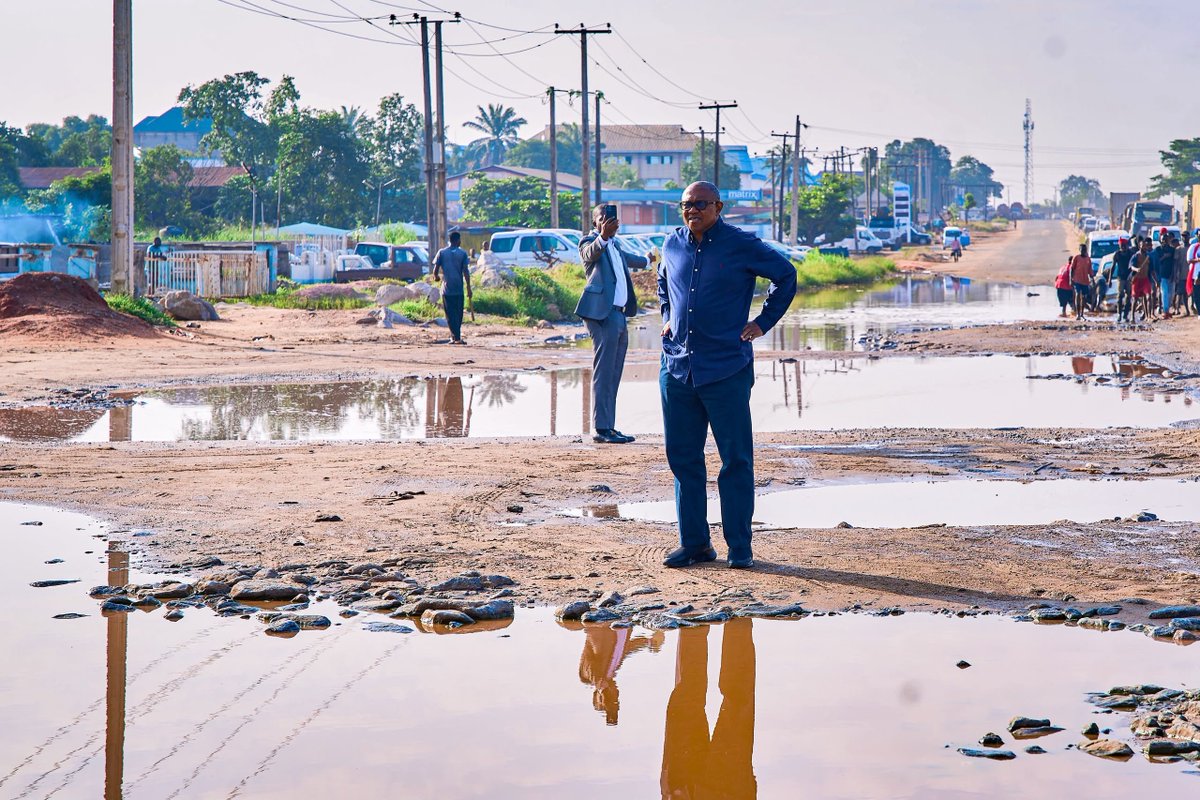
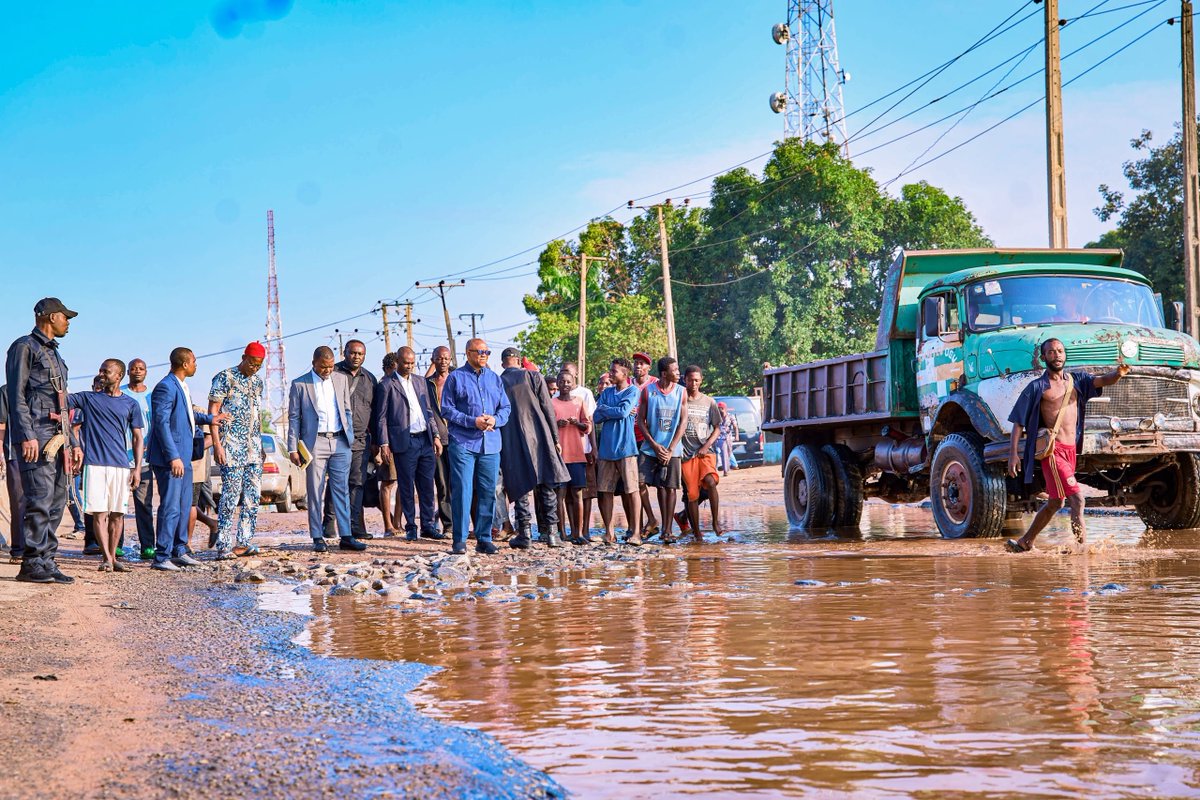
Consider, for instance, the Asaba–Benin Road. This thoroughfare is a vital artery within Nigeria's transportation infrastructure. Travellers traversing from Akwa Ibom, Anambra, Rivers, Imo, Ebonyi, Cross River, Abia, Enugu, and portions of Benue and Kogi States to Lagos are compelled to utilise this route.
Despite its significance, substantial sections of this road are in a lamentable condition. It has become a major impediment, precipitating persistent traffic congestion and inflicting undue hardship on travellers, businesses, and transport operators.
Regrettably, this situation is not unique; it reflects the reality on many of our busiest national highways.
Our efforts should be directed towards the reconstruction and maintenance of our current road infrastructure before we announce plans for new road projects. The Nigerian populace requires functional and motorable roads, not merely projects that garner public attention.
Efforts aimed at superficial improvements for political gain should not supersede the urgent need to address the condition of our existing, critical roadways.
A new Nigeria is POssible. -PO
When a court in Lokoja #Nigeria can unmake a party overnight, the question is no longer who #Nigerians will vote for in 2027, but whether they will be allowed to vote for anyone at all.
There is a word for what is happening to Nigeria’s democracy, and @ChidiOdinkalu has already given it to us in his 2025 book, #TheSelectorate: When Judges Topple the People.
https://t.co/wbm6gMTrLA
Engaging Tomorrow’s Leaders at Madonna University
Yesterday, I continued my engagement with future leaders in the country. I was at Madonna University, Okija Campus, where I had the privilege of interacting with students at the NextGen Mentorship & Leadership Initiative on the theme: “Beyond Now: Raising the Next Generation of Leaders.”
The session was highly engaging, with students asking thoughtful and probing questions. Their concerns reflected the frustration of many young Nigerians who feel constrained by poor governance and widespread corruption, which have denied them opportunities to realise their full potential. However, I was equally encouraged by their optimism and determination to be part of the solution.
I reminded them that leadership is the greatest determinant of a nation’s progress. A true leader must possess the character, competence, capacity, and compassion to make sacrifices for the good of the people. Nigeria’s future depends on leaders committed to safeguarding lives, investing in education, creating opportunities, and building effective institutions.
I encouraged the students to take their education seriously, to prepare themselves for leadership, and to see themselves not merely as spectators but as agents of change. Through active participation in the democratic process, they have the power to enthrone leaders with integrity and the capacity to propel our nation forward.
As part of my ongoing commitment to education, I presented a cheque of ₦15 million to the university to support its educational mission. Investing in education remains one of the most effective ways to develop the human capital necessary for national progress.
Together, by raising a new generation of responsible and visionary leaders, we can build the Nigeria of our dreams that is POssible. -PO
Delighted to Return to School of Nursing Sciences, Emekuku, Owerri, Imo State.
In continuation of my itinerant visits to educational and healthcare institutions in the country, yesterday, I visited the School of Nursing Sciences, Holy Rosary Hospital, Emekuku, where I met with the management, staff, and students, and presented a donation of ₦15 million to the institution.
I reminded the students that the world needs them more than they need the world because healthcare is one of humanity’s most fundamental needs. Any nation that truly desires development must invest in the education and training of healthcare professionals, who remain indispensable to the well-being and productivity of society.
I was delighted to inspect the computer laboratory, which I had previously supported, and to witness the remarkable progress the institution has made. It was also encouraging to reflect on other health institutions, such as Iyi-Enu and Borromeo, which I supported over the years and which have now grown into teaching hospitals. Their transformation reinforces my belief that sustained investments in health and education can produce enduring results. I look forward to seeing Holy Rosary Hospital attain the same status.
Our vision must be to build a Nigeria where functional institutions produce competent professionals, where investments are directed to critical sectors that lift people out of poverty, and where every child, regardless of background, has the opportunity to succeed. That is how we will build a nation where the son of nobody can become somebody without knowing anybody.
A New Nigeria is POssible. -PO
Lokoja Judgment: An Unnecessary Serious Setback for Nigerian Democracy
Today was an exceptionally busy day. I left Lagos in the early hours for Emekuku, where I visited the School of Nursing Sciences, an institution I have consistently supported over the years. It was gratifying to inspect projects funded through my previous interventions, including the school’s computer laboratory. Such investments reaffirm my belief that education remains one of the strongest foundations for national development.
From there, I attended the 80th birthday celebration of the Emeritus Archbishop of Owerri, Most Rev. Dr Anthony Obinna, whose commitment to justice, peace, and the common good has inspired many, before proceeding to Madonna University for another engagement.
It was at Madonna University that I received the court news of the Lokoja court rulings through my brother, Senator Rabiu Musa Kwankwaso.
Every Nigerian committed to the country’s progress should be deeply concerned. This judgment represents another setback for our democracy and the institutions upon which our future depends.
It is regrettable that some who claim to champion democracy now appear determined to weaken the very institutions that sustain it. In doing so, they are undermining public confidence and endangering the future of millions of Nigerians.
The legislature and the judiciary are increasingly being drawn into this pattern of institutional decline. Democracy cannot thrive where institutions lose their independence and credibility.
Those who seek to weaken Nigeria’s democratic foundations will not ultimately prevail. When a similar situation recently affected the ADC, I condemned it without hesitation. I do so again today because my position has always been guided by principle.
My concern is not about who becomes President. My concern is that Nigeria works. Our politics must move beyond the quest for power and focus instead on building a united nation founded on justice, strong institutions, the rule of law, and equal opportunity. That is the Nigeria we owe ourselves and the one we must leave for future generations.
I therefore urge all well-meaning Nigerians to rise above partisan interests and defend our democracy. The survival of our institutions is inseparable from the survival of our nation. It's when we work together that a new Nigeria of our dream is made POssible. -PO
Applications for the Ireland Fellows Programme opens on 29 June 2026!
Apply for the opportunity to study in Ireland on a fully funded master’s scholarship 🎓
Applicants from Nigeria and Ghana can find all info and applications here: https://t.co/vgAi4vZfyU @commercium_afr
Yesterday the House of Lords and home affairs committee published a 122 page report to oppose majority of proposed changes to immigration.
They said longer waiting times will lead to more poverty, less integration and more people becoming overstayers.
🇬🇧 HOUSE OF LORDS REPORT: SETTLEMENT, CITIZENSHIP & INTEGRATION
The House of Lords Justice and Home Affairs Committee has published a major report examining the Government’s proposed immigration reforms and what they could mean for migrants, settlement (ILR), and British citizenship.
Here are some of the key takeaways 👇
🔹 The Committee does not support making 10 years the standard route to Indefinite Leave to Remain (ILR).
It concluded that:
▪️ A 10-year route would be more restrictive than systems used in many comparable countries and could make the UK an international outlier.
▪️ Longer pathways to settlement may undermine integration by making it harder for migrants to plan for their future, including employment, housing, and family life.
▪️ Repeated visa application fees and Immigration Health Surcharge (IHS) payments could place significant financial pressure on families, particularly lower-income households.
▪️ Some migrants could fall out of lawful status simply because they are unable to afford repeated visa renewals.
▪️ A proposed 20-year route for refugees could create prolonged uncertainty and make integration more difficult.
🔹 The majority of the Committee also opposed applying any new settlement rules retrospectively to people who are already on a pathway to settlement.
The report describes this as potentially unfair and warns that it could damage confidence in the UK’s immigration system.
🔹 Instead, the Committee recommends retaining the current 5-year route to settlement, while exploring alternative measures such as maintaining restrictions on access to public funds until a later stage.
🔹The report also raises broader concerns about:
▪️ Poor quality data on migrant outcomes and overstayers.
▪️ Limited evidence and impact assessments for major immigration changes.
▪️ The complexity and high cost of settlement and citizenship applications.
▪️ The need for better English language provision and stronger integration support.
▪️ Ensuring children who grow up in the UK have a clear pathway to settled status by adulthood.
📌 Key Point
This is a House of Lords Committee report. Its recommendations are not legally binding, and the Government is not required to adopt them.
However, it represents an important intervention in the ongoing debate around immigration reform, settlement, and the proposed “Earned Settlement” model.
We will continue to monitor developments and share updates with the community as they become available.
https://t.co/UksdXhZrUW
#UKImmigration #ILR #Settlement #BritishCitizenship #ImmigrationReform #EarnedSettlement #NIUK
Owning Up to Leadership Failures and Political Responsibility
This morning, I listened to the British Prime Minister’s speech announcing his planned resignation in July. As a keen observer of global politics, my primary interest lies in examining what successful nations do right and the structural factors that cause others to lag or struggle with governance and development.
The Prime Minister’s planned resignation comes amid mounting public frustration over a stagnant economy, a worsening cost-of-living crisis, and a perceived failure to honour key campaign pledges.
Looking inward in our dear country, we can recall our own situation. Before 2015, our President on several occasions championed the call for the then President Goodluck Jonathan to resign over economic hardship and insecurity affecting Nigerians. During the Chibok school kidnapping incident, he demanded the immediate resignation of President Jonathan, arguing that the government had failed in its most fundamental duty of protecting lives.
During the 2023 election campaign, President Bola Ahmed Tinubu made several promises, including improved electricity supply. He also challenged the electorate not to vote for him for a second term if he failed to deliver on those commitments—particularly in providing stable power, fighting corruption, and improving the welfare of Nigerians.
At present, however, these conditions have worsened. Electricity supply remains unreliable, insecurity has intensified in many areas, including kidnappings, and economic hardship has deepened rather than eased. Similar concerns are reflected across other critical sectors such as security, infrastructure, transportation, and anti-corruption efforts, all of which have regressed. We are in the worst possible condition.
I, therefore, join Nigerians of goodwill in calling for the resignation of the President over monumental failure in governance. Such a gesture would help enthrone a political culture rooted in accountability and responsibility, rather than further entrenching impunity. It would also send a powerful message that public office is a sacred trust, not an entitlement, and help build a society in which future leaders understand that failure carries consequences. Only by ending the culture of impunity can we secure a better future for the society our children will inherit in a New Nigeria that is possible. -PO
Happy birthday to illustrious and distinguished Nigerians.
A highlight of my weekend was attending the special birthday celebrations of two distinguished Nigerians whose lives continue to reflect service, leadership, and nation-building.
The first was His Royal Majesty, Igwe Nnaemeka Alfred Ugochukwu Achebe (Agbogidi), CFR, the Obi of Onitsha and Chancellor of Ahmadu Bello University. He is a respected symbol of cultural heritage, enterprise, and traditional leadership, who marked his 85th birthday. I worked closely with him in my eight years as Governor, where he showed a passion for good governance. His life and reign continue to represent dignity, continuity, and the preservation of our rich cultural identity.
Also celebrated was Chief Yomi Edu, former Minister of the Federal Republic, who turned 80. His years of public service and contributions to the corporate world and national development were duly honoured by family, friends, and well-wishers.
The occasion was further graced by eminent personalities, including former President Olusegun Obasanjo, the former President of Ghana, the Governor of Lagos State, captains of industry, former governors, and other distinguished guests from across Nigeria and Africa at large. It was a gathering that reflected deep respect across political, cultural, and generational lines.
Moments like this remind us of the value of longevity, service, and the importance of celebrating those who have contributed in various ways to the growth of our nation and continent.
We continue to pray that God grants them good health, strength, and many more fruitful years ahead. -PO
One thing has become increasingly clear, Mr. Peter Obi is no longer merely a politician seeking office. He has become a symbol of hope for millions of Nigerians who desire a different kind of leadership.
Whether in Lagos, Abuja, or other parts of the country, the crowds, the energy, and the genuine affection shown to him cannot be manufactured. They are not the product of state resources, political patronage, or ethnic mobilization. Rather, they are the result of years of consistency, simplicity, discipline, and a message that resonates deeply with ordinary Nigerians.
What continues to inspire many about Mr. Peter Obi is that he speaks less about power and more about purpose. He speaks about production rather than consumption, about investing in people rather than politics, and about building a nation where competence matters more than connections.
In every engagement, whether with business leaders, young professionals, market men and women, students, or community stakeholders, the same pattern emerges: people listen because they believe he understands their pain and shares their aspirations. His recent engagements in Lagos have once again reinforced his commitment to credible elections, national development, and a more productive Nigeria.
What many see in Mr. Peter Obi is not perfection. Rather, they see a leader who has consistently demonstrated prudence, accountability, and empathy in public service. They see a man whose personal lifestyle reflects many of the values he advocates publicly.
The excitement surrounding him is therefore not just about one man. It is about what he represents: the possibility that Nigeria can work, that leadership can be responsible, and that public office can once again become a platform for service rather than personal enrichment.
History often reminds us that great movements are built around ideas, not individuals. Mr. @PeterObi's greatest strength may not be Peter Obi himself, but the awakening of civic consciousness he has inspired among millions of Nigerians who now believe they have a stake in the future of their country.
Consistently unfolding events serve as yet another reminder that while political structures remain important, the most powerful force in any democracy is still the people.
As we celebrate Father's Day today, it is also fitting to acknowledge the fatherly role that true leadership plays in society, offering guidance, responsibility, sacrifice, and hope for future generations. Nigeria's yearning for better leadership is, at its core, a desire for a nation that cares for its people and secures a brighter future for its children.
Happy Father's Day to all fathers and father figures whose sacrifices, wisdom, and dedication continue to shape families, communities, and nations.
-DrMo
Supporting Education with a visit to Shanahan University
I remain firmly convinced that no nation truly develops without investing deeply in human capital. The more a society invests in education, the more sustainable its development becomes. Education remains the most critical driver of progress; the more educated a state is, the more its prospects to develop become.
Guided by this conviction, I visited Shanahan University, Onitsha, Anambra State, again yesterday, an institution I have supported on several occasions. During the visit, I continued my support with an additional donation of 25 million Naira.
I wish to sincerely commend the management, lecturers, and staff of the university for their dedication and the excellent work they are doing in nurturing a new generation of morally upright, academically sound, and socially responsible leaders. I am particularly encouraged by the vision and commitment of the institution to building a better society through quality education.
I also urge the students to remain focused on their studies and to keep hope alive. The future belongs to them, and with discipline, hard work, and strong values, they can play a vital role in building the New Nigeria we all desire.
A New Nigeria is POssible. -PO