A brief history of Quantum computers 👇
1905: Albert Einstein explains the photoelectric effect and suggests that light consists of quantum particles or photons
1924: Max Born uses the term quantum mechanics for the first time
1925: Werner Heisenberg, Max Born, and Pascual Jordan formulate matrix mechanics, the first formulation of quantum mechanics
1925-1927: Niels Bohr and Werner Heisenberg develop the Copenhagen interpretation, one of the earliest and most common interpretations of quantum mechanics
1930: Paul Dirac publishes The Principles of Quantum Mechanics, a standard textbook on quantum theory
1935: Albert Einstein, Boris Podolsky, and Nathan Rosen publish a paper highlighting the counterintuitive nature of quantum superposition and arguing that quantum mechanics is incomplete
1935: Erwin Schrödinger develops a thought experiment involving a cat that is simultaneously dead and alive, and coins the term “quantum entanglement”
1944: John von Neumann publishes Mathematical Foundations of Quantum Mechanics, a rigorous mathematical framework for quantum theory
1957: Hugh Everett proposes the many-worlds interpretation of quantum mechanics, which suggests that every possible outcome of a quantum measurement actually occurs in a parallel universe
1961: Rolf Landauer shows that erasing a bit of information dissipates a minimum amount of energy, known as Landauer’s principle
1965: John Bell proves that quantum entanglement cannot be explained by any local hidden variable theory, known as Bell’s theorem
1973: Alexander Holevo proves that n qubits cannot carry more than n classical bits of information, known as Holevo’s theorem or Holevo’s bound
1980: Paul Benioff proposes a model of a quantum Turing machine, a theoretical device that can perform any computation using quantum mechanical principles
1981: Richard Feynman suggests that simulating quantum systems would require a new type of computer based on quantum mechanics
1982: David Deutsch generalizes Benioff’s model and proposes the concept of a universal quantum computer
1984: Charles Bennett and Gilles Brassard develop a protocol for quantum key distribution, which allows two parties to securely exchange cryptographic keys using quantum states
1985: David Deutsch and Richard Jozsa devise an algorithm that can solve a specific problem faster than any classical algorithm, known as the Deutsch-Jozsa algorithm
1991: Artur Ekert proposes another protocol for quantum key distribution based on quantum entanglement, known as the E91 protocol
1992: David Deutsch and Richard Jozsa extend their algorithm to handle multiple inputs, known as the Deutsch-Jozsa algorithm
1994: Peter Shor discovers an algorithm that can factor large numbers in polynomial time using a quantum computer, known as Shor’s algorithm
1996: Lov Grover invents an algorithm that can search an unsorted database in square root time using a quantum computer, known as Grover’s algorithm
1997: Isaac Chuang, Neil Gershenfeld, and Mark Kubinec demonstrate the first implementation of Shor’s algorithm using nuclear magnetic resonance (NMR) techniques
2000: David DiVincenzo proposes five criteria for building a practical quantum computer, known as the DiVincenzo criteria
2001: IBM researchers implement Grover’s algorithm using NMR techniques and achieve a modest speedup over classical algorithms
2007: D-Wave Systems claims to have built the first commercial quantum computer, but its validity is disputed by many experts
2019: Google announces that it has achieved quantum supremacy by performing a calculation on a 53-qubit quantum processor that would take a classical supercomputer thousands of years to complete
2020: IBM demonstrates that its 65-qubit quantum processor can perform calculations beyond the reach of any classical computer
📷 An IBM QC photographed by James Estrin
It’s funny that football has spent a century optimizing tactics, boots, VAR...
But we still keep experimenting so much with the geometry of the ball. How have we not found the ideal number of panels?
FUN FACT
In 1611 Kepler conjectured that the densest way to stack spheres is the pyramid arrangement greengrocers use for oranges.
It took 387 years to prove. Thomas Hales' 1998 proof was so massive that referees spent 4 years on it and could only certify they were "99% certain" it was correct. Hales spent the next decade building a formal proof, machine-verified line by line. It finished in 2014.
As a physicist and former Pokémon player, it’s impossible not to love Renova.
First physics toilet paper. Now Pokémon toilet paper.
Great job @fpaulusaa!
Georg Cantor introduced the concept of different "sizes" of infinity, which is counter-intuitive when you first encounter it. For many people, the idea of infinity means something without end, unlimited and universally same-sized. But Cantor, through his work on set theory, demonstrated that there are hierarchies of infinity—some infinities are indeed "larger" than others.
The public has a distorted view of science, because children are taught in school that science is a collection of firmly established truths. In fact, science is not a collection of truths. It is a continuing exploration of mysteries.
- Freeman Dyson
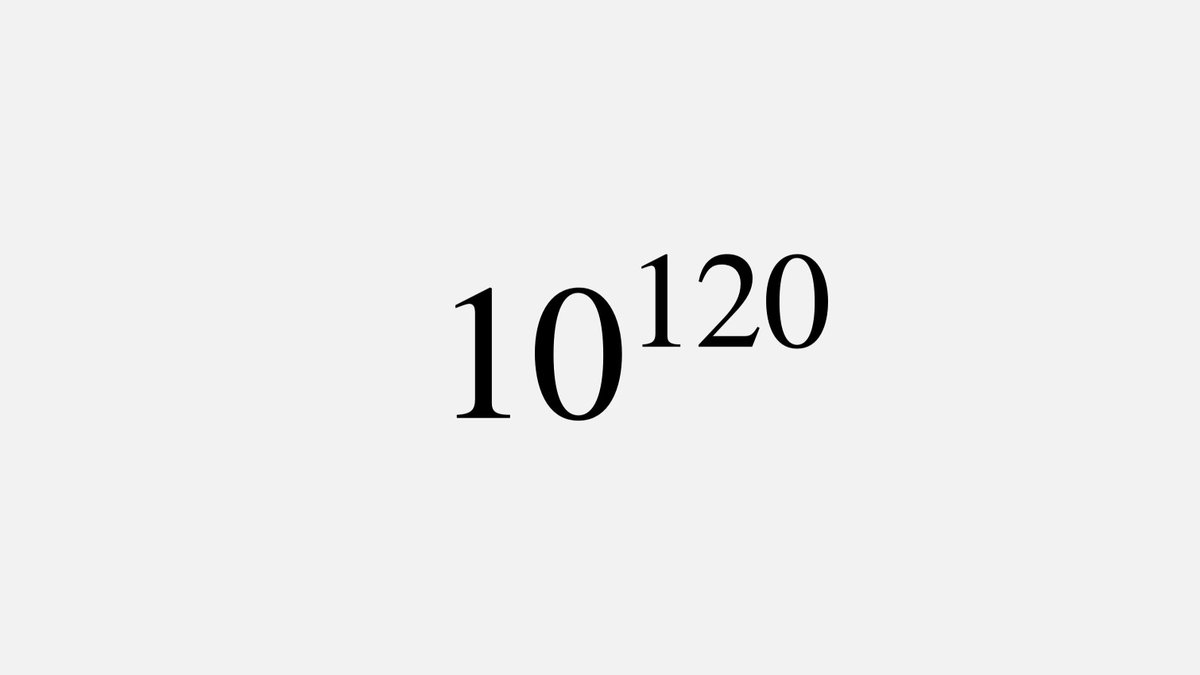
The Shannon Number ♟️
is an estimate how many different chess games are possible (10^120). Fun fact: that's more than the number of atoms in the observable universe (~ 10^80).
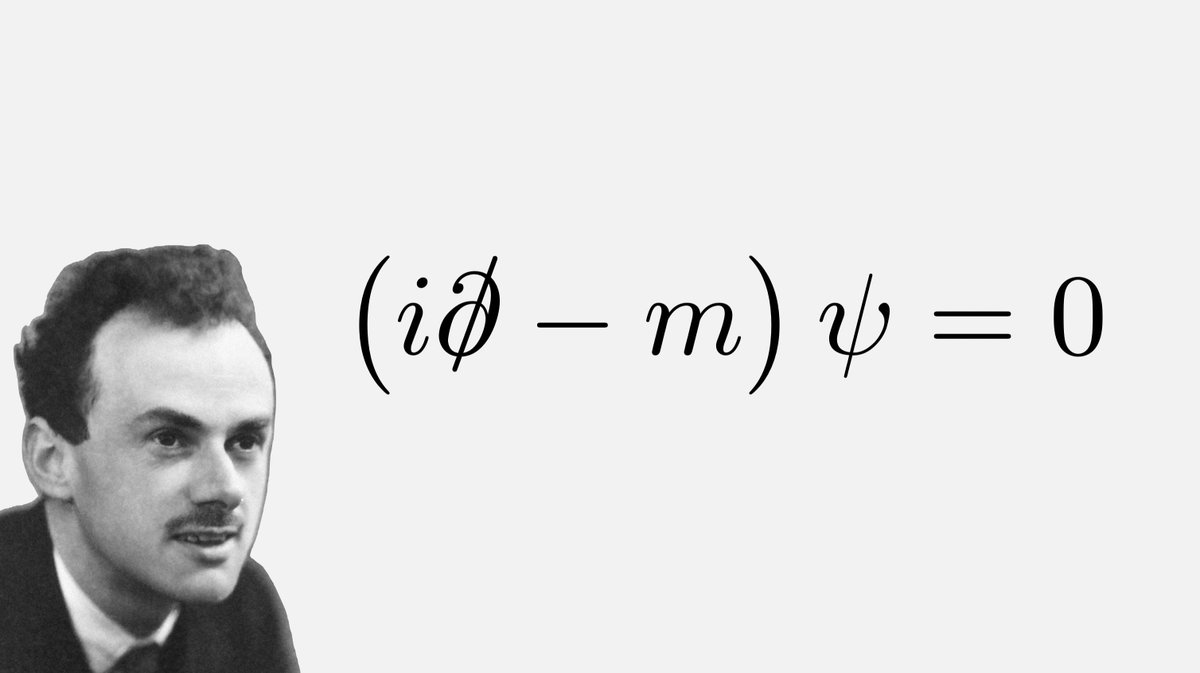
In 1928, Paul Dirac introduced an equation that combined quantum mechanics with Einstein's relativity to describe the electron. By expressing the electron's wave-like behavior and its relativistic energy the equation led to the prediction of particles identical to electrons but with positive charge. These "positrons" were later observed experimentally in 1932 by Carl Anderson - confirming the existence of antimatter.
Joseph Liouville was born exactly 216 years ago. In 1844, he became the first person to prove the existence of transcendental numbers — numbers that are not roots of any non-zero polynomial equation with integer coefficients — and provided the first explicit decimal examples, such as the Liouville constant.