Reported attacks on shipping in and around the Strait of Hormuz are at the highest levels since the Iran war began, maritime data shows, as Tehran seeks to re-exert its control over the critical waterway amid falling oil prices. https://t.co/F0mWcayaCU
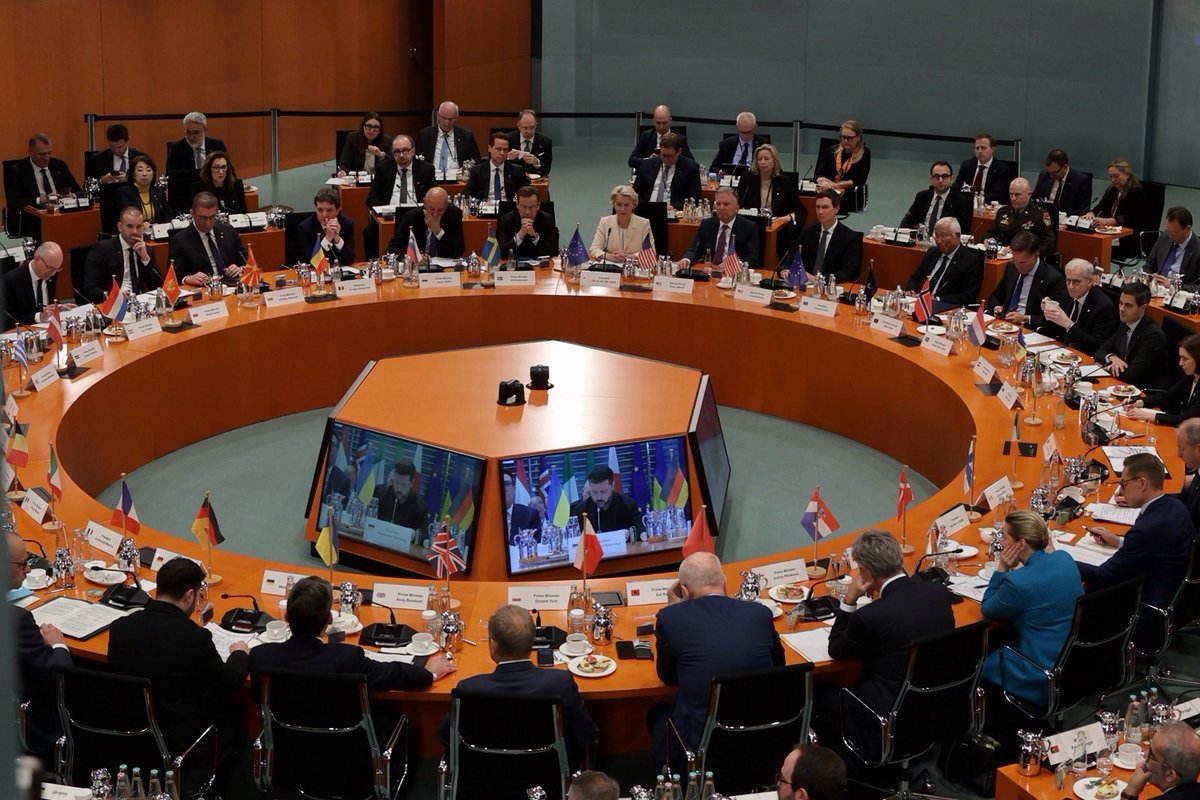
Our American partners, Steve Witkoff @SEPeaceMissions and Jared Kushner @jaredkushner, took part in today’s Coalition of the Willing meeting. There is a decision that Europeans will participate in the negotiation formats with the Russians. This is important.
Europe will be represented by five countries plus the European Union and NATO, and America fully understands why strong and coordinated European participation in the negotiations is necessary.
Later today, we will speak separately with the American envoys about when the next meeting will take place and what its agenda will be. It must now be a four-party meeting – Ukraine, Europe, America, and Russia. We are really counting on this. The agenda for the meeting must be jointly developed and approved by all of us – Ukraine, Europe, and America.
And together, we must take the necessary steps to ensure that Russia engages in serious, substantive work instead of wasting time. This is very important to us because people are dying – our Ukrainians. And we do not want Russia to drag all of this out into the winter. Pressure is needed. Europe is ready with new sanctions and new steps to support Ukraine and the Ukrainian people. It is important that the United States of America exert its influence on Russia.
From the press conference with leaders following the Coalition of the Willing meeting. (1/3)
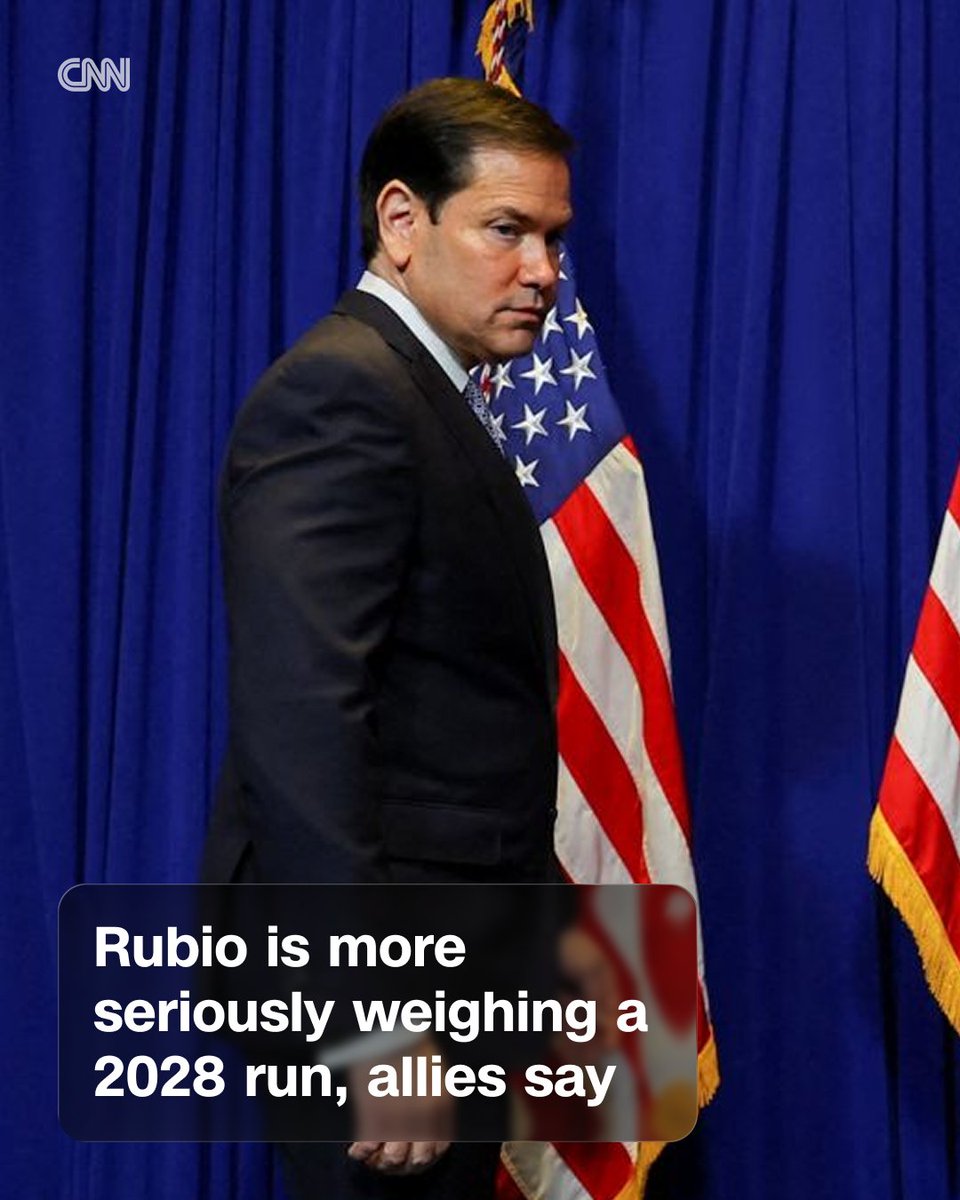
The groundswell of support for Marco Rubio comes as donors, lawmakers and operatives – alarmed by the party's midterm wipeout – begin to plot for a post-Trump era that now appears more uncertain than ever. And many Republicans are increasingly warming to Rubio as a potential standard bearer who could build a winning coalition of his own that's distinct from the now-shaky MAGA movement. https://t.co/t8mHM9kLCu
US President Donald Trump is open to offering Ukraine security guarantees “based on NATO’s Article 5” mutual defence clause, special envoy Jared Kushner has said. He also claimed Russia is “comfortable” with the proposal.
The EU and its members have paid €231bn in support for Ukraine since 2022 - and virtually the same amount to Russia for energy exports.
The figures come from the @EU_Commission. They almost exactly match what @realDonaldTrump said last month.
Victim and aggressor get the same.
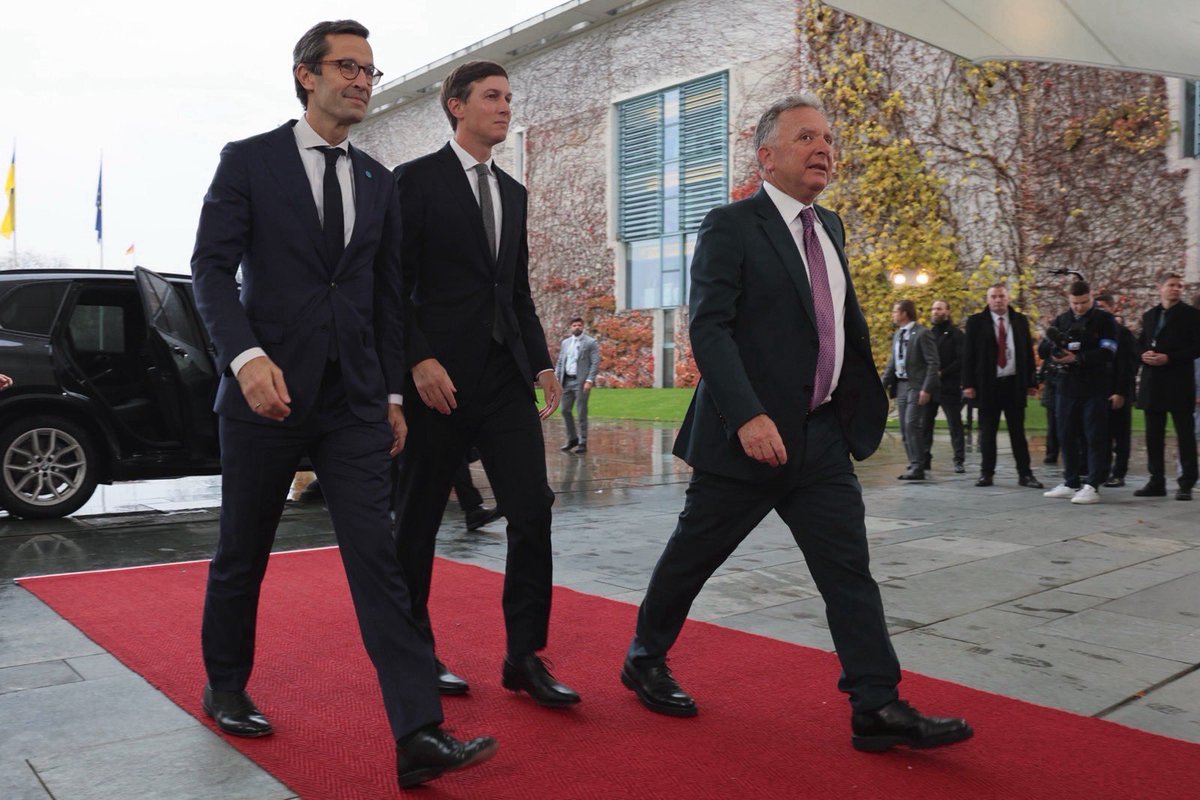
Today, at the direction of @POTUS, @jaredkushner and I joined our European allies in Berlin for a meeting of the Coalition of the Willing. The conversations were frank and productive. President Trump is determined to bring this horrible war to an end and we are resolved to make this happen in a way that fully preserves Ukraine’s security and sovereignty and prevents the recurrence of conflict.
Our purpose in Berlin was to engage directly with our European partners, exchange perspectives, and discuss the path forward. We had substantive and candid discussions, and appreciate the seriousness and commitment demonstrated by all those involved. Important work remains, and we will continue these efforts in close coordination with our allies as we work toward a lasting peace.
Thank you, @POTUS, for your continued leadership and unwavering commitment to bringing this war to an end.
Thank you very much. On behalf of Steve and I, I'd like to thank Chancellor Merz for hosting us here so graciously, and I'd also like to compliment Chancellor Merz and President Macron and Prime Minister Burnham and President Zelenskyy on a very substantive and successful gathering here today. I'd also like to thank some of the other European leaders who have been so essential in helping us shape our point of view, helping us design the right pathway forward.
Amongst them is Prime Minister Meloni from Italy. I'd like to thank the Prime Minister from Poland who's been helpful, Ursula von der Leyen from the EU, and obviously Secretary General of NATO Mark Rutte, as well as the President of Finland, Alex Stubb, and Jonas Gahr, the Prime Minister of Norway, who have all been really engaging with us on a very regular basis in a very substantive and an informative and deliberate way.
What we came away from today with is really seeing that Europe is very united and very, very strong in their support of Ukraine.
We saw—and we relayed this to President Trump when we spoke to him after the meeting, but we also will go back and relay this to the Russian delegation—which is we see strength and unity and commitment, but we also see a real desire for peace, and I think that we're doing a lot of work to organize on how to give it the best shot to get there. After a war that's gone on for this long, that's so emotional and tough and with huge costs from a human perspective, it's very, very hard to get both sides back to the table and back to peace, but I do believe we're making significant steps towards doing that, and it's going to be very, very hard to achieve it, but by working together, everyone here is committed to giving it their best shot, and I believe and I hope and I pray that we will be able to be successful. President Trump sent Steve and I here today and then called into the meeting to give an update on his conversations in Shenzhen with President Xi and President Putin, where he sent a very strong message to both of them on the desire for peace and would like to engage both of them very aggressively to get there, and I'm not going to go into the private discussions that he had.
I'll let him disclose that when he's ready, but I believe he also came away believing that peace is achievable and we need to all work together to try and achieve it. For Steve and I, this is deeply personal. We speak to a lot of people who are being impacted by the war.
Last week, I was speaking to a friend of mine who's from Kramatorsk (Ukraine), and she was telling me about her brother who's fighting on the front lines, and how dire the situation is, and how a lot of the area where she grew up has been destroyed, and a lot of friends have been killed in the battle. A lot of people feel very hopeless, and they don't have any say in what's happening, and they really would like to see peace. On behalf of those people on both sides, Steve and I are working very, very hard to try and do whatever we can do to see if we can help bring this horrible war to an end, to stop the fighting, the killing, the suffering, and all of the negative things that come from war.
When Steve and I started on this a year ago, we very quickly defined that for us, success in an outcome would be to have a sovereign, secure, prosperous, and free Ukraine at the end of the war. I do think that the negotiations and the outcomes that we're discussing, and it's very important that we're here in Europe and you're hearing this from us directly, we do believe that that is very achievable. We think we've made a lot of progress in the last year towards a pathway with Ukraine to the EU.
Before we got involved, everyone had spoken about that Ukraine needed security guarantees, and obviously that was not offered. Steve and I went to President Trump and said, ‘Is that something you'd be open to?’ He said, ‘Absolutely, write them up.’ Obviously, we’d have to go through Congress and we do it in a responsible way that's in line with principles and values, but we've made a lot of progress working with President Zelensky and the Coalition of the Willing on what those security guarantees can look like.
We've also been making a lot of progress on a post-war prosperity plan. We've been working with the World Bank and BlackRock and President Zelenskyy's team, and the EU has really been excellent at spearheading that effort. I think that we've made progress towards defining what a successful and strong Ukraine can look like, hopefully, after this war.
In September, when Steve and I first went to visit Russia and Ukraine, the negotiations were really dead in the water and it was looking very, very hopeless. We came up with a plan working with our European colleagues to try and get the trilateral format back up and running. It took us some time and some hard work to do that, but we were able to achieve that just recently.
That's led to some humanitarian breakthroughs. There's going to be thousands of prisoners of war who will be going home to their families in the next weeks, which will be obviously a great gesture and a great relief for people. In addition to that, most importantly, Russia has agreed to engage in the multilateral format with the Europeans.
Part of that was us explaining to the Russians that we do believe that Russia having Europe at the table will be essential to ending this war in a just and long-term, durable way. The Russians are willing to trust that instinct on our behalf. I believe that after today, we can go back with an even stronger affirmation that we believe that, we've heard that, and there's real commitment to that.
The next steps for us are obviously to work in close coordination after this press conference. Steve and I are going to be meeting with all the NSAs, which make up the negotiating team, and we appreciate the leaders really giving their full time and commitment to that. We're going to be working on joint proposals.
Obviously, we want to make sure that everything we're doing is unified. I also want to be able to reiterate that President Trump wants to make a deal with Europe by his side. He's not looking to impose anything unilaterally.
He wants to do it with Europe and Ukraine, and any deal we do will be in close consultation with Ukraine and with Europe. That's something that he also asked us to come here today and reassure people in that regard. I would say the progress of the meeting—and I think we'll make further progress after—is that I do feel like our positions are becoming much closer, much more detailed, and more aligned in that regard.
That's going to be critical to getting to the next set of talks. Finally, I'll just address post-war security. I think the discussion today on Coalition of the Willing, everything they discussed today are elements of what post-war security.
I appreciate that Chancellor Merz brought up the right mechanisms for communication, transparency, crisis management, and then potentially reciprocal de-escalation. There is a lot of infrastructure already in Europe that we can draw on, like the NATO-Russia Council. I think that will be very important to work on in a solution.
Obviously, NATO will be a central pillar of whatever we work on in the settlement. Hopefully, it will be a much stronger NATO that really has the ability to be a protector of the peace and not seen as provocative, which is obviously not the nature of NATO in that regard. We have to finalize the credible guarantees.
I'll conclude to say that our goal is really to end this war and to really help build a durable peace. We are very committed. President Trump will do whatever it takes to do that.
He's instructed us to commit as much time as possible, and we will continue to do that in full coordination and unity with our European partners. Thank you.
From remarks in Berlin
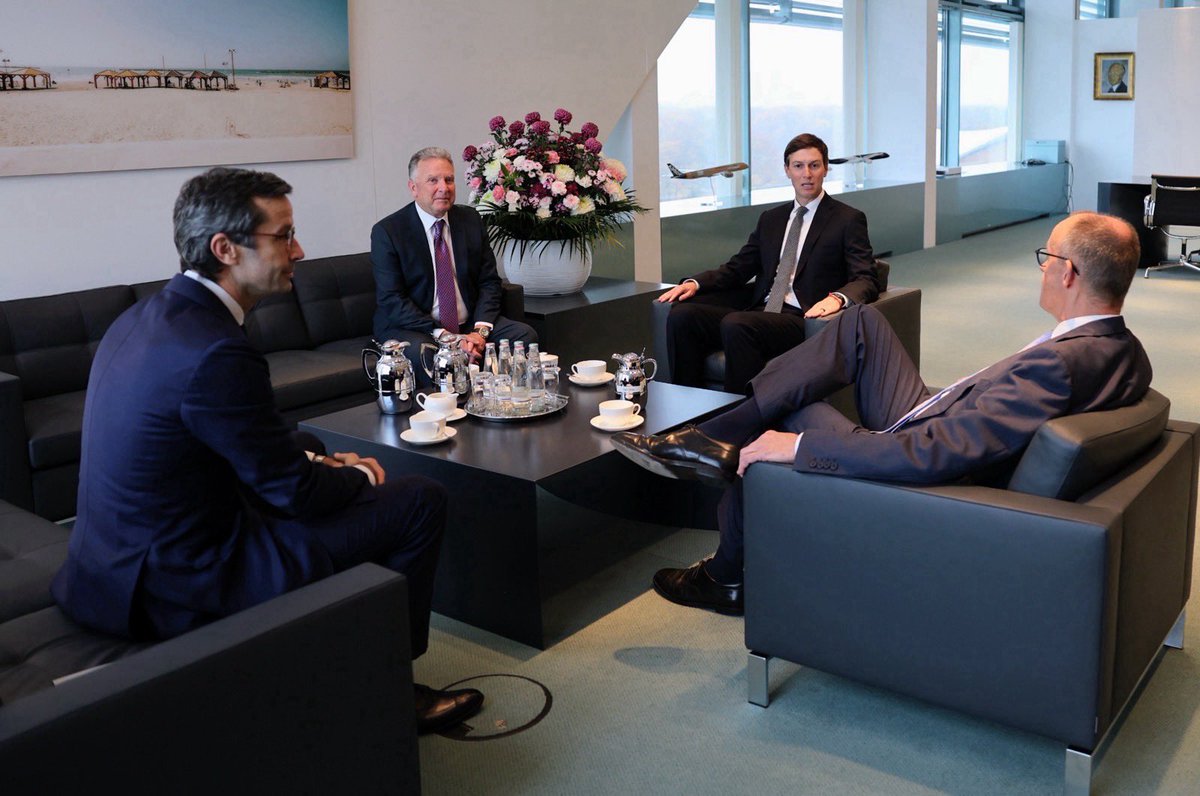
.@SEPeaceMissions and I had a very productive meeting today with German Chancellor @_FriedrichMerz and his National Security Advisor Günter Sautter.
We updated them on @realDonaldTrump discussions in China and the latest efforts to achieve a just, lasting and durable peace in Ukraine.
We continue to work in close coordination with Germany, Ukraine and our European partners to align our positions and prepare for the next round of negotiations.
Chancellor Merz is a strong advocate for peace in Ukraine and a strong Euro-Atlantic alliance. We are grateful for his leadership, constructive engagement, and close partnership as we work together toward our shared goal of ending this terrible war and building a secure and prosperous future for Ukraine and Europe.
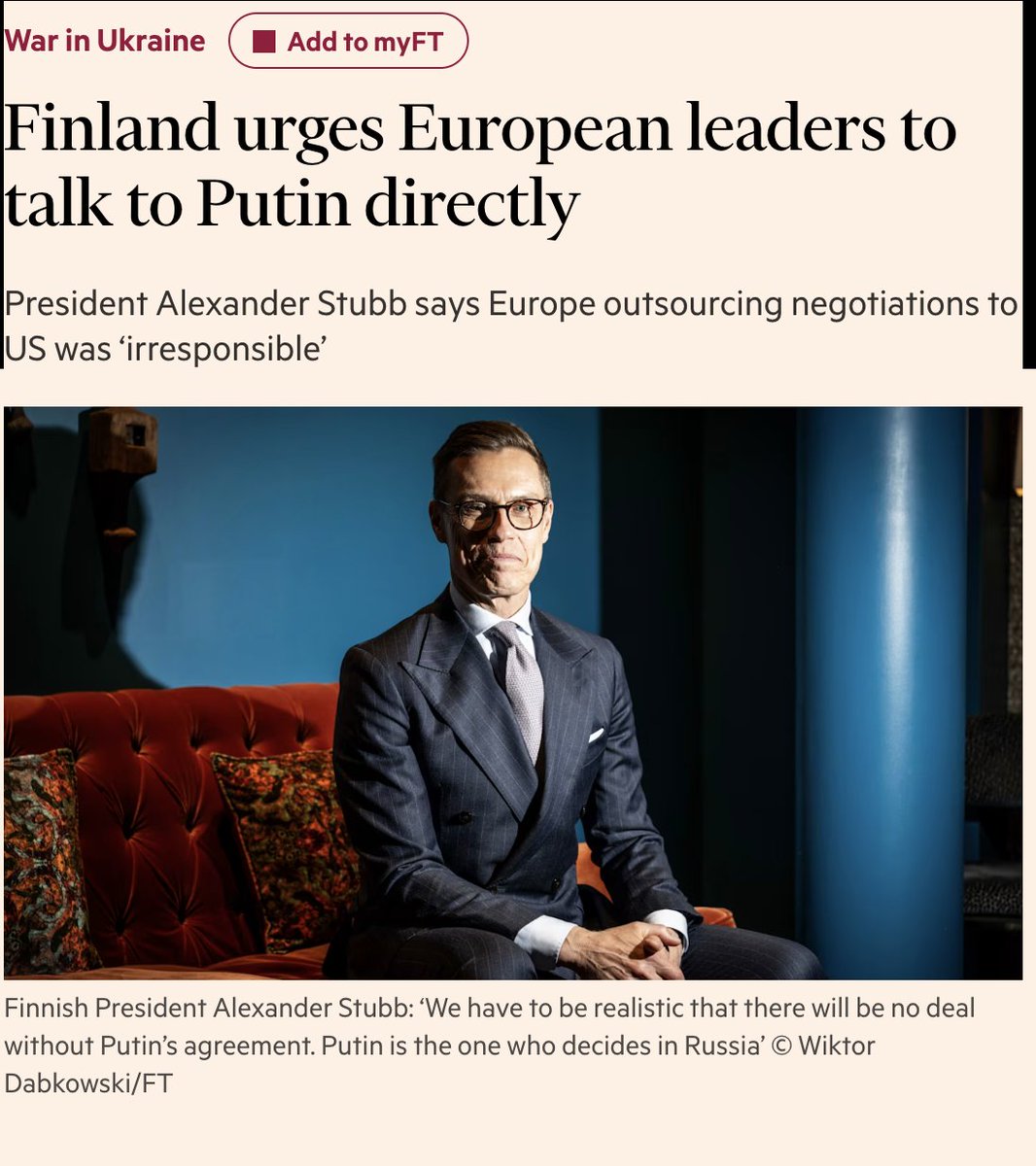
Finland's @alexstubb, a rare actual statesman in today's leaderless Europe, breaks silence on EU's self-destructive failure to negotiate with Putin: "We have outsourced European engagement with Russia for too long and I think that is irresponsible." Stubb, who spoke to Putin, also puts pay to the fact-free claim that Russia won't negotiate: Putin is “ready to engage with Europe”, even as the continent is “late” in organising itself for such talks, he told @FT
Following our trilateral meetings and subsequent discussions with Presidents Putin and @ZelenskyyUa, @SEPeaceMissions and I have remained in close consultation with Russia, Ukraine, and our European partners on next steps.
Our focus now is on facilitating direct engagement between Moscow and European partners and preparing the agenda for the next round of trilateral talks.
Several new ideas emerged from these discussions and are now being explored. Some may lead to breakthroughs directly, while others may evolve into new proposals that help bridge the remaining gaps.
As President @realDonaldTrump has made clear, A lasting peace requires credible security guarantees for Ukraine and detailed, actionable postwar security arrangements that reduce the risk of another war. NATO will remain a critical pillar of European security, enhanced by stronger mechanisms for military, communication, deconfliction, and reciprocal de-escalation, with practical ways to address disputes before they become crises. This is why we are working to bring our European partners directly into these discussions. Any final agreement must be agreed to by the relevant parties, and President Trump will only support arrangements that strengthen Ukraine’s and Europe’s security and make future conflict less likely.
The press has reported some of the maximalist positions proposed by both sides, along with strong political rhetoric. In our private discussions, both sides understand that practical compromises will be necessary to end this war. Serious and constructive work continues among those of us committed to finding solutions.
The human cost of this war is devastating, and the issues remain extraordinarily difficult. However, we are determined to continue the hard work, maintain the confidentiality necessary for sensitive negotiations, and find a pathway to end this horrible war and establish a durable peace.
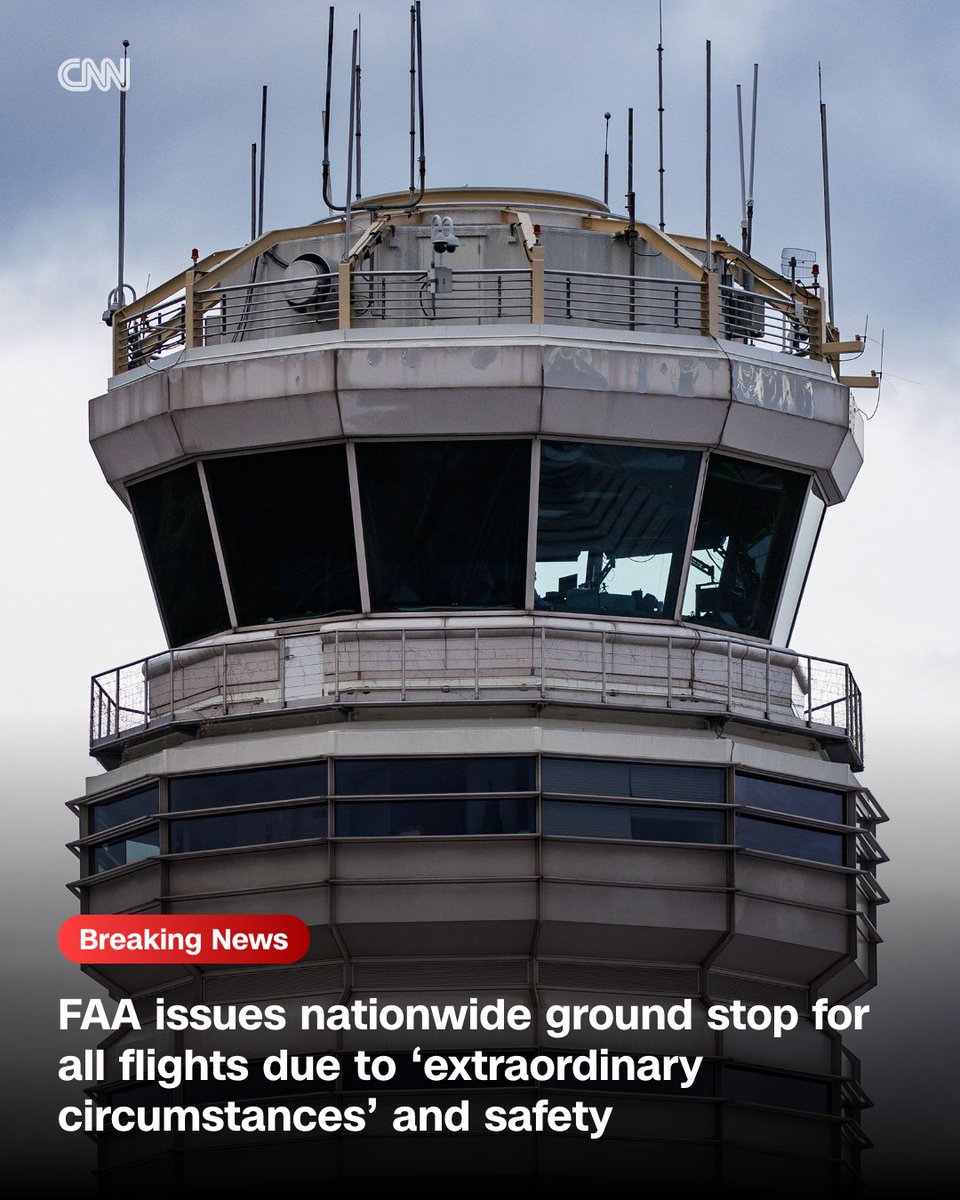
All flights in the United States are grounded until further notice, "due to extraordinary circumstances and for reasons of safety," the Federal Aviation Administration said in a statement.
The cause of the ground stop was not immediately clear, but it comes after frequency outages were reported in some parts of the country. https://t.co/PX3liL0A3K
News: The US intel community is still working to understand the relationship between a Chinese businesswoman who had an affair with Nvidia CEO Jensen Huang and the Chinese government, with multiple sources telling CNN that the intelligence collected on her to date does not prove that she was acting as a spy for Beijing.
https://t.co/SB9WF81j9n
An Israeli strike on a hospital in southern Gaza overnight Wednesday killed at least six people, including a doctor and a child, Palestinian officials say. https://t.co/3mtQIn840V
"I think progress was made. I think it was made earlier today."
@fpleitgenCNN catches up with US envoy Steve Witkoff at Moscow's Vnukovo Airport before he boards flight to Dublin, Ireland to meet Ukrainian President Volodymyr Zelensky.
Latest https://t.co/4dCIj488QV
If the US launches another war against Iran, every military base involved in the aggression—from West Asia to Europe—will be a legitimate target for Iran’s lethal strikes.
NO SAFE DISTANCE. NO SAFE HAVEN. NO IMMUNITY.
American voters have made their choice. Time for the White House to make its own.
Our 2-day proposal stands: meet the requirements, including end to war on all fronts, and you will see results.
Or choose war, and see our alert and battle-hardened Warriors rain down hell.