Ποῖ βαίνεις και πόθεν ἥκεις;
Filosofía Contemporánea, educación y cultura. Idiomas: español, alemán, inglés y griego antiguo. Fútbol, In Flames y Wagner.
Mi publicación más reciente sobre la traducción-interpretación fenomenológica de Heidegger acerca de los primeros dos capítulos del libro primero de la Metafísica de Aristóteles.
https://t.co/lKj8KcAwqk
"The black holes of nature are the most perfect macroscopic objects there are in the universe: the only elements in their construction are our concepts of space and time."
-- Subramanyam Chandrasekhar (1910 - 1995), 'The mathematical Theory of Black Holes'
Publicado nuevo volumen de Studia Heideggeriana:
VOL XIII (2023) - VIDA, ACCIÓN Y EMOCIÓN Disponible en línea y en papel.
Versión online: https://t.co/kUQ2j4tuiX
Versión en papel: https://t.co/lekhOX0BZS
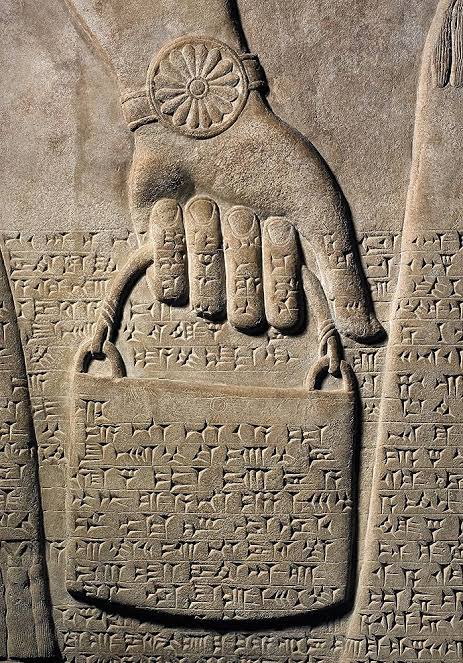
Earliest writing we know of dates back to around 3000 BC and was probably invented by Sumerians, living in major cities with centralized economies in what is now southern Iraq. Earliest tablets with written inscriptions represent work of administrators, perhaps of large temple institutions, recording allocation of rations or movement and storage of goods. Temple officials needed to keep records of grain, sheep, and cattle entering or leaving their stores and farms and it became impossible to rely on memory. So, an alternative method was required and very earliest texts were pictures of items scribes needed to record (pictographs). During its 3000 year history, cuneiform was used to write around 15 different languages including Sumerian, Akkadian, Babylonian, Assyrian, Elamite, Hittite, Urartian and Old Persian.
Writing, recording of a spoken language, emerged from earlier recording systems, 4th Millennium BC. First written language in Mesopotamia is called Sumerian. Most of early tablets come from Uruk, in southern Mesopotamia, and it may have been here that this form of writing was invented. These texts were drawn on damp clay tablets using a pointed tool. It seems scribes realized it was quicker and easier to produce representations of such things as animals, rather than naturalistic impressions of them. They began to draw marks in clay to make up signs, which were standardized so they could be recognized by many people.
From these beginnings, cuneiform signs were put together and developed to represent sounds, so they could be used to record spoken language. Once this was achieved, ideas and concepts could be expressed and communicated in writing. Cuneiform is one of oldest forms of writing known. It means “wedge-shaped,” because people wrote it using a reed stylus cut to make a wedge-shaped mark on a clay tablet. Letters enclosed in clay envelopes, as well as works of literature, such as Epic of Gilgamesh have been found. Historical accounts have also come to light, as have huge libraries such as that belonging to Assyrian king, Ashurbanipal.
Department’s collection of cuneiform tablets is among the most important in the world. It contains approx. 130,000 texts and fragments and is perhaps largest collection outside of Iraq. Centerpiece of collection is Library of Ashurbanipal, comprising many thousands of most important tablets ever found. Significance of these tablets was immediately realized by Library’s excavator, Austin Henry Layard, who wrote :
"They furnish us with materials for the complete decipherment of the cuneiform character, for restoring language and history of Assyria, and for inquiring into customs, sciences, and . . . literature, of its people."
Decipherment of cuneiform began in 18th Century as European scholars searched for proof of places and events recorded in Bible. Travelers, antiquaries, and some of earliest archaeologists visited ancient Near East where they uncovered great cities such as Nineveh. They brought back a range of artifacts, including thousands of clay tablets covered in cuneiform.
Scholars began incredibly difficult job of trying to decipher these strange signs representing languages no-one had heard for thousands of years. Gradually, cuneiform signs representing these different languages were deciphered thanks to work of a number of dedicated people. Confirmation that they had succeeded came in 1857. Royal Asiatic Society sent copies of a newly found clay record of military and hunting achievements of King Tiglath-pileser I to four scholars: Henry Creswicke Rawlinson, Edward Hincks, Julius Oppert, and William H. Fox Talbot. They each worked independently and returned translations that broadly agreed with each other. This was accepted as proof that cuneiform had been successfully deciphered, but there are still elements that we don’t completely understand and study continues.
#archaeohistories
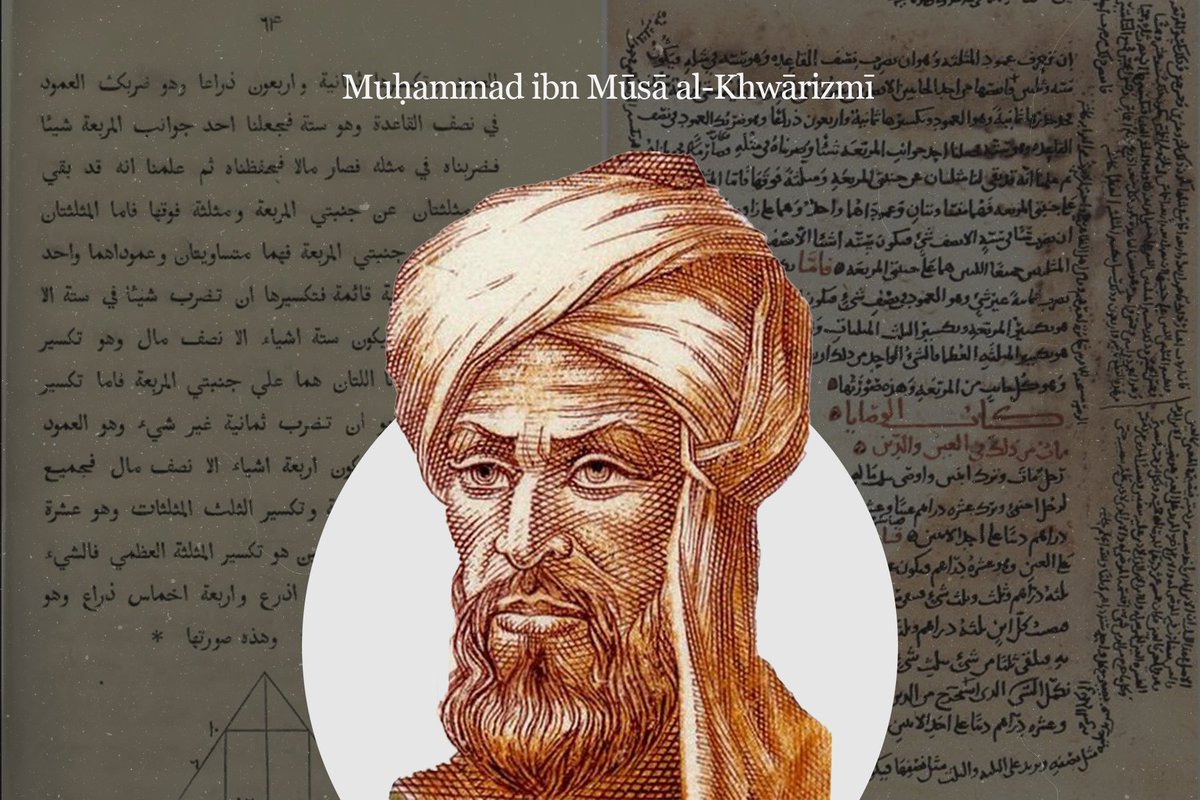
The word “algebra” comes from the Arabic word “al-jabr”, which means “reunion of broken parts” or “restoration”. This term was used by the Persian mathematician Muḥammad ibn Mūsā al-Khwārizmī in his 9th-century book “Kitab al-jabr wa al-muqabala”, which introduced methods for solving equations and laid the foundation for modern algebra. The word “algebra” was later translated into Latin and other languages, and gradually expanded to cover a wider range of mathematical topics and concepts.
The Lord's Prayer in Greek at the end of this manuscript, probably in the hand of Abbot (Bishop) Dorbbene of Iona (d.713 CE)
Schaffhausen, Stadtbibliothek, Gen. 1; Adamnanus de Iona, Vita Columbae; between 688 CE and 713 CE; Ireland; p.137
(https://t.co/JuugCtd8Gg)
La gente ha sido inexplicablemente buena conmigo. No tengo enemigos, y si ciertas personas se han puesto ese disfraz, han sido tan bondadosas que ni siquiera me han lastimado. Cada vez que leo algo que han escrito contra mí, no sólo comparto el sentimiento sino que pienso que yo mismo podría hacer mucho mejor el trabajo. Quizá debería aconsejar a los aspirantes a enemigos que me envíen sus críticas de antemano, con la seguridad de que recibirán toda mi ayuda y mi apoyo. Hasta he deseado secretamente escribir, con seudónimo, una larga invectiva contra mí mismo. ¡Ay, las crudas verdades que guardo!
A mi edad uno debería tener conciencia de los propios límites, y ese conocimiento quizá contribuya a la felicidad. De joven pensaba que la literatura era un juego de variaciones hábiles y sorprendentes. Ahora que he encontrado mi propia voz, pienso que corregir y volver a corregir mis originales no los mejora ni los empeora.
Supongo que ya he escrito mis mejores libros. Eso me da una cierta satisfacción y tranquilidad. Sin embargo, no creo que lo haya escrito todo. De algún modo, la juventud me resulta más cercana que cuando era joven. Ya no considero inalcanzable la felicidad como me sucedía hace tiempo. Ahora sé que puede ocurrir en cualquier momento, pero nunca hay que buscarla. En cuanto al fracaso y la fama, me parecen irrelevantes y no me preocupan. Lo que quiero ahora es la paz, el placer del pensamiento y de la amistad. Y aunque parezca demasiado ambicioso, la sensación de amar y ser amado.
JORGE LUIS BORGES.
AUTOBIOGRAFÍA.
EL ATENEO, Buenos Aires, 1999.
Ich beende das Jahr 2023 mit meinem alten Freund Nietzsche. Heute habe ich ein weiteres Exemplar von Zarathustra gekauft, meinem zweitliebsten Buch, einem Text von tiefer Schönheit, der mein Herz berührte, als ich 24 Jahre alt war.
Some people prefer riches, while others wish to travel. Some want sports cars while others want fame. Some people wish for many friends, while others want romantic partners. Some people love the great outdoors, while others love sports. But I just love books.
SEH RECOMIENDA:
𝑪𝒇𝑷: 𝐇𝐞𝐠𝐞𝐥 𝐲 𝐥𝐚 𝐩𝐬𝐢𝐪𝐮𝐢𝐚𝐭𝐫𝐢́𝐚. Petición de artículos, reseñas y notas críticas para el vol. 10/2024 de 𝑺𝒕𝒖𝒅𝒊𝒂 𝑯𝒆𝒈𝒆𝒍𝒊𝒂𝒏𝒂, órgano de expresión de la 𝑆𝑜𝑐𝑖𝑒𝑑𝑎𝑑 𝐸𝑠𝑝𝑎𝑛̃𝑜𝑙𝑎 𝑑𝑒 𝐸𝑠𝑡𝑢𝑑𝑖𝑜𝑠 𝑠𝑜𝑏𝑟𝑒 𝐻𝑒𝑔𝑒𝑙